Glennon Doyle - Untamed
Здесь есть возможность читать онлайн «Glennon Doyle - Untamed» весь текст электронной книги совершенно бесплатно (целиком полную версию без сокращений). В некоторых случаях можно слушать аудио, скачать через торрент в формате fb2 и присутствует краткое содержание. Год выпуска: 2020, Издательство: Random House Publishing Group, Жанр: Публицистика, на английском языке. Описание произведения, (предисловие) а так же отзывы посетителей доступны на портале библиотеки ЛибКат.
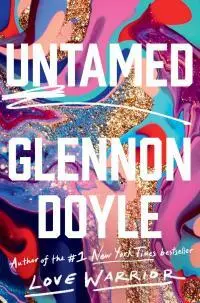
- Название:Untamed
- Автор:
- Издательство:Random House Publishing Group
- Жанр:
- Год:2020
- ISBN:нет данных
- Рейтинг книги:4 / 5. Голосов: 2
-
Избранное:Добавить в избранное
- Отзывы:
-
Ваша оценка:
Untamed: краткое содержание, описание и аннотация
Предлагаем к чтению аннотацию, описание, краткое содержание или предисловие (зависит от того, что написал сам автор книги «Untamed»). Если вы не нашли необходимую информацию о книге — напишите в комментариях, мы постараемся отыскать её.
" *Untamed* will liberate women --emotionally, spiritually, and physically. **It is phenomenal.** "--Elizabeth Gilbert, author of *City of Girls* and *Eat Pray Love***
*This is how you find yourself.
*
There is a voice of longing inside each woman. We strive so mightily to be good: good partners, daughters, mothers, employees, and friends. We hope all this striving will make us feel alive. Instead, it leaves us feeling weary, stuck, overwhelmed, and underwhelmed. We look at our lives and wonder: *Wasn't it all supposed to be more beautiful than this?* We quickly silence that question, telling ourselves to be grateful, hiding...
Untamed — читать онлайн бесплатно полную книгу (весь текст) целиком
Ниже представлен текст книги, разбитый по страницам. Система сохранения места последней прочитанной страницы, позволяет с удобством читать онлайн бесплатно книгу «Untamed», без необходимости каждый раз заново искать на чём Вы остановились. Поставьте закладку, и сможете в любой момент перейти на страницу, на которой закончили чтение.
Интервал:
Закладка:
I talk to women all the time about how the misogyny pumped into the air by our culture affects us deeply. How it corrupts our ideas about ourselves and pits women against each other. How that programmed poison makes us sick and mean. How we all have to work hard to detox from it so that we don’t keep hurting ourselves and other women. Women cry and nod and say, “Yes, yes, me, too. I’ve got misogyny in me, and I want it out.” No one is terrified to admit she has internalized misogyny, because there is no morality attached to the admission. No one decides that being affected by misogyny makes her a bad person. When a woman says she wants to work to detox herself of misogyny, she is not labeled a misogynist. It is understood that there is a difference between a misogynist and a person affected by misogyny who is actively working to detox. They both have misogyny in them, programmed by the system, but the former is using it to wield power to hurt people and the latter is working to untangle herself from its power so she can stop hurting people.
But then when I bring up racism, the same women say, “But I’m not racist. I am not prejudiced. I was raised better than that.”
We are not going to get the racism out of us until we start thinking about racism like we think about misogyny. Until we consider racism as not just a personal moral failing but as the air we’ve been breathing. How many images of black bodies being thrown to the ground have I ingested? How many photographs of jails filled with black bodies have I seen? How many racist jokes have I swallowed? We have been deluged by stories and images meant to convince us that black men are dangerous, black women are dispensable, and black bodies are worth less than white bodies. These messages are in the air and we’ve just been breathing. We must decide that admitting to being poisoned by racism is not a moral failing—but denying we have poison in us certainly is.
Revelation must come before revolution. Becoming sober—from booze, patriarchy, white supremacy—is a little bit like swallowing the blue pill and slowly watching the invisible, deliberate matrix we’ve been living inside of become visible. For me, the process of detoxing from booze included becoming aware of the matrix of consumer culture that brainwashed me into believing that my pain was to be numbed through consumption. Detoxing from my eating disorder meant seeing the web of patriarchy that trained me to believe that I was not allowed to be hungry or take up space on the earth. And detoxing from racism is requiring me to open my eyes to the elaborate web of white supremacy that exists to convince me that I am better than people of color.
In America, there are not two kinds of people, racists and nonracists. There are three kinds of people: those poisoned by racism and actively choosing to spread it; those poisoned by racism and actively trying to detox; and those poisoned by racism who deny its very existence inside them.
I’ve decided that the people who called me a racist were right.
And wrong.
I am the second type of person. I am a white woman who has come to the conclusion that the reason people call me a racist when I show up to speak about racism is that I am showing up as I am and I have racism in me. By what I say and don’t say, by the way I say it, people can see my inner racism on the outside. What they are seeing and pointing out is the truth.
Every white person who shows up and tells the truth—because it’s her duty as a member of our human family—is going to have her racism called out. She will have to accept that others will disagree with how she’s showing up and that they will have every right to disagree. She will need to learn to withstand people’s anger, knowing that much of it is real and true and necessary. She will need to accept that one of the privileges she’s letting burn is her emotional comfort. She will need to remind herself that being called a racist is actually not the worst thing. The worst thing is privately hiding her racism to stay safe, liked, and comfortable while others suffer and die. There are worse things than being criticized—like being a coward.
I am afraid to put these thoughts inside a book that will not be in people’s hands until a year from now. I know that I will later read this and see the racism in it that I cannot see right now. But I think of the words of Dr. Maya Angelou: “Do the best you can until you know better. Then when you know better, do better.” Doing our best now is an active thing, and so is knowing better. We don’t show up and then wait to magically know better. We show up and then, when we are corrected, we keep working. We listen hard so we can know better next time. We seek out teachers so we can know better next time. We let burn our ideas about how good and well-meaning we are so we can become better next time. Learning to know better is a commitment. We will only know better if we continue unbecoming.
So I will commit to showing up with deep humility and doing the best I can. I will keep getting it wrong, which is the closest I can come to getting it right. When I am corrected, I will stay open and keep learning. Not because I want to be the wokest woke who ever woked. But because people’s children are dying of racism, and there is no such thing as other people’s children. Hidden racism is destroying and ending lives. It’s making police officers kill black men at three times the rate of white men. It’s making lawmakers limit funding for clean water and poison children. It’s making doctors allow black women to die during or after childbirth at three to four times the rate of white women. It’s making school officials suspend and expel black students at three times the rate of white students. It’s making judges incarcerate black drug users at nearly six times the rate of white drug users. And—because of my complicity in this system that dehumanizes others—it is dehumanizing me. The fact that the programmed poison of racism was pumped into us may not be our fault, but getting it out is sure as hell our responsibility.
So when the moment comes—whether it’s about my family, my community, or my country—when the energy shifts to me and the question is asked of me: “How do you imagine you might be contributing to our sickness?” I want to stay in the room, I want to feel, to imagine, to listen, to work. I want to turn myself inside out to help clear our air.
Recently I was holding a town hall–type event in the Midwest. There were a thousand women in the audience, a smattering of men, a few gurgling babies. After we opened up the event for questions, I noticed a hand slowly rise in the back of the room. A runner hurried to the back, slid along the pew, and asked the owner of the hand to stand. A woman with short gray hair and a gentle, serious face with deep wrinkles slowly stood. She wore a sweatshirt with an American flag and the word GRAMMA puffy-painted onto it. Her hand shook a little as she held the mic. I loved her instantly. She said:
“Hi, Glennon. I’ve been following your work for ten years, and I came here to ask you a question that I’m afraid to ask anyone else. I feel…confused. My nephew is now my niece. I adore him…I’m sorry—her. My granddaughter took a boy to homecoming last year and a girl this year. And now…you’re gay, too? I don’t mean any offense, it’s just: Why is everybody so gay all of a sudden?”
The room fell still and silent. The sea of heads that was turned toward this woman slowly turned back toward me. Eyes were wide. I felt the room’s collective stress. For her, for me, for all of us. (Oh, God, was that offensive? Was that wrong? Is Glennon pissed? But also why is everybody so gay all of a sudden?) They were worried that we’d just crashed and burned. I knew we’d finally taken off. Blessed are those brave enough to make things awkward, for they wake us up and move us forward.
Читать дальшеИнтервал:
Закладка:
Похожие книги на «Untamed»
Представляем Вашему вниманию похожие книги на «Untamed» списком для выбора. Мы отобрали схожую по названию и смыслу литературу в надежде предоставить читателям больше вариантов отыскать новые, интересные, ещё непрочитанные произведения.









Обсуждение, отзывы о книге «Untamed» и просто собственные мнения читателей. Оставьте ваши комментарии, напишите, что Вы думаете о произведении, его смысле или главных героях. Укажите что конкретно понравилось, а что нет, и почему Вы так считаете.