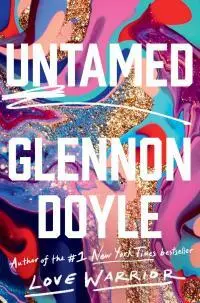
Glennon Doyle - Untamed
Здесь есть возможность читать онлайн «Glennon Doyle - Untamed» весь текст электронной книги совершенно бесплатно (целиком полную версию без сокращений). В некоторых случаях можно слушать аудио, скачать через торрент в формате fb2 и присутствует краткое содержание. Год выпуска: 2020, Издательство: Random House Publishing Group, Жанр: Публицистика, на английском языке. Описание произведения, (предисловие) а так же отзывы посетителей доступны на портале библиотеки ЛибКат.
- Название:Untamed
- Автор:
- Издательство:Random House Publishing Group
- Жанр:
- Год:2020
- ISBN:нет данных
- Рейтинг книги:4 / 5. Голосов: 2
-
Избранное:Добавить в избранное
- Отзывы:
-
Ваша оценка:
Untamed: краткое содержание, описание и аннотация
Предлагаем к чтению аннотацию, описание, краткое содержание или предисловие (зависит от того, что написал сам автор книги «Untamed»). Если вы не нашли необходимую информацию о книге — напишите в комментариях, мы постараемся отыскать её.
" *Untamed* will liberate women --emotionally, spiritually, and physically. **It is phenomenal.** "--Elizabeth Gilbert, author of *City of Girls* and *Eat Pray Love***
*This is how you find yourself.
*
There is a voice of longing inside each woman. We strive so mightily to be good: good partners, daughters, mothers, employees, and friends. We hope all this striving will make us feel alive. Instead, it leaves us feeling weary, stuck, overwhelmed, and underwhelmed. We look at our lives and wonder: *Wasn't it all supposed to be more beautiful than this?* We quickly silence that question, telling ourselves to be grateful, hiding...
Untamed — читать онлайн бесплатно полную книгу (весь текст) целиком
Ниже представлен текст книги, разбитый по страницам. Система сохранения места последней прочитанной страницы, позволяет с удобством читать онлайн бесплатно книгу «Untamed», без необходимости каждый раз заново искать на чём Вы остановились. Поставьте закладку, и сможете в любой момент перейти на страницу, на которой закончили чтение.
Интервал:
Закладка:
I’m forty-four years old now, and I’ll be damned if I’ll choose that kind of pain ever again.
I left my husband and I am building a life with Abby because I’m a grown-ass woman now and I do what the fuck I want. I mean this with deep respect and love—and with the desire that you, too, will do what the fuck you want with your own singular precious life.
The truth is that it matters not at all what you think of my life—but it matters supremely what you think of your own. Judgment is just another cage we live in so we don’t have to feel, know, and imagine. Judgment is self-abandonment. You are not here to waste your time deciding whether my life is true and beautiful enough for you. You are here to decide if your life, relationships, and world are true and beautiful enough for you. And if they are not and you dare to admit they are not, you must decide if you have the guts, the right—perhaps even the duty—to burn to the ground that which is not true and beautiful enough and get started building what is.
That is what I want to model now, because that is what I want for all of us. I want us all to grow so comfortable in our own feelings, our own Knowing, our own imagination that we become more committed to our own joy, freedom, and integrity than we are to manipulating what others think of us. I want us to refuse to betray ourselves. Because what the world needs right now in order to evolve is to watch one woman at a time live her truest, most beautiful life without asking for permission or offering explanation.
So the next morning, I woke up, poured myself some coffee, opened my computer, and took a long, deep breath. Then I posted—to a million people—a picture of Abby and me snuggling on our front-porch swing, her strumming a guitar, both of us looking directly into the camera. We looked certain. Content. Settled. Relieved. I wrote that Abby and I were in love and planned to build a life together, along with the kids and their father. I didn’t write much more than that. I was careful not to apologize or explain or justify. I just let it stand. Then I walked away and reminded myself that I was responsible for telling the truth but not for anyone’s reaction to it. I’d done my part.
My sister called me an hour later, and her voice was trembling. “Sissy,” she said. “You won’t believe what’s happening. Please sit down and read what our people are saying. What they’re doing. How this community is showing up for you and Abby.”
I logged on and saw thousands of gorgeous, kind, gracious, intelligent, spacious, gentle, nuanced comments. They were from a community of people who understood that they did not have to understand me to love me. It was not a bloodbath. It was more of a baptism. They seemed to say, “Welcome to the world, Glennon. We’ve got you.”
That night, a friend called and said, “Glennon, here’s what I’ve been thinking about all day: You made this community for other women. But maybe it was actually for you. All this time you’ve been creating the net that one day you’d need to fall into.”
May we all live in communities where every person’s truest Self is both held and free.
I was eleven years old when I started treatment for bulimia. Back then, the mental health world treated eating disorders differently than it does now. When a child got sick, it was assumed that she was broken. We didn’t yet understand that many sick children are canaries in coal mines, passively inhaling toxins in the air of their families or cultures or both. So I was separated, sent away to therapists and doctors who tried to fix me instead of trying to fix the toxins I was breathing.
When I was in high school, a therapist finally asked my family to attend one of my sessions. After a few minutes, she turned to my dad and asked, “Can you imagine how you might be inadvertently contributing to Glennon’s illness?” My dad became very angry. He stood up and walked out of the room. I understood why. My dad’s first priority was to be a good father. He held so tightly to the identity of good father that he couldn’t dare to imagine that he might in any way have hurt his little girl. In his mind, good fathers do not contribute to family dysfunction. They do, of course, all the time, because good fathers are still human. In retrospect, I can see that our family had ideas about food, control, and bodies that would have been healthy for all of us to excavate, pull out into the light, and clear up. But my dad’s refusal to look inward meant that I was on my own for a long while. Nobody else was going to turn their insides out but me.
Decades after that day in the therapist’s office, Donald Trump was elected president. A friend called me and said, “This is the apocalypse. This is the end of our country as we know it.”
I said, “I hope so. Apocalypse means uncovering. Gotta uncover before you can recover.”
She said, “Oh, God, not more recovery talk. Not now.”
“No, listen—this feels to me like we’ve hit rock bottom! Maybe that means we’re finally ready for the steps. Maybe we’ll admit that our country has become unmanageable. Maybe we’ll take a moral inventory and face our open family secret: that this nation—founded upon ‘liberty and justice for all’—was built while murdering, enslaving, raping, and subjugating millions. Maybe we’ll admit that liberty and justice for all has always meant liberty for white straight wealthy men. Then maybe we’ll gather the entire family at the table—the women and the gay and black and brown folks and those in power—so that we can begin the long, hard work of making amends. I’ve seen this process heal people and families. Maybe our nation can heal this way, too.”
I was adamant and righteous. But I’d forgotten that sick systems are made up of sick people. People like me. In order to get healthy, everybody has to stay in the room and turn themselves inside out. No family recovers until each member recovers.
Soon after that conversation with my friend, I sat on my family room couch and patted a spot to my left and one to my right. I said to my daughters, “Come here, girls.” They sat down and looked up at me. I told them that while they were asleep, a man who was white had walked into a church and shot and killed nine people who were black.
Then I told my daughters about a black boy their brother’s age, who was walking home and was chased down and murdered. I told them that the killer said he thought the boy had a gun, but what the boy really had was a bag of Skittles. Amma said, “Why did that man think Trayvon’s candy was a gun?” I said, “I don’t think he really did. I think he just needed an excuse to kill.”
We sat with all of this for a while. They asked more questions. I did my best. Then I decided that we had talked about villains for long enough. We needed to talk about heroes.
I went to my office to find a particular book. I pulled it down from the shelf, came back to the couch, and sat between them again. I opened the book, and we read about Martin Luther King, Jr., Rosa Parks, John Lewis, Fannie Lou Hamer, Diane Nash, and Daisy Bates. We looked at pictures of civil rights marches, and we talked about why people march. “Someone once said that marching is praying with your feet,” I told them.
Amma pointed to a white woman holding a sign, marching in a sea of black and brown people. Her eyes popped and she said, “Mama, look! Would we have been marching with them? Like her?”
I fixed my mouth to say, “Of course. Of course we would have, baby.”
But before I could say it, Tish said, “No, Amma. We wouldn’t have been marching with them back then. I mean, we’re not marching now.”
I stared at my girls as they looked up at me. I thought of my dad in that therapist’s office all those years ago. It was as if my girls had turned to me and asked, “Mama, how do you imagine we might be inadvertently contributing to our country’s sickness?”
Читать дальшеИнтервал:
Закладка:
Похожие книги на «Untamed»
Представляем Вашему вниманию похожие книги на «Untamed» списком для выбора. Мы отобрали схожую по названию и смыслу литературу в надежде предоставить читателям больше вариантов отыскать новые, интересные, ещё непрочитанные произведения.



Обсуждение, отзывы о книге «Untamed» и просто собственные мнения читателей. Оставьте ваши комментарии, напишите, что Вы думаете о произведении, его смысле или главных героях. Укажите что конкретно понравилось, а что нет, и почему Вы так считаете.