Glennon Doyle - Untamed
Здесь есть возможность читать онлайн «Glennon Doyle - Untamed» весь текст электронной книги совершенно бесплатно (целиком полную версию без сокращений). В некоторых случаях можно слушать аудио, скачать через торрент в формате fb2 и присутствует краткое содержание. Год выпуска: 2020, Издательство: Random House Publishing Group, Жанр: Публицистика, на английском языке. Описание произведения, (предисловие) а так же отзывы посетителей доступны на портале библиотеки ЛибКат.
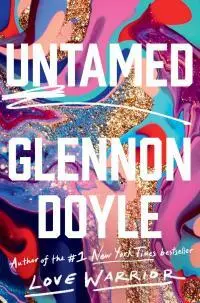
- Название:Untamed
- Автор:
- Издательство:Random House Publishing Group
- Жанр:
- Год:2020
- ISBN:нет данных
- Рейтинг книги:4 / 5. Голосов: 2
-
Избранное:Добавить в избранное
- Отзывы:
-
Ваша оценка:
Untamed: краткое содержание, описание и аннотация
Предлагаем к чтению аннотацию, описание, краткое содержание или предисловие (зависит от того, что написал сам автор книги «Untamed»). Если вы не нашли необходимую информацию о книге — напишите в комментариях, мы постараемся отыскать её.
" *Untamed* will liberate women --emotionally, spiritually, and physically. **It is phenomenal.** "--Elizabeth Gilbert, author of *City of Girls* and *Eat Pray Love***
*This is how you find yourself.
*
There is a voice of longing inside each woman. We strive so mightily to be good: good partners, daughters, mothers, employees, and friends. We hope all this striving will make us feel alive. Instead, it leaves us feeling weary, stuck, overwhelmed, and underwhelmed. We look at our lives and wonder: *Wasn't it all supposed to be more beautiful than this?* We quickly silence that question, telling ourselves to be grateful, hiding...
Untamed — читать онлайн бесплатно полную книгу (весь текст) целиком
Ниже представлен текст книги, разбитый по страницам. Система сохранения места последней прочитанной страницы, позволяет с удобством читать онлайн бесплатно книгу «Untamed», без необходимости каждый раз заново искать на чём Вы остановились. Поставьте закладку, и сможете в любой момент перейти на страницу, на которой закончили чтение.
Интервал:
Закладка:
A week later, I was reading Martin Luther King, Jr.’s, famous essay “Letter from Birmingham Jail,” and I came across this:
I must confess that over the last few years I have been gravely disappointed with the white moderate. I have almost reached the regrettable conclusion that the Negro’s great stumbling block in his stride toward freedom is not the White Citizen’s Counciler or the Ku Klux Klanner, but the white moderate, who is more devoted to “order” than to justice; who prefers a negative peace which is the absence of tension to a positive peace which is the presence of justice; who constantly says: “I agree with you in the goal you seek, but I cannot agree with your methods of direct action.”
This was the first time I had encountered language that defined the kind of person I was in the world. I was a white person who imagined herself to be on the side of civil rights, because I was a good person who strongly believed in equality as the right idea. But the white woman Amma had pointed to in that photograph wasn’t staying home and believing. She was showing up. When I looked at her face, she didn’t look nice at all. She looked radical. Angry. Brave. Afraid. Tired. Passionate. Resolute. Regal. And a little bit scary.
I imagined myself to be the kind of white person who would have stood with Dr. King because I respect him now. Close to 90 percent of white Americans approve of Dr. King today. Yet while he was alive and demanding change, only about 30 percent approved of him—the same rate of white Americans who approve of Colin Kaepernick today.
So, if I want to know how I’d have felt about Dr. King back then, I can’t ask myself how I feel about him now; instead I have to ask myself: How do I feel about Kaepernick now? If I want to know how I’d have felt about the Freedom Riders back then, I can’t ask myself how I feel about them now; instead, I have to ask myself: How do I feel about Black Lives Matter now?
If I want to know how I’d have shown up in the last civil rights era, I have to ask myself: How am I showing up today, in this civil rights era?
I decided to read every book I could get my hands on about race in America. I filled my social media feeds with writers and activists of color. It became very clear very quickly how strongly my social media feeds shaped my worldview. With a feed filled with white voices, faces that looked like my own, and articles that reflected experiences like mine, it was easy to believe that, for the most part, things were fine. Once I committed myself to beginning each day by reading the perspectives of black and brown people, I learned that everything was, and always has been, quite far from fine. I learned about rampant police brutality, the preschool-to-prison pipeline, the subhuman conditions of immigrant detainment centers, the pillaging of native lands. I began to widen. I was unlearning the whitewashed version of American history I’d been indoctrinated into believing. I was discovering that I was not who I imagined myself to be. I was learning that my country was not what I had been taught it was.
This experience of learning and unlearning reminded me of getting sober from addiction. When I started to really listen and think more deeply about the experiences of people of color and other marginalized people in our country, I felt like I did when I first quit drinking: increasingly uncomfortable as the truth agitated my comfortable numbness. I felt ashamed as I began to learn all the ways my ignorance and silence had hurt other people. I felt exhausted because there was so much more to unlearn, so many amends to be made, and so much work to do. Just like in my early days of sobriety from booze, in my early days of waking up to white supremacy, I felt shaky, jumpy, and agitated as I slowly surrendered the privilege of not knowing. It was a painful unbecoming.
Eventually it became time to speak up. I started sharing the voices I was reading, and speaking out against the racism of America’s past and the bigotry and strategic divisiveness of the current administration. Every time I did this, people got pissed off. I felt okay about this because I seemed to be pissing off the right people.
Much later, I was asked to participate in an activist group led by women of color. One of the black leaders tasked another white woman and me with the job of planning an online webinar for other white women with the intention of calling them into the work of racial justice. Our mission was twofold: Begin educating other white women and solicit donations to fund bail and respite for black activists putting themselves on the line day after day.
The other white woman and I accepted the job. On our planning calls for the webinar, we decided that she would focus on the history of complicity of white women and I would focus on my personal experience as a white woman waking up to her place inside of white supremacy. I thought that if I explained to white women that the confusion, shame, and fear they would experience in their early days of racial sobriety were predictable parts of the process of unbecoming, they would be more likely to remain in the anti-racism effort. Also, they’d be better equipped to confront their racism privately, instead of mistakenly believing that their feelings should be shared publicly. This felt important, because black leaders were telling me that the ignorance and emotionality of well-intentioned white women was a major stumbling block toward justice.
I knew what they meant. I’d seen it happen again and again. If white women don’t learn that our experiences in early racial sobriety are predictable, we think our reactions are unique. So we enter race conversations far too early and we lead with our feelings and confusion and opinions. When we do this, we are centering ourselves, so we inevitably get put back where we belong, which is far from the center. This makes us even more agitated. We are used to people showing gratitude for our presence, so being unappreciated hurts our feelings. We double down. We say things like “At least I’m trying. No one is even grateful. All I do is get attacked.” People become upset, because saying “I am being attacked” doesn’t accurately describe what is happening. People are just telling us the truth for the first time. That truth feels like an attack because we have been protected by comfortable lies for so long.
We are dumbfounded. We feel like we are always saying the wrong things and that people are always getting upset about that. But I do not think people become upset just because we say the wrong things. I think people are upset—and we are defensive, hurt, and frustrated—because we have fallen into the trap of believing that becoming racially sober is about saying the right thing instead of becoming the right thing; that showing up is based in performing instead of transforming . The way we show up reveals that we haven’t yet done the studying and listening required to become the right thing before trying to say the right thing.
We are mugs filled to the brim, and we keep getting bumped. If we are filled with coffee, coffee will spill out. If we are filled with tea, tea will spill out. Getting bumped is inevitable. If we want to change what spills out of us, we have to work to change what’s inside of us.
“How do I enter the race conversation?” is the wrong question in the early days of racial sobriety. We are not talking about a conversation to enter publicly as much as a conversion to surrender to privately. Whether we are in it to perform or to transform becomes evident by the way we take up space. When a white woman who is unbecoming does show up publicly, she does so with humble respect, which is a way of being that is quiet, steady, and yielding. Not with hand-wringing shame, because self-flagellation is just another way to demand attention. She has feelings, but she interrogates them within instead of imposing them on others, because there is a deep understanding that how she feels is irrelevant when people are dying.
Читать дальшеИнтервал:
Закладка:
Похожие книги на «Untamed»
Представляем Вашему вниманию похожие книги на «Untamed» списком для выбора. Мы отобрали схожую по названию и смыслу литературу в надежде предоставить читателям больше вариантов отыскать новые, интересные, ещё непрочитанные произведения.









Обсуждение, отзывы о книге «Untamed» и просто собственные мнения читателей. Оставьте ваши комментарии, напишите, что Вы думаете о произведении, его смысле или главных героях. Укажите что конкретно понравилось, а что нет, и почему Вы так считаете.