Glennon Doyle - Untamed
Здесь есть возможность читать онлайн «Glennon Doyle - Untamed» весь текст электронной книги совершенно бесплатно (целиком полную версию без сокращений). В некоторых случаях можно слушать аудио, скачать через торрент в формате fb2 и присутствует краткое содержание. Год выпуска: 2020, Издательство: Random House Publishing Group, Жанр: Публицистика, на английском языке. Описание произведения, (предисловие) а так же отзывы посетителей доступны на портале библиотеки ЛибКат.
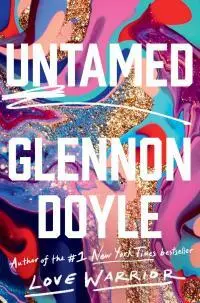
- Название:Untamed
- Автор:
- Издательство:Random House Publishing Group
- Жанр:
- Год:2020
- ISBN:нет данных
- Рейтинг книги:4 / 5. Голосов: 2
-
Избранное:Добавить в избранное
- Отзывы:
-
Ваша оценка:
Untamed: краткое содержание, описание и аннотация
Предлагаем к чтению аннотацию, описание, краткое содержание или предисловие (зависит от того, что написал сам автор книги «Untamed»). Если вы не нашли необходимую информацию о книге — напишите в комментариях, мы постараемся отыскать её.
" *Untamed* will liberate women --emotionally, spiritually, and physically. **It is phenomenal.** "--Elizabeth Gilbert, author of *City of Girls* and *Eat Pray Love***
*This is how you find yourself.
*
There is a voice of longing inside each woman. We strive so mightily to be good: good partners, daughters, mothers, employees, and friends. We hope all this striving will make us feel alive. Instead, it leaves us feeling weary, stuck, overwhelmed, and underwhelmed. We look at our lives and wonder: *Wasn't it all supposed to be more beautiful than this?* We quickly silence that question, telling ourselves to be grateful, hiding...
Untamed — читать онлайн бесплатно полную книгу (весь текст) целиком
Ниже представлен текст книги, разбитый по страницам. Система сохранения места последней прочитанной страницы, позволяет с удобством читать онлайн бесплатно книгу «Untamed», без необходимости каждый раз заново искать на чём Вы остановились. Поставьте закладку, и сможете в любой момент перейти на страницу, на которой закончили чтение.
Интервал:
Закладка:
I planned to share all of this on the webinar. My hope was that it might prepare participants for the early stages of racial sobriety and that this preparation might serve the larger social justice efforts of our activist group. We sent the plans for our webinar out to the leaders of our group for feedback and approval. We made their suggested adjustments, then posted online about the seminar. Thousands registered. I went to bed.
The next morning, I woke up to a text from a friend that said: “G, Just checking on you. I’m watching what’s going down online. Let me know that you’re okay.”
My heart sank as I opened up Instagram. There were hundreds—eventually thousands—of comments, many of them from people calling me a racist.
What I didn’t know back then is that there are several valid and contradictory schools of thought about how white women should show up in the racial justice movement. One view: White women—when accountable to and led by women of color—should use our voices and platforms to call other white women into anti-racism work. Another view: White women should only use their voices to point to people of color already doing the work. Those who subscribed to the latter philosophy were furious with me about this webinar.
Why would you try to teach instead of pointing toward women of color who are already doing this work? Why would you take up space in this movement when so many women of color have been doing this work forever? You offering a free course is taking money out of black educators’ pockets. Offering a “safe space” for white women to talk about race is wrong—white women don’t need to be safe; they need to be educated. You are canceled. You are a racist. You are a racist, Glennon. You are nothing but a racist. Everywhere, the word racist .
I was stunned.
I am not new to criticism. I am a woman who announced her engagement to a woman during a countrywide Christian speaking tour. I have been publicly ridiculed by and excommunicated from entire religious denominations. I’m used to the “other side” hating me; I wear that kind of backlash as a badge of honor. But friendly fire was new and excruciating. I felt idiotic and remorseful. I also felt terribly jealous of every single person who had decided to sit this one out. I thought of the quote “It is better to be quiet and thought a fool than to open your mouth and prove it.” I felt defensive, hurt, frustrated, and afraid. I could not think of a single thing I was more terrified of being called than a racist. This was rock bottom.
Luckily, I am a woman who has learned repeatedly that while rock bottom feels like the end—it’s always the beginning of something. I knew that this was the moment I’d either relapse with a couple shots of self-pity and resignation, or I’d double down on my racial sobriety and carry on. I told myself: Breathe. Don’t panic and flee. Sink. Feel it all. Be Still. Imagine. Let it burn.
Eventually, I started remembering.
Each night when I was growing up, my family would sit down on our basement couch and watch the evening news together. It was the time of the War on Drugs. I lived in the suburbs, but in the cities things were clearly terrible. The news insisted that crack was everywhere, and so were so-called crack babies and welfare queens. Night after night we watched young black bodies thrown to the ground, rounded up en masse, pushed into cop cars. After the nightly news, the show Cops aired. Along with millions of other American families, my family would sit and watch Cops together. Every night, I’d see mostly white cops arresting mostly poor black men. For entertainment. We would eat popcorn while we watched.
Thirty years later, after the Charleston massacre, my parents’ rural Virginia town buzzed about how to respond to the racial issues agitating Americans’ consciousness. A local church invited the community to come together and address it. My parents decided to attend.
They sat in a large room with about a hundred other white folks. A woman stood up to bring the meeting to order. She announced that she and a few other women had decided to respond by sending care packages to the predominantly black school across town. She suggested that they break up into groups and choose items to collect. The room exhaled in relief: Yes! Outward action! Performance instead of transformation! Our insides are safe!
My father was confused and frustrated. He raised his hand. The woman called on him.
My dad stood and said, “I’m not here to make packages. I’m here to talk. I was raised in a racist southern town. I was taught a lot of things about black people that I’ve been carrying in my mind and my heart for decades. I’m starting to understand that not only are these lies, but they’re deadly lies. I don’t want to pass this poison down to my grandkids’ generation. I want this stuff out of me, but I don’t know how to get it out. I think I’m saying that I’ve got racism in me, and I want to unlearn it.”
My father is a man who spent his entire career in schools championing kids who didn’t look like me. He is a man who taught us every single day that racism is evil. But now my father understood that a person can be good and still be sick. He understood that there is such a thing in America as a highly functioning racist. He’d become humble enough to learn that we can be good, kind, justice-loving people in our hearts and minds—but if we live in America, we’re poisoned by the racist air we breathe. He had dared to imagine that he played a role in our sick American family. He was ready to let burn his cherished identity of “good white person.” He was ready to stay in the room and turn himself inside out.
I am a feminist, but I was raised in a sexist culture. I was raised in a world that tried to convince me through media, religious organizations, history books, and the beauty industry that female bodies are worth less than male bodies and that certain types of female bodies (thin, tall, young) are worth more than other types of female bodies.
The images of women’s bodies for sale, the onslaught of emaciated women’s bodies held up as the pinnacle of female achievement, and the pervasive message that women exist to please men is the air I breathed. I lived in a mine, and the toxin was misogyny. I got sick from it. Not because I’m a bad, sexist person, but because I was breathing misogynistic air.
I became bulimic, and it’s taken me a lifetime to recover. Self-hatred is harder to unlearn than it is to learn. It is difficult for a woman to be healthy in a culture that is still so very sick. It is the ultimate victory for a woman to find a way to love herself and other women while existing in a world insisting that she has no right to. So I’m working hard at health and wholeness every day. I’m an advocate for women’s equality because, at my roots, I know the truth. I know what my body is for. It’s not for men’s use. It’s not for selling things. It’s for loving and learning and resting and for fighting for justice. I know that every body on this earth has equal, unsurpassable worth.
And yet.
I still have the poison in me. I still have all the biases that were instilled in me for decades. I still struggle to love my body every single day. Fifty percent of all my daily thoughts are about my body. I still step on the scale to check my self-worth. Subconsciously, I would likely still judge a thinner, younger woman to be worth more than a heavy older woman. I know that often my knee-jerk reaction is not my wild, it’s my taming. So I can correct that misguided first judgment, but it takes me a deliberate effort. We become the air we breathe.
When I was thirty-five, I noticed that the wrinkles on my forehead were deepening and I found myself driving to a doctor’s office and paying hundreds of dollars to have Botox poison painfully injected into my forehead to make my face worth as much as the younger, smoother faces on TV. I quite literally knew better. But my subconscious did not know better. My subconscious had not yet caught up with my mind and my heart, because it was (is still) poisoned. It took a conscious decision to stop poisoning myself. To stop paying to have misogyny injected beneath my skin. I am a fierce, forever feminist. But I still have sexism and misogyny running through my veins. You can be one thing, and your subconscious can be another thing.
Читать дальшеИнтервал:
Закладка:
Похожие книги на «Untamed»
Представляем Вашему вниманию похожие книги на «Untamed» списком для выбора. Мы отобрали схожую по названию и смыслу литературу в надежде предоставить читателям больше вариантов отыскать новые, интересные, ещё непрочитанные произведения.










Обсуждение, отзывы о книге «Untamed» и просто собственные мнения читателей. Оставьте ваши комментарии, напишите, что Вы думаете о произведении, его смысле или главных героях. Укажите что конкретно понравилось, а что нет, и почему Вы так считаете.