Glennon Doyle - Untamed
Здесь есть возможность читать онлайн «Glennon Doyle - Untamed» весь текст электронной книги совершенно бесплатно (целиком полную версию без сокращений). В некоторых случаях можно слушать аудио, скачать через торрент в формате fb2 и присутствует краткое содержание. Год выпуска: 2020, Издательство: Random House Publishing Group, Жанр: Публицистика, на английском языке. Описание произведения, (предисловие) а так же отзывы посетителей доступны на портале библиотеки ЛибКат.
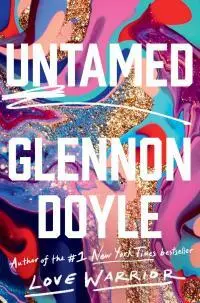
- Название:Untamed
- Автор:
- Издательство:Random House Publishing Group
- Жанр:
- Год:2020
- ISBN:нет данных
- Рейтинг книги:4 / 5. Голосов: 2
-
Избранное:Добавить в избранное
- Отзывы:
-
Ваша оценка:
Untamed: краткое содержание, описание и аннотация
Предлагаем к чтению аннотацию, описание, краткое содержание или предисловие (зависит от того, что написал сам автор книги «Untamed»). Если вы не нашли необходимую информацию о книге — напишите в комментариях, мы постараемся отыскать её.
" *Untamed* will liberate women --emotionally, spiritually, and physically. **It is phenomenal.** "--Elizabeth Gilbert, author of *City of Girls* and *Eat Pray Love***
*This is how you find yourself.
*
There is a voice of longing inside each woman. We strive so mightily to be good: good partners, daughters, mothers, employees, and friends. We hope all this striving will make us feel alive. Instead, it leaves us feeling weary, stuck, overwhelmed, and underwhelmed. We look at our lives and wonder: *Wasn't it all supposed to be more beautiful than this?* We quickly silence that question, telling ourselves to be grateful, hiding...
Untamed — читать онлайн бесплатно полную книгу (весь текст) целиком
Ниже представлен текст книги, разбитый по страницам. Система сохранения места последней прочитанной страницы, позволяет с удобством читать онлайн бесплатно книгу «Untamed», без необходимости каждый раз заново искать на чём Вы остановились. Поставьте закладку, и сможете в любой момент перейти на страницу, на которой закончили чтение.
Интервал:
Закладка:
I said, “Thank you for asking a question most are too afraid to admit they have. Unasked questions become prejudices. Your niece and granddaughter are lucky to have you. Will you tell me your name?”
“Joanne.”
“Okay. I do know why everybody’s so gay all of a sudden. It’s those damn GMOs, Joanne.”
A wave of relieved laughter washed over the entire church. Some ladies laughed so hard that tears rolled down their faces as we all had ourselves one giant, collective, organic baptism. When the laughter died down, I suggested that we all take a deep breath. It felt so good to laugh and then breathe together. Everything doesn’t have to be terrifying, after all. This is just life, and we are just people trying to figure each other out. Trying to figure ourselves out. After our breath, I said something like this:
There are wild, mysterious forces inside and between human beings that we have never been able to understand. Forces like faith. Like love. Like sexuality. We are uncomfortable with our inability to comprehend or control these mysteries.
So we took wild faith—the mysterious undefinable ever-shifting flow between humans and the divine—and we packaged it into religions.
We took wild sexuality—the mysterious undefinable ever-shifting flow between human beings—and we packaged it into sexual identities.
It’s like water in a glass.
Faith is water. Religion is a glass.
Sexuality is water. Sexual identity is a glass.
We created these glasses to try to contain uncontainable forces.
Then we said to people: Pick a glass—straight or gay.
( By the way, choosing the gay glass will likely leave you unprotected by the law, ostracized by your community, and banished by God. Choose wisely. )
So folks poured their wide, juicy selves into those narrow, arbitrary glasses because that was what was expected. Many lived lives of quiet desperation, slowly suffocating as they held their breath to fit inside.
Somewhere, sometime, someone—for whatever courageous, miraculous reason—finally acknowledged her dragon. She decided to trust what she felt, to know what she knew, and to dare to imagine an unseen order where she might be free. She refused to contain herself any longer. She decided to speak her insides on the outside and just Let It Burn. She raised her hand and said, “Those labels don’t feel true to me. I don’t want to squeeze myself inside either of those glasses. For me, that’s not exactly it. I am not sure what it is, yet—but it’s not that.”
Someone else heard the first brave one speak and felt electric hope flowing through his veins. He thought: Wait. What if I am not alone? What if I am not broken at all? What if the glasses system is broken? He felt his hand rise and voice rise with a “Me too!” Then another person’s hand slowly rose and then another and another until there was a sea of hands, some shaking, some in fists—a chain reaction of truth, hope, freedom.
I don’t think that gayness is contagious. But I am certain that freedom is.
In the name of freedom, we added more glasses. We said, “Okay, I hear you. Those other glasses don’t fit. So, here’s a bisexual glass for you! And for you, how about a pansexual glass?” We kept adding labeled glasses for every letter of the LGBTQ until it felt like we’d eventually use up the whole alphabet. This was better. But not exactly right: Because some glasses still came with fewer rights and greater burdens. And some people, like me, still couldn’t find a glass that fit.
My hunch is that folks have always been fifty shades of gay. I wonder if instead of adding more glasses, we should stop trying to contain people within them. Perhaps, eventually, we’ll rid ourselves of the glass system altogether. Faith, sexuality, and gender are fluid. No glasses—all sea.
But letting old structures burn can feel uncomfortable and disorienting. Rumbling freedom is scary because at first it feels like chaos. Pronouns and bathrooms and girls taking girls to prom, oh my! But “progress” is just perpetually undoing our no-longer-true-enough systems in order to create new ones that more closely fit people as they really are. People aren’t changing, after all. It’s just that for the first time, there’s enough freedom for people to stop changing who they are. Progress is the acknowledgment of what is and what has always been. Progress is always a returning.
Maybe we can stop trying so hard to understand the gorgeous mystery of sexuality. Instead, we can just listen to ourselves and each other with curiosity and love, and without fear. We can just let people be who they are and we can believe that the freer each person is, the better we all are. Maybe our understanding of sexuality can become as fluid as sexuality itself. We can remember that no matter how inconvenient it is for us to allow people to emerge from their glasses and flow, it’s worth it. Our willingness to be confused, open, and kind will save lives.
Maybe courage is not just refusing to be afraid of ourselves but refusing to be afraid of others, too. Maybe we can stop trying to find common ground and let everybody be the sea. They already are, anyway. Let it be.
A fundamentalist Christian organization recently announced that I was excommunicated from “the evangelical church.” I learned of this with great amusement. I felt like Kramer from Seinfeld when his boss tries to fire him from a job he never really had. “You can’t fire me,” Kramer says, baffled and defiant. “I don’t even really work here.”
I was talking to a friend about this and she said, “It’s so awful. Why can’t they understand that you were born this way ? You can’t help it! How cruel to punish you for something you can’t even change.”
Hmmmmm, I thought. That’s not exactly it.
Sometimes we say things that we believe are loving but actually reveal our conditioning.
Things you can’t help are things you would help if you could.
If I could change my sexuality, I sure as hell wouldn’t. Sweet Jesus: I love sharing my life with a woman. I love how relentlessly we yearn to understand each other and how neither of us quits until we do. I love how we already do understand each other so well, because we are two women trying to free ourselves from the same cages. I love how our life together is one eternal conversation that we put on pause only to sleep.
I love having sex with my wife. I love the touches that are suggestions, and I love the moment we lock eyes and decide. I love how well we understand each other’s bodies, and I love the liquid velvet of her skin. I love the softness, intensity, patience, and generosity of the during, and I love the after—the time outside of time—when we lie in each other’s arms in silence and smile at the ceiling in relief and gratitude. I love how one of us inevitably giggles and says: Is this really our life?
I have been in a mixed-gender marriage and in a same-gender marriage. The same-gender marriage feels so much more natural to me, because there is no constant effort to bridge the gap between two genders that have been trained by our culture to love and live so differently. My wife and I are on the same side of the bridge already. Being married to Abby is arriving home after a long, cold, exhausting journey. She is the crackling fireplace, the shag rug, the couch I sink into, the blanket wrapped around me, and the jazz playing in the background that makes me shiver inside my blanket.
What I want to say is: What if I wasn’t born this way at all? What if I married Abby not just because I’m gay but because I’m smart ? What if I did choose my sexuality and my marriage and they are simply the truest, wisest, most beautiful, most faithful, most divine decisions I’ve ever made in my entire life? What if I have come to see same-gender love as a really solid choice—just a brilliant idea? Something I would highly recommend ?
Читать дальшеИнтервал:
Закладка:
Похожие книги на «Untamed»
Представляем Вашему вниманию похожие книги на «Untamed» списком для выбора. Мы отобрали схожую по названию и смыслу литературу в надежде предоставить читателям больше вариантов отыскать новые, интересные, ещё непрочитанные произведения.










Обсуждение, отзывы о книге «Untamed» и просто собственные мнения читателей. Оставьте ваши комментарии, напишите, что Вы думаете о произведении, его смысле или главных героях. Укажите что конкретно понравилось, а что нет, и почему Вы так считаете.