Steve LeVine - Putin's Labyrinth
Здесь есть возможность читать онлайн «Steve LeVine - Putin's Labyrinth» весь текст электронной книги совершенно бесплатно (целиком полную версию без сокращений). В некоторых случаях можно слушать аудио, скачать через торрент в формате fb2 и присутствует краткое содержание. Город: New York, Год выпуска: 2008, ISBN: 2008, Издательство: Random House, Жанр: Публицистика, на английском языке. Описание произведения, (предисловие) а так же отзывы посетителей доступны на портале библиотеки ЛибКат.
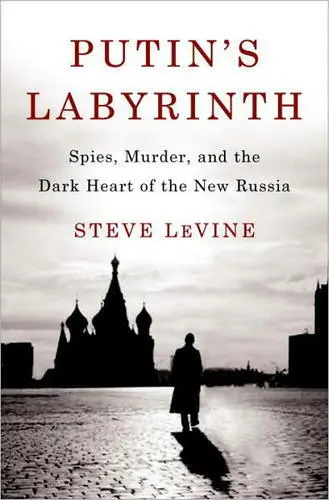
- Название:Putin's Labyrinth
- Автор:
- Издательство:Random House
- Жанр:
- Год:2008
- Город:New York
- ISBN:978-1-58836-815-7
- Рейтинг книги:3 / 5. Голосов: 1
-
Избранное:Добавить в избранное
- Отзывы:
-
Ваша оценка:
Putin's Labyrinth: краткое содержание, описание и аннотация
Предлагаем к чтению аннотацию, описание, краткое содержание или предисловие (зависит от того, что написал сам автор книги «Putin's Labyrinth»). Если вы не нашли необходимую информацию о книге — напишите в комментариях, мы постараемся отыскать её.
Drawing on new interviews with eyewitnesses and the families of victims, LeVine documents the bloodshed that has stained Putin’s two terms as president. Among the incidents chronicled in these pages: The 2002 terrorist takeover of a crowded Moscow theater—which led to the government gassing the building, and the deaths of more than a hundred terrified hostages–seen here from new angles, through the riveting words of those who survived; and the murder of courageous investigative reporter Anna Politkovskaya, shot in the elevator of her apartment building on Putin’s birthday, purportedly as a malicious “gift” for the president from supporters. Finally, a shocking story that made international headlines–the 2006 death of defector Alexander Litvinenko in London—is dramatized as never before. LeVine traces the steps of this KGB-spy-turned-dissident on his way to being poisoned with polonium-210, a radioactive isotope. And in doing so, LeVine is granted a rare series of interviews with a KGB defector who was nearly killed in strangely similar circumstances fifty years earlier. Through LeVine’s exhaustive research, we come to know the victims as real people, not just names in brief news accounts of how they died.
Putin’s Labyrinth
Putin's Labyrinth — читать онлайн бесплатно полную книгу (весь текст) целиком
Ниже представлен текст книги, разбитый по страницам. Система сохранения места последней прочитанной страницы, позволяет с удобством читать онлайн бесплатно книгу «Putin's Labyrinth», без необходимости каждый раз заново искать на чём Вы остановились. Поставьте закладку, и сможете в любой момент перейти на страницу, на которой закончили чтение.
Интервал:
Закладка:
“I have a message from Anna Politkovskaya,” Ilya said when he reached the stage.
“How do you know her?” the suspicious Barayev inquired.
Ilya recounted his long-standing friendship with the journalist’s family.
Barayev asked for the phone number of Anna’s daughter, then sent Ilya back to his seat.
At three a.m. in Moscow, the daughter was awakened by the ringing phone.
“This is Barayev. From Nord-Ost. ”
Anna had his permission to enter the theater.
For Ilya, conditions improved at once. He was allowed to roam the theater aisles, no longer forced like the rest to stay seated. He took it to mean that Anna enjoyed “undisputed authority” among the Chechens.
Ilya noticed a curious thing during his wanderings. At night, when the hostages were mostly asleep, the black widows were much less menacing. They appeared rather relaxed, unlike during daytime, when they were ultra-serious and seemingly ready to set off their belt bombs at any moment.
And there was something puzzling about the belts themselves. Ilya saw one woman reflexively pushing her thumb detonator without causing her belt to explode. Screws dropped regularly to the floor from other belts. Such observations made Ilya and some fellow musicians wonder if the belts were fake.
Anna Politkovskaya arrived in Moscow the second day of the hostage-taking. She went directly to the theater, on Melnikov Street, in the Dubrovka district. She was used to danger, having reported stories in the most remote and treacherous parts of Chechnya. But walking into a hostage situation with terrorists ready to explode bombs was quite another matter. She was admittedly frightened.
The theater was not what one might call cavernous; it was more like a large cinema house, with two decks of red-covered seats set on a slight incline down to a moderate-size stage. Anna entered the lobby area, accompanied by an elderly doctor who had volunteered to check on the condition of the hostages. There was no one in sight. “Hello, is anyone here?” she called out. “This is Politkovskaya.” There was no reply. Again she called out.
At last they heard a voice. “Are you the one who was at Khotuny?” A masked man made himself visible. He was referring to a Chechen mountain village that Anna had visited some twenty months earlier to investigate the reported presence of a brutal Russian prison camp. Yes, I was there, Anna told him.
That made her welcome, but not the elderly doctor, who was ushered out after being accused of various misdeeds. Anna went on alone until she came face-to-face with a man calling himself Abu Bakar. He was nominally Barayev’s deputy. But it was clear from his authoritative manner that the relatively inexperienced Barayev relied on him heavily for most of the crucial decisions.
Here was an opportunity to try for a negotiated settlement. Anna spoke first. She assured him she wanted to hear everything the Chechens had to say, but first the children in the audience must be released. She was instantly rebuffed. Russian soldiers made a practice of arresting Chechen males as young as twelve, Abu Bakar replied, so why should we show mercy?
At least allow the hostages to have something to drink and eat. Abu Bakar gave a little ground. He would permit juice and water to be brought into the theater, but no food. The hostages could eat the same as the beleaguered Chechen people, meaning little or nothing.
Anna could understand Abu Bakar’s bitterness. She felt that Putin had victimized not only the Chechens, but also Russian civilians, by inuring them to a vicious war, and his own military, too, by turning professional soldiers into callous killers.
What were the Chechen demands? Anna wanted to know.
There were two, Abu Bakar replied. Putin had to declare the war over. And, as a confidence-building measure, he had to actually withdraw troops from one part of Chechnya. Once those demands were fulfilled, the hostages could go home.
And what about Abu Bakar’s masked comrades and the black widows?
“We will stay here, take the fight, and die,” he said.
Anna knew there was no chance that Putin would agree. Perhaps there was some other way out. But for now, the hostages needed attention.
She returned to the street and went looking for drinks. But the Russian commandos surrounding the theater had come ill prepared to satisfy such a request—there were no food supplies of any kind for the hostages. So Anna solicited cash donations from fellow journalists and some firemen—enough to buy water, juice, and candy at a nearby kiosk. The candy was not explicitly permitted, but Anna figured that it was worth the risk. In several relays, the drinks and the sweets were carried inside.
Anna felt better after having brought some relief to the hostages. But she was newly distressed by a message whispered to her furtively by one of Ilya’s orchestra mates. Word was circulating that the Chechens intended to begin shooting captives soon.
Anna telephoned a trusted friend, Dima Muratov, her editor at Novaya Gazeta. He told her to stand by while he called someone. Novaya Gazeta— “The New Newspaper”—was the only national opposition paper that had survived Putin’s purge of rival voices in the media. It did not have a lot of friends in the Kremlin, but Muratov did possess the phone number of one important person—a suave survivor from the Yeltsin era named Alexander Voloshin, who was Putin’s chief of staff. Perhaps Voloshin could make a difference. The editor put in the call.
“Can Anna leave the theater area? Is she free to leave?” the Putin aide asked. Muratov didn’t know. He had to call his reporter back.
“Yes, I can go,” Anna told him.
“Tell her to leave,” Putin’s man said when the editor called back. The meaning of his words was ominously clear. The Russian security forces had their own timetable—they were about to storm the theater. If Anna were there, she risked being swept up in the violence. The trouble was, if her editor told her the truth, she was sure to refuse to leave. She was just that way.
Muratov called Anna. “I need you to come back to the newsroom—now,” he said. “I need you to write your story.”
Apparently not suspecting her editor’s subterfuge, Anna returned to the office and wrote up the events of the previous hours.
The clock ticked past midnight, and Irina’s fifteen-year-old son began saying his good-byes to those sitting around him. “I will not survive,” he said.
A few rows away, Elena’s son, a third-year chemistry student at Moscow State University, wondered aloud why authorities didn’t pump in a gas that would simply put everyone to sleep. “Such gases exist,” he said. But his stepfather, the retired colonel in military intelligence, said it wouldn’t work.
“If they spray gas, it is not physically possible for everyone to be put to sleep,” the older man said. So “they will just start shooting.”
Elena thought that if anyone was about to die, it would be her. She turned to her new husband. He had to promise that if anything happened to her, he would not abandon her son. “You’ll help him,” she said. She was thinking of her former husband, who had walked out two years earlier to live with another woman. The colonel looked at her with tense eyes but spoke in a calm voice. “Don’t doubt about this,” he said. “I would never abandon him.” A reassured Elena relaxed. She was certain he would not.
Suddenly, there was hope. “You can rest. Someone is coming from the government,” the Chechens’ leader, Barayev, called out. General Viktor Kazantsev, Putin’s special envoy for Chechnya, had called to say he was flying in to Moscow and would come to the theater for face-to-face talks. The standoff, now in its third day, might actually be near an end.
Читать дальшеИнтервал:
Закладка:
Похожие книги на «Putin's Labyrinth»
Представляем Вашему вниманию похожие книги на «Putin's Labyrinth» списком для выбора. Мы отобрали схожую по названию и смыслу литературу в надежде предоставить читателям больше вариантов отыскать новые, интересные, ещё непрочитанные произведения.







Обсуждение, отзывы о книге «Putin's Labyrinth» и просто собственные мнения читателей. Оставьте ваши комментарии, напишите, что Вы думаете о произведении, его смысле или главных героях. Укажите что конкретно понравилось, а что нет, и почему Вы так считаете.