Steve LeVine - Putin's Labyrinth
Здесь есть возможность читать онлайн «Steve LeVine - Putin's Labyrinth» весь текст электронной книги совершенно бесплатно (целиком полную версию без сокращений). В некоторых случаях можно слушать аудио, скачать через торрент в формате fb2 и присутствует краткое содержание. Город: New York, Год выпуска: 2008, ISBN: 2008, Издательство: Random House, Жанр: Публицистика, на английском языке. Описание произведения, (предисловие) а так же отзывы посетителей доступны на портале библиотеки ЛибКат.
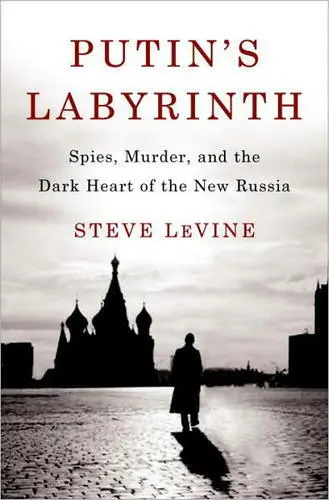
- Название:Putin's Labyrinth
- Автор:
- Издательство:Random House
- Жанр:
- Год:2008
- Город:New York
- ISBN:978-1-58836-815-7
- Рейтинг книги:3 / 5. Голосов: 1
-
Избранное:Добавить в избранное
- Отзывы:
-
Ваша оценка:
Putin's Labyrinth: краткое содержание, описание и аннотация
Предлагаем к чтению аннотацию, описание, краткое содержание или предисловие (зависит от того, что написал сам автор книги «Putin's Labyrinth»). Если вы не нашли необходимую информацию о книге — напишите в комментариях, мы постараемся отыскать её.
Drawing on new interviews with eyewitnesses and the families of victims, LeVine documents the bloodshed that has stained Putin’s two terms as president. Among the incidents chronicled in these pages: The 2002 terrorist takeover of a crowded Moscow theater—which led to the government gassing the building, and the deaths of more than a hundred terrified hostages–seen here from new angles, through the riveting words of those who survived; and the murder of courageous investigative reporter Anna Politkovskaya, shot in the elevator of her apartment building on Putin’s birthday, purportedly as a malicious “gift” for the president from supporters. Finally, a shocking story that made international headlines–the 2006 death of defector Alexander Litvinenko in London—is dramatized as never before. LeVine traces the steps of this KGB-spy-turned-dissident on his way to being poisoned with polonium-210, a radioactive isotope. And in doing so, LeVine is granted a rare series of interviews with a KGB defector who was nearly killed in strangely similar circumstances fifty years earlier. Through LeVine’s exhaustive research, we come to know the victims as real people, not just names in brief news accounts of how they died.
Putin’s Labyrinth
Putin's Labyrinth — читать онлайн бесплатно полную книгу (весь текст) целиком
Ниже представлен текст книги, разбитый по страницам. Система сохранения места последней прочитанной страницы, позволяет с удобством читать онлайн бесплатно книгу «Putin's Labyrinth», без необходимости каждый раз заново искать на чём Вы остановились. Поставьте закладку, и сможете в любой момент перейти на страницу, на которой закончили чтение.
Интервал:
Закладка:
A week passed without word from the Soviet capital. Then Mr. X called. “Nobody went to your family in Moscow,” he said. “…I don’t know why. It looks like at the last moment they got cold feet.” All Nikolai could think was that he had lost Yana and Alik.
Five decades later, in all of our conversations Nikolai never deviated from the above narrative. But I wondered, was it entirely credible?
Two retired CIA agents who were posted in Germany when Nikolai defected did their best to convince me that his story was fiction or at least greatly exaggerated.
Thomas Polgar, then intelligence adviser to the CIA station chief there, said that a CIA agent would have been willing to “say anything” to exploit the opportunity that Nikolai presented. But he said that he had never met Nikolai and knew of no ironclad promise that his wife and child would be rescued.
David E. Murphy, a principal agent on Soviet affairs at the time, was present during the interrogation of Nikolai. While the Russian might have thought he had a deal, “he was never told this would happen,” Murphy said. “The State Department had no interest at all in such a risky activity in Moscow. How would you have done it? I don’t think it would have worked.”
Nikolai, Murphy suggested, was clinging to what he had wanted to believe would happen. Moreover, the Russian’s version of events was convenient, considering that he had left his family behind in Moscow. “He has to justify having decided to defect. That’s why he insists on this portrayal,” Murphy said.
When I told Nikolai that I was in touch with Murphy and Polgar, he urged me to be skeptical since CIA people “are trained to lie.” (Well, I thought, so are KGB people.) He said Polgar, despite asserting that he had never met Nikolai, had attended at least one interrogation session. Murphy, he said, conceived the idea of the press conference and spiriting Yana and Alik to the American embassy—and assured Nikolai that Washington had approved the scheme.
In the end, there was little overlap between the competing firsthand versions of events. But I heard enough from these two CIA agents and others posted to Germany at the time to understand that honoring promises was less important than outwitting the Soviets in the Cold War. American interrogators did and said what was necessary to turn possible KGB defectors and convince them to cooperate. And it seems clear that’s what they did with Nikolai. He was deliberately misled into thinking he had a deal. The propaganda payoff for the United States was obvious: the saga of an idealistic young Russian agent seeking refuge in America after suffering a crisis of conscience.
But why did the CIA allow his version of events to stand unchallenged all these years? Was this mere humanism, empathy for a guy in the same business who had lost his family? Not likely. The greater probability was that the agency didn’t want to push Nikolai too far and risk losing his cooperation.
In an unpublished chapter of his memoir, Nikolai wrote that he was “often close to suicide” after his defection, enduring “endless hours of loneliness mixed with feelings of guilt and failure.” Two months after his Bonn press conference, word arrived from Moscow that his wife and son were missing. Nikolai feared the worst. (Much later he would learn that Yana had been arrested the day after the press conference and sentenced to five years of internal exile, in the Russian republic of Komi. She was able to take Alik with her, work, and receive visitors. Her punishment seemed relatively benign; Yana once observed that her interrogators had become “nauseatingly friendly.”)
But by late 1954, his spirits were lifting. Private committees were formed in the United States to support Yana’s immigration. While none succeeded, the effort comforted Nikolai. He became a sensation in America, telling eager audiences across the country what it was like to be a Russian secret agent: bombs concealed in soap, salt, and tea; offices hidden behind bookcases; shadowing a subject.
The remarkable detail of Nikolai’s revelations set him apart from other spies who were defecting from the Soviet bloc to the West (in such large numbers that the CIA had to establish a reception center in Frankfurt to process them). He was one of the first to publicly divulge the most intimate secrets of the Kremlin’s assassination program. The Russians reacted to his and a series of other security breaches by curtailing political killings.
With the CIA looking on approvingly, Nikolai became a favorite of Cold War propagandists, testifying on Soviet wrongs before the House Un-American Activities Committee and otherwise lending his voice to the anticommunist crusade in America. He made the rounds of network television talk shows such as Meet the Press and wrote a series of articles entitled “I Would Not Murder for the Soviets” in The Saturday Evening Post, then a dominant U.S. magazine. Nikolai told me the CIA arranged the articles.
In fall 1957, he attended a Frankfurt conference of the anti-Soviet organization of Russian émigrés led by Giorgy Okolovich, the man he was once ordered to assassinate. He remembered drinking a rancid cup of coffee and then dropping by an adjacent concert hall to hear a performance featuring opera singers. Suddenly his ears were ringing and his stomach was queasy. Around him “things began to whirl…[and] the electric bulbs were swaying,” he wrote.
Nikolai retreated to his room and began vomiting violently. Okolovich was summoned, and took him to a hospital, where he was treated for acute gastritis. The reddish-copper hue that appeared on his ordinarily pale skin would soon fade, doctors assured him.
But the morning of his sixth day of hospitalization, brown stripes and spots emerged on his face. His pillow was drenched in blood and his hair came out in clumps. After a battery of tests, the German doctors suspected poisoning by thallium. They administered a compound called Prussian blue, the recognized—and generally effective—treatment for exposure to the heavy metal. Nikolai’s body failed to respond, leaving his doctors baffled. The chief physician told Nikolai’s friends, “To be honest, it’s hopeless…. Wait with your questions until the autopsy.”
Twelve days into the crisis, Nikolai was moved to an American military hospital in Frankfurt. Under tight security, doctors administered continuous blood transfusions and injections of vitamins, steroids such as cortisone, and so on—anything that might fortify his immune system. On the eighteenth day, the symptoms finally receded. Gaunt and bald under a beret, appearing two decades older than his thirty-five years, Nikolai walked out of the hospital. He later told crusading Russian journalist Anna Politkovskaya that it took a full year to recover; his legs in particular hurt.
What had nearly killed Nikolai? The commander of the U.S. hospital concluded that his suffering was “due to poisoning, probably by thallium and/or other chemical agents.” In his memoir, Nikolai says that a New York specialist later analyzed the evidence and confirmed the presence of radioactive thallium. The near-fatal dose had in all likelihood been dropped into his coffee at the conference. When I asked Nikolai the doctor’s name, he said he could no longer recall it, his typical reaction to a perceived challenge. I decided that, given the symptoms and the advice of chemists that thallium does have relatively stable nuclear isotopes, there was no reason to seriously question his assertion.
Nikolai had no doubts about what had happened. The poisoning was the handiwork of his former colleagues in Soviet intelligence, who had finally had enough of his public denunciations and wanted to “square accounts” with him. But why had this method been chosen? Was its aim not only to kill, but to kill cruelly? Nikolai thought Moscow’s intention was more prosaic—to avoid detection. His assassins never expected that anyone would discover the presence of radioactive thallium.
Читать дальшеИнтервал:
Закладка:
Похожие книги на «Putin's Labyrinth»
Представляем Вашему вниманию похожие книги на «Putin's Labyrinth» списком для выбора. Мы отобрали схожую по названию и смыслу литературу в надежде предоставить читателям больше вариантов отыскать новые, интересные, ещё непрочитанные произведения.









Обсуждение, отзывы о книге «Putin's Labyrinth» и просто собственные мнения читателей. Оставьте ваши комментарии, напишите, что Вы думаете о произведении, его смысле или главных героях. Укажите что конкретно понравилось, а что нет, и почему Вы так считаете.