Steve LeVine - Putin's Labyrinth
Здесь есть возможность читать онлайн «Steve LeVine - Putin's Labyrinth» весь текст электронной книги совершенно бесплатно (целиком полную версию без сокращений). В некоторых случаях можно слушать аудио, скачать через торрент в формате fb2 и присутствует краткое содержание. Город: New York, Год выпуска: 2008, ISBN: 2008, Издательство: Random House, Жанр: Публицистика, на английском языке. Описание произведения, (предисловие) а так же отзывы посетителей доступны на портале библиотеки ЛибКат.
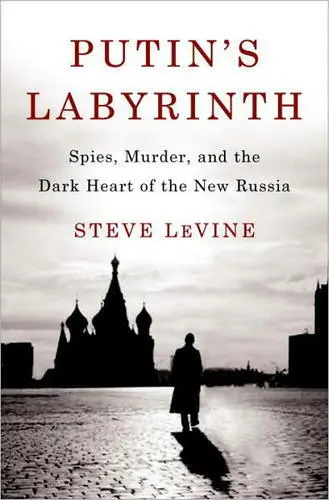
- Название:Putin's Labyrinth
- Автор:
- Издательство:Random House
- Жанр:
- Год:2008
- Город:New York
- ISBN:978-1-58836-815-7
- Рейтинг книги:3 / 5. Голосов: 1
-
Избранное:Добавить в избранное
- Отзывы:
-
Ваша оценка:
Putin's Labyrinth: краткое содержание, описание и аннотация
Предлагаем к чтению аннотацию, описание, краткое содержание или предисловие (зависит от того, что написал сам автор книги «Putin's Labyrinth»). Если вы не нашли необходимую информацию о книге — напишите в комментариях, мы постараемся отыскать её.
Drawing on new interviews with eyewitnesses and the families of victims, LeVine documents the bloodshed that has stained Putin’s two terms as president. Among the incidents chronicled in these pages: The 2002 terrorist takeover of a crowded Moscow theater—which led to the government gassing the building, and the deaths of more than a hundred terrified hostages–seen here from new angles, through the riveting words of those who survived; and the murder of courageous investigative reporter Anna Politkovskaya, shot in the elevator of her apartment building on Putin’s birthday, purportedly as a malicious “gift” for the president from supporters. Finally, a shocking story that made international headlines–the 2006 death of defector Alexander Litvinenko in London—is dramatized as never before. LeVine traces the steps of this KGB-spy-turned-dissident on his way to being poisoned with polonium-210, a radioactive isotope. And in doing so, LeVine is granted a rare series of interviews with a KGB defector who was nearly killed in strangely similar circumstances fifty years earlier. Through LeVine’s exhaustive research, we come to know the victims as real people, not just names in brief news accounts of how they died.
Putin’s Labyrinth
Putin's Labyrinth — читать онлайн бесплатно полную книгу (весь текст) целиком
Ниже представлен текст книги, разбитый по страницам. Система сохранения места последней прочитанной страницы, позволяет с удобством читать онлайн бесплатно книгу «Putin's Labyrinth», без необходимости каждый раз заново искать на чём Вы остановились. Поставьте закладку, и сможете в любой момент перейти на страницу, на которой закончили чтение.
Интервал:
Закладка:
As the hours ticked by, tensions heightened. Some of the intruders wired bombs to pillars that supported the theater’s structure. Others fired weapons over the heads of audience members. “Just look straight ahead,” said one masked man. “Anyone who ducks will be dealt with.” It was ultimate terror, Ilya thought—was he more likely to die from a bullet as he sat in his seat, or if he ducked down next to his bass? He looked directly ahead, as did everyone else.
Later, when the attention of the Chechens seemed to be directed away from the orchestra, Ilya sensed that the time might be right for escape. His seat was close to a door leading to the musicians’ dressing rooms. He reached over and opened the door, and the players quietly filed out of the pit, locking the door behind them. But the Chechens quickly noticed their absence. A few militants climbed into the pit and demanded that the musicians come out. If they did not comply, the door would be forced open and a grenade tossed in. What could Ilya do? He opened the door, and the musicians returned to the pit, with their hands behind their heads. Now they were made to sit with the audience, directly in front of Movsar Barayev so that the Chechen leader could keep an eye on them.
Only a few rows away, Irina expressed confidence that the standoff would soon end. Even if these were genuine Chechen terrorists, they would be satisfied to have made their point; the show would then go on and she and her son would be home by eleven o’clock. “No, this will be two or three days,” came the voice of one of the black widows, known to audience members only as Asya. She had been standing nearby and overheard the conversation. Her prediction would prove to be eerily accurate.
Russians were not unused to mass hostage-taking by Chechen insurgents. In 1995, after an assault on the town of Budyonnovsk, invaders from Chechnya retreated to a hospital and held some 1,500 patients hostage. About 30 died in fighting with Russian forces before a truce was finally negotiated. The following year, two villages were raided in Dagestan, a territory adjoining Chechnya; more than 2,000 were taken hostage and about 340 died before the standoffs ended. In all three of these episodes, many Chechen fighters were able to escape.
I was more accustomed to the criminality that erupted after the First Chechen War ended in 1996. It sorely tested the sympathy that many Western reporters felt for the quarrelsome republic that had been nearly obliterated by the Russian military. The main crime was kidnapping-for-ransom. It wasn’t only the abductions themselves that disillusioned me, but the way victims were treated. They were typically held for months without word, sometimes in pits dug under homes, even if family members were ready to pay up. Most victims were Chechens, many never to be seen again. Some were foreigners, including a Russian journalist named Yelena Masyuk, who was held for 101 days before being ransomed for $2 million.
In August 1997, I visited the northern Caucasus city of Nalchik, a two-hour drive west of Chechnya, where sixteen residents had already been kidnapped that year. Thirteen had been released for an average ransom of $300,000. Among the lucky ones was Alim Tlupov, a muscular twenty-three-year-old with a butch haircut. He and two friends had driven into Chechnya to barter belongings for diesel fuel. But two Chechen acquaintances led them into a trap. Alim and his friends ended up with pillowcases over their heads and their hands tied, while the captors telephoned Alim’s father, Zauddin, with a demand for the equivalent of $300,000. The sum was absurd, since Zauddin was only a factory driver.
So began an ordeal in which the three young men were moved from one basement to another, beaten, and prevented from bathing. Alim described it as a family enterprise. The kidnappers’ wives and sisters wandered about, sometimes delivering bread and unsweetened tea to the captors—their main diet. Neighbors strolled by, clearly aware that kidnapping victims were being held a few steps away, Alim said.
After two months, the captives managed to escape. Before they could reach home, the infuriated Chechens telephoned Alim’s father. “Your son has been killed in a skirmish,” one of the captors said. “Come right away.” Now the father would become the victim. When Zauddin arrived at the rendezvous point, the Chechens abducted him. Another two months passed. Finally, the kidnappers accepted a reduced ransom of about $22,000, which the Tlupovs managed to raise from relatives. What seemed to most anger the family was the tepid response they received from authorities in Russia and Chechnya when they asked for help. Everyone pleaded impotence against the kidnappers.
Some victims who managed to escape—especially Europeans—tried to explain away the kidnappings as a natural outgrowth of the abuse the people of Chechnya had experienced. But that was absurd. The truth was that kidnapping became a way of life for many Chechens. Obviously nowhere near the whole population was involved, but sometimes it seemed so.
At the same time, Chechen militants fighting for a cause became interwoven with unholy characters such as Arbi Barayev, a sadistic Chechen insurgent who, among other outrages, had decapitated four Western telecom workers—three Britons and a New Zealander—in 1998 and left their heads in a sack by a road.
Now Barayev’s nephew was standing on a theater stage in Moscow, glaring down at hundreds of terrified hostages whose lives were in his hands.
Anna Politkovskaya was in Santa Monica, California, to receive an award for courage from UCLA. Swooping into the sun-drenched lobby of her hotel, the celebrated Russian journalist was handed a message: Call Moscow.
“The terrorists want to see you,” a colleague told her.
What terrorists?
Anna turned on the television and saw news of the siege for the first time. She rang her hosts to express regrets and booked the next available flight from Los Angeles to Moscow, via New York, a grueling trip. On the way, she telephoned her twenty-two-year-old daughter, Vera, in Russia.
Here is where coincidence proved difficult to believe.
Ilya, the young bassist now sitting quietly under the watchful eyes of his Chechen captors, had been a favorite of Anna’s family since childhood. She had been like a mother, someone he could turn to for advice. More than once he had slept over on their couch after a study session with Anna’s son, who was Ilya’s best friend. For a time, Anna’s daughter had been Ilya’s girlfriend.
Mother, Ilya just telephoned me from Nord-Ost, the daughter told Anna.
Ilya is in Nord-Ost ? Quite apart from concern over his fate, Anna had an idea. If he calls back, she instructed her daughter, please make two requests. Could he ask the Chechens if it was all right for her—Anna—to enter the theater when she reached Moscow? And would he also relay her request that they not do anything rash before she arrived?
Ilya did call back. That was one of the oddities of the hostage-taking—the Chechens’ leader, Movsar Barayev, allowed his captives to make as many cell phone calls as they wished. He saw it as a way to increase public pressure on the Kremlin to negotiate. The only limit was how much power remained in one’s cell battery.
But Barayev was not one to trifle with. He was the proud heir of his uncle Arbi, whose reputation for brutality was well known. The nephew apparently had not carried out any major operations before Nord-Ost —and, unlike his uncle, had not decapitated anyone. He commanded respect nonetheless, specifically because of his family link.
From where he was sitting, Ilya had almost line-of-sight eye contact with Barayev. “Can I talk to you?” he called out. The Chechen looked over and then motioned for Ilya to approach.
Читать дальшеИнтервал:
Закладка:
Похожие книги на «Putin's Labyrinth»
Представляем Вашему вниманию похожие книги на «Putin's Labyrinth» списком для выбора. Мы отобрали схожую по названию и смыслу литературу в надежде предоставить читателям больше вариантов отыскать новые, интересные, ещё непрочитанные произведения.










Обсуждение, отзывы о книге «Putin's Labyrinth» и просто собственные мнения читателей. Оставьте ваши комментарии, напишите, что Вы думаете о произведении, его смысле или главных героях. Укажите что конкретно понравилось, а что нет, и почему Вы так считаете.