Roberto Saviano - ZeroZeroZero
Здесь есть возможность читать онлайн «Roberto Saviano - ZeroZeroZero» весь текст электронной книги совершенно бесплатно (целиком полную версию без сокращений). В некоторых случаях можно слушать аудио, скачать через торрент в формате fb2 и присутствует краткое содержание. Год выпуска: 2015, Издательство: Penguin Publishing Group, Жанр: Публицистика, Криминальный детектив, на английском языке. Описание произведения, (предисловие) а так же отзывы посетителей доступны на портале библиотеки ЛибКат.
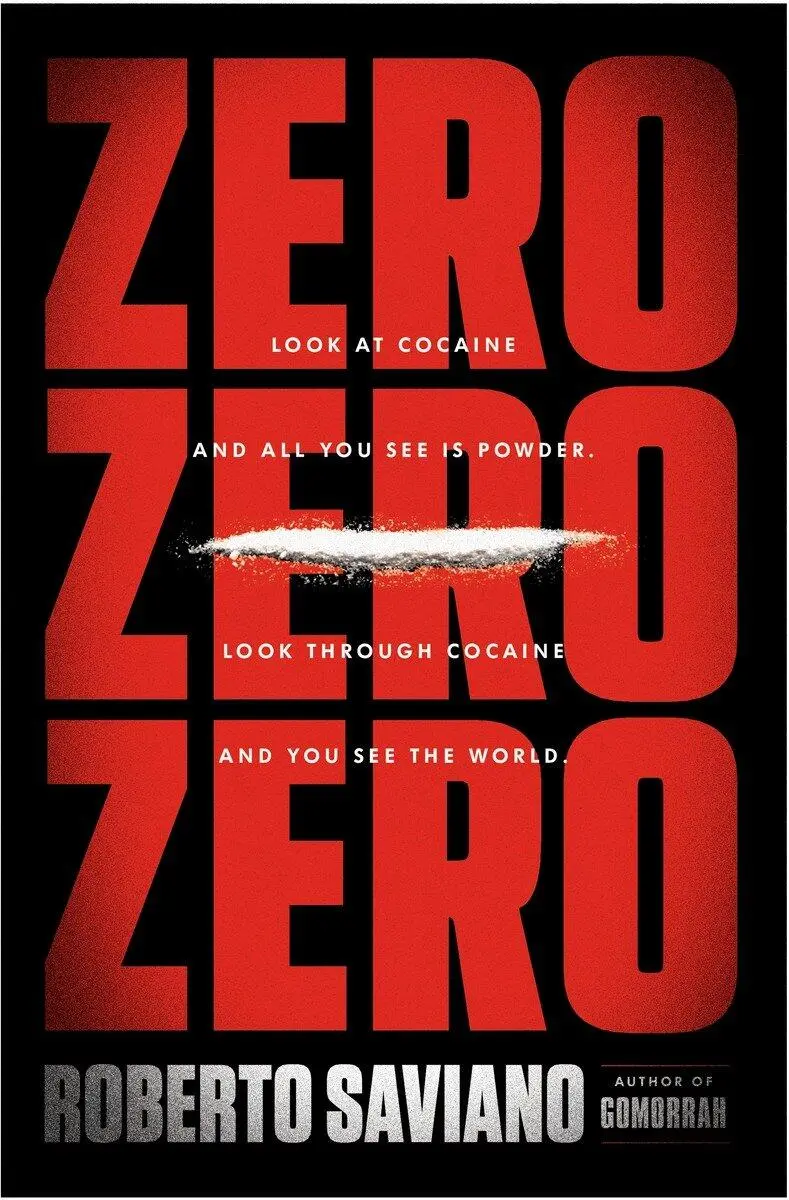
- Название:ZeroZeroZero
- Автор:
- Издательство:Penguin Publishing Group
- Жанр:
- Год:2015
- ISBN:нет данных
- Рейтинг книги:5 / 5. Голосов: 1
-
Избранное:Добавить в избранное
- Отзывы:
-
Ваша оценка:
ZeroZeroZero: краткое содержание, описание и аннотация
Предлагаем к чтению аннотацию, описание, краткое содержание или предисловие (зависит от того, что написал сам автор книги «ZeroZeroZero»). Если вы не нашли необходимую информацию о книге — напишите в комментариях, мы постараемся отыскать её.
Saviano’s
, his explosive account of the Neapolitan mob, the Camorra, was a worldwide publishing sensation. It struck such a nerve with the Camorra that Saviano has lived with twenty-four hour police protection in the shadow of death threats for more than seven years. During this time he has become intimate with law enforcement agencies around the world. Saviano has broadened his perspective to take in the entire global corporate” entity that is the drug trade in cooperation with law enforcement officials, who have fed him information and sources and used him to guide their own thinking and tactics. Saviano has used this extraordinary access to feed his own groundbreaking reportage.
The result is a truly amazing and harrowing synthesis of intimate literary narrative and geopolitical analysis of one of the most powerful dark forces in the global economy. In
, Saviano tracks the shift in the cocaine trade’s axis of power, from Colombia to Mexico, and relates how the Latin American cartels and gangs have forged alliances, first with the Italian crime syndicates, then with the Russians, Africans, and others. On the one hand, he charts an astonishing increase in sophistication and diversification as these criminal entities diversify into many other products and markets. On the other, he reveals the threat of violence to protect and extend power and how the nature of the violence has grown steadily more appalling.
Saviano is a journalist of rare courage and a thinker of impressive intellectual depth and moral imagination, able to see the connections between far-flung phenomena and bind them into a single epic story. Most drug-war narratives feel safely removed from our own lives; Saviano offers no such comfort. As heart racing as it is heady,
is a fusion of a variety of disparate genres into a brilliant new form that can only be called
.
ZeroZeroZero — читать онлайн бесплатно полную книгу (весь текст) целиком
Ниже представлен текст книги, разбитый по страницам. Система сохранения места последней прочитанной страницы, позволяет с удобством читать онлайн бесплатно книгу «ZeroZeroZero», без необходимости каждый раз заново искать на чём Вы остановились. Поставьте закладку, и сможете в любой момент перейти на страницу, на которой закончили чтение.
Интервал:
Закладка:
No one knew Amado’s whereabouts. He moved around constantly among the many residences he had scattered throughout the country. Eccentricity and ostentation, compensated for with shrewd financial decisions and an obsession with security, made him the iconic drug lord. Handsome and fierce, intelligent and cocky, courageous and tenderhearted. A hero for his time. He established ties with some Guadalajara bosses, got control of airports and clandestine runways, and bribed José de Jesús Gutiérrez Rebollo, head of the National Institute to Combat Drugs, who with his men became Amado’s armed wing, using the institute’s rich network of information to wipe out Amado’s enemies and competitors, in exchange for enormous kickbacks. He even planned on striking an agreement with the federal government: Mexico would get 50 percent of his property; his collaboration in reducing violence among cartels; and his guarantee that drugs would not infest Mexico but only the United States and Europe. In exchange Amado would get peace and tranquillity to do his business.
But it wasn’t to be. On November 2, 1997, along the Autopista del Sol — the Sun Highway — that runs from Mexico City to Acapulco, the police made a gruesome discovery: three cadavers in barrels filled with cement, bodies of three renowned plastic surgeons who had disappeared a few weeks earlier. Freed from the cement, their bodies bore witness to the tortures they endured before being killed: gouged-out eyes and broken bones. They’d been beaten so badly that one of the bodies had to be tied together to keep it from falling to pieces. Two of them had died of asphyxia, strangled with cables, the third of a bullet to the back of his neck. Their crime? Having the courage to operate on Amado Carrillo Fuentes, who, like many drug lords, wanted a total makeover. Four months earlier, on July 4, 1997, the Lord of the Skies had died in room 407 of the Santa Monica Hospital in Mexico City, after undergoing plastic surgery and liposuction under a false name. An overdose of Dormicum, a powerful sedative used during postop, had proved fatal. His heart, already weakened by cocaine, had given out. It’s still unclear whether anyone was at fault, whether his death was accidental or intentional. Such a bizarre end for a sovereign generates legends of immortality as well as endless, malicious gossip. Some say his own vanity killed him, but it’s more likely that he wanted to alter his appearance in order to escape the police and his enemies.
Amado’s death created a huge power vacuum. His brother Vicente took over the cartel, but relations between Carrillo Fuentes and rival groups became increasingly precarious. In 2001, after El Chapo Guzmán escaped from prison, many Juárez cartel members decided to follow him and to join the Sinaloa cartel. On April 9, 2010, the Associated Press announced that the Sinaloa cartel had finally won the battle against the Juárez men. But the media epitaph did not prevent the Juárez cartel from continuing to wage war. A war that made Ciudad Juárez the most dangerous and violent city in the world, with nearly two thousand homicides a year.
In July 2010, on a street in the center of the city, a car bomb set off by a cell phone killed a federal police agent, a doctor, and a musician who lived in the area. These last two had heard gunshots and gone out into the street in order to help a man in a police uniform lying wounded on the ground. But as the narcos revealed after their arrest, he was merely the bait to attract the attention of the feds. A message spray-painted in black was found on a wall near the attack: “What happened on Calle 16 septiembre will happen to all the authorities who continue to back El Chapo. Cordially, the Juárez cartel. And anyway, we have other car bombs.”
“ Carne asada! Grilled meat!” It’s a cry you hear every day as you wander the crowded streets of Ciudad Juárez. If it weren’t for the agitated tone and the adrenaline in their voices it would sound like two Mexicans organizing a Sunday cookout. Instead, it’s the code narcos use to say that someone’s been killed. The killings continue undisturbed. Mutilated, decapitated bodies. Bodies exposed in public for the sole purpose of guaranteeing the status quo of fear. Bodies like that of the lawyer Fernando Reyes, suffocated with a plastic bag, wacked several times in the head with a shovel, thrown in a ditch, and covered first with quicklime and then with dirt.
In order to try to stop the Juárez cartel, the Mexican authorities offered a reward of 30 million pesos, and the U.S. government up to $5 million, for information leading to the arrest of Vicente Carrillo Fuentes, known as the Viceroy but actually the real king of the organization since his brother Amado’s death. On October 9, 2014, Vicente was captured in Torreón, Coahuila, during a federal police operation that concluded without any shots fired. When stopped at a checkpoint he showed a fake driver’s license registered to a Jorge Sánchez Mejía, but the federal forces, who had been after him for several months, were not fooled: He was the chief of one of the most violent drug cartels Mexico had ever known. Along with the Viceroy, they arrested his ever-present bodyguard, a figure without whom the narcos never leave their hideouts.
Vicente’s arrest could lead to a loss of power of the Juárez cartel, as the Mexican authorities hope, but just as happened in the past, it could also create a power vacuum to be filled with violence and terror.
“Carne asada! Carne asada!”
• • •
El Chapo didn’t believe in showing his rage. He saw no point. He punished those who deserved it with death, but even when applying this definitive sentence, he didn’t allow any emotion to shine through. El Chapo was rational in his bloodthirstiness. Alfredo Beltrán Leyva, the Beltrán Leyva brother known as El Mochomo — as the red desert ants that eat anything and survive everything are called in Sinaloa — was the complete opposite: instinctive, hot-tempered, aggressive. He loved the good life and wanted a steady stream of people coming to see him, especially women. El Mochomo was the Beltrán Leyva brother entrusted with the most public role. But El Chapo realized that Alfredo was dangerous. Being showy doesn’t fit well with being a fugitive; you’re too easy a target. The state of alert increased significantly when El Chapo found out that the Beltrán Leyvas were negotiating with Los Zetas. A scission was inevitable. Which meant blood.
Alfredo Beltrán Leyva was arrested in Culiacán in January 2008, together with three members of his security corps. He was found in possession of almost a million dollars, luxury watches, and a small arsenal, including frag grenades. A tough blow for Sinaloa, because Alfredo supervised drug trafficking on a large scale, handled the organization’s money laundering, and bribed the police. He was the cartel’s foreign minister. But as the Beltrán Leyva brothers saw it, El Chapo was behind Alfredo’s arrest. They had to respond in kind, and it was easy to decide where to strike.
Édgar Guzmán López was only twenty-two, but he had a brilliant career ahead of him because he was El Chapo’s son. In May 2008, he went for a stroll with some friends in a shopping center in Culiacán. To check out the shop windows and the chicas . A peaceful day. On their way back to their car, which they left in the parking lot, they saw fifteen men approaching, in uniforms and blue bulletproof vests. The men moved in unison, like soldiers, and the boys were petrified, immobile. Before the men opened fire, the boys managed to read what was on their bulletproof vests: FEDA, which stood for Fuerzas Especiales de Arturo, or Arturo’s Special Forces. These were the men of Arturo Beltrán Leyva, the brother known as El Barbas. To prepare for the break with the Sinaloa cartel he’d created a unit with the same structure and discipline as the army and special police corps. They used heavy weapons, including the lethal P90 personal defense weapon, and were charged with protecting the bosses and eliminating hit men of rival cartels. Now, in 2008, baptized in the blood of El Chapo’s son, the Beltrán Leyva cartel was born. The brothers handled cocaine, marijuana, and heroin, thanks in part to their complete control of the principal airports in the states of México, Guerrero, Quintana Roo, and Nuevo León. Other activities included human trafficking; prostitution; money laundering, through hotels, restaurants, and resorts; extortion; abduction; and arms trafficking. From South to North America, they managed corridors that moved tons of drugs. It was a new, small cartel, but one determined to carve out a sizable slice of power. But the Mexican authorities were eager to put the family out of business right away, so when Arturo threw a party in the winter of 2009, they didn’t let the opportunity pass.
Читать дальшеИнтервал:
Закладка:
Похожие книги на «ZeroZeroZero»
Представляем Вашему вниманию похожие книги на «ZeroZeroZero» списком для выбора. Мы отобрали схожую по названию и смыслу литературу в надежде предоставить читателям больше вариантов отыскать новые, интересные, ещё непрочитанные произведения.

Обсуждение, отзывы о книге «ZeroZeroZero» и просто собственные мнения читателей. Оставьте ваши комментарии, напишите, что Вы думаете о произведении, его смысле или главных героях. Укажите что конкретно понравилось, а что нет, и почему Вы так считаете.