Roberto Saviano - ZeroZeroZero
Здесь есть возможность читать онлайн «Roberto Saviano - ZeroZeroZero» весь текст электронной книги совершенно бесплатно (целиком полную версию без сокращений). В некоторых случаях можно слушать аудио, скачать через торрент в формате fb2 и присутствует краткое содержание. Год выпуска: 2015, Издательство: Penguin Publishing Group, Жанр: Публицистика, Криминальный детектив, на английском языке. Описание произведения, (предисловие) а так же отзывы посетителей доступны на портале библиотеки ЛибКат.
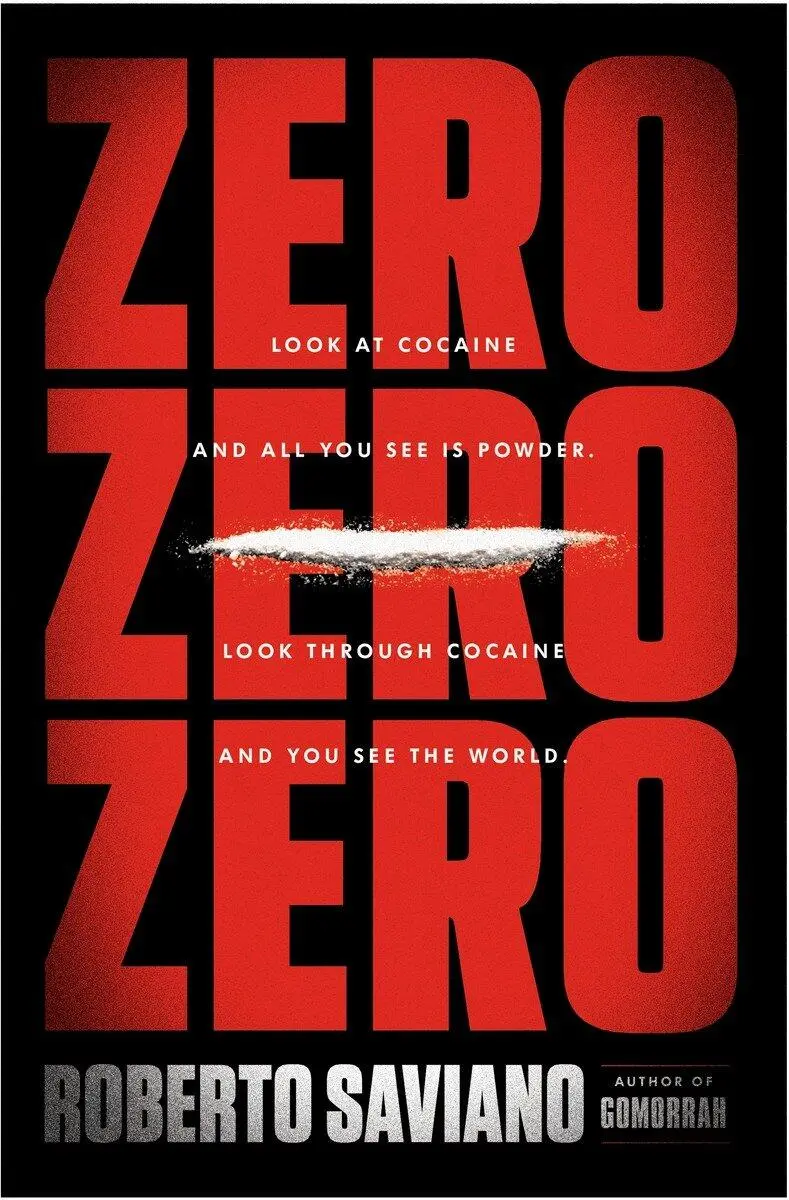
- Название:ZeroZeroZero
- Автор:
- Издательство:Penguin Publishing Group
- Жанр:
- Год:2015
- ISBN:нет данных
- Рейтинг книги:5 / 5. Голосов: 1
-
Избранное:Добавить в избранное
- Отзывы:
-
Ваша оценка:
ZeroZeroZero: краткое содержание, описание и аннотация
Предлагаем к чтению аннотацию, описание, краткое содержание или предисловие (зависит от того, что написал сам автор книги «ZeroZeroZero»). Если вы не нашли необходимую информацию о книге — напишите в комментариях, мы постараемся отыскать её.
Saviano’s
, his explosive account of the Neapolitan mob, the Camorra, was a worldwide publishing sensation. It struck such a nerve with the Camorra that Saviano has lived with twenty-four hour police protection in the shadow of death threats for more than seven years. During this time he has become intimate with law enforcement agencies around the world. Saviano has broadened his perspective to take in the entire global corporate” entity that is the drug trade in cooperation with law enforcement officials, who have fed him information and sources and used him to guide their own thinking and tactics. Saviano has used this extraordinary access to feed his own groundbreaking reportage.
The result is a truly amazing and harrowing synthesis of intimate literary narrative and geopolitical analysis of one of the most powerful dark forces in the global economy. In
, Saviano tracks the shift in the cocaine trade’s axis of power, from Colombia to Mexico, and relates how the Latin American cartels and gangs have forged alliances, first with the Italian crime syndicates, then with the Russians, Africans, and others. On the one hand, he charts an astonishing increase in sophistication and diversification as these criminal entities diversify into many other products and markets. On the other, he reveals the threat of violence to protect and extend power and how the nature of the violence has grown steadily more appalling.
Saviano is a journalist of rare courage and a thinker of impressive intellectual depth and moral imagination, able to see the connections between far-flung phenomena and bind them into a single epic story. Most drug-war narratives feel safely removed from our own lives; Saviano offers no such comfort. As heart racing as it is heady,
is a fusion of a variety of disparate genres into a brilliant new form that can only be called
.
ZeroZeroZero — читать онлайн бесплатно полную книгу (весь текст) целиком
Ниже представлен текст книги, разбитый по страницам. Система сохранения места последней прочитанной страницы, позволяет с удобством читать онлайн бесплатно книгу «ZeroZeroZero», без необходимости каждый раз заново искать на чём Вы остановились. Поставьте закладку, и сможете в любой момент перейти на страницу, на которой закончили чтение.
Интервал:
Закладка:
The military operation had been launched about ten days before: Law enforcement officers had managed to identify several residences in Culiacán, El Chapo’s stronghold, where he usually stayed. The man who had been a master at digging tunnels to get drugs into the United States relied on them for his own getaways too: Several of his residences were connected by underground passageways. The military nearly caught him more than once, but he always managed to escape. Several members of the Sinaloa cartel had been arrested, though; El Chapo’s inner circle was shrinking. Earlier that week a raid of his ex-wife Griselda López’s house turned up some weapons and a tunnel that fed to the sewers. Mexico’s drug lord would clamber through the sewers to get from one hiding place to another.
What’s most extraordinary is that El Chapo was caught by surprise in Mazatlán, a tourist town. He wasn’t hiding up in the Sierra mountains, as most people thought. And his hotel in Mazatlán was nothing fancy: an ordinary building, with a nondescript lobby and a simple room. The way he’d always lived.
In Mexico his arrest was followed with the same anxiety as the World Cup finals, with more interest than a presidential election. Rumors of his arrest or murder had circulated for years. Which is why, on February 22, no one could believe it had actually happened. Thousands of tweets: “Is it really him? Where’s the proof?” “I won’t believe it till I see the photo of El Chapo in handcuffs.” “El Chapo is still El Chapo, they don’t have him!” Many tweeters did not hide their disappointment; many expressed their solidarity with the boss; many wrote in English. A hashtag was even created: #FreeChapo. These tweets say more about the world today than most articles and political powwows.
Verifying El Chapo’s capture proved to be as agonizing as the arrest itself. At first there were just unconfirmed reports: The Associated Press gave out the news at 9:54 A.M., after receiving a tip-off from an anonymous American official. The Mexican authorities did not confirm it, however. Meanwhile, word of his arrest started spreading all over the Internet. The Mexican authorities called a press conference for 11:30, but the secretary of state canceled it, leading people to think it wasn’t him. But the photo of a bare-chested man with a mustache, arrested by a soldier in camouflage, started to circulate. It sure looked like him, but thirteen years had passed since the last official photos; it could just be a close resemblance. Everyone waited with bated breath. At 12:08 the secretary of the interior, Miguel Ángel Osorio Chong, called a new press conference, this time for 1:00 P.M. Would the rumors be denied or confirmed? Doubts were quelled at 12:33; the Mexican authorities confirmed the arrest on CNN. But still no official announcement. El Chapo’s fans were hoping it was all a terrible mistake. At 1:20 El Chapo’s photo disappeared from the DEA’s most wanted list. That’s how the Americans confirmed the news. They beat out the Mexican confirmation, which came a few minutes later, in the form of a tweet by President Enrique Peña Nieto, expressing his gratitude for the work of the security forces. In truth, he was patting himself on the back for the most important arrest since he’d taken office. At 2:04 a federal police helicopter landed in front of the group of reporters gathered in a navy hangar. During the press conference they confirmed what everyone already knew: El Chapo had been arrested. They filled in some details, about where and when. The attorney general of Mexico read the list of people arrested and goods seized: thirteen men, ninety-seven large guns, thirty-six handguns, two grenade launchers, forty-three vehicles, sixteen houses, and four farms. Only one thing was missing: the man himself. El Chapo made his entrance at 2:11, captured by photographers as he was escorted across the square to the police helicopter: black jeans and white shirt, neat hair and mustache. Looking a little tired and not in the least cocky as Mexican marines in camouflage hold him by the arms and make him lower his head. No presentation to the media, just these few photos to confirm his arrest. At 3:00 P.M., word was given that El Chapo was behind bars at the Penal del Altiplano, the prison in Almoloya de Juárez, in México state.
A few years earlier El Chapo had formed a new tie with the United States. In August 2011, his young wife Emma, an American citizen, tranquilly gave birth to twin girls in a clinic in Lancaster, near Los Angeles. The DEA knew but couldn’t do anything, because Emma, twenty-two at the time, had a clean record. El Chapo’s men had accompanied her to Lancaster, but she did take one precaution: Emma left the father’s name blank on the twins’ birth certificates. But everyone knows who the father is. The Mexican and American authorities exulted after El Chapo’s arrest, but alongside their messages on social networks were others, posted by regular people who considered El Chapo a hero, a benefactor, a Mexican god. The most widespread reaction was disbelief: “El Chapo is too clever to let himself be caught”; “El Chapo is too smart to let himself be framed”; “impossible that they nabbed him two feet from his stronghold.” As if El Chapo had orchestrated it all, as if he had decided that the moment for his arrest had come. There are all sorts of theories: Maybe he sensed that he was becoming too big a story politically, and the only way his cartel could keep doing business would be if he was arrested. Or maybe he knew a big feud was about to erupt, so he took himself out of the equation to avoid being killed by a new generation of Sinaloa narcos eager to take his place. Some have even quietly insinuated that his fedelissimo, El Mayo, also in hiding and fearing his own arrest or murder, sold his boss’s head. In fact, the press had been expecting El Mayo’s arrest for days, but to their surprise, El Chapo was arrested instead. The only certainty is ambiguity. At any rate, it’s hard to believe that it was purely a police action, because, as everyone knows, nothing in Sinaloa happens without El Chapo’s blessing. The king is dead, long live the king.
4. FRIEND KILLER
Matamoros, in the state of Tamaulipas in northeastern Mexico, rises on the southern bank of the Rio Bravo and is connected to the Texas city of Brownsville by four bridges. Those four bridges are like four pipelines through which white petrol is pumped into the United States. Here it’s the Gulf cartel that rules. In 1999 it was bringing up to fifty tons of cocaine into the United States every month, and its power had spread from the Gulf of Mexico to parts of the Pacific, areas conquered with violence, corruption, and agreements with other narco groups. The Gulf cartel was number one. And its number one was Osiel Cárdenas Guillén.
Osiel had heard the story a million times. El Padrino arrived last, took a seat, and toasted the new territory bosses. Sure, the details changed from one teller to the next, as unsteady as April showers, but the gist was always the same: The new world had been created at that meeting.
“If you can have the whole world, why be satisfied with just a piece?” This was said to be his retort to an impudent interlocutor who’d annoyed him for the umpteenth time with the story of El Padrino and the division of the kingdom. Osiel was born angry. Quarrelsome as a boy, tough as a teenager, violent as a young man. A blind, senseless rage that he nourished and nursed constantly, and that his lively intelligence made sadistic and demonic. He was born to parents who, indifferent to the poverty in which they lived, continued unperturbed to churn out babies whom they then left to crawl around in the dirt with the scrawny chickens; Osiel invented his own world, as far away as possible from the chaos that surrounded him. By age fourteen he was working as a mechanic’s assistant in the morning, and at a maquiladora, or factory, in the afternoon, where he, along with two hundred other people, assembled vacuum cleaners that some Yankee housewife would use a few miles to the north.
Читать дальшеИнтервал:
Закладка:
Похожие книги на «ZeroZeroZero»
Представляем Вашему вниманию похожие книги на «ZeroZeroZero» списком для выбора. Мы отобрали схожую по названию и смыслу литературу в надежде предоставить читателям больше вариантов отыскать новые, интересные, ещё непрочитанные произведения.

Обсуждение, отзывы о книге «ZeroZeroZero» и просто собственные мнения читателей. Оставьте ваши комментарии, напишите, что Вы думаете о произведении, его смысле или главных героях. Укажите что конкретно понравилось, а что нет, и почему Вы так считаете.