Dan Hampton - Viper Pilot
Здесь есть возможность читать онлайн «Dan Hampton - Viper Pilot» весь текст электронной книги совершенно бесплатно (целиком полную версию без сокращений). В некоторых случаях можно слушать аудио, скачать через торрент в формате fb2 и присутствует краткое содержание. Город: New York, Год выпуска: 2012, ISBN: 2012, Издательство: William Morrow, Жанр: Биографии и Мемуары, nonf_military, на английском языке. Описание произведения, (предисловие) а так же отзывы посетителей доступны на портале библиотеки ЛибКат.
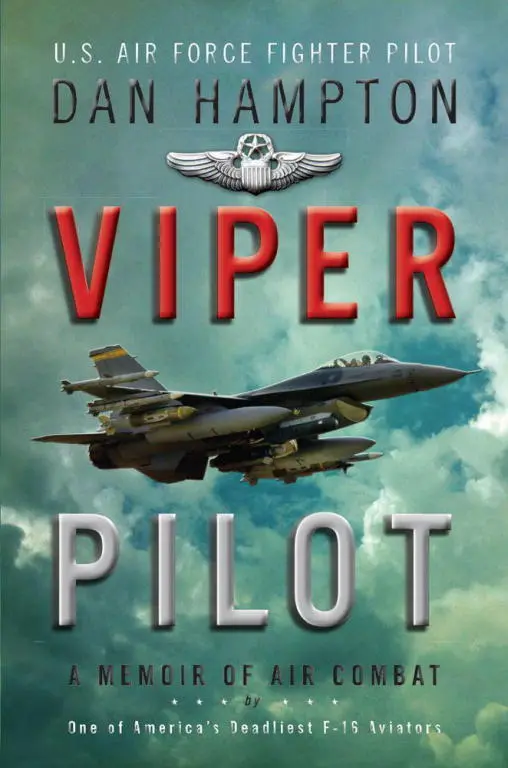
- Название:Viper Pilot
- Автор:
- Издательство:William Morrow
- Жанр:
- Год:2012
- Город:New York
- ISBN:978-0-06-213035-8
- Рейтинг книги:4 / 5. Голосов: 1
-
Избранное:Добавить в избранное
- Отзывы:
-
Ваша оценка:
Viper Pilot: краткое содержание, описание и аннотация
Предлагаем к чтению аннотацию, описание, краткое содержание или предисловие (зависит от того, что написал сам автор книги «Viper Pilot»). Если вы не нашли необходимую информацию о книге — напишите в комментариях, мы постараемся отыскать её.
is the electrifying memoir of one of the most decorated F-16 pilots in American history: U.S. Air Force Lieutenant Colonel Dan Hampton, who served for twenty years, flying missions in the Iraq War, the Kosovo conflict, and the first Gulf War.
Both a rare look into the elite world of fighter pilots and a thrilling first-person account of contemporary air combat,
soars—a true story of courage, skill, and commitment that will thrill U.S. Special Forces buffs, aviation and military history aficionados, and fans of the novels of Tom Clancy and Dale Brown.
Viper Pilot — читать онлайн бесплатно полную книгу (весь текст) целиком
Ниже представлен текст книги, разбитый по страницам. Система сохранения места последней прочитанной страницы, позволяет с удобством читать онлайн бесплатно книгу «Viper Pilot», без необходимости каждый раз заново искать на чём Вы остановились. Поставьте закладку, и сможете в любой момент перейти на страницу, на которой закончили чтение.
Интервал:
Закладка:
Speaking of the pilot, he was leaning as far back away from me as he could get. I noticed he was unstrapped from the ejection seat, and his G-suit hose was disconnected. But he couldn’t get out, because I was there.
“Hey dude!” I smiled and slapped the canopy rail. “Good to see ya!”
The pilot looked typical. About thirty years old, very fit, with sweaty black hair cut close on the sides. He was wearing oversize aviator sunglasses that looped behind his ears. His left hand was on the console just beneath the HUD so he could twist and face me. I then noticed his right hand was on the black 9-mm pistol in his vest. That made me blink. Suspicious was one thing but deadly force was another. I tried a different tack.
“How ’bouta beer?”
Dragging the perspiring can from my pocket, I carefully set it on the top of the ladder, and he slowly took his hand off the weapon. We stared at each other for a long moment, then he said, “Where are we?”
Actually, he shouted it at me like Americans do when they think volume overcomes language barriers. I leaned back, somewhat surprised.
“Wha…”
“WHERE… ARE… WE?”
I frowned a little but at least he was talking. I popped the beer and shoved it at him.
“Cut it out man… you’re in Beni Suef.”
He took the beer and nodded, pleased to have his suspicions confirmed. Taking a long swallow, he wiped his mouth with a gloved hand and said something I’ll never forget.
“YOU… SPEAK… GOOD… ENGLISH!” he shouted again.
“Wha…”
“YOU SPEAK ENGLISH VERY WELL!”
For the second time in an hour, my mouth dropped open. Then, as he stared at me, I saw my reflection in his big sunglasses.
Oh.
And then it all made sense. He thought I was an Egyptian. Seeing myself through his eyes, so to speak, I thought it was an understandable mistake. I was wearing an Egyptian uniform with Egyptian pilot wings and squadron patches. I also had a very bad mustache and was tanned like a piece of unshaven mahogany. Picture Pancho Villa in a flight suit and you’ve got it.
“Cut it out man… I’m an American.”
“YOUR… ACCENT… IS… VERY… GOOD!”
Anyway, we sorted it out.
Once they figured out that I wasn’t a terrorist who spoke East Coast Yankee English, everything was okay. They’d been on their way in country to Dhahran Air Base, Saudi Arabia, for a 120-day Southern Watch deployment. This was done through relays of air-refueling tankers, which started out in the United States. The fighters would then be “handed off” over the North Atlantic to tankers from bases in Europe. Sometimes they’d spend the night in Germany or Spain, but often, depending on the situation, they’d fly all the way in to Saudi or Kuwait. Fourteen hours in a cockpit the size of a desk was about as much fun as it sounded. In either case, the fighters would meet up over the eastern Mediterranean with U.S. tankers temporarily based in Saudi, called the Kingdom, that would take them the rest of the way in.
Apparently, there’d been a big dust storm, a khamsin, that kept these last tankers on the ground. Unable to make it to Dhahran and unable to return to Europe, the fighters had diverted into Beni Suef. Now, every such deployment was planned out to an amazing level of detail. Every leg of the trip, fuel numbers, divert bases, and radio frequencies are painstakingly arranged so when something like this happens, everyone knows what to do. These guys weren’t lost—no one gets lost in an F-16 crammed with electronic wizardry—they knew exactly where they were geographically, they just didn’t know where they were, if you follow. They were simply appalled by their surroundings. You don’t see burned-out aircraft, cratered runways, and donkeys on a U.S. air base.
I got the extremely nervous Egyptian maintenance officer and a crew of his minions to bed down the jets. This was done amid much supervision by the still-suspicious Americans. The Egyptians were shocked when each pilot pulled out everything needed for his aircraft from a big travel pod slung beneath one wing. Chocks for the wheels, intake and canopy covers, oil-sample kits etc.… The Arabs were even more surprised when our guys did all of this themselves. Egyptian pilots more or less shut their planes down, hopped out, and went to drink tea.
My new friends were less shocked when I led them over to the Oasis (as we called the General Dynamics compound) and into a few of the villas. They got positively enthusiastic when they saw the pool and the bar. I was so happy to have buddies again that, I confess, I didn’t work too hard on their logistical issues for a few days. Don’t get me wrong—Beni Suef wasn’t a bad place, and the two other officers with me were good guys, but I missed the camaraderie. Thirty other men who’ve survived the same screening, years of training, and the constant attrition are generally priceless to be around. Personal likes and dislikes aside, you know that you will count on them with your life. They’d die for you. There is no real equivalent to that in life beyond a fighter squadron. It’s like a fanatically loyal family with brains—and weapons.
I kept these guys around a few days while we worked out their flight plan and clearances to leave one Arab country and go into another. This would normally take about twenty-four hours, but I managed to cram it into three days. Hey, I had to be thorough, right? Right. They weren’t in any hurry, because no one—and I mean no one—liked Saudi Arabia. I called it the Great Hijacking.
THE VIPER BROKE LEFT OVER THE RUNWAY NUMBERS AND pulled into a hard, six-G turn. Grunting against gravity, I closed my eyes and grabbed the “towel rack” that ran along the canopy in the back of the two-seat F-16D.
Every squadron had a few of these jets, and they were used for various types of “dual” training. That is, missions or events that had to be done with an instructor pilot physically in the same jet. Americans avoided them whenever possible, but the Egyptians used them a good deal—a relic of their Soviet training. I was always being thrown in the back for some sort of near-death experience that called for instruction.
I hated flying in the damn thing.
“WHUMP… WHUMP… WHUMP.”
What the … my eyes popped open as the landing gear thunked down and the Egyptian rolled wings level. For a moment, I was speechless and the jet slowed as the guy up front prepared to turn to final.
“Hamad… wha… why did you put the gear down?”
“Sir?”
“Why is the gear down?”
“For to land, sir.”
I rubbed my face and took a deep breath. You never rolled into a six-G break turn and put the wheels down—it was a wonderful way to rip hydraulic lines and gear doors off the aircraft. Because of this, there was a strict airspeed limit of 300 knots.
So Hamad waffled through the final turn, scaring us both.
“Go around,” I directed, and he obediently raised the gear, added power, and off we went. Rather than stay in the pattern, we took the long way back to a ten-mile final, so we could talk a bit. Turned out, Hamad had flown MiG-21s and they always put the gear down in the break turn. This was okay, because a MiG-21 couldn’t pull six Gs, and it took about a minute for the crappy Russian hydraulics to get the wheels down anyway. In a patois of French, Arabic, and English, we decided that we were in an F-16 today and we’d do it my way.
He swore he understood.
But, just to make sure, I actually squirmed around enough in the back to wedge my boot under the gear handle. There was no way the sucker was coming down.
As the Gs hit during the break and my knee connected with my chin, I felt the handle bump against my boot.
“Heh, heh, heh,” I managed to gurgle from my pretzel-like position, feeling pretty proud of myself.
Читать дальшеИнтервал:
Закладка:
Похожие книги на «Viper Pilot»
Представляем Вашему вниманию похожие книги на «Viper Pilot» списком для выбора. Мы отобрали схожую по названию и смыслу литературу в надежде предоставить читателям больше вариантов отыскать новые, интересные, ещё непрочитанные произведения.











Обсуждение, отзывы о книге «Viper Pilot» и просто собственные мнения читателей. Оставьте ваши комментарии, напишите, что Вы думаете о произведении, его смысле или главных героях. Укажите что конкретно понравилось, а что нет, и почему Вы так считаете.