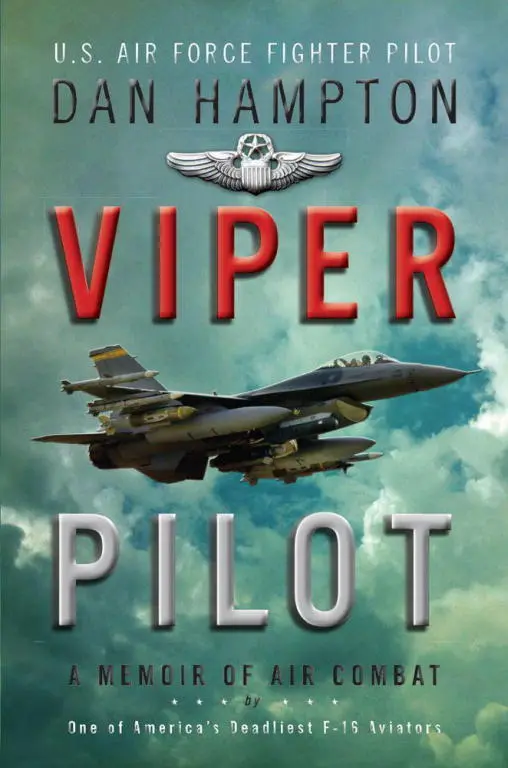
Dan Hampton - Viper Pilot
Здесь есть возможность читать онлайн «Dan Hampton - Viper Pilot» весь текст электронной книги совершенно бесплатно (целиком полную версию без сокращений). В некоторых случаях можно слушать аудио, скачать через торрент в формате fb2 и присутствует краткое содержание. Город: New York, Год выпуска: 2012, ISBN: 2012, Издательство: William Morrow, Жанр: Биографии и Мемуары, nonf_military, на английском языке. Описание произведения, (предисловие) а так же отзывы посетителей доступны на портале библиотеки ЛибКат.
- Название:Viper Pilot
- Автор:
- Издательство:William Morrow
- Жанр:
- Год:2012
- Город:New York
- ISBN:978-0-06-213035-8
- Рейтинг книги:4 / 5. Голосов: 1
-
Избранное:Добавить в избранное
- Отзывы:
-
Ваша оценка:
Viper Pilot: краткое содержание, описание и аннотация
Предлагаем к чтению аннотацию, описание, краткое содержание или предисловие (зависит от того, что написал сам автор книги «Viper Pilot»). Если вы не нашли необходимую информацию о книге — напишите в комментариях, мы постараемся отыскать её.
is the electrifying memoir of one of the most decorated F-16 pilots in American history: U.S. Air Force Lieutenant Colonel Dan Hampton, who served for twenty years, flying missions in the Iraq War, the Kosovo conflict, and the first Gulf War.
Both a rare look into the elite world of fighter pilots and a thrilling first-person account of contemporary air combat,
soars—a true story of courage, skill, and commitment that will thrill U.S. Special Forces buffs, aviation and military history aficionados, and fans of the novels of Tom Clancy and Dale Brown.
Viper Pilot — читать онлайн бесплатно полную книгу (весь текст) целиком
Ниже представлен текст книги, разбитый по страницам. Система сохранения места последней прочитанной страницы, позволяет с удобством читать онлайн бесплатно книгу «Viper Pilot», без необходимости каждый раз заново искать на чём Вы остановились. Поставьте закладку, и сможете в любой момент перейти на страницу, на которой закончили чтение.
Интервал:
Закладка:
I got Egypt.
Still, I was excited. Land of the pharaohs and the Valley of the Kings. I’d studied it all as an architectural student in college, and now I got to see it firsthand. Pyramids and scuba diving. And it wasn’t teaching student-pilot aerobatics for the anal-retentive Training Command in Texas.
Egypt in 1992 had none of the turmoil it is working its way through today. Hosni Mubarak was very definitely in power and the military controlled everything. There were about half a million soldiers on active duty and half a million more in reserve. The Egyptian Air Force was the fourth-largest user of F-16s in the world. Military officers, especially fighter pilots, were treated like royalty. The United States was giving Egypt more than a billion dollars per year in aid, which made American officers doubly welcome.
The Egyptian leadership had watched the Gulf War especially closely. They’d had a long debate over which superpower had superior arms, training, and personnel. The Iraqi military had been largely trained and equipped by the Soviets, yet the Americans had crushed it in less than ninety days. Saddam’s armed forces had been widely feared in the Middle East, at least by the Arabs, and, as our allies, the Egyptians were thrilled to get young combat veterans like me to train their pilots.
I was part of a PEACE VECTOR (PV) program, through which American tactical personnel were “loaned” to friendly foreign governments to provide technical assistance and training. As the United States was, and is, the world’s largest arms exporter, this is big business, to the tune of $18–20B annually. I was essentially a government-sponsored mercenary.
AFTER SEVERAL COUNTERTERRORISM COURSES AND LANGUAGE TRAINING, I was attached to the Office of Military Cooperation in Egypt. The U.S. embassy maintained a beautiful apartment for us in the upscale Mahdi section of Cairo. Marble and earth tones, of course, but very nice and available anytime we wanted to come into the city.
I was sent down to PEACE VECTOR Three at Beni Suef. This former MiG and bomber base was about a hundred kilometers south of Cairo, in the Faiyum Oasis. In the days of ancient Egypt, it had been known as Crocodilopolis, but unfortunately, by the time I got there, all the crocs were long gone. Cairo, Alexandria, and Jiyanklis (on the Suez Canal) also had PV detachments. These usually consisted of two pilots, a maintenance officer, and a handful of senior sergeants who were specialists in their respective fields. Each location hosted an Egyptian fighter wing that was composed of at least two full squadrons. We would be embedded with the resident Egyptian Air Force units and assist them with all aspects of military training.
Beni Suef appalled me at first, but that was only because I was used to Germany. With the notable exception of the Gulf War, I hadn’t seen the shitty parts of the Middle East yet. In retrospect, it was a great place. General Dynamics had built a compound within the confines of the air base for its original support folks. It was like a little village. There were nearly a hundred houses, euphemistically called “villas” while in reality they were 1960s-style ranch homes. Other good things included a baseball diamond, volleyball and tennis courts, a splendid pool, and, of course, a bar with hot tub.
Much like McCarthy-era America, which feared the Soviet Union, Egypt suffered from acute national paranoia toward Israel. This meant each fighter wing maintained a different six-day schedule to prevent the Israelis from sneak-attacking. Theoretically. The Israeli Air Force couldn’t have cared less about Egypt’s alert status. In fact, I met a veteran Israeli pilot who told me that before attacking Beni Suef in 1973, he flew down the runway, in fingertip formation, to give the Egyptians a chance to make it to their bomb shelters. In any event, Egypt had fighters actively flying, seven days a week, all year long. (Apparently, the fact that Egypt and Israel were both American allies didn’t bother anyone in the PV program.)
The Egyptian pilots were all brought in from their homes in Cairo or Alexandria via C-130 transport on day one. Days two through five were workdays. This usually meant four scheduled flights, called lines, in the late morning, followed by four more late in the afternoon. So, eight lines a day for four days. By comparison, a typical American fighter squadron would fly ten to twelve lines in the morning, followed by eight to ten lines in the afternoon or night. American pilots also plan meticulously and debrief each mission exhaustingly, sometimes for five or six hours. Egyptian flight briefings were more of a Zen thing. It was hardly a taxing schedule. On day six, they were on a C-130 back home for a four-day weekend. Then the whole ten-day rotation would begin again.
Between the military detachment and the civilian contractors, there were maybe thirty people living on a compound built for a hundred and fifty. There were no children and only two wives. We played lots of volleyball, swam, and cooked out a great deal. Almost every late afternoon we’d sit up on the roofs and watch the sun go down. Sunsets were truly spectacular. Bands of yellow, orange, and gold lay like glowing sword blades along the horizon. It would become thinner and thinner until, at the very end, the orange fire slid abruptly into the darkness. The final desperate rays would shoot upward, splattering the pink bellies of clouds until they, too, were extinguished. This ritual was usually enhanced by drinking Fuzzy Navels and playing very loud classical music. The Egyptians working on the compound thought we were crazy. They’d stand in small groups, talking softly, pointing at us, and shaking their heads. I thought it was great.
Anyway, about six months into this, I was dozing by the pool early one afternoon when my handheld radio started squawking in highly excited pigeon English.
“Captain Dan! Captain Dan… many planes come!”
Many planes?
I opened an eye and squinted at the radio, debating whether or not to answer it. It was the second day of the typical four-day weekend and absolutely nothing was happening. Normally we’d drive out to the Red Sea coast and dive, or we’d go up to Cairo, stay in the U.S. embassy apartment and get a real meal. But the other pilot was on vacation in Greece, and the maintenance officer was in the States, so I was just hanging around working on a really fine tan.
Deciding to ignore the noise, I then heard an unmistakable dull roar in the distance. That unique manly whine that only comes from high-performance fighter engines. I opened both eyes and stared straight up. The runway was about a mile east of where I lay, and, as the noise got loud enough to drown out the panicked tower controller, I saw them.
Four F-16s in fingertip formation, each about three feet apart and holding position perfectly. I know my mouth dropped open, but I didn’t care. They flew down the runway and pitched out in the classic “break” turn. Only fighters do this, because you pull about six Gs and roll out heading back the way you came. The leader got abeam the approach end of the runway and I saw his landing gear come down. One by one, the other three followed as he dropped and turned to line up on the runway. Egyptians didn’t fly that way.
“Captain Dan! Many plane… you come… please …” The poor guy was practically in tears. Like he was going to be personally blamed for the unannounced arrivals. Actually, he probably was, given the Egyptian military mentality.
“Easy, habibi, ” I answered. “I’ll come now.”
I sighed once at the quiet pool. As I jogged to the villa, two other flights of four came screaming overhead and pitched out. Throwing on my flight suit and boots, I paused long enough to grab two six-packs of beer from the fridge. I was excited now. Lots of countries flew F-16s, and the new arrivals were not Egyptians. Now that the Gulf War was over and the danger was past, many of our NATO allies were finally sending contingents of fighters to the “war” zone. These, I thought, were likely Dutch or Belgians on their way into Saudi Arabia.
Читать дальшеИнтервал:
Закладка:
Похожие книги на «Viper Pilot»
Представляем Вашему вниманию похожие книги на «Viper Pilot» списком для выбора. Мы отобрали схожую по названию и смыслу литературу в надежде предоставить читателям больше вариантов отыскать новые, интересные, ещё непрочитанные произведения.










Обсуждение, отзывы о книге «Viper Pilot» и просто собственные мнения читателей. Оставьте ваши комментарии, напишите, что Вы думаете о произведении, его смысле или главных героях. Укажите что конкретно понравилось, а что нет, и почему Вы так считаете.