Dan Hampton - Viper Pilot
Здесь есть возможность читать онлайн «Dan Hampton - Viper Pilot» весь текст электронной книги совершенно бесплатно (целиком полную версию без сокращений). В некоторых случаях можно слушать аудио, скачать через торрент в формате fb2 и присутствует краткое содержание. Город: New York, Год выпуска: 2012, ISBN: 2012, Издательство: William Morrow, Жанр: Биографии и Мемуары, nonf_military, на английском языке. Описание произведения, (предисловие) а так же отзывы посетителей доступны на портале библиотеки ЛибКат.
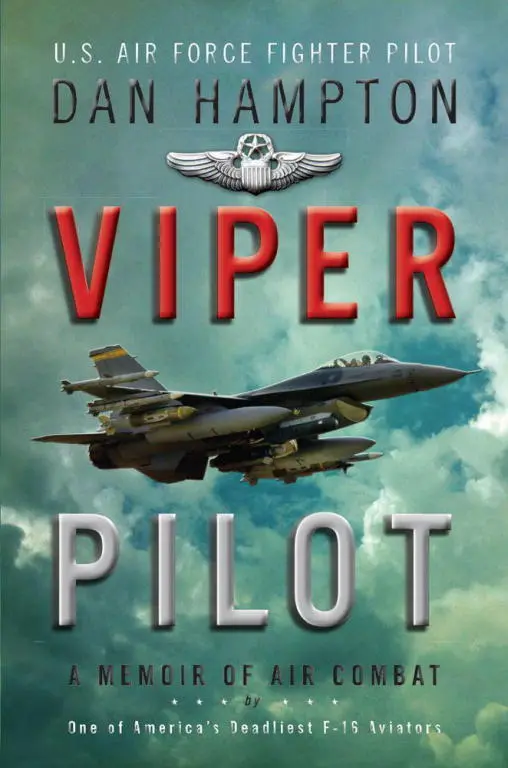
- Название:Viper Pilot
- Автор:
- Издательство:William Morrow
- Жанр:
- Год:2012
- Город:New York
- ISBN:978-0-06-213035-8
- Рейтинг книги:4 / 5. Голосов: 1
-
Избранное:Добавить в избранное
- Отзывы:
-
Ваша оценка:
Viper Pilot: краткое содержание, описание и аннотация
Предлагаем к чтению аннотацию, описание, краткое содержание или предисловие (зависит от того, что написал сам автор книги «Viper Pilot»). Если вы не нашли необходимую информацию о книге — напишите в комментариях, мы постараемся отыскать её.
is the electrifying memoir of one of the most decorated F-16 pilots in American history: U.S. Air Force Lieutenant Colonel Dan Hampton, who served for twenty years, flying missions in the Iraq War, the Kosovo conflict, and the first Gulf War.
Both a rare look into the elite world of fighter pilots and a thrilling first-person account of contemporary air combat,
soars—a true story of courage, skill, and commitment that will thrill U.S. Special Forces buffs, aviation and military history aficionados, and fans of the novels of Tom Clancy and Dale Brown.
Viper Pilot — читать онлайн бесплатно полную книгу (весь текст) целиком
Ниже представлен текст книги, разбитый по страницам. Система сохранения места последней прочитанной страницы, позволяет с удобством читать онлайн бесплатно книгу «Viper Pilot», без необходимости каждый раз заново искать на чём Вы остановились. Поставьте закладку, и сможете в любой момент перейти на страницу, на которой закончили чтение.
Интервал:
Закладка:
Bursting free, the fighter surged upward, gulping thinner air, mixing it with jet fuel, and shooting the exploding mix out the back. Egypt fell away beneath me, and, within seconds, all my eyes could pick up was the distant horizon. Bunting forward slightly, I held the climb angle at sixty degrees and rocketed into the brilliant morning. The F-16 ejection seat is tilted back to counteract the tremendous G forces of dogfighting, so, combined with my climb angle, I was sitting perpendicular to the earth. The air-conditioning vent between my legs coughed and spit out a stream of misty, smelly air; dust from the Egyptian morning, hot plastic canopy baked in the sun, jet fuel, and a faint whiff of burned oil.
I frowned. Hot oil wasn’t normal, but this aircraft had just come out of maintenance after having the engine changed. It was also an Egyptian F-16. Anything was possible, which was precisely why I was flying it this morning on a functional test flight. This was a combination of specific maneuvers, called a profile, designed to thoroughly and brutally punish the aircraft before it was returned to normal flying with squadron pilots. The Egyptians always refused to take the chance of a test flight, so it fell to the Americans. I didn’t mind—it was extra flying time with no brief or debriefing. A few seconds after pulling vertical, I passed 5,000 feet, smiling under the oxygen mask and dark visor. Everything was working perfectly.
Briefly.
It was 0602:11.
“WARNING—WARNING… WARNING—WARNING…”
Shit.
My eyes snapped to the engine instruments, then to the row of RBLs (“really bad lights”). These were just under the glare shield at eye level maybe two feet in front of me.
Shit.
ENG FIRE… HYD OIL… all the serious ones were suddenly glowing red. The jet was dying. Just like that. In less than a second.
0602:16.
Reacting instantly, I yanked the throttle back to IDLE and continued pulling over the top. Without the awesome thrust of its engine, the fighter slowed rapidly. Four hundred fifty knots and falling. If you were watching from a nearby cloud, the F-16’s flight path would have looked like the profile of an egg. At four hundred knots, the jet reached the top of the egg and was gracefully curving back, falling toward the horizon. Inverted now, I pushed the stick forward slightly into “negative” Gs and felt my butt float off the seat. This more or less kept me at the same altitude for a few moments while I hung upside down and decided what to do.
From the beginning of their career, pilots are taught how to troubleshoot complex and potentially fatal in-flight emergencies. The ability to diagnose, evaluate, and choose the correct action while still managing to fly an aircraft is fundamental. It’s another skill that separates a single-seat fighter pilot from the others. We don’t have a crew to read checklists or help evaluate the situation.
Doing all of this in a complicated F-16 loaded up with weapons and traveling at the speed of a rifle bullet is a big challenge. There are two types of emergencies—the kinds that won’t kill you and the ones that will. As this was definitely the latter, there was no time to do anything but react.
The huge, dry runway beneath me helped. European and American runways I’d used were much, much shorter and often wet or icy. On the other hand, the Russians had built this one for bombers, and it was enormous. Also, unlike American runways, which were aligned with the prevailing wind, this one seemed purposely built so there would always be a direct crosswind to complicate landings.
None of that mattered at the moment. I had no engine, and I was going nowhere but down. Eyeballing the gauges, I saw that the engine temperature, called Fan Turbine Inlet Temperature (FTIT), was spiked in the red range. Not good. But the hydraulics and electrics were okay, meaning the flight controls worked and I could still physically fly the jet.
0602:22.
I could smell burning oil; in a plane loaded up with 7,000 pounds of jet fuel and carrying missiles, this was definitely bad. The oil gauge in this $40M fighter was the size of a quarter, and I had to squint to see it. It was low. Not at zero, but well below normal. If I was truly on fire, I would have to either shut the engine down or eject.
Neither option appealed to me.
Or I could pull the throttle back to IDLE, glide to the runway, and hope I didn’t explode. Swiveling my head around to look past the tail, I saw there wasn’t any smoke from a burning engine, so I had that going for me. Hanging there, upside down, with cockpit dust floating in my face and a mile above an air base in the middle of Egypt, I had a brief thought that this wasn’t so bad. I mean, a wing hadn’t fallen off, and I hadn’t taken a missile up the tailpipe over hostile territory, right?
Right.
Without looking down, I reached to the left console by my knee, lifted the protective guard around the switch, and turned on the Emergency Power Unit (EPU). Immediately, a steady “WHRRRRR” vibrated up from behind my seat, as the system fired up. The EPU would provide essential power for hydraulics, flight controls, and the radios in the event the engine failed or I shut it down. There was also a Jet Fuel Starter (JFS) system. This was a small turbine shaft that ran through a gearbox and connected to the main engine. Using a mixture of compressed air and an extremely toxic gas called hydrazine, the main turbine would spin up to begin the ignition sequence. This allowed a startup independent of the old cumbersome “start” carts you see beside older jets.
0602:26.
Just then a violent shudder ran up from under the ejection seat, through the cushion and into my spine. Flipping the fighter upright, I blinked as the dust settled back to the floor. Rolling up on my left wing, because fighter pilots prefer to look left, I stared down at the field. I was too high and too close. Dumping the nose slightly, I angled away to the right, so I could look left at the runway. Glancing sideways into the cockpit, I squinted against the morning sun at the engine gauges. The EPU was providing minimal hydraulic pressure and enough electricity to keep the flight controls working. Everything else looked bad.
At 4,900 feet above the runway, at 0602:30, I keyed the mike.
“Beni Suef Tower… Beni Tower… MAKO Four One…”
I was now about a mile southwest of the field in a wide, shallow descending turn. Flying was all by the seat of my pants at this point. Distance and altitude… distance and altitude. I could see where I needed to be, and my hands worked to make it happen. Flameout landings were a huge part of F-16 non-tactical training. We practiced this technique repeatedly, day or night, in all weather and from random positions. But in the back of your head, in training, you know that if you completely ass it up, your engine still works and you won’t crash or eject.
Not this time. Although the engine was still running, the smell was worse, and I knew I’d never be able to go around and attempt it again. I was trying not to think about the Egyptian Air Force’s incompetent maintenance. There were thousands of spinning turbine blades, millions of micro-combustions, and miles of tubing, conduit, and wiring running beneath my feet. All repaired by Arabs, who generally didn’t read their own language, much less six-inch-thick manuals written in technical English. This was another reason I didn’t want to try the ejection seat.
“What the fuck am I doing here…” I muttered as I rolled and adjusted my flight path. I was holding about 250 knots and steadily dropping. Jets don’t glide well. The oil gauge now read zero pressure and the cockpit smelled like the inside of an oil can. But no smoke yet.
At 0602:34, I put the gear handle down and felt two belated “thumps.” Eyeballing the landing-gear lights, I saw only two lights. No nose gear. Perfect. Then the tower decided to wake up.
Читать дальшеИнтервал:
Закладка:
Похожие книги на «Viper Pilot»
Представляем Вашему вниманию похожие книги на «Viper Pilot» списком для выбора. Мы отобрали схожую по названию и смыслу литературу в надежде предоставить читателям больше вариантов отыскать новые, интересные, ещё непрочитанные произведения.










Обсуждение, отзывы о книге «Viper Pilot» и просто собственные мнения читателей. Оставьте ваши комментарии, напишите, что Вы думаете о произведении, его смысле или главных героях. Укажите что конкретно понравилось, а что нет, и почему Вы так считаете.