Dan Hampton - Viper Pilot
Здесь есть возможность читать онлайн «Dan Hampton - Viper Pilot» весь текст электронной книги совершенно бесплатно (целиком полную версию без сокращений). В некоторых случаях можно слушать аудио, скачать через торрент в формате fb2 и присутствует краткое содержание. Город: New York, Год выпуска: 2012, ISBN: 2012, Издательство: William Morrow, Жанр: Биографии и Мемуары, nonf_military, на английском языке. Описание произведения, (предисловие) а так же отзывы посетителей доступны на портале библиотеки ЛибКат.
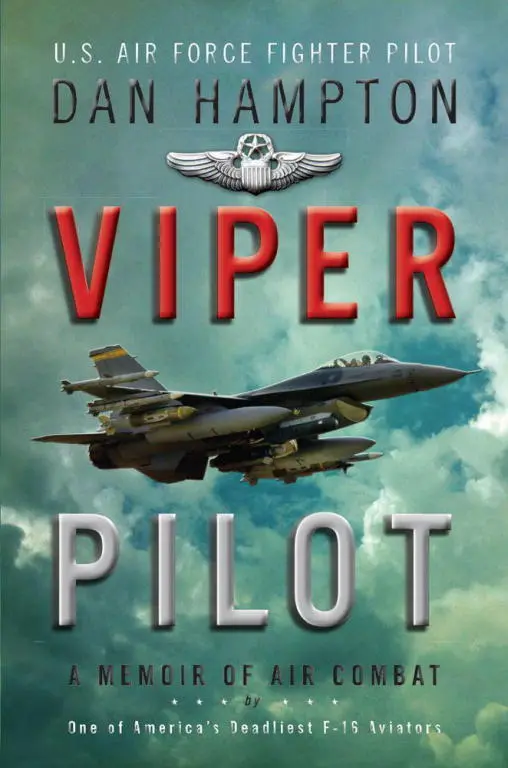
- Название:Viper Pilot
- Автор:
- Издательство:William Morrow
- Жанр:
- Год:2012
- Город:New York
- ISBN:978-0-06-213035-8
- Рейтинг книги:4 / 5. Голосов: 1
-
Избранное:Добавить в избранное
- Отзывы:
-
Ваша оценка:
Viper Pilot: краткое содержание, описание и аннотация
Предлагаем к чтению аннотацию, описание, краткое содержание или предисловие (зависит от того, что написал сам автор книги «Viper Pilot»). Если вы не нашли необходимую информацию о книге — напишите в комментариях, мы постараемся отыскать её.
is the electrifying memoir of one of the most decorated F-16 pilots in American history: U.S. Air Force Lieutenant Colonel Dan Hampton, who served for twenty years, flying missions in the Iraq War, the Kosovo conflict, and the first Gulf War.
Both a rare look into the elite world of fighter pilots and a thrilling first-person account of contemporary air combat,
soars—a true story of courage, skill, and commitment that will thrill U.S. Special Forces buffs, aviation and military history aficionados, and fans of the novels of Tom Clancy and Dale Brown.
Viper Pilot — читать онлайн бесплатно полную книгу (весь текст) целиком
Ниже представлен текст книги, разбитый по страницам. Система сохранения места последней прочитанной страницы, позволяет с удобством читать онлайн бесплатно книгу «Viper Pilot», без необходимости каждый раз заново искать на чём Вы остановились. Поставьте закладку, и сможете в любой момент перейти на страницу, на которой закончили чтение.
Интервал:
Закладка:
“Mahhko… Mahhko… theese Bani Toweler… you call?” The Egyptian sounded sleepy.
I swallowed and took a deep breath.
“MAKO Four One… Base Key… Emergency,” I answered calmly. I mean, you have to sound good, even in Egypt.
I was now about two miles southwest of the runway, passing 3,000 feet, and still no nose gear. I pumped the stick a few times to help it down but still had no light. It didn’t matter. Dumping the nose to keep my speed up, I steepened the turn and came around to point at the runway, just as the tower controller went bat-shit.
“Mahhko… WHAT?” he screamed. Arabs generally aren’t known for their ability to stay calm, cool, and collected.
“Say ageeen… you have… mish’killah ?” He reverted to Arabic in his panic, although what he had to be excited about was beyond me. I was the one riding the pine, as we say. To help him out, I replied in Arabic.
“Aiwa habibi … MAKO jenoob harb… itneen kilo.” You bet… MAKO is southwest, two miles.
As the tower operator erupted into a flood of high-speed Arabic and English, I just turned the volume down. He couldn’t do anything for me anyway, and I had other problems. Landing on two wheels wouldn’t kill me unless I was a complete jackass, and with a couple miles of concrete before me, it wasn’t too critical. I focused entirely on where I wanted to touch down—called an aim point—and my airspeed. If I was too slow, I’d stall and die. If I was too fast, I’d run out of runway and crash in the dirt. In this situation, the only way to get slower or faster was by trading altitude, and without an engine, I had all the height I was going to get.
Base Key was an established position in the standard F-16 flameout landing pattern. It meant I was somewhere between one and three miles at about 2,000 feet and lining up with the runway to land. I was in a decent position. Sufficient distance and airspeed to make it and enough runway to stop on. I exhaled, and for the second time I felt I might reasonably survive this.
Then I saw the smoke.
Little gray wisps of it floated out from my air-conditioning ducts. My eyes flickered back and forth between the ground and the smoke. Getting fixated on the wrong thing right now would be fatal. Besides… sometimes the vapor from the environmental control system looked like smoke. But vapor doesn’t burn, and this stuff stank.
Reacting instantly, I pulled the throttle back over the stop into CUTOFF and heard the engine immediately wind down. The cockpit got ominously quiet except for Bitching Betty’s annoying monotone and the sound of air rushing over the canopy.
“WARNING, WARNING… WARNING, WARNING…”
Yeah… I know.
It was 0602:40.
I passed through a thousand feet at 1.5 miles from the end of the runway, slowing to 230 knots. My throat was dry and my hands were clammy as I stared through the HUD. Far off toward the middle of the airfield, I saw the morning sun glinting from the control tower’s mirrored-glass windows. Several vehicles with flashing lights were racing down the taxiway, raising twin brown plumes of dust. That surprised me. I hadn’t known there were any emergency response trucks here.
Lining up the little green Flight Path Marker on the white centerline stripes, I noticed that the smoke had disappeared, which was good, but that my nose gear was still up, which was bad. Pulling a little on the stick, I let the jet rise slightly and slowly to 190 knots. Sometimes the nose gear wouldn’t extend if the airspeed was too high. But nothing happened, and as the controls got sluggish, I pushed the nose back over for more airspeed.
Holding 200 knots, I kept the little FPM nailed to the runway and glided over the threshold. With the ground rushing up, I made a gentle, blended pull, called a “flare,” and held the jet off the concrete. As I did this, I heard another thump as the nose gear finally came down. Not risking a look into the cockpit, I eyeballed the last few feet against the rapidly dropping airspeed. Rocking slightly between both wheels, the fighter touched down in wobbly F-16 fashion. I kept the nose off the ground as the runway zipped past.
At 100 knots, I let the nose drop and, despite the green gear light, I winced when the wheel smacked down. Without an engine to continuously power the brakes, stopping would be problematic on most runways, but this one was so long I wasn’t worried. Nevertheless, I let the F-16 roll out by itself for a few seconds, then smoothly pressed down on the brakes to completely stop the jet.
The fighter came to a halt 7,000 feet down the runway at 0603:07. I sat there for a few moments, staring straight ahead, my boots pressed hard against the rudder pedals and my hands still gripping the stick and throttle. One minute and thirty seconds had elapsed since I’d released the brakes for takeoff. Fifty-six seconds since the engine decided to come apart.
Reaching over, I toggled on the parking brake and then unhooked the left side of my oxygen mask. Leaning my head back against the seat, I gazed up through the canopy at the blue sky and the beautiful dawn that had nearly been my last. Off to the left, the emergency vehicles were careening in my direction; I exhaled slowly.
Switching off the EPU, I raised the canopy, pulled my helmet from my head, and put it on the HUD as a wave of warm Egyptian air hit me. Rich earth, dust, and a faint whiff of burning trash. I smiled a bit as I wiped my face.
It doesn’t get any weirder than this.
AGAIN, I SHOULD’VE KNOWN BETTER THAN TO HAVE THIS THOUGHT. I glanced up over the canopy rail to the right and saw an ancient-looking peasant not thirty yards away. He was standing in the dirt beside the runway and had obviously walked through the holes in the perimeter fence. If we were on a U.S. air base, he’d never get through the fence. Or, if he did, he’d be dead right now. The man had a face like a raisin and dark, deep-set eyes. He was wearing ragged sandals and a dirty white gallibiyah, an ankle-length robe. Beside him was a donkey even skinnier than he was, and they were both looking at me.
Later I’d come to think that this scene summed up Egypt. They could build 12,000-foot runways but couldn’t keep old farmers from wandering onto them. They could buy $40M jet fighters but couldn’t keep them working. However, right then I was literally dazed. I’d just landed an F-16 without power, saved it and myself, and was staring at a donkey’s face.
So, as I sat there, my sweat cooling and the emergency sirens growing louder, the peasant calmly shuffled in front of my jet, leading the mangy animal. As they passed before me, the donkey raised his tail and shat on the runway. The old man looked back at me and very deliberately shook his head.
I think the donkey did, too.
THE CAREER OF A TACTICAL OFFICER IS NOMADIC. TRUE MILITARY logic assumes that picking someone up every two to three years and having him start over somewhere else is a smart thing. It does offer a great deal of experience in widely varied environments, which, I suppose, is the point. You also get very good at moving and selling houses.
My operational career had been overseas, and I wanted to stay there. No other commitments—why not see the world? Germany had been terrific, but it was time to go. The Air Force figured that a young, combat-experienced, frontline instructor pilot would be ideal for… flying training jets in Texas.
I disagreed.
With feeling.
Scrambling around for any alternative, I discovered there were some wild and exotic exchange tours available to fighter pilots. These programs provided American instructors to assist allied air forces that had purchased F-16s. I had friends who went to Greece, Portugal, and Turkey. One lucky bastard ended up on the island of Bali with the Indonesian Air Force and women in grass skirts. He used to send me postcards just to rub it in.
Читать дальшеИнтервал:
Закладка:
Похожие книги на «Viper Pilot»
Представляем Вашему вниманию похожие книги на «Viper Pilot» списком для выбора. Мы отобрали схожую по названию и смыслу литературу в надежде предоставить читателям больше вариантов отыскать новые, интересные, ещё непрочитанные произведения.







Обсуждение, отзывы о книге «Viper Pilot» и просто собственные мнения читателей. Оставьте ваши комментарии, напишите, что Вы думаете о произведении, его смысле или главных героях. Укажите что конкретно понравилось, а что нет, и почему Вы так считаете.