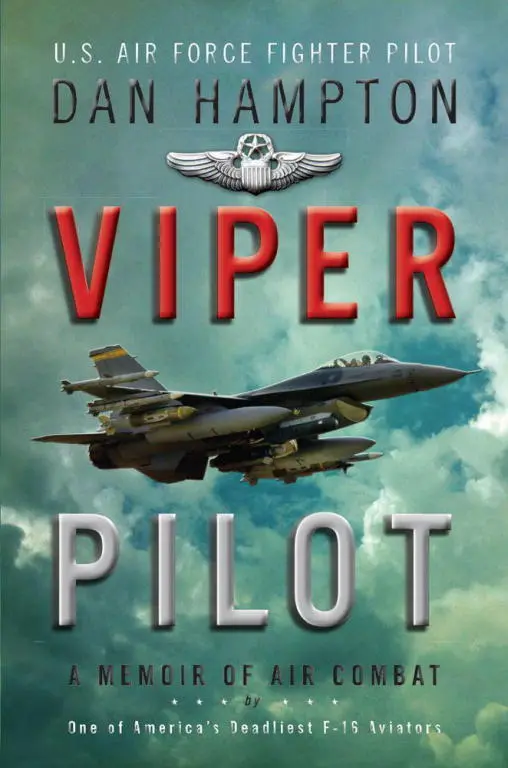
Dan Hampton - Viper Pilot
Здесь есть возможность читать онлайн «Dan Hampton - Viper Pilot» весь текст электронной книги совершенно бесплатно (целиком полную версию без сокращений). В некоторых случаях можно слушать аудио, скачать через торрент в формате fb2 и присутствует краткое содержание. Город: New York, Год выпуска: 2012, ISBN: 2012, Издательство: William Morrow, Жанр: Биографии и Мемуары, nonf_military, на английском языке. Описание произведения, (предисловие) а так же отзывы посетителей доступны на портале библиотеки ЛибКат.
- Название:Viper Pilot
- Автор:
- Издательство:William Morrow
- Жанр:
- Год:2012
- Город:New York
- ISBN:978-0-06-213035-8
- Рейтинг книги:4 / 5. Голосов: 1
-
Избранное:Добавить в избранное
- Отзывы:
-
Ваша оценка:
Viper Pilot: краткое содержание, описание и аннотация
Предлагаем к чтению аннотацию, описание, краткое содержание или предисловие (зависит от того, что написал сам автор книги «Viper Pilot»). Если вы не нашли необходимую информацию о книге — напишите в комментариях, мы постараемся отыскать её.
is the electrifying memoir of one of the most decorated F-16 pilots in American history: U.S. Air Force Lieutenant Colonel Dan Hampton, who served for twenty years, flying missions in the Iraq War, the Kosovo conflict, and the first Gulf War.
Both a rare look into the elite world of fighter pilots and a thrilling first-person account of contemporary air combat,
soars—a true story of courage, skill, and commitment that will thrill U.S. Special Forces buffs, aviation and military history aficionados, and fans of the novels of Tom Clancy and Dale Brown.
Viper Pilot — читать онлайн бесплатно полную книгу (весь текст) целиком
Ниже представлен текст книги, разбитый по страницам. Система сохранения места последней прочитанной страницы, позволяет с удобством читать онлайн бесплатно книгу «Viper Pilot», без необходимости каждый раз заново искать на чём Вы остановились. Поставьте закладку, и сможете в любой момент перейти на страницу, на которой закончили чтение.
Интервал:
Закладка:
Another great squadron had a weekly ceremony and award called the “HUA.” This stands for “Head Up [his] Ass” award and was given—after much serious and sober consideration, of course—to the poor bastard who’d done the dumbest thing that week. This didn’t necessarily have to do with flying if you’d been stupid enough to have witnesses for something else.
Like the punk lieutenant who rolled in on a slightly older but stunning woman at the Officer’s Club bar only to later discover that she was his new commander’s wife. A commander who observed the whole sorry attempt from a few bar stools down. She thought it was funny but the colonel didn’t laugh much. Neither did the lieutenant.
Where the commander is the personality of a squadron, the Vault is the heart.
The Vault is a secure, special-access area of the squadron that’s only entered through a coded, double steel door. Inside are the briefing rooms, library, mission-planning areas, map rooms, and computers. The Vault is the focal point for tactical operations and is the province of the squadron Weapons Officer.
Also known as a Patchwearer or Target Arm, the Weapons Officer is the squadron expert on combat operations and the training required to survive and win wars. A graduate of the elite Fighter Weapons Instructor Course (FWIC) taught at Nellis AFB in the Nevada desert, he’s been through the nastiest, toughest tactical-air-combat course in the world. Think of it as a fighter pilot’s version of a Special Forces or SEAL Team—absolutely the best of the best in tactical aviation. Easy to spot by the black-and-gray patch (earned on completion of Fighter Weapons School) worn on his left shoulder, the Weapons Officer is the yardstick by which the other squadron pilots are measured. He instructs the instructors. He takes the squadron to war.
THE PATHWAY TO THE FIGHTER WEAPONS SCHOOL WORKS LIKE THIS.
Weapons Officers are constantly evaluating the instructor pilots in their squadrons. Target Arms select and train senior flight leads as instructors, so they’re aware of likely candidates for several years. Each of these guys will already have phenomenal credentials as a pilot and instructor, so what makes or breaks the application are the recommendations from the few active Patchwearers in the wing. Just being an extremely gifted pilot isn’t enough. The guy has to be able to teach as well as lead, and this isn’t always the same thing.
The Air Force’s idea is to train very few individuals to a level surpassing all others and then have them teach the rest. Aside from eye-watering flying abilities, this is why being able to instruct is so vital. To paraphrase one Fighter Weapons Instructor, being the best pilot in the Air Force doesn’t matter if no one can learn from you.
Twice per year, each wing will submit a primary candidate and an alternate from its top pilots for the Weapons School selection board to consider. So, out of the hundreds of fighter instructor pilots in the USAF, about thirty get selected to attend each course. For the F-16 world, that amounts to three or four from bases within the United States, one from Germany, and two from the Far Eastern bases.
Once you’re selected, but before leaving for Nellis, you get what’s called a “spin-up.” In essence, the Patchwearers at your base take turns beating the shit out of you. You go out and dogfight every day against your wing’s Target Arms for two weeks to hone your skills. Your briefing and debriefing skills are exhaustingly picked apart. Remember, you’re already an IP and the top pick from your base, so this is humbling.
Fighter Weapons School lasts six months—and the details are almost all classified. Incidentally, all Air Force fighter pilots today have Top Secret/Special Compartmentalized Information (TS/SCI) clearance. The course generally follows the same structure that a pilot will have experienced in every training program he’s completed—but the course is on steroids. Remember, besides extremely lethal fighting skills, the goal is to really, really teach a pilot how to instruct others.
AS YOU TRAVEL TO NELLIS AFB (LOCATED OUTSIDE LAS VEGAS, NEVADA) and spend your first week there in a classroom, the Weapons School instructors are fighting each other twice a day, every day. By the time you face off with them, you haven’t flown in two weeks, while they’ve been sharpening their claws and licking their fangs. Not that it would make a difference. They’re superb, and no spin-up in the world would save a student from the shredding he’s about to receive. It’s a necessary attention-getter: until you get thoroughly trounced, somewhere in the back of your mind is the belief that you’re still God’s gift to the fighter world. You get over it quick.
Basic Fighter Maneuvers (BFM) is the first phase of the course. It’s anything but basic and much too complex to describe on paper, but I’ll attempt an overview. BFM is aerial hand-to-hand combat at 400 knots. Its purpose is to teach the pilot to truly fly and fight the aircraft. Nothing reveals the physical limits of yourself and the jet like BFM. It is fast, violent, and death is literally a few seconds away. There are midair collisions, out-of-control situations, and blackouts from G-locks. This is the blood-draining agony of sustained, multidimensional maneuvering at seven to nine times the force of gravity.
It will kill you.
There are four types of BFM. Offensive, which puts you at a starting point behind your adversary. He reacts, and you have to kill him before he can reverse positions and kill you. Defensive, where you’re the meat and the enemy is behind you. You’ve got to defeat his initial shots and then stay alive long enough to take away his advantage and kill him. In neutral BFM, the fight begins as both aircraft pass nose-to-nose at about a thousand knots. Each guy then claws through various options at 800 feet per second and tries to arrive at a position to employ his weapons. In this case, barring a mistake, it all comes down to experience and who can outperform the other soonest. Dissimilar BFM is when any of the above are fought against another type of aircraft. This, especially if it’s from a neutral setup, is the most realistic dogfighting training there is. In the real world, you rarely know exactly who all the bad guys are, and you’re much more likely to meet one head-on rather than sneak up behind him.
BFM is only the beginning.
Air Combat Maneuvering (ACM) is next, and it’s BFM on steroids. Here you fight as a pair against one enemy fighter. Again, there’s Offensive, Defensive, Neutral, and Dissimilar. Communicating with your wingman is vital, and together you must locate the threat, identify it, react, and then kill it. Remember, you’re doing all this while zipping around at rifle-bullet speeds.
Air Combat Tactics (ACT) is fighting as a pair against an unknown number of adversaries—because in combat you never really know how many bad guys are out there. Again, this approximates real-world confusion and tests a pilot’s ability to be able to think, fight, and win against any number or type of threat.
There are two main categories of air-to-air tactics. Within Visual Range (WVR) is where you’re fighting an opponent you can see with your eyes. This usually means short-range weapons, like heat-seeking Sidewinder missiles and the 20-mm cannon. Beyond Visual Range (BVR) is meant to take advantage of the American technical superiority that permits long-range missile employment. If you can kill a guy before he gets close enough to shoot at you, it’s always better. Think about a man coming at you with a knife, but you’ve got a loaded gun in your hand. Would you pull your own knife or just shoot him in the head?
The best part of ACT was the dissimilar combat. We usually fought against American F-15s or F/A-18s, both of which are very tough fights. There were even some Navy F-14 Tomcats (you know, Maverick and Goose) still creaking around, but they were more for trophy-hunting rather than fighting. Sparing no expense, the Air Force also brought over foreign aircraft and their pilots when available. French Mirages, Israeli KIFRs, and German Tornados were all on the menu.
Читать дальшеИнтервал:
Закладка:
Похожие книги на «Viper Pilot»
Представляем Вашему вниманию похожие книги на «Viper Pilot» списком для выбора. Мы отобрали схожую по названию и смыслу литературу в надежде предоставить читателям больше вариантов отыскать новые, интересные, ещё непрочитанные произведения.







Обсуждение, отзывы о книге «Viper Pilot» и просто собственные мнения читателей. Оставьте ваши комментарии, напишите, что Вы думаете о произведении, его смысле или главных героях. Укажите что конкретно понравилось, а что нет, и почему Вы так считаете.