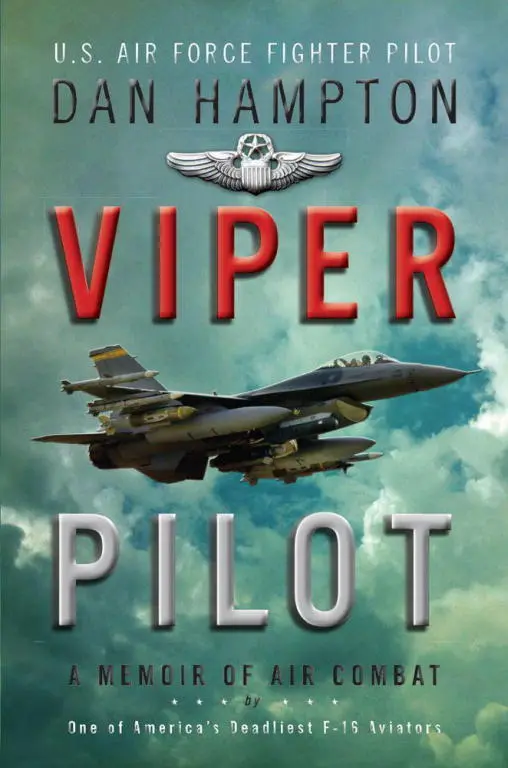
Dan Hampton - Viper Pilot
Здесь есть возможность читать онлайн «Dan Hampton - Viper Pilot» весь текст электронной книги совершенно бесплатно (целиком полную версию без сокращений). В некоторых случаях можно слушать аудио, скачать через торрент в формате fb2 и присутствует краткое содержание. Город: New York, Год выпуска: 2012, ISBN: 2012, Издательство: William Morrow, Жанр: Биографии и Мемуары, nonf_military, на английском языке. Описание произведения, (предисловие) а так же отзывы посетителей доступны на портале библиотеки ЛибКат.
- Название:Viper Pilot
- Автор:
- Издательство:William Morrow
- Жанр:
- Год:2012
- Город:New York
- ISBN:978-0-06-213035-8
- Рейтинг книги:4 / 5. Голосов: 1
-
Избранное:Добавить в избранное
- Отзывы:
-
Ваша оценка:
Viper Pilot: краткое содержание, описание и аннотация
Предлагаем к чтению аннотацию, описание, краткое содержание или предисловие (зависит от того, что написал сам автор книги «Viper Pilot»). Если вы не нашли необходимую информацию о книге — напишите в комментариях, мы постараемся отыскать её.
is the electrifying memoir of one of the most decorated F-16 pilots in American history: U.S. Air Force Lieutenant Colonel Dan Hampton, who served for twenty years, flying missions in the Iraq War, the Kosovo conflict, and the first Gulf War.
Both a rare look into the elite world of fighter pilots and a thrilling first-person account of contemporary air combat,
soars—a true story of courage, skill, and commitment that will thrill U.S. Special Forces buffs, aviation and military history aficionados, and fans of the novels of Tom Clancy and Dale Brown.
Viper Pilot — читать онлайн бесплатно полную книгу (весь текст) целиком
Ниже представлен текст книги, разбитый по страницам. Система сохранения места последней прочитанной страницы, позволяет с удобством читать онлайн бесплатно книгу «Viper Pilot», без необходимости каждый раз заново искать на чём Вы остановились. Поставьте закладку, и сможете в любой момент перейти на страницу, на которой закончили чтение.
Интервал:
Закладка:
These international guys always had a good time flying across the world to Sin City to dogfight in the sun. One night in downtown Vegas, I watched a British fighter squadron get thrown out of a casino and arrested en masse. The Brits were confused, because it’s simply Royal Air Force tradition to get plastered, sing songs, and perform the Prang Concerto—that is, burn a piano. Unfortunately, this particular piano was in the lobby of a very large and prominent downtown casino. If we’d done that, we’d be in jail for a while, but these guys got a headline in the Daily Mirror and a hero’s welcome back in England. We thought it was great. Do you want fighter pilots or overgrown Boy Scouts?
ACT was also important, because it was more or less the halfway point of the program, and I finally felt I might make it. Maybe. Again, it was a real shock for someone who’d aced everything to date to consider failing a formal course. Shocking and scary. But fear is a very useful motivator.
Throughout the program, we also attended classes every day. More than three hundred hours of academic instruction covering all the aircraft systems at engineering-level detail. All the weapons we could use were dissected and rebuilt. Tactics, countertactics, and every threat we could face in the world was analyzed in detail. We also had to research and write a graduate school–level paper on a related classified subject, and then present it before a panel of FWIC instructors. All of this was commingled with nonstop flying, briefing, and debriefing. I used to fall asleep standing up in the shower at the end of the day. It sucked. I loved it.
The last few flights in the air-to-air phase were called four v. fours—meaning four of us against four of something else. In our case, we traveled to Florida and flew against the F-15s from the 33rd Fighter Wing (Eglin AFB) and the 325th Fighter Wing (Tyndall AFB). Air-to-air fighting in all its variations is what Eagles do. It’s all they do. And the advantage to flying only one type of mission is that you have the luxury of becoming extremely good at it.
However, we were all F-16 instructors and we’d been FWIC students for three months. We’d recovered some confidence and were ready to finish ACT and move on. Besides, it was Florida, and everyone, the FWIC instructors included, was looking forward to a little wind-down before we started the most complex sections of the course. Killing Eagles at the beach was fun. I smiled for the first time in three months.
With the air-to-air phase complete, the FWIC course switched into high gear. Viper pilots regard dogfighting as something we might have to do on our way to killing things on the ground. No one ever won a war solely through air superiority. Don’t get me wrong—you have to own the air in order to win on the ground, but rarely can you be victorious with airplanes alone. Every American war fought since 1917 is proof of that.
Bomb-dropping in support of ground operations, generally referred to as “Surface Attack,” is the bread and butter of the F-16 world. There are low- and medium-altitude attacks with different bombs, strafing with the 20-mm cannon, precision-guided munitions like the Maverick missile, laser and TV bombs, cluster bombs… the list goes on.
The point is, as a Target Arm, you’ve got to be the best at this. From your own jet, you have to be able to watch pilots executing these attacks and be instantly able to gauge their effectiveness. Or prevent fatalities. Several thousand pounds of high explosives delivered in the wrong place can kill you. Or blow up the wrong people on the ground. Missing a target also means someone else will have to fight his way in and risk his life to fix your fuckup. It could also lead to ground troops getting overrun and never coming home again. So we take it seriously—and so did the FWIC instructors.
Basic Surface Attack leads into Surface Attack Tactics (SAT). A student is given “objectives”—the desired results—and a few other specifics, like the Time Over Target (TOT) and the known threats. He then designs, plans, briefs, and leads the attacks against the entire catalog of possible threats.
Now, the Nellis threat array is infamous for its lethality, in a training sense. In any given year, more than five hundred aircraft from all over the world fly twenty thousand training sorties against these threats. All U.S. tactical flying units cycle through every few years, including USAF fighter squadrons based in Europe and the Far East. All the NATO air forces attend if they can afford it, and occasionally you can see Israelis and some of the friendlier Arab nations, like Egypt or Morocco. Even the French show up occasionally, when they can find it.
After SAT comes the Mission Employment (ME) phase. Every aspect of the course is rolled into four separate missions. You’re given tactical problems with targets, threats, and timing windows. How you solve the problems is up to you. I’ve seen perfect plans that are poorly executed and bad plans that are overcome by superb execution. You just never know how it’s going to play out, and a student’s adaptability is a key issue with surviving this phase—or not.
The FWIC student, now only several flights away from hopefully graduating, is the Mission Commander. He has to decide, based on the threats and the target, how to plan and orchestrate the attack. He chooses the weapons, routes, tactics, and designs the attacks. He also runs the entire mass briefing and debriefing.
Each aircraft that flies on the Nellis range carries an Air Combat Maneuvering Instrumentation (ACMI) pod. All the flight parameters and even the pilot’s HUD view is fed back to a huge building containing the mission debriefing system. RFMDS, the Red Flag Mission Debriefing System, is the heart of all tactical training at Nellis. Every mission and every flight can be picked apart thanks to the ACMI pods. It’s a tremendous advantage, to be able to sit with a cup of coffee at zero miles per hour and totally reconstruct a mission. All maneuvers, tactics, and every weapon that is dropped or shot is analyzed. This is how we learn, improve, evaluate, and this is another reason for American air supremacy.
For a FWIC student, the ME phase is a rite of passage. However, I knew two pilots who washed out in this final part of the course. If you do survive, your immediate reaction is disbelief. At least it was in my case. That, and the weak-limbed numbness that comes from profound relief. I’d been through every other formal course and training possible for a fighter pilot— and had seen action in the Gulf War. Fighter Weapons School was by far the most difficult.
After my final flight, I drove back to the Visiting Officer’s Quarters and sat outside on the Wailing Bench. Normally, you only sat on this thing when you busted (failed) a flight. You’d carve your call sign and the mission number into the bench and wait for your buddies to pass you a shot of scotch by way of solace. Needless to say, there were hundreds of names and dates, because everyone busts rides. So I sat there, let the sweat dry, and the realization sink in that I was almost a Patchwearer. There was one final, very closely held initiation that would take place during Patch Night. After this, graduates received the gray-and-black patch they’d proudly wear for the rest of their careers. The idea was now to go back to a fighter squadron with the latest techniques and tactics and pass it along to everyone else.
I’d known for months that my combat experiences in the Gulf were at odds with some of the tactics being taught at Nellis. But remember the environment. FWIC instructors fight other elite American pilots, so their tactics tend to reflect that level of threat—and not necessarily those posed by poorly trained Russian, Chinese, or Middle Eastern aviators. Besides, if you can defeat the Nellis “threat,” you can beat anything in the world. One curious result I’ve noticed is that we often falsely equate the threat’s capability with our own standards. We give them too much credit and occasionally derive some flawed tactics from this outlook. I was determined not to do this. I wanted to combine all my previous experience with the magic I’d just been taught—a perfect marriage of real-world lessons with the most lethal fighter training in the world. In retrospect, it was a nice thought.
Читать дальшеИнтервал:
Закладка:
Похожие книги на «Viper Pilot»
Представляем Вашему вниманию похожие книги на «Viper Pilot» списком для выбора. Мы отобрали схожую по названию и смыслу литературу в надежде предоставить читателям больше вариантов отыскать новые, интересные, ещё непрочитанные произведения.








Обсуждение, отзывы о книге «Viper Pilot» и просто собственные мнения читателей. Оставьте ваши комментарии, напишите, что Вы думаете о произведении, его смысле или главных героях. Укажите что конкретно понравилось, а что нет, и почему Вы так считаете.