Dan Hampton - Viper Pilot
Здесь есть возможность читать онлайн «Dan Hampton - Viper Pilot» весь текст электронной книги совершенно бесплатно (целиком полную версию без сокращений). В некоторых случаях можно слушать аудио, скачать через торрент в формате fb2 и присутствует краткое содержание. Город: New York, Год выпуска: 2012, ISBN: 2012, Издательство: William Morrow, Жанр: Биографии и Мемуары, nonf_military, на английском языке. Описание произведения, (предисловие) а так же отзывы посетителей доступны на портале библиотеки ЛибКат.
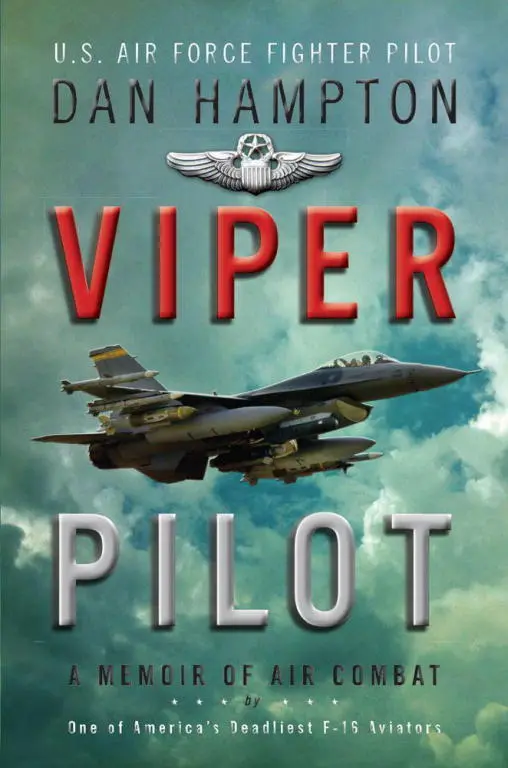
- Название:Viper Pilot
- Автор:
- Издательство:William Morrow
- Жанр:
- Год:2012
- Город:New York
- ISBN:978-0-06-213035-8
- Рейтинг книги:4 / 5. Голосов: 1
-
Избранное:Добавить в избранное
- Отзывы:
-
Ваша оценка:
Viper Pilot: краткое содержание, описание и аннотация
Предлагаем к чтению аннотацию, описание, краткое содержание или предисловие (зависит от того, что написал сам автор книги «Viper Pilot»). Если вы не нашли необходимую информацию о книге — напишите в комментариях, мы постараемся отыскать её.
is the electrifying memoir of one of the most decorated F-16 pilots in American history: U.S. Air Force Lieutenant Colonel Dan Hampton, who served for twenty years, flying missions in the Iraq War, the Kosovo conflict, and the first Gulf War.
Both a rare look into the elite world of fighter pilots and a thrilling first-person account of contemporary air combat,
soars—a true story of courage, skill, and commitment that will thrill U.S. Special Forces buffs, aviation and military history aficionados, and fans of the novels of Tom Clancy and Dale Brown.
Viper Pilot — читать онлайн бесплатно полную книгу (весь текст) целиком
Ниже представлен текст книги, разбитый по страницам. Система сохранения места последней прочитанной страницы, позволяет с удобством читать онлайн бесплатно книгу «Viper Pilot», без необходимости каждый раз заново искать на чём Вы остановились. Поставьте закладку, и сможете в любой момент перейти на страницу, на которой закончили чтение.
Интервал:
Закладка:
It was called Khobar Towers—and it was as good as it was going to get.
One humid, sticky night in June changed all that. As the faint mournful echoes of evening prayer floated over our compound, the lights flickered and for a fraction of a second I felt an overpressure in my ears. My brain didn’t process the cause until the building shook and I suddenly found myself on the floor in the next room. The glass picture window that made up the exterior wall was gone. It took me a few seconds to realize that I was sitting on most of it. More was in my hair and stuck through my skin in various places. But not my eyes, thank God. As I lay there, legs spread and sticky back against the wall, it occurred to me to inventory my critical body parts.
Testicles first. Thanks again.
Then feet, legs, hands, etc.… As I was doing this, my suitemate (each officer got his own room in the four-bedroom suite) appeared in the doorway. The blast had knocked him out of bed and he stood there a moment, scratching himself and peering at me through one open eye.
“Hey… I think that was a bomb.”
No shit, Sherlock.
In fact, it was an enormous bomb.
Twenty-five thousand pounds of TNT had been packed into a sewage service tanker truck and driven up to the perimeter on the northeastern corner of the compound. A USAF Security Policeman had actually seen the truck and its getaway car approach the fence. Two local Saudis had jumped out of the truck into the car and sped off. Recognizing it for what it was, the cop tried to evacuate Building 131, the closest to the truck—but was too late.
All the American pilots had just finished our nightly fun of cracking skulls during games of roller hockey. I slowly limped upstairs and was heroically drinking milk in my kitchen on the top floor of Building 133 when the bomb went off. Minutes later, as I lay there in the puddle of glass and blood, I remembered a similar blast in Cairo five years before. It had felt more or less the same, just much smaller, and I’d been a bit farther back than the fifty yards that had separated me from the explosion. Staring at my feet, I realized I was still wearing my skates. The other captain saw it, too, and we both laughed.
The laugh of the terminally crazy.
I ditched the skates as sirens began to wail and the shouting began. We made a quick tour of the tenth floor, kicked a few people out, and I limped toward the stairs. I’d gotten a piece of glass stuck in my face and wasn’t seeing so well, but eventually we got downstairs and emerged into chaos. All the compound lights were out, but the lights from the surrounding Saudi housing area were shining brightly. Dust hung in the air, thick and nearly motionless. Buildings were burning, people were running, and there was lots of shouting. You see, most of the Air Force is made up of support folks. Essential, of course, but they weren’t trained for combat and most of them had no idea what to do. Also, no one except pilots and police had weapons.
Fortunately, the security force reacted quickly, and so did the medical folks. As we rounded the corner, there were already armed cops gathering around the shattered gap in the fence. The wounded were getting triaged on the street. Others were heading toward the tottering building to see if they could help pull bodies out or assist the injured. The police realized the danger and eventually cleared everyone away.
Nineteen Americans died that night. Scores of others were wounded.
“We will pursue this,” President Clinton declared. “Those who did this must not go unpunished.”
Right.
Well, that didn’t happen. The 4404th Wing Commander, Brigadier General Terry Schwalier, eventually even got a second star. Not at first, of course. Someone had to be held accountable, and, quite correctly in my opinion, the blame fell on Schwalier, the man ultimately responsible for the safety and security of the Wing.
Even though this was 1996 and long before 9/11 made bin Laden and al-Qaeda household names, there’d been obvious signs that the situation was deteriorating and that American servicemen in Saudi Arabia were at risk. The previous November, for instance, a car bomb detonated in Riyadh outside the office of the Program Manager for the Saudi National Guard. Five Americans had been killed and another thirty people wounded. All through the winter and early spring of 1996 there had been bombings and violence in Bahrain. In January 1996, an Air Force Office of Special Investigations (AFOSI) report specifically mentioned the threat of vehicle bombs along the Khobar perimeter.
Despite these warnings, Khobar remained exposed and vulnerable in June 1996. Two sides of Khobar were bordered by a Saudi housing area. The north end (where the bomb would explode) was an open park for locals. Schwalier did conclude that the threat of a car bomb necessitated enhanced security so the single gate into Khobar Towers ended up looking like the Maginot Line. Pillboxes, wire, armed guards, etc.… all very impressive but what about the miles of exposed perimeter around the rest of the complex? Even a simple-minded Saudi terrorist is smart enough not to attack the strongest part of a fence.
Eventually thirty-six of the thirty-nine AFOSI recommendations were implemented at Khobar, but it was too little and too late. For instance, a “Giant Voice” public-address system that could’ve been used to warn of attacks was incomprehensible to anyone inside a building on the Khobar complex. Also, even if one of the rooftop sentries could detect an attack (and one did see the tanker truck pull up on June 25) there was no quick way to sound an alert. There was no siren that could be activated by the sentries, because the wing leadership decided it would offend the local Saudis. Any information or suspicious activity had to be called in to Central Security Control, then passed to the Wing Operations Center and finally to the Wing Commander before a decision could be made. The “system” was, in a word, useless.
I freely acknowledge it was a tough security situation and the likelihood of Saudi cooperation was pretty small, but I never saw evidence that Schwalier tried to press the issues with them. Or with the American chain of command. I contend the root problem was his failure to take a hard line with our so-called hosts to ensure the security of the U.S. servicemen at Khobar. Both the military and civilian leadership seemed to me more concerned with not offending the Saudis than they were with the safety of our people.
Ultimately, the Iranian-backed Hezbollah al-Hejaz (Party of God) was found responsible for the attacks. Thirteen Saudi nationals and one Lebanese man were indicted by the U.S. District Court of Eastern Virginia, but there has been no justice to date. These terrorists remain on the FBI’s Most Wanted list.
Although Schwalier was eventually cleared and his actions found not to be culpable for the attacks, my opinion of him remains unchanged. Doing everything possible to protect your people is a fundamental command principle. It can’t always be achieved, especially in combat, but a good leader would fall on his sword over conditions like this, and I don’t believe Schwalier made the necessary efforts. He didn’t make any waves in the interest of our security that I could see, and the result was nineteen dead Americans and hundreds more like me who live with their injuries every day. Remember, we’re not talking about a civilian company that makes computer chips or sells fast food. This is the front-line military, deployed on foreign soil. Not doing enough doesn’t damage a corporate bottom line—it gets people killed.
More broadly, the Khobar bombing was a warning of just how ominously unprepared the military leadership was to face the post–Cold War security reality, where extremist groups can pose as much of a threat as state-sponsored fighters. (This new state of affairs would, in time, change everything—from training to weapon systems to tactics.) In August 1996, a month after the attack, Osama bin Laden issued a fatwa titled “Declaration of War against the Americans Occupying the Land of the Two Holy Places,” referring to the U.S. military presence in Saudi Arabia (home of the Muslim holy sites Mecca and Medina). While bin Laden’s “declaration of war” aroused far too little interest among the public and intelligence circles, those who were in the Khobar Towers on June 25, 1996, and were exposed to the savage violence of terrorism knew the road ahead had just become far darker.
Читать дальшеИнтервал:
Закладка:
Похожие книги на «Viper Pilot»
Представляем Вашему вниманию похожие книги на «Viper Pilot» списком для выбора. Мы отобрали схожую по названию и смыслу литературу в надежде предоставить читателям больше вариантов отыскать новые, интересные, ещё непрочитанные произведения.







Обсуждение, отзывы о книге «Viper Pilot» и просто собственные мнения читателей. Оставьте ваши комментарии, напишите, что Вы думаете о произведении, его смысле или главных героях. Укажите что конкретно понравилось, а что нет, и почему Вы так считаете.