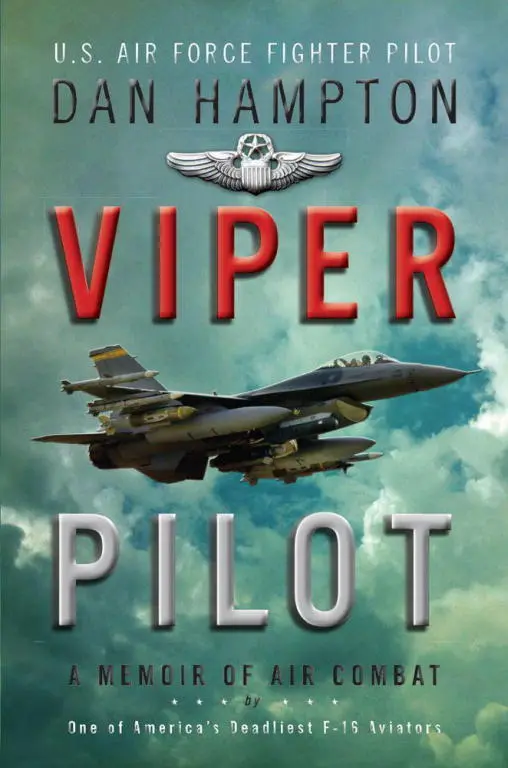
Dan Hampton - Viper Pilot
Здесь есть возможность читать онлайн «Dan Hampton - Viper Pilot» весь текст электронной книги совершенно бесплатно (целиком полную версию без сокращений). В некоторых случаях можно слушать аудио, скачать через торрент в формате fb2 и присутствует краткое содержание. Город: New York, Год выпуска: 2012, ISBN: 2012, Издательство: William Morrow, Жанр: Биографии и Мемуары, nonf_military, на английском языке. Описание произведения, (предисловие) а так же отзывы посетителей доступны на портале библиотеки ЛибКат.
- Название:Viper Pilot
- Автор:
- Издательство:William Morrow
- Жанр:
- Год:2012
- Город:New York
- ISBN:978-0-06-213035-8
- Рейтинг книги:4 / 5. Голосов: 1
-
Избранное:Добавить в избранное
- Отзывы:
-
Ваша оценка:
Viper Pilot: краткое содержание, описание и аннотация
Предлагаем к чтению аннотацию, описание, краткое содержание или предисловие (зависит от того, что написал сам автор книги «Viper Pilot»). Если вы не нашли необходимую информацию о книге — напишите в комментариях, мы постараемся отыскать её.
is the electrifying memoir of one of the most decorated F-16 pilots in American history: U.S. Air Force Lieutenant Colonel Dan Hampton, who served for twenty years, flying missions in the Iraq War, the Kosovo conflict, and the first Gulf War.
Both a rare look into the elite world of fighter pilots and a thrilling first-person account of contemporary air combat,
soars—a true story of courage, skill, and commitment that will thrill U.S. Special Forces buffs, aviation and military history aficionados, and fans of the novels of Tom Clancy and Dale Brown.
Viper Pilot — читать онлайн бесплатно полную книгу (весь текст) целиком
Ниже представлен текст книги, разбитый по страницам. Система сохранения места последней прочитанной страницы, позволяет с удобством читать онлайн бесплатно книгу «Viper Pilot», без необходимости каждый раз заново искать на чём Вы остановились. Поставьте закладку, и сможете в любой момент перейти на страницу, на которой закончили чтение.
Интервал:
Закладка:
“Charlotte, did you bother calling Fort Bragg?”
The long, pregnant pause said it all, so I switched freqs and called up the Shaw AFB command post.
“Shaw, FANG 69… request.”
“Go ahead.”
“Get on the landline and call Fort Bragg. Find out what kind of air activity they’ve got going tonight and don’t let ’em give you any covert-ops BS. Tell them there are armed fighters overhead and if they want their helos back in one piece then they need to ’fess up with locations and call signs.”
Fort Bragg, just east of Charlotte, happened to be home to the 82nd Airborne Division and the U.S. Special Operations Command. These people got paid to skulk around with no lights and no communications while performing suspicious-looking acts. At least suspicious to the uninitiated, which this guy plainly was. Turned out, that was exactly what was going on, proving again that we are our own worst enemy.
A few days later, the approach controller at Atlanta’s Hartsfield airport asked me if I’d make a low pass over downtown Atlanta for morale. A show of force to reassure the folks that all was well. I was astounded. Downtown Atlanta? But we did, at a thousand feet over the skyscrapers, with the speed brakes out so we could plug in our afterburners and make more noise. He asked us to come around again and later told me people were crying and smiling in the streets.
That week affected me in an unexpected way. I mean, we were used to taking chances and were prepared, mentally and physically, to fight. But the average American is not, and I saw real fear on my neighbors’ faces. All my naive but generous, self-centered but well-meaning countrymen had gotten slapped in the face. Hijackers are cowards. In my opinion, true terrorists are all cowards. That’s what the label means: they inspire terror by preying on the weak and defenseless, as they have no chance in a stand-up fight against armed men. Every fighter pilot I knew was extremely angry about this and would’ve gone to war immediately, given the chance.
This passed. It obviously wasn’t our failure, and the wonderful American resilience to catastrophe began emerging quickly enough. The realization that we were not universally loved and admired sank in to our national consciousness, and America seemed to give a collective shrug. Okay, you don’t love us, and we don’t care. But you did awaken the sleeping giant and now you’ll pay for it.
American flags began flying everywhere, stores gave military discounts, and a countrywide “Support the Troops” movement gathered momentum. Many Americans still didn’t really understand the military or the larger world around them, but they were trying to learn and show their appreciation. Even those who didn’t believe in war protested the government and not those doing the fighting.
The ghosts of Vietnam were finally laid to rest. I think the realization dawned that we were not simply fighting an ideology, as with Nazi Germany or the Soviet version of communism. No, this time we were up against a religious fanaticism that was irrevocably and fundamentally opposed to everything we stood for or valued. Fanatics, of any creed, are dangerous, and there would be no compromise possible with the type of men who would kill helpless strangers. For the first time I could remember, America was more or less united against a common foe and motivated toward a shared cause of protecting the nation. This cause, right or wrong, would serve as the casus belli for dealing with Saddam once and for all.
AS THE 77TH FIGHTER SQUADRON THUNDERED OUT OF OUR base in South Carolina on Valentine’s Day 2002, more than a month before the invasion, we were ready. Bound for Prince Sultan Air Base, Saudi Arabia, we stopped overnight at Morón Air Base in Spain. Once there, we were sent to a hotel in downtown Seville to catch a few hours sleep. A public-relations officer, an officious little weenie who likely never left the base, told us to stay in our hotel—for our own safety. All thirty of us just looked at him and burst out laughing. What an idiotic thing to say to a fighter squadron on its way to war. Needless to say, late that afternoon I found myself wandering around this most charming of Spanish cities looking for the Cathedral of St. Mary. Strolling through the Alcazar Gardens, I noticed the city seemed remarkably quiet and relatively deserted. I thought I just got lucky. Coming around a corner onto the Calle Vida, however, I heard the sound of drums and the thumping of thousands of feet.
Now, the University of Seville was barely a quarter mile south, and it was a definite hotbed of antiwar protest. But I’d come to see the church and its famous bell tower and had no intention of walking through the university. That would’ve been like cutting through UC Berkeley in 1968 wearing a uniform. So I ducked into an alley next to the Alcazar—and came out face to face with a marching mob. Like most protesters, they looked young. The majority of them were also waving flags. All red. Banners, too. Hundreds of banners showing caricatures of George Bush and Tony Blair; crossed-out NATO symbols, American and British flags, and one very ugly Uncle Sam with his foot on the globe. They were chanting, too.
“No a la Guerra! No a la Guerra!”
“No to the war”… and there I was.
I got caught up in the flow, like a swimmer in a strong current, and simply rolled through the dusky old streets with the rest of them. After a few twists and turns we shot out into the bright sunlight, the crowd thinning as it filled the square. Blinking, I slid sideways to put my back against a wall and looked up, startled, at the sandstone-colored tower next to me. La Giralda; a minaret that survived the destruction of the Seville mosque and was now a Catholic bell tower. Glancing around then, I knew exactly where I was—the Plaza del Triunfo in front of the cathedral. The square had filled quickly and I saw news crews scattered about, big cameras panning back and forth over the crowd. What a terrific headline that would make, I thought.
Then I saw her.
A young girl, maybe twenty, with long, black hair blowing in the breeze. She’d jumped up on one of the concrete piers lining the sidewalk and was holding an immense red flag. The sun was behind her, and the flag was made of thin material, because I could see through it. The girl had on an oversize white blouse, a dark, loose skirt, and no shoes. As I watched, she began waving the flag slowly back and forth. All the people at the base of her piling began chanting and the girl smiled. It was, in retrospect, a true Kodak moment. I watched for a few seconds then turned to slip away—directly in front of a BBC camera filming the girl. Without hesitating, I raised my fist and yelled, “No a la Guerra!” before gliding off into the crowd.
I eventually made it back to the hotel and never told anyone about it. As we took off the next day for the bleak, cultural void of Saudi Arabia, the irony was plain. I, who would shortly be leading dozens of aircraft in combat, had taken part in one of the biggest antiwar rallies in Europe. Fortunately, nothing ever came of it, and, in fact, I did get to see the cathedral after all, my last bit of beauty for a few months, which was nice.
I stood outside our operations trailer in Prince Sultan Air Base and breathed in deeply. The heavy Saudi air was very still but I could plainly smell the desert—dust, smoke, and a very faint trace of distant rain. Twilight was always fast in Arabia; the painful, fiery shield of the sun darkened to deep orange, then to blood red as it slid beneath the horizon.
War was here.
Thinking back to Desert Storm, I couldn’t recall feeling any fear. I’d stood in my room, listened to the Phantom of the Opera soundtrack, and waited for the call. When it had come, I felt a release—no more waiting. A day later, climbing up the ladder into my F-16 before my first combat mission, I was only afraid of screwing up. Of letting down those who depended on me. Years of extensive and unforgiving training had winnowed out the weak and given us all the quiet confidence of true professionals. I knew I could do it—but you never really know.
Читать дальшеИнтервал:
Закладка:
Похожие книги на «Viper Pilot»
Представляем Вашему вниманию похожие книги на «Viper Pilot» списком для выбора. Мы отобрали схожую по названию и смыслу литературу в надежде предоставить читателям больше вариантов отыскать новые, интересные, ещё непрочитанные произведения.







Обсуждение, отзывы о книге «Viper Pilot» и просто собственные мнения читателей. Оставьте ваши комментарии, напишите, что Вы думаете о произведении, его смысле или главных героях. Укажите что конкретно понравилось, а что нет, и почему Вы так считаете.