Dan Hampton - Viper Pilot
Здесь есть возможность читать онлайн «Dan Hampton - Viper Pilot» весь текст электронной книги совершенно бесплатно (целиком полную версию без сокращений). В некоторых случаях можно слушать аудио, скачать через торрент в формате fb2 и присутствует краткое содержание. Город: New York, Год выпуска: 2012, ISBN: 2012, Издательство: William Morrow, Жанр: Биографии и Мемуары, nonf_military, на английском языке. Описание произведения, (предисловие) а так же отзывы посетителей доступны на портале библиотеки ЛибКат.
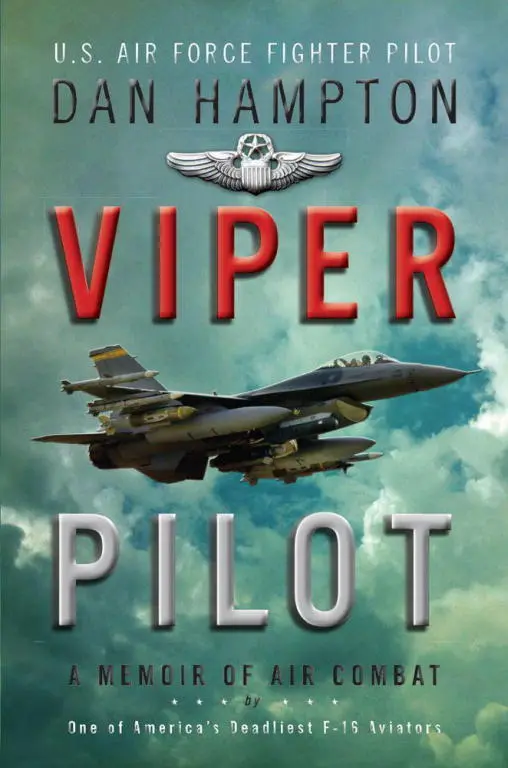
- Название:Viper Pilot
- Автор:
- Издательство:William Morrow
- Жанр:
- Год:2012
- Город:New York
- ISBN:978-0-06-213035-8
- Рейтинг книги:4 / 5. Голосов: 1
-
Избранное:Добавить в избранное
- Отзывы:
-
Ваша оценка:
Viper Pilot: краткое содержание, описание и аннотация
Предлагаем к чтению аннотацию, описание, краткое содержание или предисловие (зависит от того, что написал сам автор книги «Viper Pilot»). Если вы не нашли необходимую информацию о книге — напишите в комментариях, мы постараемся отыскать её.
is the electrifying memoir of one of the most decorated F-16 pilots in American history: U.S. Air Force Lieutenant Colonel Dan Hampton, who served for twenty years, flying missions in the Iraq War, the Kosovo conflict, and the first Gulf War.
Both a rare look into the elite world of fighter pilots and a thrilling first-person account of contemporary air combat,
soars—a true story of courage, skill, and commitment that will thrill U.S. Special Forces buffs, aviation and military history aficionados, and fans of the novels of Tom Clancy and Dale Brown.
Viper Pilot — читать онлайн бесплатно полную книгу (весь текст) целиком
Ниже представлен текст книги, разбитый по страницам. Система сохранения места последней прочитанной страницы, позволяет с удобством читать онлайн бесплатно книгу «Viper Pilot», без необходимости каждый раз заново искать на чём Вы остановились. Поставьте закладку, и сможете в любой момент перейти на страницу, на которой закончили чтение.
Интервал:
Закладка:
Dying didn’t occur to me at all in 1991. I thought I was invincible back then, so what could happen?
Well, some of that attitude changed over the years. Lots of very talented, skilled guys never came back. Fractions of seconds had separated me from oblivion literally thousands of times. Countless extremely close calls have humbled my belief in invincibility. Obviously there’s no such thing—maybe my inexplicable survival is God’s sense of humor. Or it’s just not my time. Or both.
As I stared at the fading sunset in 2002, I’d been tempered with a great deal of hard-won experience. Now, waiting to fight, it was the haunting strains of “Vide Cor Meum” instead of the Phantom, and my thoughts were somewhat different than they’d been in 1991. I was responsible for many more lives this time, and any mistakes I made would have implications far beyond my solitary cockpit. This didn’t bother me—I was thoroughly accustomed to the responsibility by this point in my career. Still, holding lives in your hands is sobering.
My country had also been attacked. I was well aware that 9/11 was not the real reason we were here waiting to surge across the Iraqi border, but to me it was a vindication nonetheless. This war, I hoped, would be an object lesson to all of those who thought America had received a comeuppance on that September morning. Regardless of the political permutations of this fight, we would show the world again that our political dithering had nothing to do with our military might. Like us or not. Hate us or love us, it didn’t matter. If an enemy struck the United States, then they would pay for it in blood and I, along with every fighting man facing north this evening, was here to collect.
Intermission was over.
7
Shock and Awe
March 19, 2003
0530 local time, south of Baghdad
“STOIC 67, SAM IN THE AIR… SAM IN THE AIR SOUTHWEST-BOUND OVER BAGHDAD!”
I rolled hard to the right and smoothly pulled back on the stick. The SAM was a flaming dot rising out of the predawn city lights, gathering speed and climbing. I wasn’t certain it was locked on me, because my threat-warning display was already alphabet soup. This was hardly surprising: I was just south of Baghdad, and the Iraqis were royally pissed off. We were leading the invasion of Iraq—“the tip of the spear.”
“BEEP… BEEP… BEEP…”
The warning receiver woke up, and I glanced at the small screen. It was covered with overlapping signals from SA-3s, SA-2s, Triple-A, and friendly airborne radars from our own fighters. Basically, the entire electronic spectrum was up and running. There were also lots of UNKNOWN symbols, meaning my system couldn’t decide whether the incoming signal was hostile or friendly. Based on their northerly direction, I assumed they were all hostile, since there were no friendly aircraft between me and Baghdad.
Terrific.
I immediately pulled the F-16 around to the east and streamed out a decoy just in case. The missile plume stayed visible; it was flying a fairly flat, very fast trajectory. Snapping upright, I pushed the throttle forward to mil power and stared at the SAM. Suddenly, from the corner of my right eye, I saw two more disembodied flames clear the dark horizon.
“STOIC One has two SA-3s… westbound out of Baghdad.”
If they were SA-2s, they’d have gone much higher, like a shuttle launch, and disappeared. Once the sustainer burned out, the missile dove down from 80,000 feet or so and was completely invisible—until it smashed you to pieces. Very nasty bastards. SA-3s were easier to detect, but they were also much quicker and harder to shake.
“STOIC One, multiple SAM launches, Baghdad… heads-up MOXIE!”
Somewhere behind me in the western darkness, I heard the other flight lead zipper his mike. Unlike during peacetime operations, we flew almost exclusively “comm out.” That is, without the usual chatter on the radios. Some of this was professionalism but most of it was efficiency. With three hundred airplanes using the same few frequencies, you had to limit conversations to the bare minimum. This meant combat. Missile launches, target locations, or, God forbid, search and rescue.
Modern fighters all had a second, and sometimes a third, radio that was used for inter-flight chitchat. Not that there was much of it. All fighter squadrons had “standards.” A hopefully short list of mundane items that we would all do the same way. The Gamblers were very good about this. We’d refined all the extraneous stuff to the point where you only really spoke as an exception. Everything else was just done by the Big Boy Book of Rules.
Then the first SAM stopped streaking west. It hung in space between the city and the stars, and I caught myself holding my breath for a moment. SAM launched. But who was the target? The flames were enormous. I was ten miles away but could plainly see the long, fiery tails; white-hot and fuzzy near the end, the plume became darker and almost red where it touched the missile. The missiles were invisible, of course, but you knew where they were, because that’s where the fire stopped. Nothing moved faster across the sky than a surface-to-air missile.
Even after the rocket boosters burned out, the eerie disembodied red flames raced across the black sky looking for targets. You didn’t start worrying until you saw the flaming doughnut—a red-orange ring of fire with a dark hole in the middle. This was the SAM and it was pointed right at you.
“Shit…” I muttered and thumbed on my Electronic Countermeasures pod. Pushing the nose over, I kept my eyes padlocked on the SA-3 as it turned and pointed at me.
“Heads-up STOIC Two… SAM at ten o’clock high… stand by…”
I thumbed the data-link switch over, heard the “tickle” in my helmet, and saw that my wingman was about two miles behind and to the right of me. Twisting in the seat, I looked back over the tail but saw nothing. It didn’t matter. Unlike previous rigid, communications-intensive tactics, we’d evolved into a much simpler mind-set. Modern technology helped—instead of asking where my wingman was, I could send a data-link position request. I also always hated the inflexible, line-abreast formations that we’d been trained with. They didn’t work in combat, because if you flew in straight lines you were just asking for a missile up your butt.
In combat, I used a “loose deuce” formation almost exclusively. This puts a wingman on a two-mile string, allowing him to maneuver at will as long as he didn’t lose sight of the flight lead and could maintain all of his other responsibilities. These included working his air-to-air radar, visually scanning for MiGs and SAMs and keeping an eye on his aircraft systems. He only spoke when he had something tactical to say. I, as the leader, just flew where I had to and didn’t have to think about his position much. In the event we had to react tactically to a threat, we were already spread out nicely. It worked well.
Just then the rocket’s flaming trail burned out, so I immediately pushed the nose farther down and began counting, my eyes locked to the HUD. Night-threat reactions while wearing NVGs aren’t generally the high-G, aerobatic maneuvers they are during the day. That’s because there’s a very real possibility of becoming disoriented without your normal flying references. Ten miles south of Baghdad, at night, with a half-dozen SAMs in the air, is no place to lose control of a fighter.
Six… seven…
Pulling hard back to the right, I pumped out several chaff bundles.
“STOIC One and Two, heading zero-eight-zero… defending SA-3…”
The response from the other two-ship was immediate. “MOXIE One… Magnum, SA-3, Baghdad.”
Читать дальшеИнтервал:
Закладка:
Похожие книги на «Viper Pilot»
Представляем Вашему вниманию похожие книги на «Viper Pilot» списком для выбора. Мы отобрали схожую по названию и смыслу литературу в надежде предоставить читателям больше вариантов отыскать новые, интересные, ещё непрочитанные произведения.






Обсуждение, отзывы о книге «Viper Pilot» и просто собственные мнения читателей. Оставьте ваши комментарии, напишите, что Вы думаете о произведении, его смысле или главных героях. Укажите что конкретно понравилось, а что нет, и почему Вы так считаете.