Dan Hampton - Viper Pilot
Здесь есть возможность читать онлайн «Dan Hampton - Viper Pilot» весь текст электронной книги совершенно бесплатно (целиком полную версию без сокращений). В некоторых случаях можно слушать аудио, скачать через торрент в формате fb2 и присутствует краткое содержание. Город: New York, Год выпуска: 2012, ISBN: 2012, Издательство: William Morrow, Жанр: Биографии и Мемуары, nonf_military, на английском языке. Описание произведения, (предисловие) а так же отзывы посетителей доступны на портале библиотеки ЛибКат.
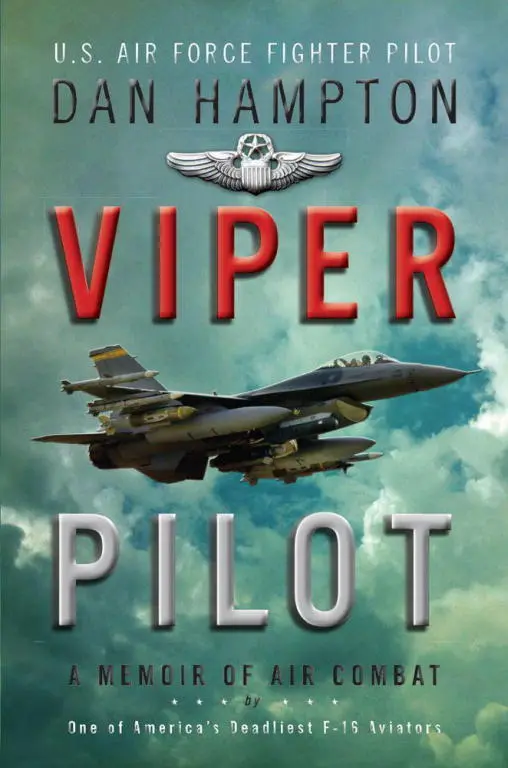
- Название:Viper Pilot
- Автор:
- Издательство:William Morrow
- Жанр:
- Год:2012
- Город:New York
- ISBN:978-0-06-213035-8
- Рейтинг книги:4 / 5. Голосов: 1
-
Избранное:Добавить в избранное
- Отзывы:
-
Ваша оценка:
Viper Pilot: краткое содержание, описание и аннотация
Предлагаем к чтению аннотацию, описание, краткое содержание или предисловие (зависит от того, что написал сам автор книги «Viper Pilot»). Если вы не нашли необходимую информацию о книге — напишите в комментариях, мы постараемся отыскать её.
is the electrifying memoir of one of the most decorated F-16 pilots in American history: U.S. Air Force Lieutenant Colonel Dan Hampton, who served for twenty years, flying missions in the Iraq War, the Kosovo conflict, and the first Gulf War.
Both a rare look into the elite world of fighter pilots and a thrilling first-person account of contemporary air combat,
soars—a true story of courage, skill, and commitment that will thrill U.S. Special Forces buffs, aviation and military history aficionados, and fans of the novels of Tom Clancy and Dale Brown.
Viper Pilot — читать онлайн бесплатно полную книгу (весь текст) целиком
Ниже представлен текст книги, разбитый по страницам. Система сохранения места последней прочитанной страницы, позволяет с удобством читать онлайн бесплатно книгу «Viper Pilot», без необходимости каждый раз заново искать на чём Вы остановились. Поставьте закладку, и сможете в любой момент перейти на страницу, на которой закончили чтение.
Интервал:
Закладка:
Tens of thousands of Triple-A rounds shot angrily upward. The large-caliber stuff made it level with me and exploded. But they even fired the smaller guns—rapid-fire hoses of yellows and oranges that arced low over the ground and detonated. Most of it was firing for effect and rage. No doubt tomorrow Radio Baghdad would declare hundreds of American warplanes shot down. It was all bullshit, of course, but it boosted Iraqi morale.
Zippering the mike, I came around to the right and snapped wings level. We were now directly south of the city by twenty-five miles and heading east. Searchlights were sweeping overhead in a vain attempt to catch a fighter or a B-52. Running my eyes over the cockpit, I saw I’d used about a third of my chaff and my wing tanks were empty. The decoy was still with me, and the warning receiver looked like a Scrabble board. I took a deep breath and exhaled. It could be a lot worse. It—
“BEEP… BEEP… BEEP…”
My eyes locked on the display. SA-3. Close!
Reacting instantly, I rolled inverted and pulled straight down into the blackness, pumping out chaff bundles.
“STOIC One… defending SA-3… close!”
Iraq was black—except for the parts that were burning, that is. There I was, upside down, at night, over enemy territory. The Viper’s nose was pointed straight down and I was hanging in my seat facing the brightly lit Iranian border.
“STOIC One… break! SAM under you… break!”
Slapping the throttle to IDLE, my right wrist strained against the stick and the fighter pirouetted. Spinning 180 degrees in about two seconds, I pulled hard on the stick while smacking the chaff button with the back of my left hand and began counting.
“C’mon…” I muttered as the jet fought gravity to come back up through the horizon. Slamming the throttle forward, I kept pulling and looked back for the SAM. As the F-16’s nose came through the horizon, I pushed the throttle into full afterburner.
“STOIC 2… Ma… Magnum SA-3!”
Poor kid sounded like he was being strangled, but he got the HARM off. I caught an absurdly bright flash, and for a split second I saw the pointed nose of an F-16 before the darkness swallowed it again.
Two…
My head swiveled like it was on a stick. But without seeing the launch, I didn’t know what direction the damn thing had gone, and so I had no real idea where it was coming in from.
“STOIC Two… any posit on the missile?”
Four…
“Negative… lost it… Two is blind!”
Perfect.
Sixty degrees nose high, I was pointing back up at the stars. Pulling the throttle back to IDLE, I again flipped onto my back and stared at the sky. Nothing. Pumping out more chaff, I glanced at the HUD. Nineteen thousand feet and 390 knots.
“STOIC Two… come south above twenty K.”
“MOXIE are southbound… Bingo.”
Pirouetting again, I pulled the fighter around to the south and leveled off at 17,000 feet, panting hard. The RWR mercifully shut up, and I dropped my mask to let the cool air hit me in the face. Glancing at my multifunction display (MFD), I decided not to thread the needle down the MiG bases along the Euphrates River. Not because of the Iraqi Air Force, but because the air bases all had SAM rings. So MOXIE and STOIC came around southwest and headed in the shortest direction to the Saudi border. Maybe, I thought, if we refueled we could go back in and go MiG-hunting.
Wiping my face, I sat back in the seat and looked at the rapidly graying sky as sunrise approached. The more I thought of it, the more I believed that last SAM had been a false alarm. Rocking my wingman in for a battle-damage check, I keyed the mike. “STOIC and MOXIE… cut the Dog loose.” Meaning, sever any decoys. Looking in my HUD, however, I saw that my decoy was already gone, and I took a deep breath.
That last SA-3 had been real after all.
AFTER LANDING BACK AT PRINCE SULTAN AIR BASE, WE IMMEDIATELY began planning to continue the Shock and Awe campaign. Contrary to popular belief, this neat little phrase wasn’t invented in 2003. In fact, it had been formalized in 1996 as a military doctrine based on the use of “overwhelming decisive force,” “dominant battlefield awareness,” “dominant maneuvers,” and “spectacular displays of power” to “paralyze” an adversary’s perception of the battlefield and destroy his will to fight.
Okay.
Every battle or firefight I’d been in was like that, but someone now had to put a name to it. I think it appealed to the self-perception of American military and political leaders. They correctly saw our military capability as overwhelming, ultimately unstoppable (if utilized properly), and downright frightening. What they screwed up, and seem to always get wrong, are enemy reactions to our force. American leaders assume whoever we’re fighting will simply lift their skirts and run away. This doesn’t always happen, however. Chances are, when your nation is attacked, you’ll forget about everything else but defending your country and your family. Unless, of course, you’re French. Then you surrender and eat cheese. (Good cheese, I must say.)
If the United States was invaded, I don’t think people would give a damn how the guy next to them voted in the last election—they’d simply fight. American reactions to the September 11 attacks are a perfect example.
Planning on the other guy’s capitulation is also a dangerous way to start a fight.
In any event, the war was rolling. The following day, the ground invasion began in earnest as U.S. Marines, Brits, and Poles attacked the port of Umm Qasr. The 3rd Infantry Division and the 1st Marine Expeditionary Force would enter southern Iraq on their way north. The heavy air campaign resumed on March 21.
Shock and Awe. In a twist of fate, it was the shock and awe of 9/11 that had provided the outward legitimacy for this war. We named it counterterrorism. Neighboring Arab countries would now call the invasion of Iraq an act of terrorism. Just goes to show you, the battlefield winner gets to write the slogans regardless of who triumphs in the end.
SHOCK AND AWE HAD BEGUN IN EARNEST, AND I WAS GLAD. The sooner it started, the sooner we’d win and could all go home. Walking outside our operations trailer, I stood there in the morning sun. My sweaty flight suit had long since dried, and I smelled stale. I yawned and rubbed my fingertips against the stubble under my chin. The door slammed behind me and the Gambler squadron commander, my good friend Storm’n Norman, stepped out.
“Breakfast?” I asked.
“Rather not. Been sick today already.”
I chuckled. The Wild Weasels were at war again.
8
Sandstorm
SOUTH OF NASIRIYAH, I PASSED 20,000 FEET, NOSED THE fighter over, and gratefully pulled the throttle back. The steering was already called up to the Dog air-refueling track, and as the airspeed dropped, I selected the maximum-endurance mode. This would give me an ideal altitude and airspeed to arrive at my selected point with minimum fuel. We used it a lot, because F-16s were always running short of gas. I continued pulling the throttle back until the airspeed matched the little V-shaped caret next to my airspeed readout in the HUD.
Two hundred and five knots.
So slow it felt like stalling. I ran my eyes over the cockpit and quickly flipped the master arm to SAFE and also switched off my flares. Not that it mattered, since I’d used them all up long ago. It was March 24, and I’d just come out of the blowing, sandy mess around Nasiriyah. I didn’t know if the Marines were safe, but I’d shot up the Iraqi convoy and stopped their reinforcements.
I wiped my face, took a deep breath, and ignored the flashing FUEL symbol in the HUD. Twelve hundred pounds of gas left. Under normal conditions, that’s what you shut down with after landing. But I was nowhere close to landing. Even without the SAMs, Triple-A, and MiGs, all flying is dangerous. This is particularly true with bad weather in fighter jets that burn fuel at appalling rates. During “normal” operations, with a hundred or so fast movers all trying to take off or land from the same piece of concrete, situations can get out of hand very quickly. However, years of training and experience took over again and I immediately began flipping through steerpoints and checking distances. Keying the mike, I said, “LUGER… this is ROMAN 75.”
Читать дальшеИнтервал:
Закладка:
Похожие книги на «Viper Pilot»
Представляем Вашему вниманию похожие книги на «Viper Pilot» списком для выбора. Мы отобрали схожую по названию и смыслу литературу в надежде предоставить читателям больше вариантов отыскать новые, интересные, ещё непрочитанные произведения.







Обсуждение, отзывы о книге «Viper Pilot» и просто собственные мнения читателей. Оставьте ваши комментарии, напишите, что Вы думаете о произведении, его смысле или главных героях. Укажите что конкретно понравилось, а что нет, и почему Вы так считаете.