Dan Hampton - Viper Pilot
Здесь есть возможность читать онлайн «Dan Hampton - Viper Pilot» весь текст электронной книги совершенно бесплатно (целиком полную версию без сокращений). В некоторых случаях можно слушать аудио, скачать через торрент в формате fb2 и присутствует краткое содержание. Город: New York, Год выпуска: 2012, ISBN: 2012, Издательство: William Morrow, Жанр: Биографии и Мемуары, nonf_military, на английском языке. Описание произведения, (предисловие) а так же отзывы посетителей доступны на портале библиотеки ЛибКат.
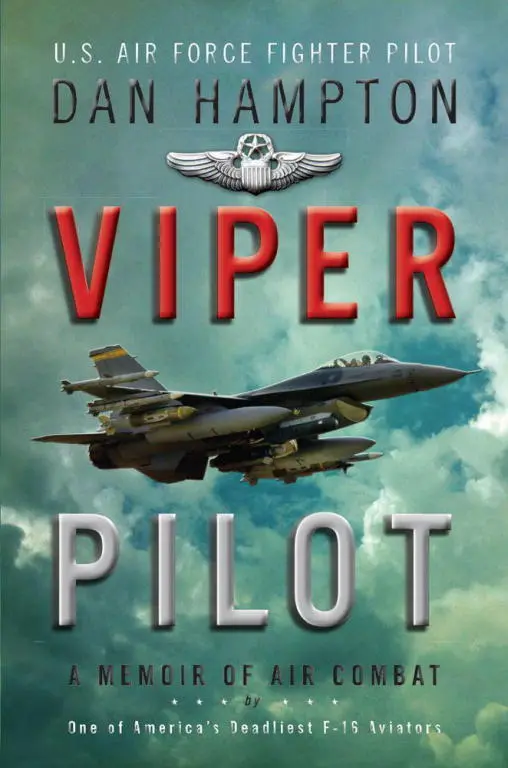
- Название:Viper Pilot
- Автор:
- Издательство:William Morrow
- Жанр:
- Год:2012
- Город:New York
- ISBN:978-0-06-213035-8
- Рейтинг книги:4 / 5. Голосов: 1
-
Избранное:Добавить в избранное
- Отзывы:
-
Ваша оценка:
Viper Pilot: краткое содержание, описание и аннотация
Предлагаем к чтению аннотацию, описание, краткое содержание или предисловие (зависит от того, что написал сам автор книги «Viper Pilot»). Если вы не нашли необходимую информацию о книге — напишите в комментариях, мы постараемся отыскать её.
is the electrifying memoir of one of the most decorated F-16 pilots in American history: U.S. Air Force Lieutenant Colonel Dan Hampton, who served for twenty years, flying missions in the Iraq War, the Kosovo conflict, and the first Gulf War.
Both a rare look into the elite world of fighter pilots and a thrilling first-person account of contemporary air combat,
soars—a true story of courage, skill, and commitment that will thrill U.S. Special Forces buffs, aviation and military history aficionados, and fans of the novels of Tom Clancy and Dale Brown.
Viper Pilot — читать онлайн бесплатно полную книгу (весь текст) целиком
Ниже представлен текст книги, разбитый по страницам. Система сохранения места последней прочитанной страницы, позволяет с удобством читать онлайн бесплатно книгу «Viper Pilot», без необходимости каждый раз заново искать на чём Вы остановились. Поставьте закладку, и сможете в любой момент перейти на страницу, на которой закончили чтение.
Интервал:
Закладка:
My luck was holding.
Nor could we divert anywhere the weather was better, because that meant Iran. In any event, all this crap was moving that way anyway. Three-quarters of a mile. I figured we had less than an hour before Ali went down, too.
“ROMAN Two, go to two-mile trail and call tied. Descent check.”
I scribbled down the Ali tower frequency from the Divert card and ran my fingers quickly over the switches. Since my wingman and I both had enough fuel, there was only one option. I’d fly us down to the end of the runway using GPS guidance and take a MARK point, a precise latitude and longitude for whatever piece of ground I chose. It could then be coupled with the aircraft’s Instrument Landing System and would generate horizontal and vertical steering to that point on the ground.
There were problems with this. Each jet’s system accuracy was a little different, so when I passed the point to my wingman, it would vary to a small degree. Normally, this was acceptable, but normally we weren’t a few hundred feet above the ground, at night, in a sandstorm, trying to land from the information. Real instrument approaches use highly tuned, ground-based systems and painstakingly certified procedures. But aside from ejecting, we didn’t have a choice.
“ROMAN Two is tied.”
I saw the F-16 spike on my Radar Warning Display signifying that my wingman had fallen back several miles and locked me with his radar. This was the safest and most accurate way to bring a wingman down through the weather. His radar would tell him my heading, altitude, airspeed, and lots of other things. He just matched my airspeed, kept the radar locked, and maintained whatever distance I wanted all the way down. Piece of cake, as they say.
“Ah… ROMAN 75 this is LUGER.”
I couldn’t wait to hear this. “Go ahead.”
“ROMAN… we’ve got several other flights of fighters holding in the air-refueling tracks who also need to divert.”
I had thought I was the last flight out of Iraq, but apparently not. “ROMAN copies… how many?”
“Ah… four two-ships.”
“Shit,” I muttered yet again. Eight other fighters that needed to get down, and I just got elected.
“ROMAN you were the Alpha mission commander this morning so you’re the senior pilot airborne.”
Perfect. Well, this is where all that experience was supposed to pay off. I took a deep breath and looked at the Situational Awareness display, getting a handle on everyone’s relative position.
“ROMAN copies. Have all strays contact me on Victor 130.225.”
“ROMAN that’s a clear frequency.”
I really hated AWACS sometimes.
This guy was really worried that some Iraqi might hear us talking about diverting to Kuwait. “Just pass it,” I somehow managed not to bark at him. Slowing down to 250 knots, I adjusted my internal cockpit lights for the NVGs. I also turned up my exterior NVG lights to full bright. Only someone looking through goggles could see them—in any event, the Iraqis on the other side of the border weren’t a concern at this point.
I was about forty miles south of Customs House when the first flight checked in.
“ROMAN 75 this is HEIST 36.”
“ROMAN reads you… say numbers, low man’s fuel, and posit from Customs House.”
“HEIST is a flight of two. 6.7 in Twitch south.”
I jotted it down. “Copy. Stand by HEIST. Any other flights on this Victor, check in with ROMAN and say fuel.”
Turned out, there was also a DERBY, a MONTY, and a WARDOG—all F-16 two-ships led by junior flight leads. They were each part of the afternoon strike package that had fallen apart due to weather. By the time I reached Customs House, I’d figured it out. MONTY was lowest on fuel, followed by HEIST, WARDOG, and DERBY. I jotted it all down on my kneeboard by flight, fuel, and position. The flight low on fuel would be the lowest in the stack and first in to land after my two-ship. I planned to drop off my wingman on short final and low approach to come back around for any stragglers.
“MONTY flight, you are now ROMAN Three and Four… HEIST is Five and Six. WARDOG you are ROMAN Seven and Eight and DERBY you’re Nine and Ten. Acknowledge.”
They all checked in with their new call signs. It was easier to keep things straight this way, and established one flight lead—me.
“ROMAN Three flight proceed to Customs House and hold at 21,000. ROMAN Five hold at 22,000, ROMAN Seven at 23K, and ROMAN Nine at 24,000. All ROMANS depart your current positions at assigned altitudes, standard east-west holding pattern at 250 knots.”
They all acknowledged. Holding in line with the wind would simplify things, and all the flights now had different altitude, so they wouldn’t be a conflict to each other. I’d also stacked them up from the bottom, low flight with the lowest fuel, in the order they’d descend to the base. This way, they’d just peel off like layers from an onion and not fly through each other’s altitude blocks.
“ROMAN Two you’re cleared to hold at 20K… One is dropping down to get the mark point for our approach. All ROMANs stand by.”
THE IMMEDIATE PROBLEM WAS TO DESCEND THROUGH THIS shit and get an accurate mark without killing myself. I pulled the power, popped open the speed brakes, and slid down into the dark brown mess below me. Holding 250 knots, I dimmed the lights and started a gentle right turn. With the steerpoint for Ali al-Salem set in the HUD, I planned to align myself to the runway ten miles out and fly in to take the mark.
The jet began to buffet when I passed 10,000 feet, as the winds near the surface increased and shifted. Eyeballing my displays, I played the stick, throttle, and speed brakes to roll out on a ten-mile final at 3,000 feet. Instrument approaches “stepped down” an aircraft in altitudes based on terrain and obstructions like towers. There was also a Minimum Safe Altitude (MSA) that would keep you clear of all dangers within twenty-five miles of the field. Since Ali had no approach, I was using the 3,000-foot MSA for Kuwait International. Hope it worked. I switched the UHF radio to Ali Tower and turned up the cockpit heat. Slowing to 200 knots, I lowered the gear handle.
“Ali Tower, ROMAN 75.”
No reply. Of course.
Feeling the welcome thumps, I saw three green lights indicating the wheels were down and locked. “First good news tonight…” Like all single-seat pilots, I talked to myself a lot. “Ali Tower, ROMAN 75.”
It didn’t matter if he answered, because we were coming in anyway. But it would be nice to talk to someone and maybe confirm the runway wasn’t full of holes or covered with Iraqis.
At five miles, I leveled off at a thousand feet and checked my fuel. 6.4 and my wing tanks were dry. Thank God for that tanker pilot, I thought. Hope he made it to Diego Garcia.
“Calling Ali Tower… say call sign.”
A voice. A wonderful, flat, unemotional American voice. I squeezed my eyes shut a moment and replied, “Ali… this is ROMAN 75, four miles, gear down, low approach… runway three-zero right.”
“ROMAN… the right runway is closed due to cratering. Three-zero left is open but no runway lights are available. Be advised, current visibility is a half-mile and blowing dust.”
And the hits keep on coming. I slowed down to a bare 160 knots and said, “Tower, do you have approach lights on the left?”
“Affirmative… but no edge lights and only a few centerline lights.” Edge lights outlined a runway and the centerline lights were a useful guide to keep big jets oriented in the middle of the concrete. We’d make do.
“ROMAN copies the weather. Lights to full bright on three-zero left, please, and say winds.”
“Ali winds are two-eight-zero degrees, twenty gusting to thirty-five.”
Читать дальшеИнтервал:
Закладка:
Похожие книги на «Viper Pilot»
Представляем Вашему вниманию похожие книги на «Viper Pilot» списком для выбора. Мы отобрали схожую по названию и смыслу литературу в надежде предоставить читателям больше вариантов отыскать новые, интересные, ещё непрочитанные произведения.










Обсуждение, отзывы о книге «Viper Pilot» и просто собственные мнения читателей. Оставьте ваши комментарии, напишите, что Вы думаете о произведении, его смысле или главных героях. Укажите что конкретно понравилось, а что нет, и почему Вы так считаете.