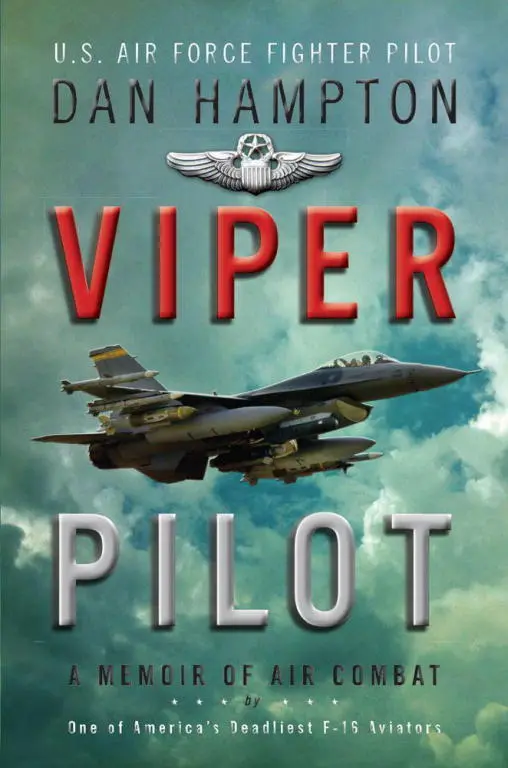
Dan Hampton - Viper Pilot
Здесь есть возможность читать онлайн «Dan Hampton - Viper Pilot» весь текст электронной книги совершенно бесплатно (целиком полную версию без сокращений). В некоторых случаях можно слушать аудио, скачать через торрент в формате fb2 и присутствует краткое содержание. Город: New York, Год выпуска: 2012, ISBN: 2012, Издательство: William Morrow, Жанр: Биографии и Мемуары, nonf_military, на английском языке. Описание произведения, (предисловие) а так же отзывы посетителей доступны на портале библиотеки ЛибКат.
- Название:Viper Pilot
- Автор:
- Издательство:William Morrow
- Жанр:
- Год:2012
- Город:New York
- ISBN:978-0-06-213035-8
- Рейтинг книги:4 / 5. Голосов: 1
-
Избранное:Добавить в избранное
- Отзывы:
-
Ваша оценка:
Viper Pilot: краткое содержание, описание и аннотация
Предлагаем к чтению аннотацию, описание, краткое содержание или предисловие (зависит от того, что написал сам автор книги «Viper Pilot»). Если вы не нашли необходимую информацию о книге — напишите в комментариях, мы постараемся отыскать её.
is the electrifying memoir of one of the most decorated F-16 pilots in American history: U.S. Air Force Lieutenant Colonel Dan Hampton, who served for twenty years, flying missions in the Iraq War, the Kosovo conflict, and the first Gulf War.
Both a rare look into the elite world of fighter pilots and a thrilling first-person account of contemporary air combat,
soars—a true story of courage, skill, and commitment that will thrill U.S. Special Forces buffs, aviation and military history aficionados, and fans of the novels of Tom Clancy and Dale Brown.
Viper Pilot — читать онлайн бесплатно полную книгу (весь текст) целиком
Ниже представлен текст книги, разбитый по страницам. Система сохранения места последней прочитанной страницы, позволяет с удобством читать онлайн бесплатно книгу «Viper Pilot», без необходимости каждый раз заново искать на чём Вы остановились. Поставьте закладку, и сможете в любой момент перейти на страницу, на которой закончили чтение.
Интервал:
Закладка:
After one more look around, I slowly pulled the throttle to CUTOFF and felt the engine gratefully wind down. Unstrapping, I took my own advice and jammed everything classified into my helmet bag. Switching on the flashlight clipped to my harness, I then shut off the aircraft battery and everything went black. As I flipped the switch to raise the canopy, a wave of cold air hit me in the face, and I flinched. The crew chief hooked up a ladder, and I gingerly unstuck my ass from the seat for the first time in over ten hours. Wincing a little as my legs straightened, I swung out and sat on the top of the ladder for a moment, taking gasps of frigid, dusty air and looking at the small crowd below.
I’ve known pilots who’ve slipped on the way down after long flights and ended up sprawled on the concrete. You lose style points for that, so I came down very slowly. To my surprise, one of the guys waiting for me was a full colonel in a flight suit.
“Welcome to Ali!” He grinned and shouted at me over the wind, “You did a helluva job getting in here tonight.”
I slowly stretched my aching neck and tried to grin right back. “Thank you, sir… there was nowhere else to go.”
“What? We weren’t first on your list?” He laughed.
“You were the list.”
The dust, by the way, was much worse. Like someone was dumping boxes of yellow cake mix into huge fans and blowing it in our faces. He clapped me on the shoulder and pointed off into the gloom. “I know. We’ve got another four F-16s over there.” He looked me up and down and said, “When you’re ready I’ll take you to chow. It’s not exactly linen tablecloths and Waterford crystal but it’s hot!”
“Good enough, sir… we’ll be ready fast.”
The local maintenance guys had already chocked the wheels and were busying themselves taking oil samples and other post-flight stuff. I found out later they were all F-16 mechanics from al-Jabber Air Base to the south. Apparently, the Vipers there used Ali as a forward refueling and divert base, so they kept some of their crew chiefs here. Bad for those poor bastards but good for us.
Lugging helmet bags, harnesses, and weapons, the ten of us stiffly piled into several pickup trucks and headed straight to dinner. The colonel drove one of the trucks himself and got us into the chow hall.
I stood there in the door, blinking against the light, and inhaled. Rice, chicken, and burned bread—but it smelled heavenly. A chubby little mess sergeant hurried over, smiled broadly at the colonel, and nodded politely to us.
“Everything’s ready, sir. Hot line, cold line, and the snack bar.”
“Help yourselves.” The colonel waved an arm. “Just coffee for me. If you want to drop your stuff here I’ll watch it while you get food.”
I found out later that he kept the chow hall open for us when he heard we were coming in. Meeting us and driving us around was also something most Operations Group Commanders didn’t do. He was quite a guy. I’m embarrassed to say that I’ve forgotten his name, but I never forgot his leadership example.
Later that night, rolled up in a groundsheet in the corner of a tent, I shivered myself to sleep colder than I’d ever been in my life. I was wearing everything I had, including my G-suit, helmet, and harness, to try and stay warm. In the morning, the colonel showed up again, with two big plastic bags. At his own expense, he’d bought razors, soap, and towels for us. The sandstorm had mostly blown itself out, but there were still thunderstorms, and the air was thick with residual, hanging dust.
Nevertheless, the war was still on. The Marines were fighting along the Saddam Canal, trying to get past Nasiriyah and cross the Euphrates River. When they did this, they could push up Highway 8 to al-Kut and pincer Baghdad from the east. The 3rd Infantry Division, which had bypassed Nasiriyah, was stalled out near Samawah, about sixty miles south of Baghdad. Having escaped Baghdad, Saddam Hussein had declared March 25 as a “day of sacrifice,” and Iraqis took this to heart. The fighting was heavy and casualties were mounting. More ominous was the revelation from Coalition Intelligence that large ammunition convoys, accompanied by chemical decontamination vehicles, were moving out of central Baghdad. The Iraqi plan was to take advantage of the bad weather to launch sustained counterattacks. They figured if they could slow up our advance, then the general Iraqi populace would arise to fight off the invaders. It was a good gamble on their part.
Unfortunately, they didn’t account for the tenacity of U.S. ground forces, nor the ferocious attacks from American fighter aircraft—despite the weather. The next day, the fourteen F-16s on the ground at Ali al-Salem were fragged to attack various targets in the Nasiriyah-Najaf-Kut triangle with whatever weapons we had remaining.
The weather was still horrendous. One good friend of mine got caught in a thunderstorm just south of Baghdad. The downdrafts were so powerful that his F-16 fell from 30,000 feet before he was able to regain control and recover 800 feet above the ground.
When we eventually returned to Prince Sultan on the afternoon of March 25, yet another unwelcome surprise was waiting. Unbelievably, I had been grounded.
ALL THE FIGHTER ASSETS AT PEESAB, INCLUDING THE 77TH FIGHTER SQUADRON, were part of the 363rd Expeditionary Operations Group, 363rd Air Expeditionary Wing. In my opinion, shared by many, many others, the senior commanders were not the varsity lineup. One of them would loiter outside the chow halls to prevent folks from dropping orange peels on “his desert.” Another would actually hang around parking areas making sure people used spotters when they backed their cars up. The Operations Group (OG) was commanded by an unpleasant, pedantic colonel who was a holdover from the peacetime, No Fly Zone world between the wars. He had two female, tanker navigators for deputies—hardly an ideal command structure for a wing at war.
According to their directives, our big priorities during the war included the correct disposal of piddle packs (there was a PowerPoint slide for that one) and proper wear of the desert “boonie” hat. There was a slide for that, too.
The day after my Nasiriyah mission (to save the Marines) the OG read the Mission Report and it must have busted his undersized genitalia. He was absolutely mortified that one of the “cowboy” Viper pilots—that would be me—had dared go below 10,000 feet during the execution of a combat mission. Since his knowledge of Close Air-Support was confined to a lecture he’d heard once at Air War College, this wasn’t surprising.
So after saving those Marines, rounding up eight stray fighters, and getting them safely down in that nightmare sandstorm this guy tries to ground me. I was flabbergasted. Everyone else was shocked and my squadron commander was positively apoplectic. I’ve never seen him that mad, even when we gave him wasabi one night in Vegas and told him it was guacamole. Sorry Storm’n.
Somehow, and I’ve never really known how, Colonel Bill “Kanga” Rew found out about it that very evening. As it happens, Colonel Rew was the 20th Fighter Wing Commander, our parent unit in South Carolina, and was currently serving as the Director of the Combined Air Operations Center there at PSAB. He was (and remains) a first-rate fighter pilot and Patchwearer. Basically, he ran the combat flying operations for the entire Coalition Forces Air Component Commander (CFACC).
Now the Coalition Forces Air Component Commander (CFACC) was a bull of a general named T. Michael Moseley, also a fighter pilot and a Patchwearer. That particular day he happened to be totally pissed off because his Marine counterpart had been publicly chastising the Air Force. The Marine general had a perception that Moseley’s pilots weren’t adequately performing close air-support for his ground troops because the Air Force didn’t want them to fly down into the SAMs and Triple A. So Moseley is steaming about this when along comes Kanga Rew with a story. A story about at least one Air Force pilot who did what it took, in abysmal conditions and at great risk, to save Marines. Moseley is apparently thrilled and wants to meet this guy. Well, says Kanga, the pilot’s got plenty of time now that the 363rd EOG has grounded him for saving those Marines.
Читать дальшеИнтервал:
Закладка:
Похожие книги на «Viper Pilot»
Представляем Вашему вниманию похожие книги на «Viper Pilot» списком для выбора. Мы отобрали схожую по названию и смыслу литературу в надежде предоставить читателям больше вариантов отыскать новые, интересные, ещё непрочитанные произведения.








Обсуждение, отзывы о книге «Viper Pilot» и просто собственные мнения читателей. Оставьте ваши комментарии, напишите, что Вы думаете о произведении, его смысле или главных героях. Укажите что конкретно понравилось, а что нет, и почему Вы так считаете.