Dan Hampton - Viper Pilot
Здесь есть возможность читать онлайн «Dan Hampton - Viper Pilot» весь текст электронной книги совершенно бесплатно (целиком полную версию без сокращений). В некоторых случаях можно слушать аудио, скачать через торрент в формате fb2 и присутствует краткое содержание. Город: New York, Год выпуска: 2012, ISBN: 2012, Издательство: William Morrow, Жанр: Биографии и Мемуары, nonf_military, на английском языке. Описание произведения, (предисловие) а так же отзывы посетителей доступны на портале библиотеки ЛибКат.
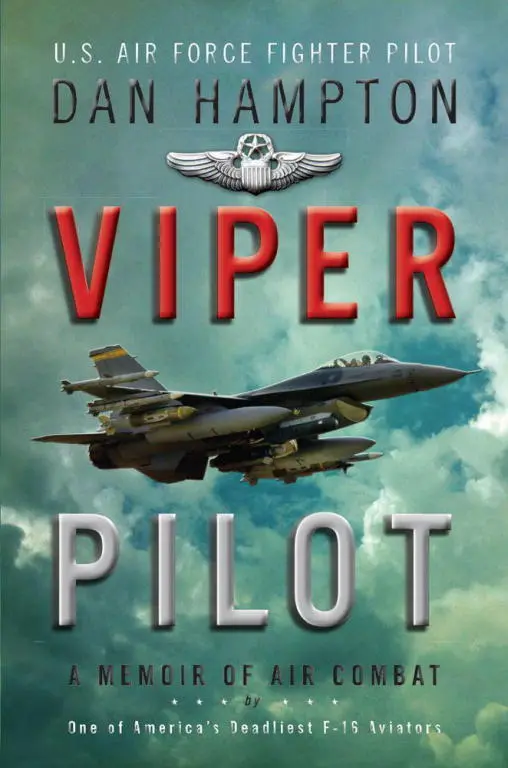
- Название:Viper Pilot
- Автор:
- Издательство:William Morrow
- Жанр:
- Год:2012
- Город:New York
- ISBN:978-0-06-213035-8
- Рейтинг книги:4 / 5. Голосов: 1
-
Избранное:Добавить в избранное
- Отзывы:
-
Ваша оценка:
Viper Pilot: краткое содержание, описание и аннотация
Предлагаем к чтению аннотацию, описание, краткое содержание или предисловие (зависит от того, что написал сам автор книги «Viper Pilot»). Если вы не нашли необходимую информацию о книге — напишите в комментариях, мы постараемся отыскать её.
is the electrifying memoir of one of the most decorated F-16 pilots in American history: U.S. Air Force Lieutenant Colonel Dan Hampton, who served for twenty years, flying missions in the Iraq War, the Kosovo conflict, and the first Gulf War.
Both a rare look into the elite world of fighter pilots and a thrilling first-person account of contemporary air combat,
soars—a true story of courage, skill, and commitment that will thrill U.S. Special Forces buffs, aviation and military history aficionados, and fans of the novels of Tom Clancy and Dale Brown.
Viper Pilot — читать онлайн бесплатно полную книгу (весь текст) целиком
Ниже представлен текст книги, разбитый по страницам. Система сохранения места последней прочитанной страницы, позволяет с удобством читать онлайн бесплатно книгу «Viper Pilot», без необходимости каждый раз заново искать на чём Вы остановились. Поставьте закладку, и сможете в любой момент перейти на страницу, на которой закончили чтение.
Интервал:
Закладка:
However, when JEREMIAH spoke, we had to listen—or fake radio problems. I jotted the coordinates down on my kneeboard and made the mistake of replying.
“Copy that, RAMROD. Say items of interest.” Meaning, what do you want me to look for?
“WICKED—possible armored vehicles and personnel moving south out of the city along Highway One.”
I zippered the mike, looked outside, and sighed. It was a normal request under ordinary circumstances. However, I wasn’t wild about flying down through all that shit, not to mention the still-undefeated Baghdad SAMs and Triple-A, just to locate a stray Iraqi patrol. Especially since our own ground units were still fighting their way north and were currently about fifty miles to the south of the capital. So again, despite space intelligence, satellites, and aerial platforms like JSTARS, it came down to human eyes on a target. My eyes, in fact.
Still, if the Iraqis were going to move, it would be now—precisely because the weather was atrocious. Their own air force didn’t fly in bad weather, and they never seemed to grasp that we could and did.
I knew without looking that my wingman would be floating around behind me about a mile away, so I flipped on the autopilot, pulled the throttle back to hold 300 knots, and unfolded my map. In the twenty-first-century Air Force, it was old-fashioned to carry a map, but I always did, precisely for times like these.
The coordinates AWACS had plotted were out along Highway 8, barely ten miles south of Baghdad, just north of the small town of Iskandiriyah. Tactical maps have lots of good information on them, and I tapped my finger over a huge lake southwest of Baghdad. Milk Lake, we called it. Besides the purpose of this reconnaissance, my other concerns included not knowing what was actually beneath me and not being able to see whatever was there. If I came in from the west over the lake, then those two problems would be temporarily solved. At least, long enough for me to get in and get out.
That is, until I popped back out over the land on the eastern shore of the lake. But the ability of an unsuspecting Iraqi patrol to acquire, track, and shoot at a target rocketing along at 550 miles per hour was a chance I’d take. I stuck the map under the kneeboard as my hands and eyes moved smoothly around the cockpit. Chaff and flares were armed, seat was up, threat-warning volume was up. The jet was ready for combat.
“WICKED TWO… ONE ON VICTOR.”
“Go ahead.”
My wingman today was a lieutenant named Ian Toogood. Really. We called him “Notso.” Get it? Notso Toogood. Actually he was good. A typical brainless lieutenant (just like I’d been) but utterly fearless.
He’d heard the whole exchange, but I explained what I was going to do and that included leaving him up in the clear air. He wasn’t happy about being left behind, but there was no reason to risk his life, too. Also, a combat flight lead is just that—a flight leader—so wingmen do what they’re told. Especially if the flight lead is also a Weapons Officer. So I zippered the mike and sliced away below him, heading west. Pulling my power back, I glided down toward the thick brown fuzz and squinted at the ground.
Nothing—no holes or breaks in the clouds.
Leveling off at about 15,000 feet, I left 5,000 feet between me and the clouds in case of a SAM. Eyeballing the HUD, I continued west until I was thirty miles—less than four minutes—from the point on the highway.
Taking a deep breath, I pushed the power back up, raised my visor, and began another slice back to the east. Dropping the nose, I centered the steering and gradually slipped down into the dust. As the horizon disappeared, I rechecked the radar altimeter and kept descending. According to the map, I would be over the western edge of the lake and there shouldn’t be anything hostile below me except water.
Passing through 10,000 feet, I flipped the master-arm switch to ARM. I had the standard air-to-air missile load of two AMRAAMs and a pair of Sidewinders. We always had a full load of 20-mm cannon shells, and I also was carrying a couple of CBU-103 cluster bombs.
By 5,000 feet, I was twenty miles from the road. The sky around me had turned chocolate-brown. Tilting my head back, I caught the weird sheen of weak sunlight filtering through the dust—like lying on the bottom of a muddy pool and looking up. At 1,000 feet, the jet began to buck and suddenly pitched sideways. I swore and tightened my grip on the stick. Dropping out of the clouds at about 800 feet, I stared down at the angry waters of the lake. Whitecaps flecked the gunmetal-gray surface, and that surprised me. It meant strong winds and unsettled weather.
I felt a twinge of uneasiness. There had been no way to predict what was under the clouds, but I didn’t expect violent weather. It was also dark and, even as I watched, lightning suddenly ripped a gash through the blackness up ahead and to my right. Then again, to the left. Apparently, there was still a very nasty storm hidden here beneath the dust. Swallowing hard, I angled away from the thunderstorm and pushed the throttle to full mil power. The ragged cloud layer pressed down from above and I had no choice but to continue descending. Or abort. I really had no choice.
Eight miles from the highway, I crossed the Euphrates River heading northeast at 510 knots and 200 feet. Maybe it was a premonition, or just faith in my own instincts, but as the water changed to hard, brown earth, I released one of my Little Buddies.
Technically called the AN/ALE-50, the Little Buddy was a towed decoy that was intended to attract hostile tracking radars and missiles to it, not the aircraft. Since it streamed out behind the jet, anything that locked onto its signal would be guided to the decoy and not the fighter.
Hopefully.
Shredded, tattered clouds hung down on all sides and I could see nothing but the ground below. It was the middle of the afternoon, yet the sky was a menacing mix of greens and blacks against a dirty-brown background. Very weird. Even at over 500 knots, the jet was bouncing and pitching in the unsettled, turbulent air.
Still, it was just a flying situation. I mean, low altitude in shitty weather less than twenty miles from Baghdad wasn’t exactly a walk in the park. But neither was it MiGs and SAMs and Triple-A. So I wriggled backward against the seat and concentrated on holding the fighter steady.
The highway!
Appearing beneath the ragged cloud curtains, a dark gray slash of paved surface ran away to the north and south. The earth was greener here, and hundreds of shabby little huts and brown boxlike houses dotted the landscape. Leaning forward, I squinted through the canopy but couldn’t make out any vehicles or anything that looked like a convoy.
The jet was skidding sideways from the wind, and I booted the rudder to hold it steady. I felt the tremendous power of the engine through my fingertips as it fought against the weather. My right hand was slick from sweat, and I wished I’d put my gloves back on. Highway 8 was about a mile off the nose, and I rolled up on one wing and looked north. There was nothing moving on the road. This was a waste of time, I thought. Well—
Suddenly the sky changed color. The clouds turned coal-black and colors exploded everywhere. Crimson reds and oranges and yellows. Tracers everywhere, reaching out for me and zipping past the cockpit.
This is it, my shocked mind clicked. I’m dead!
Flying by sheer instinct and ingrained habit patterns, I jinked. I pulled Gs violently left and right. I pulled up and shoved down. I pumped out chaff and flares. I didn’t dare use the afterburner, because the few Iraqis that hadn’t seen and heard me would see me then.
The fighter rocked sideways and my head hit the canopy. Huge red-orange mushrooms tore aside the gray sheets of rain and lit up the darkness beneath the clouds. It was like being inside a bag of fireworks that had suddenly erupted. Who knows what hell looks like, but I think this was close.
Читать дальшеИнтервал:
Закладка:
Похожие книги на «Viper Pilot»
Представляем Вашему вниманию похожие книги на «Viper Pilot» списком для выбора. Мы отобрали схожую по названию и смыслу литературу в надежде предоставить читателям больше вариантов отыскать новые, интересные, ещё непрочитанные произведения.







Обсуждение, отзывы о книге «Viper Pilot» и просто собственные мнения читателей. Оставьте ваши комментарии, напишите, что Вы думаете о произведении, его смысле или главных героях. Укажите что конкретно понравилось, а что нет, и почему Вы так считаете.