Dan Hampton - Viper Pilot
Здесь есть возможность читать онлайн «Dan Hampton - Viper Pilot» весь текст электронной книги совершенно бесплатно (целиком полную версию без сокращений). В некоторых случаях можно слушать аудио, скачать через торрент в формате fb2 и присутствует краткое содержание. Город: New York, Год выпуска: 2012, ISBN: 2012, Издательство: William Morrow, Жанр: Биографии и Мемуары, nonf_military, на английском языке. Описание произведения, (предисловие) а так же отзывы посетителей доступны на портале библиотеки ЛибКат.
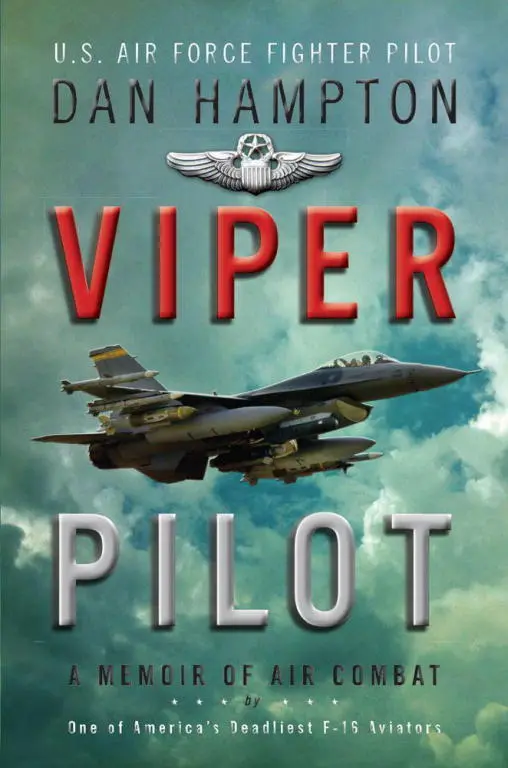
- Название:Viper Pilot
- Автор:
- Издательство:William Morrow
- Жанр:
- Год:2012
- Город:New York
- ISBN:978-0-06-213035-8
- Рейтинг книги:4 / 5. Голосов: 1
-
Избранное:Добавить в избранное
- Отзывы:
-
Ваша оценка:
Viper Pilot: краткое содержание, описание и аннотация
Предлагаем к чтению аннотацию, описание, краткое содержание или предисловие (зависит от того, что написал сам автор книги «Viper Pilot»). Если вы не нашли необходимую информацию о книге — напишите в комментариях, мы постараемся отыскать её.
is the electrifying memoir of one of the most decorated F-16 pilots in American history: U.S. Air Force Lieutenant Colonel Dan Hampton, who served for twenty years, flying missions in the Iraq War, the Kosovo conflict, and the first Gulf War.
Both a rare look into the elite world of fighter pilots and a thrilling first-person account of contemporary air combat,
soars—a true story of courage, skill, and commitment that will thrill U.S. Special Forces buffs, aviation and military history aficionados, and fans of the novels of Tom Clancy and Dale Brown.
Viper Pilot — читать онлайн бесплатно полную книгу (весь текст) целиком
Ниже представлен текст книги, разбитый по страницам. Система сохранения места последней прочитанной страницы, позволяет с удобством читать онлайн бесплатно книгу «Viper Pilot», без необходимости каждый раз заново искать на чём Вы остановились. Поставьте закладку, и сможете в любой момент перейти на страницу, на которой закончили чтение.
Интервал:
Закладка:
I ran my eyes around the cockpit one last time, then called up the MARK symbology as I passed two miles and 500 feet. Turning on the landing light, I got a face full of brown, blowing crap, and quickly switched it off. I peered through the goggles at the fuzzy wasteland off the nose. It was like a tan snowstorm.
There! Off to the right, I saw a whitish glow from some lights from the ground. Tilting my head back to see under the goggles, I saw the faint yellow blob of the air base. Adding a little rudder, I crabbed the jet to the left to stay aligned and stared to where the runway had to be.
“ROMAN… call runway in sight. You’re cleared the option.” Meaning I could land or low-approach.
“75 copies… I’ve got nine other fighters to bring back so this’ll be a low approach.”
Assuming I can find the runway, that is.
“Tower copies, standing by. Good luck,” he added.
And there it was.
The flashing sequencer lights came pulsing out of the darkness at one mile. I instantly slewed the little diamond symbol in my HUD to the point where the lights ended. At a half-mile, through the goggles, I could make out the runway threshold and one or two centerline lights farther down. Good enough. I put the diamond about a thousand feet down the runway and stabbed forward with my right thumb. The F-16’s computer did its magic, and a little block of green numbers appeared, telling me the latitude, longitude, and elevation of the diamond.
Adding power, I pulled the nose up slightly and closed the speed brakes. As the fighter accelerated, I slapped up the gear handle and keyed the mike.
“ROMAN 75 is on the go. Ali, I’ll stay up your freq and please let your TOC know that we’re inbound with ten fighters.”
“Ali copies all. Wilco.”
Wilco meant “will comply.” It was always nice to deal with professionals. Passing 5,000 feet, I ran out the air-to-air radar and keyed the VHF radio.
“All ROMANS, stand by to copy.”
Normally, the mark point could be data-linked, but I just read out the coordinates as I climbed, and they all acknowledged.
Locking onto my wingman, I angled in toward Customs House from the Iraqi side of the border and hoped our Patriot missile batteries knew I was a friendly. Breaking into the clear at 19,000 feet, I squinted through the NVGs at the greenish-white outline of the other jet. Searching left and right across the sky, I saw several others orbiting above in different places.
“All ROMANS, Christmas tree… Christmas tree.”
“Christmas tree” meant to light up like one, and I caught the twinkling and flashing of F-16 exterior lights as they came on against the black night sky. I should’ve thought of that sooner, but over here, it was just habit to fly without lights.
“All ROMANS… we’ll penetrate in flight order from Customs House. Two minutes between flights and two miles between aircraft. Outbound heading is zero-eight-zero at 250 knots. Hold this until the final approach fix at ten miles and 3,000 feet for runway three-zero left.”
I paused and let them scribble that down. “At ten miles slow to 180 knots with the gear and intercept the glide slope inbound.”
There. I’d just created an instrument approach. Several key points had to be spelled out so everyone would do it the same way and not overrun the jet in front of him. Air-to-air radars made it nice, but I’d still seen it chowdered up in the past. This way, everyone would leave Customs House at identical airspeed and head to the same location. At the next point, called the final-approach fix, everyone would slow to another set airspeed, and put the gear down. Then they’d fly the approach course to the left runway until the vertical steering, called a glide slope, indicated a descent.
“Slow to final approach speed at three miles and call full stop with Ali Tower. All ROMANS acknowledge.”
And they did. All nine of them, with no questions. It was good to fly with fighter pilots.
“Ali Tower copies all.” Ah. A sharp controller.
I glanced at my HUD and it showed eleven miles to Customs House. “Ali Tower ROMAN 75, flight of ten, will commence the approach in three minutes. We’ll need a follow-me truck in EOR and confirm transient alert has been notified.”
“ROMAN… affirmative on all.”
I crossed Customs House heading east at 250 knots. Fanning the boards, I dropped the nose ten degrees and said, “ROMAN One flight, pushing. 5.1.”
“Pushing” meant I was outbound from the briefed point, and the low man on fuel in my flight had 5,100 pounds of gas. Somewhere behind and above me, the next flight of two should be lining up to “push” in two minutes. “ROMANS… check course three-zero-zero set… altimeter two-nine-nine-one.”
Three hundred degrees was the final approach course to the runway and 2991 was the latest altimeter setting. Everything was done, except for the flying, so I shut up and flew. Sliding back down in the thick dust, I shook my head and stifled a yawn. Despite the heat blowing in my face, I was still cold and I had a headache. Later, I told myself. I could yawn after landing.
“ROMAN Three flight—pushing.”
I looked at the time, and it was exactly two minutes after I’d called. I didn’t know any of these pilots but we all spoke the same language and had the same basic skills. Otherwise, this wouldn’t have been possible.
By the time the next two-ship called, I was about twelve miles from Ali and beginning the turn to final. At ten miles, I abruptly pulled the power, fanned open the speed brakes, and lowered the gear. The fighter slowed in a hurry, so I retracted the boards and added power to hold 180 knots.
“ROMAN One, ten miles, gear down for two.”
I knew nine other sets of eyes were squinting at their displays, gauging positions and timing. The tower replied, “Copy ROMAN, continue. Winds are two-eight-zero at thirty knots.” He didn’t say the visibility and I didn’t ask. What was the point?
I concentrated on holding the approach course dead-center at 180 knots. If I jackassed it, then the accordion effect would ripple down the line and screw everyone over. At about eight miles, the little horizontal bar on my ILS symbology fluttered and began its slow drop. This was the glide slope, the controlled descent, that I had to maintain to the runway. The other bar, a vertical one, would keep me lined up on the runway. I checked the HUD against the larger, old-fashioned round-dial instrument on the console, and they showed the same indications. Wriggling my fingers to work out the stiffness, I shifted around in the seat a bit.
At three miles, I could see nothing but swirling dust. Easing the power back, I slowed to 160 knots and let my eyes flicker between the ILS steering and the radar altimeter.
“Ali, ROMAN One is three miles, gear down, low approach. All other ROMANS will full-stop.”
“Tower copies… confirm you’ll be coming back?” Was there anywhere else to go?
“Affirmative… ROMAN One will land last.”
This way, if a wingman missed approach or had instrument trouble, I’d still be airborne to bring him back down through the weather in fingertip formation. Passing two miles and 700 feet, there was still nothing in the HUD. Less than twenty minutes ago, I’d been able to pick up the base from here, but not now. Despite my confidence, my mouth got a little dry. It wasn’t like we had a lot of other choices here.
There! I thought I saw a faint flash off the nose and strained forward against the straps. Again! And again. I glanced at the ILS steering and saw it had drifted slightly left, but it was close enough. Fighting the urge to nose over toward the runway, I continued flying the approach until the lights disappeared beneath me, and I could see the runway threshold.
Читать дальшеИнтервал:
Закладка:
Похожие книги на «Viper Pilot»
Представляем Вашему вниманию похожие книги на «Viper Pilot» списком для выбора. Мы отобрали схожую по названию и смыслу литературу в надежде предоставить читателям больше вариантов отыскать новые, интересные, ещё непрочитанные произведения.










Обсуждение, отзывы о книге «Viper Pilot» и просто собственные мнения читателей. Оставьте ваши комментарии, напишите, что Вы думаете о произведении, его смысле или главных героях. Укажите что конкретно понравилось, а что нет, и почему Вы так считаете.