Dan Hampton - Viper Pilot
Здесь есть возможность читать онлайн «Dan Hampton - Viper Pilot» весь текст электронной книги совершенно бесплатно (целиком полную версию без сокращений). В некоторых случаях можно слушать аудио, скачать через торрент в формате fb2 и присутствует краткое содержание. Город: New York, Год выпуска: 2012, ISBN: 2012, Издательство: William Morrow, Жанр: Биографии и Мемуары, nonf_military, на английском языке. Описание произведения, (предисловие) а так же отзывы посетителей доступны на портале библиотеки ЛибКат.
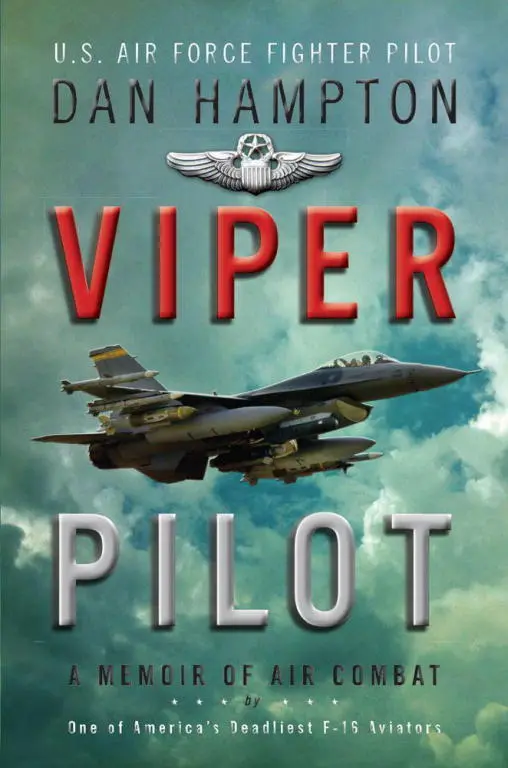
- Название:Viper Pilot
- Автор:
- Издательство:William Morrow
- Жанр:
- Год:2012
- Город:New York
- ISBN:978-0-06-213035-8
- Рейтинг книги:4 / 5. Голосов: 1
-
Избранное:Добавить в избранное
- Отзывы:
-
Ваша оценка:
Viper Pilot: краткое содержание, описание и аннотация
Предлагаем к чтению аннотацию, описание, краткое содержание или предисловие (зависит от того, что написал сам автор книги «Viper Pilot»). Если вы не нашли необходимую информацию о книге — напишите в комментариях, мы постараемся отыскать её.
is the electrifying memoir of one of the most decorated F-16 pilots in American history: U.S. Air Force Lieutenant Colonel Dan Hampton, who served for twenty years, flying missions in the Iraq War, the Kosovo conflict, and the first Gulf War.
Both a rare look into the elite world of fighter pilots and a thrilling first-person account of contemporary air combat,
soars—a true story of courage, skill, and commitment that will thrill U.S. Special Forces buffs, aviation and military history aficionados, and fans of the novels of Tom Clancy and Dale Brown.
Viper Pilot — читать онлайн бесплатно полную книгу (весь текст) целиком
Ниже представлен текст книги, разбитый по страницам. Система сохранения места последней прочитанной страницы, позволяет с удобством читать онлайн бесплатно книгу «Viper Pilot», без необходимости каждый раз заново искать на чём Вы остановились. Поставьте закладку, и сможете в любой момент перейти на страницу, на которой закончили чтение.
Интервал:
Закладка:
Nothing.
I tried the other radio. “ROMAN Two… ROMAN One on Victor.”
Nothing.
I sent a data-link, but if he’d changed radio frequencies, he’d never get it.
Running my air-to-air radar out to eighty miles, I stared at the screen. There were little white squares drifting across the top, but no way to tell if they were tankers. Glancing at my kneeboard, I punched in the air-to-air TACAN channel for the refueler that was supposed to be in the DOG South track.
Nothing.
This really wasn’t my day. Rummaging through the disorganized bag of mission materials was useless. Pages and pages of radio frequencies and even a copy of the Laws of Armed Conflict, in case I wanted a little light reading. You’ve Gotta Be Shittin’ Me.
“If I get out of this, I swear no one else will have to deal with this horseshit …” Muttering disgustedly, I stuffed all the paper back into my helmet bag. Maybe I could start a fire with it after I ejected.
The sun had disappeared into a really nasty wall of sand that was growing along the horizon. The orange glow had faded fast into the haze, and soon it would be dark. Rejoining on a tanker, assuming I could find one, at night, in a sandstorm, with no gas, was enough to pucker anyone’s sphincter.
“Fuck it.”
Bringing the F-16 around in a slow turn, I headed for Kuwait. There were two big air bases in that country, plus Kuwait International Airport. I’d find a piece of concrete. Just then, of course, my VHF radio came alive.
“ROMAN One, this is Two on Victor!”
“Go.”
“One… Two is Bull’s-eye one-six-zero for two-seventy, Angels 22… tanker in tow.”
Immediately reversing, I came back heading southwest and slewed my radar cursors to the position he gave. There! About fifty miles off the nose. I locked onto the brightest return and was rewarded with an aircraft symbol at 22,000 feet, heading directly for me at 300 knots.
“ROMAN One is radar contact. I’m off your nose, fifty miles, Angels 20.”
“Two is contact. The tanker is TENDON 31 on Carmine 33.”
“Just give me the frequency.” Radio freqs were always color-coded and you had to have the daily communications list to break the code. I didn’t feel like tearing through the bag again and, frankly, couldn’t care less if the Iraqis heard me air-refueling.
“Copy… that’s 310.6.” He sounded a little abashed. But the boy had done good work by somehow persuading the tanker to come north toward me. Tankers were understandably reluctant to venture into Indian Country, and who could blame them? Switching frequencies, I stared through the HUD at the distant contact. I couldn’t see the tanker, but the radar could. Close enough—this just might work.
“TENDON 31… this is ROMAN 75.”
“Loud and clear, ROMAN… we’re northeast-bound at twenty-two… Bull’s-eye—”
I cut him off. “ROMAN is radar contact and visual.”
“Copy that.” He sounded relieved. “Starting a right-hand turn back to the border.”
“Negative.” I eyeballed the radar and did the geometry in my head. “Repeat, negative. Come ten degrees right and continue. I don’t have the gas to maneuver or chase you down.”
In fact, I’d be lucky to rejoin and take fuel before flaming out, but I didn’t say that. “TENDON copies. We’ll come to you.” To the tanker pilot’s everlasting credit, he added, “We always wanted to see Iraq.”
In fact, coming across the border into what was definitely hostile territory, with potential MiGs and certainly some SAMs, was a ballsy thing to do in an unarmed, non-maneuverable flying gas-can.
So I held my breath, flew silky-smooth, and willed the few remaining pounds of jet fuel to remain in my nearly empty tanks. At about twenty miles, I stared through the HUD and picked up the edges of the fat-bodied tanker emerging from the fuzzy orange background. A truly beautiful sight; I actually sighed with relief.
TO EXECUTE A MIDAIR REFUELING, THE IDEA IS TO END UP about a half-mile behind the tanker and a little below. As the tanker’s boom extends, you then ease up into the pre-contact position—about twenty feet back from the tip. You’re then cleared to “contact” and you ease the jet forward very, very slowly, until the boom operator, called a boomer, can plug the end of his receptacle into your jet. In peacetime, there’s lots of talk back and forth between the boomer and the receiving pilot, but in combat, there’s none.
Once you’re plugged in, there is a double row of lights on the tanker’s belly that indicates your vertical and horizontal position relative to the boom, and you just “fly the lights” to keep your aircraft in position. Think of your wet tongue stuck to a frozen pipe being towed behind a car at 300 miles per hour, and you get the idea. It’s even more fun at night.
Anyway, there wasn’t time for any of that now. I also didn’t have the fuel to overcome any maneuvering mistakes, which is why I told the tanker to just continue straight ahead. At about eight miles, I was pointed directly at him and pushed the throttle back up to mil power. By three miles, I was directly off the tanker’s left wing, and I could make out my wingman flying formation off the big KC-135’s right wing.
Without looking down, I carefully felt along the left console and toggled a big, square switch that opened the air-refueling door behind my cockpit. At a mile, I was about 100 knots faster than the tanker and still pointed directly at him. Squaring the corner, I brought the F-16 around directly behind him as the airspeed bled away from the turn. The boom bounced down then and fully extended. Another lovely picture.
Sliding in the last fifty feet, I fanned the speed brakes several times until my airspeed was just high enough to move forward. I was at eye level to the boom now, and it was about ten feet in front of me. Using the boom’s position as a reference, I flew straight at it. When it seemed as if it would shatter the canopy and spear me in the face, the boomer nudged it sideways and I saw the tip disappear behind me. Finessing the throttle, I matched the tanker’s airspeed and stopped in position.
For several long moments, nothing happened. If he couldn’t pass gas, or I had any type of receiver issue, then I was truly screwed. I’d be lucky to make it back across the border to eject in friendly territory.
But then came the gentle push of the boom against my jet and, staring up at that wonderful wide belly, I saw the director lights come on. Of the hundreds of times I’d done this, it had never felt so good.
“GOOD AFTERNOON, SIR! WELCOME TO TENDON 31. WILL THIS BE LEADED OR UNLEADED?”
Everyone’s a comedian. I realized I’d been holding my breath, and I exhaled with a relieved chuckle and made my voice sound calm. I got paid to be calm and, no matter what, you had to sound good.
“Premium please. Check the oil, too.”
He laughed. “You should be taking gas now, sir. Looks like you’ve had quite an afternoon.”
I didn’t want to look away to see if my fuel counter was increasing, so I just flew. After a few moments, I wriggled my fingers and toes to relax the death grip I had on the throttle and stick. After a couple more minutes, I risked a glance and saw the fuel had increased to 3,000 pounds. Enough to make it to Kuwait. I swallowed and exhaled again.
“Mind if we take a few pictures, sir?”
“I missed my bikini wax this morning.” See, I’m funny, too.
“None of us have ever seen the burn marks from the cannon.”
With that, there were some flashes from the bubble turret beneath the tanker, where the boomer lay. I squirmed my completely flat butt around and shrugged a pair of very tired shoulders against the harness. A few minutes longer, I’d be full up, and we could go home. I thought about the Marines in Nasiriyah and wondered if they’d gotten out. I had passed the last target area coordinates to the AWACS, and maybe a flight of night fighters could scope out the area.
Читать дальшеИнтервал:
Закладка:
Похожие книги на «Viper Pilot»
Представляем Вашему вниманию похожие книги на «Viper Pilot» списком для выбора. Мы отобрали схожую по названию и смыслу литературу в надежде предоставить читателям больше вариантов отыскать новые, интересные, ещё непрочитанные произведения.






Обсуждение, отзывы о книге «Viper Pilot» и просто собственные мнения читателей. Оставьте ваши комментарии, напишите, что Вы думаете о произведении, его смысле или главных героях. Укажите что конкретно понравилось, а что нет, и почему Вы так считаете.