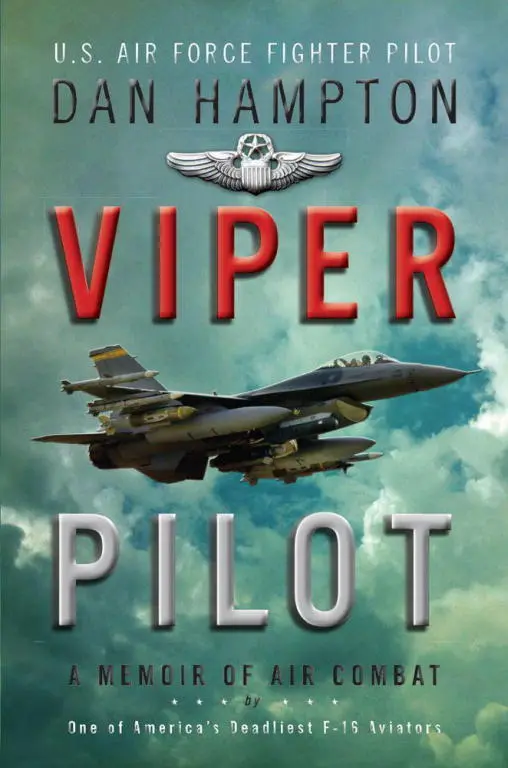
Dan Hampton - Viper Pilot
Здесь есть возможность читать онлайн «Dan Hampton - Viper Pilot» весь текст электронной книги совершенно бесплатно (целиком полную версию без сокращений). В некоторых случаях можно слушать аудио, скачать через торрент в формате fb2 и присутствует краткое содержание. Город: New York, Год выпуска: 2012, ISBN: 2012, Издательство: William Morrow, Жанр: Биографии и Мемуары, nonf_military, на английском языке. Описание произведения, (предисловие) а так же отзывы посетителей доступны на портале библиотеки ЛибКат.
- Название:Viper Pilot
- Автор:
- Издательство:William Morrow
- Жанр:
- Год:2012
- Город:New York
- ISBN:978-0-06-213035-8
- Рейтинг книги:4 / 5. Голосов: 1
-
Избранное:Добавить в избранное
- Отзывы:
-
Ваша оценка:
Viper Pilot: краткое содержание, описание и аннотация
Предлагаем к чтению аннотацию, описание, краткое содержание или предисловие (зависит от того, что написал сам автор книги «Viper Pilot»). Если вы не нашли необходимую информацию о книге — напишите в комментариях, мы постараемся отыскать её.
is the electrifying memoir of one of the most decorated F-16 pilots in American history: U.S. Air Force Lieutenant Colonel Dan Hampton, who served for twenty years, flying missions in the Iraq War, the Kosovo conflict, and the first Gulf War.
Both a rare look into the elite world of fighter pilots and a thrilling first-person account of contemporary air combat,
soars—a true story of courage, skill, and commitment that will thrill U.S. Special Forces buffs, aviation and military history aficionados, and fans of the novels of Tom Clancy and Dale Brown.
Viper Pilot — читать онлайн бесплатно полную книгу (весь текст) целиком
Ниже представлен текст книги, разбитый по страницам. Система сохранения места последней прочитанной страницы, позволяет с удобством читать онлайн бесплатно книгу «Viper Pilot», без необходимости каждый раз заново искать на чём Вы остановились. Поставьте закладку, и сможете в любой момент перейти на страницу, на которой закончили чтение.
Интервал:
Закладка:
Each fighter wing is made up of several “groups” that share the wing’s number. For instance, the 20th Fighter Wing (FW) at Shaw AFB consists of a Maintenance Group, Medical Group and a few other support organizations like Security Police and Personnel. The 20th Operations Group contains the 55th, 77th, 78th, and 79th Fighter Squadrons. Every active flying pilot on the base is assigned to a squadron. A recently assigned pilot, whether a transfer or a true rookie out of the training pipeline, is called a Fucking New Guy (FNG)—unless he’s a lieutenant colonel or above. FNGs are assigned to a “flight,” an administrative unit within a squadron made up of about five pilots plus an Assistant Flight Commander and a Flight Commander. These last two guys are senior captains; the Flight Commander should be an Instructor Pilot (IP) but often is only a flight leader.
He takes care of his guys. The Flight Commander knows what upgrades and training each pilot needs, and builds the weekly flying schedule accordingly. He reviews the grade sheets written on each man and helps maintain the all-important grade book. This is a permanent record of the formal training courses and upgrades the pilot has completed.
Besides a flight assignment, a pilot will also have at least one additional duty. He’ll be put into one of the squadron functional areas, called a Shop, under the Shop Chief who is a senior captain. These shops allow the squadron to run smoothly: Scheduling, Training, Mobility, Life Support, Standardization and Evaluation, Intelligence, and the Weapons and Tactics.
The Training Shop is exactly that. The Chief and his minions keep track of each pilot’s various requirements and currencies. Currencies cover not only tactical issues, like weapons qualifications, but a myriad of other headaches. How many takeoffs and landings per month, how many night landings, instrument approaches, required briefings, etc.… The list is nearly endless. Scheduling is the backbone of a flying operation. Every six months, the Scheduling Shop builds a Long Range Schedule outlining known deployments, exercises, and then creates the Flying Window, which are blocks of time available to the entire wing for its flying. Every pilot needs to maintain weapons currency by dropping so many bombs, strafing, and firing a certain number of missiles within preset accuracy parameters. There’s much, much more to this, but it’s sufficient to say that scheduling is a basic nightmare and an excellent place to stick a new guy.
Mobility is responsible for all the equipment, paperwork, and special requirements necessary for a squadron of three hundred people and two dozen aircraft to deploy at a moment’s notice. The life-support shop, with the assistance of specially trained enlisted folks, maintains the helmets, G-suits, harnesses, and survival gear, as well as overseeing periodic refresher training for first aid, water survival, land survival, and personal weapons qualifications.
Standardization and Evaluation (Stan Eval) Shop is like the flying police. Everything related to military and applicable civilian flying regulations is maintained and enforced by Stan Eval. Each pilot, in addition to required training, currencies, and upgrades, must also take at least two check-rides per year. As explained earlier, check-flights are comprehensive oral, written, and flying exams. Normal pilots must take an instrument check that verifies his instrument rating and professional qualifications to fly a military fighter. This involves a session in a flight simulator, where all critical emergencies must be analyzed, solved, and taken to a logical, satisfactory conclusion. Another day is taken up with written tests covering aircraft systems, flying regulations, and the annual Instrument Refresher academic course. The actual flight takes another day.
The check pilot, called a Standardization and Evaluation Flight Examiner (SEFE), evaluates every aspect of the mission. Instrument Qual checks focus on maintaining your instrument rating and advanced aircraft handling through aerobatics and a few dogfighting setups. Several instrument approaches are flown, followed by Simulated Flameout Approaches, since being able to land without an engine is obviously crucial to a single-seat fighter pilot. Once back on the ground, after an extensive debrief, the SEFE gives an oral examination of anything else he feels is required.
Mission Qual checks follow the same format but the focus is on a pilot’s fighting skills. The actual flight will be from a scenario provided by the SEFE, which encompasses the specific missions a squadron would be responsible for in combat. Strike squadrons may focus on laser-guided bombing, whereas a Wild Weasel squadron would concentrate on Maverick missiles or cluster bomb attacks against SAM sites. The oral debrief is just as thorough and equally unpleasant but absolutely necessary. It’s all taken very, very seriously. The examinee is tested up to whatever qualification level he holds and must demonstrate his proficiency at all the inclusive skills. Every pilot, regardless of rank or qualification, is also subject to no-notice check-rides. This occurs when a SEFE shows up at the squadron one morning, points at a scheduled flight, and makes it a check-ride. The idea is to see how ready and lethal a pilot can be with no time to prepare. Kind of like combat.
Evaluators are usually field-grade officers and always instructor pilots. Some of the best SEFEs are Weapons Officers who’ve been off to staffs and schools, are now majors, and are back in flying units. Evaluating others from your own jet and knowing what’s happening in the other cockpit takes a great deal of experience—judgment of critical, dynamic situations with lives and tens of millions of dollars at stake doesn’t come naturally to everyone. In a fighter squadron, the commander and the director of operations (DO) should always be SEFEs. This is a credibility issue as well, since guys who lead should be the best, and credibility is essential in fighter units. The Weapons Officer is also usually a SEFE, and at least one of the Assistant Director of Operations (ADO).
ADOs are majors or sometimes very junior lieutenant colonels. They usually return to flying after completing the obligatory staff tour or one of the singularly useless professional military education courses. Fully re-qualified to fly, they’re put in charge of the functional shops run by captains. As field-grade officers, they’re another level of supervision and they work directly for the Director of Operations (DO).
The Director of Operations is the second-in-command of the squadron. He takes care of all the operational and training aspects just discussed. The squadron commander sets the tone and focus, and the DO deals with implementation. Always an IP and a SEFE, this officer rules the flying operations. He’s a lieutenant colonel who has served as an ADO or on the wing staff and should know all there is to know about running a squadron. If he doesn’t retire or screw up, he’ll likely command a squadron of his own.
The squadron commander makes or breaks the outfit. Life is superb with the right commander and miserable with the wrong one—I’ve had both kinds. When I showed up in Germany, my squadron was just shutting down for two weeks of skiing. The commander had made it an annual tradition to take everyone to the Alps for a big winter party. So, a month after finishing F-16 training in Phoenix, Arizona, I’m sitting on a snowbank on top of an Austrian mountain and drinking Apfelkorn. Surreal.
We also routinely rented boats during the grape harvest season and would take wine-tasting cruises up and down the Mosel River. There were also weekend “cross-country” flights. These contributed to instrument training and familiarity with foreign air bases, but it was also great fun to take a few fighters and tear up a French Officer’s Club. Or fly up to Copenhagen to see the Little Mermaid statue or over to England for a weekend in London. You get the idea.
Читать дальшеИнтервал:
Закладка:
Похожие книги на «Viper Pilot»
Представляем Вашему вниманию похожие книги на «Viper Pilot» списком для выбора. Мы отобрали схожую по названию и смыслу литературу в надежде предоставить читателям больше вариантов отыскать новые, интересные, ещё непрочитанные произведения.










Обсуждение, отзывы о книге «Viper Pilot» и просто собственные мнения читателей. Оставьте ваши комментарии, напишите, что Вы думаете о произведении, его смысле или главных героях. Укажите что конкретно понравилось, а что нет, и почему Вы так считаете.