Hugh Mills - Low Level Hell
Здесь есть возможность читать онлайн «Hugh Mills - Low Level Hell» весь текст электронной книги совершенно бесплатно (целиком полную версию без сокращений). В некоторых случаях можно слушать аудио, скачать через торрент в формате fb2 и присутствует краткое содержание. Город: Novato, CA, Год выпуска: 2009, ISBN: 2009, Издательство: Presidio Press, Жанр: Биографии и Мемуары, military_history, на английском языке. Описание произведения, (предисловие) а так же отзывы посетителей доступны на портале библиотеки ЛибКат.
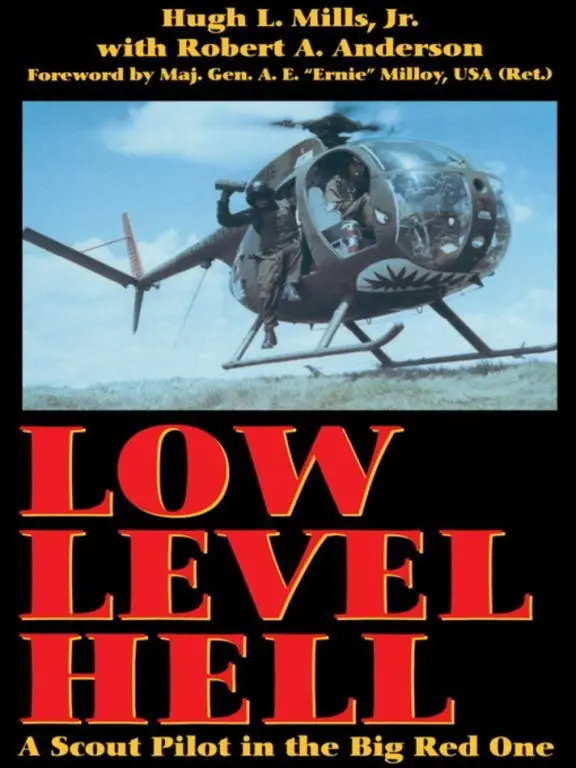
- Название:Low Level Hell
- Автор:
- Издательство:Presidio Press
- Жанр:
- Год:2009
- Город:Novato, CA
- ISBN:978-0-307-53792-8
- Рейтинг книги:4 / 5. Голосов: 1
-
Избранное:Добавить в избранное
- Отзывы:
-
Ваша оценка:
Low Level Hell: краткое содержание, описание и аннотация
Предлагаем к чтению аннотацию, описание, краткое содержание или предисловие (зависит от того, что написал сам автор книги «Low Level Hell»). Если вы не нашли необходимую информацию о книге — напишите в комментариях, мы постараемся отыскать её.
Low Level Hell — читать онлайн бесплатно полную книгу (весь текст) целиком
Ниже представлен текст книги, разбитый по страницам. Система сохранения места последней прочитанной страницы, позволяет с удобством читать онлайн бесплатно книгу «Low Level Hell», без необходимости каждый раз заново искать на чём Вы остановились. Поставьте закладку, и сможете в любой момент перейти на страницу, на которой закончили чтение.
Интервал:
Закладка:
Most fliers would not have known these details about the enemy. They had no reason to. But scouts were different—we had to know the enemy’s habits and personality. We were down low and slow looking for them every day, and knowing these things helped us locate the enemy.
So I could know Charlie’s ways even better, I arranged with Four Six (ARP leader Bob Harris) to go out into the field with the ARPs on my days off. This way I could actually see enemy bunkers and study how they were built, talk to captured enemy personnel through interpreters, and go into their tunnels and hootches to discover how they lived in the field.
Up to this time, the scout platoon worked in the south around the Iron T, Trapezoid, and Michelin. The terrain around those areas was flat and open, and occupied mostly by VC forces. But, in late May, our services were required up north to help keep elements of the 7th NVA Division under close surveillance.
We all disliked working up north on Thunder Road (Highway 13) around An Loc and Quan Loi because it meant trying to see through triple-canopy jungle. There was also the good prospect of running into the NVA regulars who operated out of nearby Cambodian sanctuaries. The whole area was hot as a firecracker.
From An Loc-Quan Loi it was only about twenty kilometers north and west to the Cambodian border and an area we called the Fishhook. When we worked up there we generally took a flight of six (three scouts and three Cobras) out of Phu Loi and up to Quan Loi early in the morning. Then we’d work out of that base and return to Phu Loi before dark.
Though the entire border area was crawling with NVA, the main problem was the terrain—the tall, layered, dense, and dark jungle. To see anything at all from the air, we had to fly right down on top of the trees, then slow down to nearly a hover—a point where we were easy pickings for the many heavy tripod-mounted .30- and .50-caliber antiaircraft machine guns that the North Vietnamese had dug into the jungle.
On 22 May we were working west out of An Loc-Quan Loi on reconnaissance to provide information on enemy activity to the base camp commander. The VR-1 that day was Bob Davis (One Three). He was down in his search pattern lowin’ and slowin’ away when all hell broke loose. Enemy .50-caliber rounds suddenly came bursting up out of the jungle and tore into Davis’s OH-6.
The sound of any kind of fire tearing through the bird is frightening, but the sound of .50s finding their mark is terrifying. Especially when you can’t see the gun or its muzzle blast, and have no idea where the fire is coming from.
Fortunately, neither Davis nor his crew chief was hit by the sudden barrage. With some careful nursing, One Three was able to get his ship back to Quan Loi and safely set her down. There were numerous big, ripping slug tears through the cabin and tail boom of the aircraft. It was the first time since I had been in the troop that any of our Loaches had ever been engaged and hit by .50-caliber fire.
Davis told me the general area where he had run into trouble, and I headed out with my gun cover to see if I could find the emplacement. I had no luck at all. Peering down into the deep, dark jungle revealed not a trace of any enemy activity other than a few old foot trails. The score near the Cambodian border quickly became NVA one, Darkhorse scouts zero.
Not long after the incident, Jim Ameigh (One Five) was scouting the same area and found the .50 pit that apparently had fired at Davis. We called those pits “donuts” because they were circular, with a platform of earth left in the center where the gun rested. This way, the firing team could track targets 360 degrees on the tripod without having to physically move the machine gun.
When Ameigh found the donut, the gun was gone. Once the enemy had exposed their position, they didn’t wait around. They knew that U.S. air would be back soon on a hosing down mission.
The incident left us all with an ominous, foreboding feeling about the area. We knew that the entire region to the west of An Loc was infested with NVA, and that the difficult terrain wouldn’t let us find them easily.
On 26 May, we were back up around An Loc-Quan Loi to work a routine VR mission out west toward the Fishhook. Crockett was getting ready to rotate back home, so I was flying again with Al Farrar as my crew chief.
As we pulled out behind Darkhorse Three Eight (Phil Carriss’s Cobra), Farrar keyed the intercom. “Where we headed today, Lieutenant?”
As we passed over the Phu Loi perimeter fence, I heard him arm his M-60. “Just sit back and relax, Al,” I responded. “We’ve got a few klicks to ride up to Quan Loi, then probably on out toward the Fishhook for a little look-see at what the bad guys are up to.”
“I hear it can get pretty hot up there, sir. But, you know, I love flying scouts. I haven’t been a crew chief very long now, but I’m learning real good and getting better every day.”
“How about a little radio fifty-four as we ride, Al?” I said back into the intercom. Without waiting for his answer, I flipped on the automatic direction finder (ADF) so we could catch the armed forces AM radio on the long flight up to Quan Loi. As was becoming my habit also, I took my right foot off the pedal and propped it on the lower door frame outside the aircraft. Finding that I could easily handle level flight with just the left pedal, wiggling my right foot out the door was a comfortable diversion.
“I really have been looking forward to flying more with you, sir,” Farrar said over the music. ‘’Since I’m just learning, I sure would appreciate anything you can do to help me along.”
“If you think you’ve drawn the master card to learn everything on this flight, you’re in deep trouble, Al, because we’re both learning. So, if we cooperate and graduate together, we might get this thing done right.”
“I sure do roger that, Lieutenant.”
As we flew into an area northwest of the An Loc rubber plantation, Carriss in the Cobra broke on VHF to me. “OK, One Six, we’re coming up on the area that Quan Loi wants us to take a look at. How do you feel about it?”
“OK, Three Eight, let’s go,” I responded.
“All right, One Six. I want you to go down on the large open clearing on the crest of the hill at about your four o’clock. Have you got that in sight?”
With my head cocked out the door, I picked up the hill with a valley leading off to the west. “Roger that… in sight.”
“OK,” Carriss followed up, “then begin your runs to the west, working to the north. We’ll call your breaks for you. You’ve got free-fire.”
I keyed the intercom and asked Farrar if he was ready to go to work. With excitement clear in his voice, he came back, “Yes, sir, Lieutenant, let’s do it!”
I kicked right pedal and whipped the cyclic over, forcing the little Loach into a tight right-hand descending turn. We swirled down to about a kilometer away from the hilltop where I was to start my pattern.
Pulling out at fifteen to twenty feet above the treetops, I headed for the hill from zero nine zero degrees so I could pass over that specific terrain feature and start my run in the cardinal direction of west. I headed up the valley at about forty knots, making 360-degree turns over things I wanted to look at again.
As I neared my westerly mark, the Cobra front-seater called, “Western limit, One Six.”
With that message, I did a right turn north for fifty to sixty yards, then another right, heading me back east to work a return search.
As I circled over what looked to be an old deserted bunker, looking for foot traffic patterns, I was interrupted by Carriss. “Hey, One Six, we’ve lost you. Where are you?”
Knowing full well how difficult it was to see me against the dense jungle from fifteen hundred feet, I kidded back, “I’m right down here, Three Eight. I can see you. Why in the hell can’t you see me?”
Читать дальшеИнтервал:
Закладка:
Похожие книги на «Low Level Hell»
Представляем Вашему вниманию похожие книги на «Low Level Hell» списком для выбора. Мы отобрали схожую по названию и смыслу литературу в надежде предоставить читателям больше вариантов отыскать новые, интересные, ещё непрочитанные произведения.











Обсуждение, отзывы о книге «Low Level Hell» и просто собственные мнения читателей. Оставьте ваши комментарии, напишите, что Вы думаете о произведении, его смысле или главных героях. Укажите что конкретно понравилось, а что нет, и почему Вы так считаете.