Hugh Mills - Low Level Hell
Здесь есть возможность читать онлайн «Hugh Mills - Low Level Hell» весь текст электронной книги совершенно бесплатно (целиком полную версию без сокращений). В некоторых случаях можно слушать аудио, скачать через торрент в формате fb2 и присутствует краткое содержание. Город: Novato, CA, Год выпуска: 2009, ISBN: 2009, Издательство: Presidio Press, Жанр: Биографии и Мемуары, military_history, на английском языке. Описание произведения, (предисловие) а так же отзывы посетителей доступны на портале библиотеки ЛибКат.
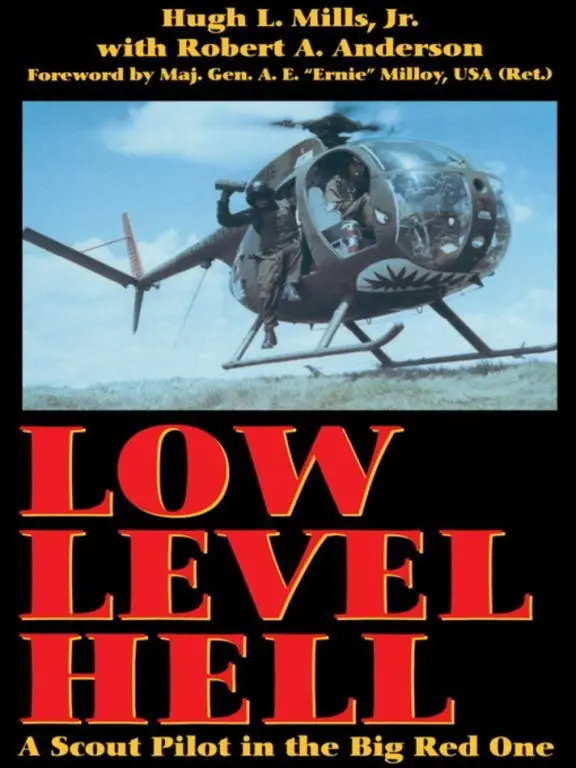
- Название:Low Level Hell
- Автор:
- Издательство:Presidio Press
- Жанр:
- Год:2009
- Город:Novato, CA
- ISBN:978-0-307-53792-8
- Рейтинг книги:4 / 5. Голосов: 1
-
Избранное:Добавить в избранное
- Отзывы:
-
Ваша оценка:
Low Level Hell: краткое содержание, описание и аннотация
Предлагаем к чтению аннотацию, описание, краткое содержание или предисловие (зависит от того, что написал сам автор книги «Low Level Hell»). Если вы не нашли необходимую информацию о книге — напишите в комментариях, мы постараемся отыскать её.
Low Level Hell — читать онлайн бесплатно полную книгу (весь текст) целиком
Ниже представлен текст книги, разбитый по страницам. Система сохранения места последней прочитанной страницы, позволяет с удобством читать онлайн бесплатно книгу «Low Level Hell», без необходимости каждый раз заново искать на чём Вы остановились. Поставьте закладку, и сможете в любой момент перейти на страницу, на которой закончили чтение.
Интервал:
Закладка:
“Hey, there’s an empty bunk right outside the beaded curtain. I’ll help you move your gear, then after I shower up we can go down to the O club and catch dinner and a movie.”
By this time he was on his feet and sticking out his hand. “My name is Rod Willis, Lieutenant Rod Willis. Are you a scout pilot?”
I shook his hand. “Well, yes… I’m Hugh Mills, One Six. Are you assigned to the scout platoon?”
“Yes, but it wasn’t easy.”
I liked Willis almost from the start. I got him introduced around the club and showed him the troop plaque lineup behind the bar. Each of the pilots in the troop had a plaque with his name and call sign on it. When a new guy came into the unit, his plaque was made up and put at the bottom of the group on the left side wall behind the bar. Plaques for the senior pilots were hung on the right side of the bar. As people DEROSed or otherwise left the troop, their plaques were taken down and everybody else moved up higher in the pecking order. Willis took a lot of kidding that night as he became the lowest man on the totem pole—a very visible position.
After supper, Bill Jones, Bob Davis, Willis (now to be the new One Seven), and I went back to the hootch and talked scouting for a couple of hours. Though Willis didn’t do an awful lot of talking, we learned that he was an air force brat. His father, a thirty-year veteran (a senior master sergeant), and the family had lived all over the world. He had followed exactly the same army career path that I had: enlisted, basic training, OCS (infantry), flight school, and Vietnam.
When he processed into Vietnam, he was assigned to pilot Hueys in the 1st Division. He told us how he practically begged on bended knee to get the S-3 to change his orders from jockeying ash and trash to flying combat missions in the scouts.
The kinds of questions Willis asked that night showed me what kind of pilot he would be. “You guys fly real low, don’t you?” “How often do you make enemy contact?” “How many kills are you getting?” “How much damage are the scouts doing to the enemy?” “How soon can I get transitioned into Loaches so I can get at the bastards?”
This guy’s naturally aggressive style was perfect for the scouts. He acted and talked like an individualist, and individualists were what the scouts were all about. Plus, he didn’t have a wife and family back home to worry about.
At about the same time that Willis came into the unit, we also got a new Darkhorse troop commander, a cavalry major by the name of Charles L. Moore. Not having met the man, I didn’t know what to expect when the new CO called a meeting of all the platoon leaders in his private hootch after supper on the day of the change of command ceremony. Before the meeting, though, I did find out that Moore was a second tour veteran, had actually served as the Darkhorse XO during his first tour, and had good familiarity with troop organization and operations.
At precisely 1900, we all walked into Major Moore’s hootch, snapped crisp salutes, and reported to the new commanding officer. The first thing that came across about him was that he was supercharged to the aggressive position, and somewhat spring-loaded to the pissed-off position. In other words, he was very aggressive, said exactly what he was thinking, and wanted it damned well understood that the mission of the troop was to seek out and destroy the enemy.
“It’s our cavalry heritage,” he said, “to find the enemy wherever the sons a bitches are. When we find ‘em, we’re going to kill ‘em. Is that understood?”
“Yes, sir!” we responded simultaneously.
“And starting tomorrow, I’m going to be flying C and C on as many of your missions as possible, so I’ll be there right on top of the contact to make whatever tactical decisions need to be made. Is that understood?”
Major Moore’s attitude was like a breath of fresh air to me. I decided then and there to show him Joe Vad’s new Outcast patch design.
Vad (Nine) was a rough, tough, street fighter from Brooklyn, New York. He didn’t care too much for the plain rectangular cloth patch that all the Outcasts wore over our right jacket pocket, so he had sketched a new design that he thought better typified the scout platoon’s fighting spirit. It was a blood red disk with a big skull and crossed cavalry sabers in the middle. At the top was the word OUTCASTS’ , at the bottom written on a scroll were the words, LOW LEVEL HELL.
I had been waiting for the right opportunity to show the design to Major Cummings. As soon as Major Moore saw Vad’s artwork, he approved it. He ordered patches be made and sewn on scout uniforms as soon as possible.
Though the motto on the new patch was Low Level Hell, the scout platoon was flying high. We knew our business. We all had miniguns strapped to our birds. We were scouring the countryside and finding the enemy every day. We were killing enemy every day. We hadn’t lost a single man in the platoon as the result of combat action. And the Darkhorse reputation was spreading—we were a pretty damned hot bunch of fliers.
Our increasingly cavalier attitude didn’t prepare us for what was about to happen.
A few days later, on 24 June, Jim Ameigh (One Five) and I were the scouts for two hunter-killer teams that had left Phu Loi early that morning to work an area around the Quan Loi airstrip. Captain Mike Woods (Three Five) was my gun pilot, and we worked for about ten hours with Ameigh and his gun, reconning from Quan Loi and An Loc in the south, on up Highway 13 to Loc Ninh in the north. We ended the operation about 1700, and the four of us met at Quan Loi for the flight back down Thunder Road to our base at Phu Loi.
On that day I was flying with an observer pilot in the left front seat instead of a crew chief in back. Artillery 1st Lt. Dwight Cheek had just recently come into the unit and was flying with me as a scout pilot in training. He already knew the OH-6 pretty well, having taken advanced training in the Loach and served some time as an OH-6 instructor pilot before coming to Vietnam.
Ameigh’s door gunner for the day was an experienced young crew chief by the name of Jim Slater. On the ride home from Quan Loi, both Ameigh and Slater were especially elated because they had made contact with enemy patrols that day and had scored confirmed kills—Slater out the back door with his M-60, and Ameigh with his minigun.
As we climbed out of Quan Loi, Woods in the lead Cobra got on the artillery frequency and asked for a status report.
Quan Loi artillery came right back. “Roger, Darkhorse. Quan Loi is cold… negative outgoing fires. Contact Lai Khe artillery north Thunder Three for Lai Khe advisories. Lai Khe arty is currently shooting 105s to the south and southeast. Good day.”
With Ameigh’s bird tight on my left wing, we headed down Highway 13 at eighty to ninety knots. As we approached Thunder One, Woods called up again, asking arty status from Lai Khe artillery.
They responded: “OK, Darkhorse flight of four, we’ve got 105s shooting out of Lai Khe, max ord three thousand feet. You are cleared direct to Phu Loi as long as you stay along the highway, and under two thousand feet for a safety buffer.”
Three Five rogered that with the comment that the guns were running at slightly under fifteen hundred feet and the scouts were down on the deck at a hundred feet or so off the ground. Ameigh and I were low because it was beginning to get dark, which gave us the opportunity to scout the road and maybe catch a bad guy planting a mine or digging a spider hole.
A couple of kilometers north of Lai Khe, Ameigh and I saw a group of our M-551 Sheridan tanks and M-113 ACAVs that were getting loggered in for the night. They were on the west side of the road and, in size, looked like about a troop or squadron-minus of armored cavalry.
Читать дальшеИнтервал:
Закладка:
Похожие книги на «Low Level Hell»
Представляем Вашему вниманию похожие книги на «Low Level Hell» списком для выбора. Мы отобрали схожую по названию и смыслу литературу в надежде предоставить читателям больше вариантов отыскать новые, интересные, ещё непрочитанные произведения.












Обсуждение, отзывы о книге «Low Level Hell» и просто собственные мнения читателей. Оставьте ваши комментарии, напишите, что Вы думаете о произведении, его смысле или главных героях. Укажите что конкретно понравилось, а что нет, и почему Вы так считаете.