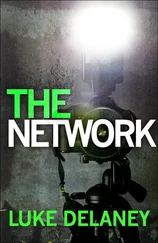
Jason Elliot - The Network
Здесь есть возможность читать онлайн «Jason Elliot - The Network» весь текст электронной книги совершенно бесплатно (целиком полную версию без сокращений). В некоторых случаях можно слушать аудио, скачать через торрент в формате fb2 и присутствует краткое содержание. Жанр: Триллер, на английском языке. Описание произведения, (предисловие) а так же отзывы посетителей доступны на портале библиотеки ЛибКат.
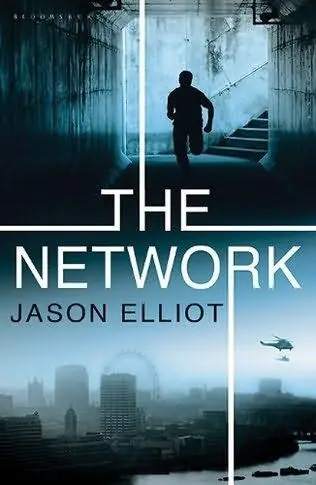
- Название:The Network
- Автор:
- Жанр:
- Год:неизвестен
- ISBN:нет данных
- Рейтинг книги:4 / 5. Голосов: 1
-
Избранное:Добавить в избранное
- Отзывы:
-
Ваша оценка:
The Network: краткое содержание, описание и аннотация
Предлагаем к чтению аннотацию, описание, краткое содержание или предисловие (зависит от того, что написал сам автор книги «The Network»). Если вы не нашли необходимую информацию о книге — напишите в комментариях, мы постараемся отыскать её.
The Network — читать онлайн бесплатно полную книгу (весь текст) целиком
Ниже представлен текст книги, разбитый по страницам. Система сохранения места последней прочитанной страницы, позволяет с удобством читать онлайн бесплатно книгу «The Network», без необходимости каждый раз заново искать на чём Вы остановились. Поставьте закладку, и сможете в любой момент перейти на страницу, на которой закончили чтение.
Интервал:
Закладка:
The border post at Torkham is a chaotic place. There’s a scruffy collection of buildings and a pair of wide gates flanked by fence posts that are no longer vertical, beyond which an Afghan flag flutters in the wind. Hovering near the gates are about a dozen Pakistani policemen in khaki uniforms, picking at random on individuals from the flow of men and women approaching the crossing point.
As long as we are not recognised as foreigners, there is nothing to stop us from entering Afghanistan here, and I sense that H is enjoying the idea of reliving the Great Game for a day and slipping unnoticed into the country. So a hundred yards from the gates we get out of the car and our driver agrees to wait until he sees us cross before he leaves. I catch the attention of an Afghan boy pushing a dusty cart laden with sacks and boxes, to which I add our bags and pay him a small sum to meet us on the far side of the gates. Then we say goodbye to our driver and merge into the flow.
‘You look good in an Afghan hat,’ I say to H.
‘See you in Afghanistan,’ he says.
We walk past the police as nonchalantly as possible and meet gratefully on the other side of the gates. It’s an anticlimax. There doesn’t seem to be any passport control. We wander into the courtyard of what looks like a customs post, where an armed Talib is dozing under a tree with an AK-47 across his lap. We rouse an official and are invited to sit, and a few minutes later a boy brings us tea. Then from the building someone waves us inside to a run-down office with a dusty desk beneath a bare bulb and a ceiling fan that doesn’t work. He smiles and stamps our passports without much interest, then points us in the direction of some decrepit cars waiting to ferry passengers to Kabul. We’re officially in Afghanistan.
Nothing has escaped the years of war here. For almost the entire route, the surface of the road has long since disappeared. For lengthy stretches even the road itself has simply been torn away by flooding or collapsed. Even on the best sections we weave between craters and gullies gouged out by years of neglect. The telephone poles and pylons beside the road have been stripped of their wires. There is no building, wall or human structure that is intact. Everything seems on the verge of collapse or to have been reduced to its most elemental parts. All along the way we see the vestiges of conflict: destroyed and rusting armoured vehicles, stripped of every salvageable part, crouching silently beyond the shoulders of the road or in the surrounding fields.
‘That’s not a tank,’ says H, when I point out the first of them ‘It’s a BTR-70. Armoured personnel carrier. That one over there’s a BMP combat vehicle.’ He knows his Soviet armour from the days when the West feared the might of the Red Army, which fought its last engagement not in Europe but in the valleys and passes of Afghanistan.
The landscape is beautiful none the less. Perhaps it’s even more beautiful because the evidence of destruction is never far away and makes us think of the fragility of life. It’s also as if we’ve gone back in time. The surrounding villages, clinging to hillsides as if they’ve grown out of the ground itself, are made from timber and adobe and have a biblical look. White-bearded men in turbans and flowing gowns lead camels by the roadside or guide wooden ploughs behind oxen. We return briefly to the twentieth century as we enter Jalalabad, where the streets are paved again, and we stop to eat kebabs and freshly baked bread at a tiny stall. The owner jokes with us and asks if we are looking for Osama.
The capital bears all the scars of war. We drive in from the east, about six hours after leaving the border, and pass the shattered suburb of Microrayon, where every building is half-ruined by gunfire and rocket blasts.
‘Bloody hell,’ says H gloomily as he looks over the destruction. ‘They really went to work here.’
Even on the outskirts of Kabul there are hollowed-out carcasses of Soviet-made tanks, whose turrets have been blown from their housings by anti-tank mines and lie upside down a few yards away. I wonder how many wars some of them saw before they ended up here. Some date from the era of the Soviet occupation that ended twelve years earlier, others from the long civil war that saw the city torn apart by rival factions. Some may have even seen action in the Gulf War, after which the CIA had the bright idea of gathering them up from Iraqi battlefields and bases and sending them on to Afghanistan.
Kabul seems half-deserted since I was last here, probably because the Tajik population championed by Massoud, the Taliban’s arch-rival, has largely fled. Nor is there any sign of the pakoul, the flat woollen hat worn all over the north of the country. On the advice of our taxi driver, we’ve already hidden ours. There are few cars other than taxis and the occasional pickup truck with tinted windows, the preferred means of travel for Taliban commanders and their bodyguards. It’s as if the place is on holiday and every normal activity has shut down. There are no kites in the sky. The Taliban have seized a ghost town.
Our guest house is in the least-destroyed residential part of the city called Wazir Akbar Khan, where a grid of homes for Kabul’s most prosperous families was built in the 1970s. The trust provides a housekeeper and a chowkidar, who welcome us warmly and fuss over our every request. The windows on the ground floor are heavily sandbagged, and upstairs the panes have anti-shatter tape across them in case of nearby explosions. We install ourselves gratefully in big rooms with marble-floored bathrooms where the taps don’t work because there’s no electricity to pump the water. But we’ve made it to Kabul and we’re happy to be here.
From the upstairs room we can just see a snow-covered ridge, miles away in the high mountains to the north. The final moments of sunlight are just settling along it with a bright pink glow, and it looks almost as if a luminous flamingo feather has gently fallen to rest there from the beyond.
13
The mine clearers are brave men whom I respect. Their work is dangerous and by normal standards they are paid a pittance for it. Though they save countless lives, they don’t get the recognition they deserve and are frequently treated with suspicion or ridicule, especially in rural areas, by people who are too stupid to understand the importance of what they do.
They have never been introduced to the notion of life insurance. When one of their team is wounded or dies, the others contribute to a sum which is then delivered to the man’s wife, who may be able to live from it for a few months. But this is Afghanistan, and they are among the most privileged of the city’s employees.
We walk to their headquarters in Wazir the following morning, and are greeted with spine-crushing hugs from the manager, a burly and jovial Pashtun in his fifties who I’ve known for years. I call him Mr Raouf because he used to call me Mr Anthony, and the habit of using our first names stuck. Even as a junior member of the de-mining team his natural confidence and authority told me he’d do well, and I did everything to see he was promoted as swiftly as was fair. Now he’s the local director and has thirty men working under him.
‘Thanks be to God,’ he smiles, ‘life is good. You see how religious we have all become?’ he asks with an ironic chuckle, and tugs at his thick beard. It’s a decree of the Taliban that men let their beards grow. Being clean-shaven is associated with the irreligious devilry of the communists, who brought ruin to Afghanistan, though not everybody agrees. Like many Afghans, Raouf doesn’t see why not having a beard should make him less religious, and like any Afghan, he dislikes being told what to do.
Читать дальшеИнтервал:
Закладка:
Похожие книги на «The Network»
Представляем Вашему вниманию похожие книги на «The Network» списком для выбора. Мы отобрали схожую по названию и смыслу литературу в надежде предоставить читателям больше вариантов отыскать новые, интересные, ещё непрочитанные произведения.


Обсуждение, отзывы о книге «The Network» и просто собственные мнения читателей. Оставьте ваши комментарии, напишите, что Вы думаете о произведении, его смысле или главных героях. Укажите что конкретно понравилось, а что нет, и почему Вы так считаете.