Erin Bow - Plain Kate
Здесь есть возможность читать онлайн «Erin Bow - Plain Kate» весь текст электронной книги совершенно бесплатно (целиком полную версию без сокращений). В некоторых случаях можно слушать аудио, скачать через торрент в формате fb2 и присутствует краткое содержание. Год выпуска: 2010, ISBN: 2010, Издательство: Scholastic Inc., Жанр: Старинная литература, на английском языке. Описание произведения, (предисловие) а так же отзывы посетителей доступны на портале библиотеки ЛибКат.
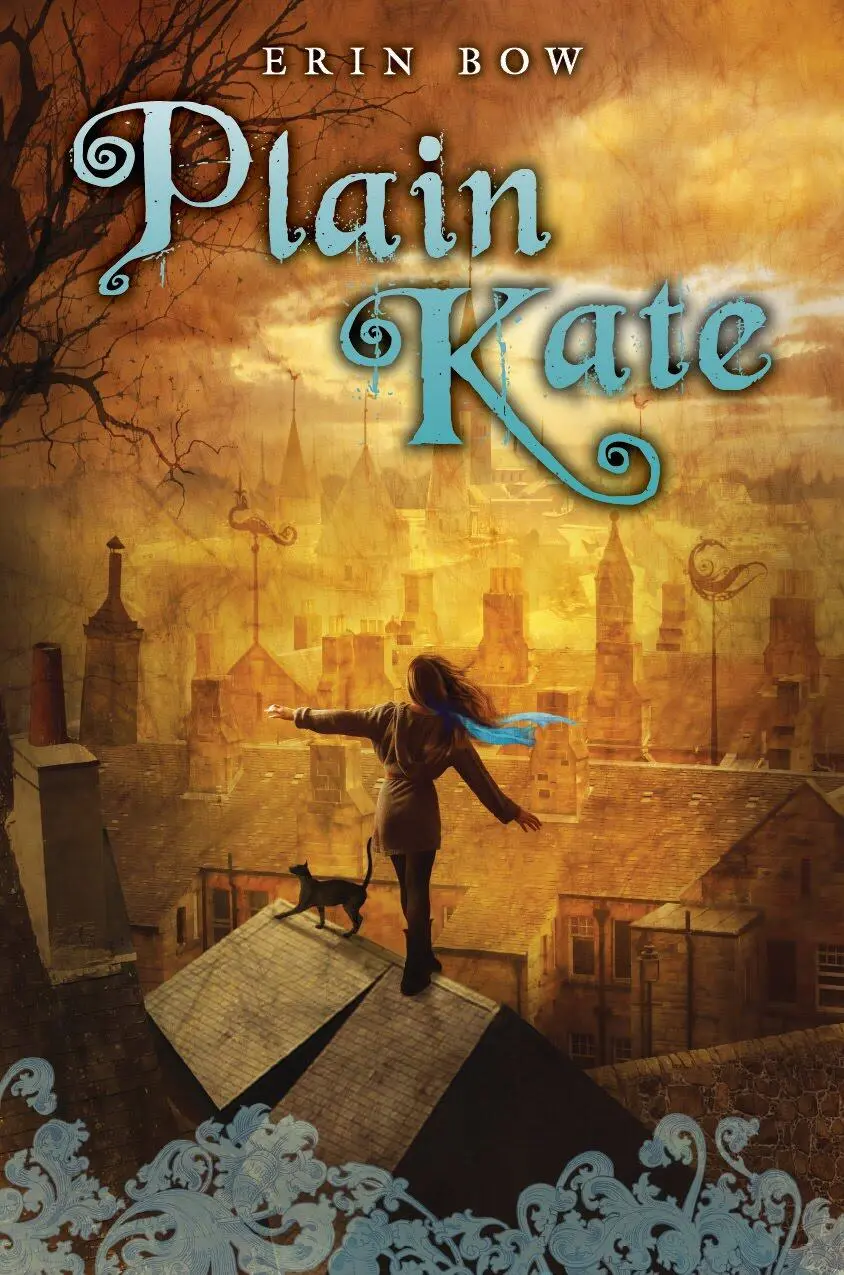
- Название:Plain Kate
- Автор:
- Издательство:Scholastic Inc.
- Жанр:
- Год:2010
- ISBN:9780545166645
- Рейтинг книги:3 / 5. Голосов: 1
-
Избранное:Добавить в избранное
- Отзывы:
-
Ваша оценка:
Plain Kate: краткое содержание, описание и аннотация
Предлагаем к чтению аннотацию, описание, краткое содержание или предисловие (зависит от того, что написал сам автор книги «Plain Kate»). Если вы не нашли необходимую информацию о книге — напишите в комментариях, мы постараемся отыскать её.
Plain Kate — читать онлайн бесплатно полную книгу (весь текст) целиком
Ниже представлен текст книги, разбитый по страницам. Система сохранения места последней прочитанной страницы, позволяет с удобством читать онлайн бесплатно книгу «Plain Kate», без необходимости каждый раз заново искать на чём Вы остановились. Поставьте закладку, и сможете в любой момент перейти на страницу, на которой закончили чтение.
Интервал:
Закладка:
Mira, she thought, and treasured it each time she heard it. They must keep me. Family.
The vardo inched down the road, deep in the wild country. Plain Kate had always known that Samilae was a little town, a long way from anywhere. But she hadn’t known what it would be like to walk for weeks and see no one, to follow a road through a wood that seemed as large as the story of the sea. Inside its dripping tunnel of branches, the road was sloppy, and her boots had to be greased every night against rot. She oiled her tools too, but rust still dappled them.
At night the fog was thick and full of lights, and sometimes voices.

One night the river fog came up so thick that the vardo seemed like islands in it, like boats. Plain Kate sat on the steps of the red vardo where she slept with Drina and Daj, carving with Taggle curled over her toes.
The fog was so thick that she couldn’t see the ground. It billowed, and when Drina came walking up, it rippled in her wake. Drina swung up beside Kate and settled in. Taggle cracked an eye open, stood, stretched as if for a long journey, then took the two steps over to Drina’s feet and flopped down over them instead.
“Faithless,” Kate scolded, nudging him with her toe. He leaned his cheek on her foot and rubbed her toe with the corner of his mouth, purring.
Drina reached down and scratched Taggle between his ears. “I wish I had a cat. Before my mother died I had a raven.”
As Drina said it, Kate suddenly remembered seeing it. She had been whittling a top at her father’s feet. The wood she was working had been light birch; it had been that week in springtime when winged maple seeds stuck up between the cobbles; she had been watching Roamers put on a show for coin. How many years ago had that been? She had been careless and cat-less and happy. The show had lifted her spirits: a man playing a fiddle, another man juggling, and a girl—a little younger than Kate—who had a raven on her shoulder, and tumbled.
“I saw!” Plain Kate said to Drina. “You and the raven. And—” Yes, she remembered now: Her father had broken two fingers when a chisel slipped, and Kate had thought it was the end of the world. One of the Roamers was a young woman, who had sad eyes but a quick smile. She re-broke the fingers and set them, singing all the time, a strange, liquid tune.
“That’s worth true silver,” her father said, wincing and holding his hand up, sweat beading on his face like resin coming out of pine when it is very hot. “You sang the pain right under.”
The woman laughed. “And that’s why you’re more pale than me, I suppose.” Kate remembered that she had been a witch-white, like Linay: her hair and skin the color of sunned linen. Before she began her work she’d plaited two rings for Piotr Carver, strange braided things of weeping willow and her own white hair. “I’ll take copper,” the woman said, “and thank you to spread no tales.”
The woman called the girl to her and the raven came flying—and that was the end of Kate’s memory.
“I saw you,” Kate told Drina. “You came to Samilae before my father died, before the skara rok . You had a raven, and you tumbled for coin.”
“I went everywhere.” Drina leaned forward. Taggle half rolled over and allowed her to rub the wishbone hollow under his chin. “I went everywhere with my mother’s clan. We tumbled, and sang, and told the bones and the stars.” She leaned farther forward, touching noses with the cat. “When my mother died, my father took me and came here. This is his clan.” Her hair swung around her and Kate couldn’t see her face. “No one asked me.”
“There was a woman,” said Kate hesitantly, caught by the memory but cautious. “A healer woman, a witch-white…”
Drina’s head flicked up, her loose hair flying. “That was my mother! You knew her?”
“I—” Kate began, but just then Taggle, who was no longer getting petted, rumbled, “Oh, please, don’t stop.”
six
secrets and roses
Drina leapt to her feet. Her skirts swirled and tangled and she stumbled and tumbled to the ground. Fog billowed up around her. “Did he—” she gasped. “Did the cat—?”
“Did he what?” the cat drawled.
“Talk,” gulped Drina.
“Drina…” Plain Kate shivered and her skin burned. She was ready to beg but not sure what to beg for, or how to begin. “Drina, if you tell—if people find out—”
“They’ll kill you.” Drina looked white-eyed as a frightened rabbit, ready to bolt.
It was so quiet for a moment that Plain Kate could hear the flame in the lantern behind her beating its wings. “You know,” said Taggle, “you were just reaching that itchy spot over the jaw.”
“Taggle,” hissed Kate. Then suddenly words came spilling out of her. “Drina, mira Drina, please, I’m not a witch, there was a man, and he was a witch, he made me give him my shadow—he’s the one who made Taggle talk.”
“You’re under a curse,” said Drina. “He cursed you.”
Plain Kate hadn’t thought of it that way, but she nodded. Her throat had almost closed and her skull felt as if it might break through her skin.
“I’ll—” Drina’s voice broke; she swallowed. “I’ll help you break it.”
Plain Kate stared at her. “You will?”
“My mother—” Drina looked down at her hands, rubbing her thumb against the place on the step corner where the red paint had worn away. “My mother was a witch. I have her power, I think, and I was learning when she—she was going to teach me. But they killed her.”
“They—” said Kate.
“In this city, Lov. It was in the skara rok , the witch’s fever. They were burning witches. They found out she had power and—”
Kate remembered thinking that she knew more about witch-hunting than Drina did. She had been wrong. “They burned her,” she said, so that Drina didn’t have to.
“Yes. No.” Drina sat down and Kate could feel the trembling that came off of her, like water fluttering in a breeze. “They took her. They hurt her until she told them—I don’t know. That she had brought the fever, I think. And then they—they burned her. They tried to burn her. But she had power, real power. She broke free and she ran. She was burning. She threw herself into the river and she drowned.”
“Drina…” said Kate, but could not go on.
“So I’ll help you,” Drina said. “I have power and I want to help you.”
Kate closed her eyes. “Help me,” she said.

Late, in the warm darkness of the vardo , Drina and Plain Kate lay whispering. The rain tapped on the canvas roof, and Daj snored a few feet away. Taggle was stretched out between the girls, belly up, one ear under each chin, rumbling in bliss. Plain Kate told Drina about the swarm of fish, the stink of the smokehouse, the axe in the dark. About why she had traded her shadow for a handful of fishhooks.
About the man who had done it, who had pulled her shadow from her like the shell from a shrimp, she said little. In that country, people said that if you spoke of demons, demons came. Linay. Kate didn’t want to say his name.
“Your shadow,” whispered Drina. “But—I’ve seen you. I know it’s always raining, but—I’ve seen you. Are you sure you’ve lost your shadow?”
“He said it would be slow.” Saying it that way made it sound awful, like a slow death. She tried to back away from that. “I’m sure, anyway. I can feel it…like a sack with a hole in it. Spilling.”
“Bleeding?” offered Taggle. “Like when you bite something small around the belly. They leak.”
Kate did not feel much helped by this expert observation. “What will happen to me, Drina? Did your mother teach you—?”
Читать дальшеИнтервал:
Закладка:
Похожие книги на «Plain Kate»
Представляем Вашему вниманию похожие книги на «Plain Kate» списком для выбора. Мы отобрали схожую по названию и смыслу литературу в надежде предоставить читателям больше вариантов отыскать новые, интересные, ещё непрочитанные произведения.







Обсуждение, отзывы о книге «Plain Kate» и просто собственные мнения читателей. Оставьте ваши комментарии, напишите, что Вы думаете о произведении, его смысле или главных героях. Укажите что конкретно понравилось, а что нет, и почему Вы так считаете.