Erin Bow - Plain Kate
Здесь есть возможность читать онлайн «Erin Bow - Plain Kate» весь текст электронной книги совершенно бесплатно (целиком полную версию без сокращений). В некоторых случаях можно слушать аудио, скачать через торрент в формате fb2 и присутствует краткое содержание. Год выпуска: 2010, ISBN: 2010, Издательство: Scholastic Inc., Жанр: Старинная литература, на английском языке. Описание произведения, (предисловие) а так же отзывы посетителей доступны на портале библиотеки ЛибКат.
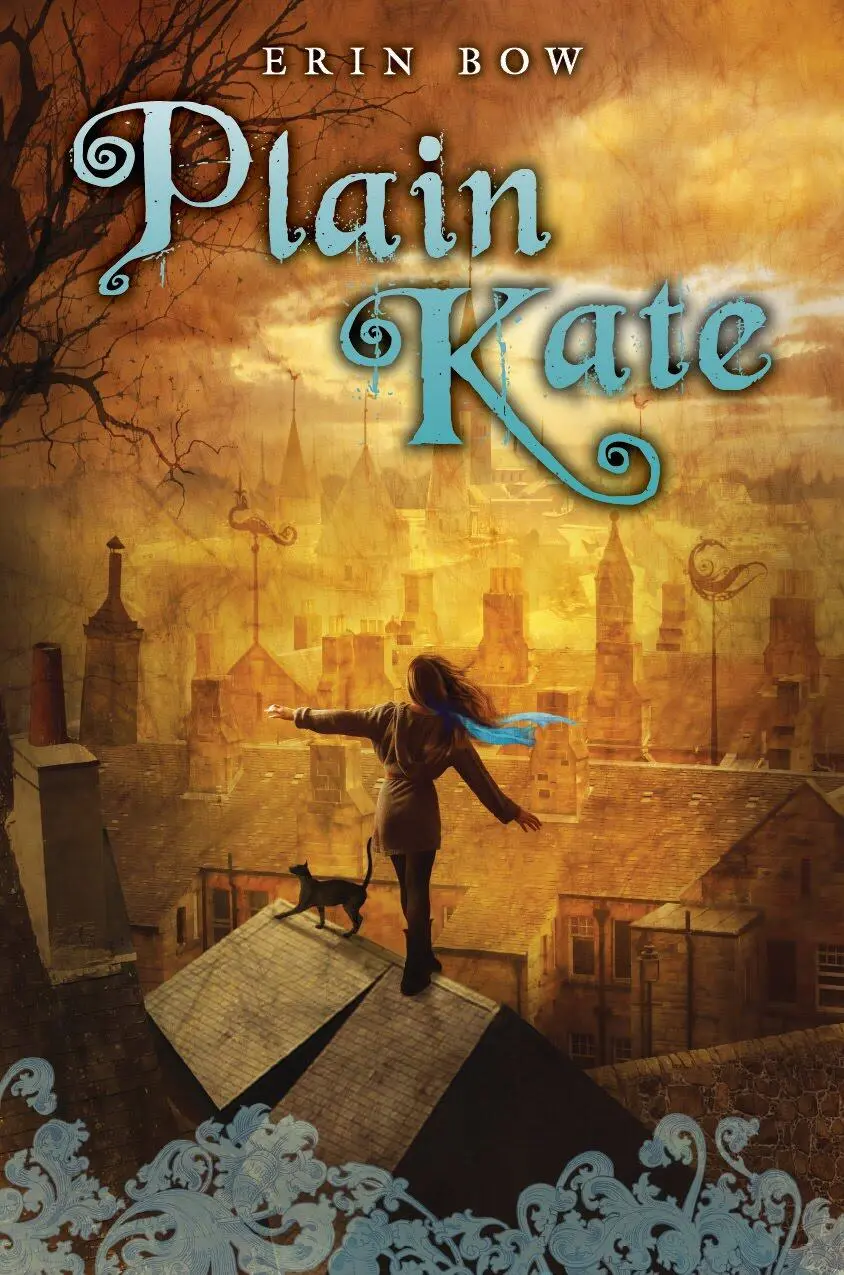
- Название:Plain Kate
- Автор:
- Издательство:Scholastic Inc.
- Жанр:
- Год:2010
- ISBN:9780545166645
- Рейтинг книги:3 / 5. Голосов: 1
-
Избранное:Добавить в избранное
- Отзывы:
-
Ваша оценка:
Plain Kate: краткое содержание, описание и аннотация
Предлагаем к чтению аннотацию, описание, краткое содержание или предисловие (зависит от того, что написал сам автор книги «Plain Kate»). Если вы не нашли необходимую информацию о книге — напишите в комментариях, мы постараемся отыскать её.
Plain Kate — читать онлайн бесплатно полную книгу (весь текст) целиком
Ниже представлен текст книги, разбитый по страницам. Система сохранения места последней прочитанной страницы, позволяет с удобством читать онлайн бесплатно книгу «Plain Kate», без необходимости каждый раз заново искать на чём Вы остановились. Поставьте закладку, и сможете в любой момент перейти на страницу, на которой закончили чтение.
Интервал:
Закладка:
Drina was silent a while. Then she said, “When my mother died—after she died, my uncle—” Behind them, Daj snorted and shifted in her sleep. The two girls tensed, then eased as the snoring started again. Drina continued, her voice the softest of whispers.
“My uncle was a witch too. They were twins, my mother and he, and they were always together; it was like they had one heart between them. I remember, we were camped outside the walls of Lov, by the river. When my mother died, I mean. And he found her, her body, floating there against the water gate. All—all burnt and hurt, he said. They wouldn’t let me see her.
“My father screamed and screamed. But my uncle got so quiet. There’s something wrong, he said, he kept saying, something is wrong with her. And my father hit him. He said of course there’s something wrong, she’s dead! But my uncle—he didn’t want her buried. And when we did bury her, he lay flat on her grave and he wouldn’t eat and he wouldn’t talk.
“And finally he said—she’s not here. She’s not resting, she’s not here. Father threatened to kill him if he didn’t shut up, but he wouldn’t. He said: Don’t bother, I’m going to kill myself. And he was a witch, you know, so it was true. Everything he said was true, one way or another.”
“And—did he?” asked Plain Kate. “Did he kill himself?”
“No. He took his shadow—that’s why I’m telling you this. He made a rope out of his own hair—he cut it all off and made it into a rope. And he soaked it in blood, his blood. And he waited until morning and he made a noose out of that rope, and he threw it down on top of his shadow, on top of the shadow’s heart. And—I saw this, it was real—the shadow got a hole in it, like he had a hole right through him and the sun was shining through. This little piece of shadow came loose, got solid, like a bird. And he picked it up and held it in his hand.
“And then he called her, my mother. He used her name. That was—we never speak the names of the dead. But he called her and he said: ‘Come and tell me where you are!’ ”
Drina’s breath, as she echoed her uncle’s cry, stirred Kate’s hair. Daj shifted again, and both girls froze in silence, listening, as if it had been them who had just summoned the dead.
“She was in the shadowless country,” said Plain Kate. “The land of the dead.”
“But she—something—something came.”
A gust of wind blew branches against the vardo ; they scraped like fingernails. Even the cat was silent now.
“He put the shadow on her tongue,” said Drina. “And she spoke. I didn’t hear. He wouldn’t tell me what she said.”
There was a long pause. The canvas roof of the vardo shone faint as the dark of the moon, and that was the only light. “My uncle summoned my mother’s spirit with just a piece of his own shadow,” said Drina. “A shadow gives a ghost life, I think. Power. With a whole shadow—I think a strong witch could raise the dead.”
“That must be why…” Kate trailed off.
“Why your shadow was taken. But what it means to be without a shadow…I do not know.”

The two girls whispered together deep into the night, slept close together with Taggle between them, then got up and stirred the fires, caught the chickens, and hauled the water. And from that day on they walked side by side.
Plain Kate tried to learn the rules of magic, which were stranger and harder than the rules of living among the Roamers. In truth Drina was not a good teacher. She only half knew things herself, and remembering tore her between the joy of her mother’s memory and the fear of her mother’s fate.
So Kate learned only a little. Magic is an exchange of gifts : That was the first rule. Thus, Drina’s nameless uncle had given up a piece of his shadow to give speech to the dead. And thus, Linay had had to make payment in magic for Kate’s shadow. Thus, the talking cat.
“A bargain,” said the cat, “at any price.”
All great magic requires a great gift. But even small magics asked something, Drina said. And so a witch would put little parts of hetself into a spell—hair, say, or tears.
“Blood,” said Taggle. “It’s always blood.”
Plain Kate narrowed her eyes at him. “What do you know about magic?”
“I,” he intoned, wrapping his tail over his paws and sitting up regally, “am a talking cat.”
“He’s right,” said Drina. “Blood’s the most powerful. Blood and breath. You shape the magic with breath—you sing it. That is why witches can’t lie, my mother said. Power flows along your words. Lying turns that power against you. It’s a real thing. It can kill you.”
“So your uncle…” A question had been growing in Kate’s mind for days, growing as her shadow thinned and twisted. “Did he die? He said he’d kill himself. Did he die, without his shadow?”
“He—” Drina paused. “He went mad. Eventually—the clan spoke death to him. They cast him out. He went alone.”
“But what happened to him?”
“You don’t understand,” said Drina. “We spoke death to him. He died to us. His name was closed. He went alone.”
It was a Roamer thing, but Plain Kate understood it better than Drina thought. Toila was coming. In Toila they would test her, and after that she might well be cast out. When they stopped next, Taggle snuggled his head up under her chin and purred while she clung to him. “Not alone,” he rumbled. “Not alone.”

The vardo inched on, farther into the wild country. One evening they camped near a charcoal burner’s hut, deep in the woods. It was abandoned: The woodpiles were covered with bird droppings, the black doorway drifted with last year’s leaves. Plain Kate didn’t like the place, but it did mean she and Drina had little work to do—there was a well for water, and wood for burning.
Kate was almost out of cured wood for carving. She rummaged through the woodpile until her arms were smeared with black rot and her face was sticky with spiderwebs. She did not hear Drina behind her. When her shoulder was touched she jumped and knocked her head hard on a branch that stuck out from the pile. She sat down, feeling sick. Taggle sprang down and pressed his nose to hers as she leaned over and tried to get her breath.
“I’m sorry!” Drina crouched over her. “Are you hurt?”
Taggle’s amber eyes shone inches from her face. “Would you like me to claw her for you?”
Kate put a hand to her head; her hair was damp, but with rain, not blood: There was no warmth. “Not hurt,” she said. She fuzzled the cat between the ears. “No clawing.”
“I only wanted to say—let me braid your hair.” The way she said it made it sound like something dangerous. It took Plain Kate a few moments to remember the story Drina had told about her uncle carving out the heart of his own shadow: He made a rope of his hair and soaked it in blood…
Plain Kate felt her throat tighten. “Are you sure?”
Drina took a moment in answering. She sat down beside Plain Kate in the wet moss. “I saw you, mira . Yesterday, when the sun broke over the river for a moment. Your shadow—it was like a river flowing away from you. Too long. Thin like a needle. And it pointed toward the river. Toward the sun.”
Oak and beech trees brooded over them, muttering in the rain. Plain Kate looked down at her knotted hands. They looked strange: The space inside her fingers held no shadow, only more washed-out gray air. It was as if they were not real.
“We must do something,” said Drina, “and it must be soon.”
Plain Kate turned to look at Drina, and then beyond her, to where the charcoal-burning sheds stood like hives of shadow. “Thank you,” she murmured. “Even if we can’t—thank you.”
Читать дальшеИнтервал:
Закладка:
Похожие книги на «Plain Kate»
Представляем Вашему вниманию похожие книги на «Plain Kate» списком для выбора. Мы отобрали схожую по названию и смыслу литературу в надежде предоставить читателям больше вариантов отыскать новые, интересные, ещё непрочитанные произведения.


Обсуждение, отзывы о книге «Plain Kate» и просто собственные мнения читателей. Оставьте ваши комментарии, напишите, что Вы думаете о произведении, его смысле или главных героях. Укажите что конкретно понравилось, а что нет, и почему Вы так считаете.