Erin Bow - Plain Kate
Здесь есть возможность читать онлайн «Erin Bow - Plain Kate» весь текст электронной книги совершенно бесплатно (целиком полную версию без сокращений). В некоторых случаях можно слушать аудио, скачать через торрент в формате fb2 и присутствует краткое содержание. Год выпуска: 2010, ISBN: 2010, Издательство: Scholastic Inc., Жанр: Старинная литература, на английском языке. Описание произведения, (предисловие) а так же отзывы посетителей доступны на портале библиотеки ЛибКат.
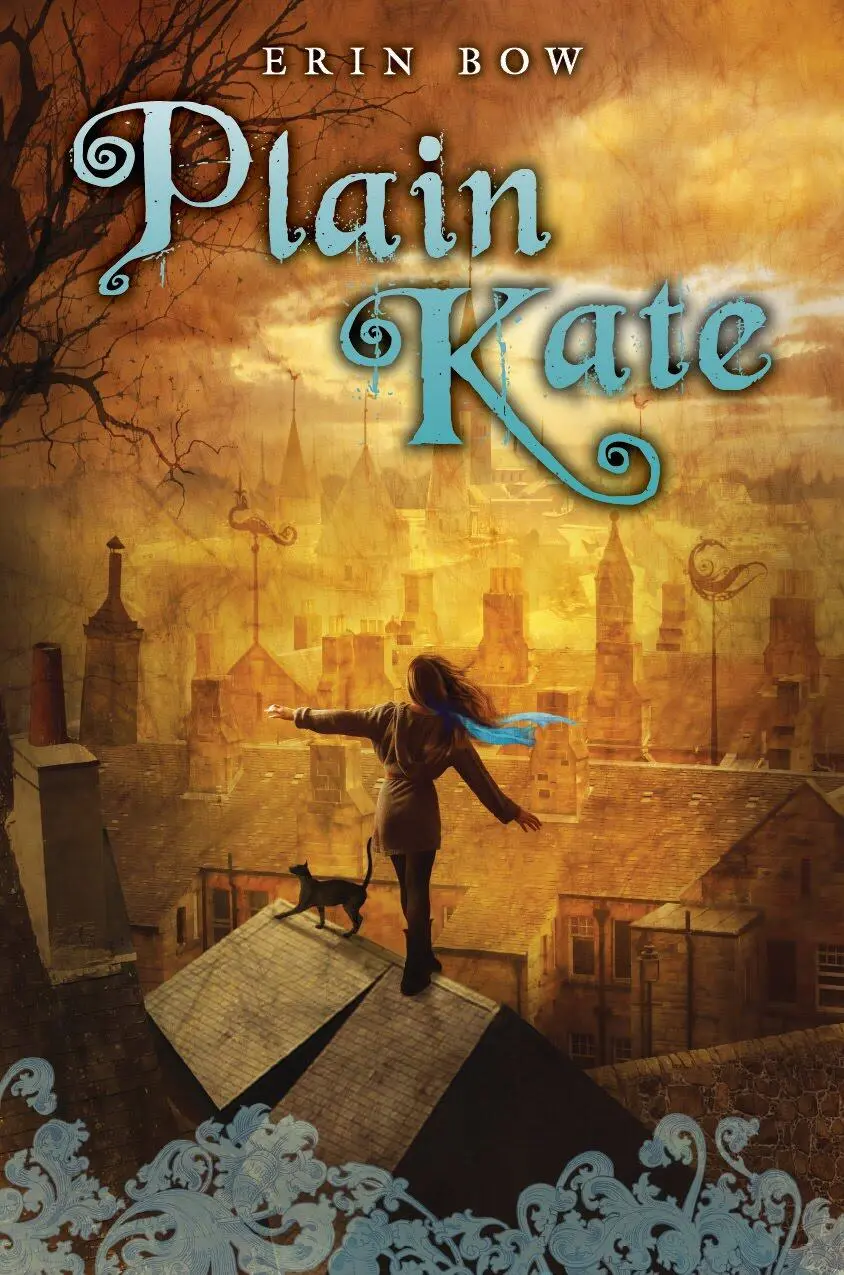
- Название:Plain Kate
- Автор:
- Издательство:Scholastic Inc.
- Жанр:
- Год:2010
- ISBN:9780545166645
- Рейтинг книги:3 / 5. Голосов: 1
-
Избранное:Добавить в избранное
- Отзывы:
-
Ваша оценка:
Plain Kate: краткое содержание, описание и аннотация
Предлагаем к чтению аннотацию, описание, краткое содержание или предисловие (зависит от того, что написал сам автор книги «Plain Kate»). Если вы не нашли необходимую информацию о книге — напишите в комментариях, мы постараемся отыскать её.
Plain Kate — читать онлайн бесплатно полную книгу (весь текст) целиком
Ниже представлен текст книги, разбитый по страницам. Система сохранения места последней прочитанной страницы, позволяет с удобством читать онлайн бесплатно книгу «Plain Kate», без необходимости каждый раз заново искать на чём Вы остановились. Поставьте закладку, и сможете в любой момент перейти на страницу, на которой закончили чтение.
Интервал:
Закладка:
“Plain Kate,” corrected Plain Kate.
“Hmph, so you said.” Daj eyed her. “As you’d have it, kit. But you’re not so plain as it needs remarking on every moment.” Kate blushed, and Daj smiled softly, and said, “Drina here will show you about. Keep you from being trampled.” She lifted the limp, feathery head and pointed around with it. “What with the great bustle.”
So Drina picked up an empty pail and led Plain Kate down toward the river. They climbed over the loose wall of stones at the edge of the sheep meadow and into the unkempt land where the river sometimes flooded. The grasses there were tall and bent with water. Sapling birch trees trembled and dripped in the misty rain. Plain Kate’s leggings got soaked and heavy. Drina’s long legs shone wet, and her skirts drooped around her knees. The two girls went silently, sneaking glances at each other.
“You wouldn’t really get trampled,” offered Drina after a while. “Daj was joking.”
“Oh, it was funny,” said Kate. She meant it but it came out dry, and Drina laughed.
“Anyway—you must be used to more people than this.”
“Yes, but—” Plain Kate wasn’t sure how to explain. “They don’t usually talk to me.”
“Well,” said Drina, swinging her pail in a full loop, “if you go the Roamer way, we’re not short on talk. Lots of other things, but not talk, is what Daj says.”
“Is Daj your mother?”
“Oh, no!” Drina laughed. “She’s too old! I just call her that. Everyone does. It’s respect.”
“Call her…?” Kate was lost.
“Daj. Oh, you don’t speak the tongue. You’ll have to learn a little. Daj means ‘mother.’ But she’s not, she just looks after me, because my mother is dead.”
“So’s mine.” Plain Kate was glad of it, for the first time. It gave her something in common with this cheerful, well-loved girl.
“Oh!” Drina stopped swinging her pail and stood there, skirt-deep in the soaked grass. She looked legless, like a chess piece. “Do you miss her?”
“No. She died when I was born.”
“Oh,” said Drina, and started walking again.
“I miss my father, though.” Plain Kate was trying to keep the flow of talk going. “He died four years ago, in the skara rok . He got the witch’s fever.”
And Drina—cheerful, smiling Drina—snapped at her, almost snarled: “Don’t call it that!”
Plain Kate felt her shoulders tighten and come forward as if to protect her heart. “Don’t call it— skara rok ?”
“Don’t call it ‘witch’s fever.’ Witches don’t make fevers or sicken cows or kill crops or any of that.”
“I didn’t say they did. But witch’s—I mean, the sickness. Everyone calls it that.”
“I know.” Drina’s voice was softer now. They had reached the river at the inner side of a broad curve where a slope of clay and pebbles eased into the water. Drina walked on the margin, placing her feet delicately as a heron and watching her prints fill with water. “But it’s—with the skara rok , people look for someone to blame. Ugly people. Outsiders. Witch-whites. Roamers.”
Carvers, thought Kate. She thought she knew more about being hunted and blamed than Drina did, but she did not say so.
The winding river Narwe was turning again; there was a huge stone a pace or two into the channel, and jammed against it a wall of tangled trunks and limbs, remnants of some old flood, cut across their way. Drina blew through her lips in frustration. “Nothing here!”
“What are you looking for?”
“Sand. Clean sand, to scour the pots.”
The anger that Drina had shown a moment ago had slid from her completely and easily, like water off of oiled wood. That sort of generosity was a new thing to Plain Kate; she didn’t know how to take it. But she said, “There’s sand just alee of this fall.” She pointed past the snarl of bleached wood. “That’s what I use.”
“I guess even a town girl has to scrub pots,” said Drina, swinging up over the timbers, staining her legs with moss.
Plain Kate climbed carefully up behind her. “I’ve only got one pot. I use the sand to smooth wood. For carving. That’s who I am, a carver.”
The drizzle had broken into patches as they walked. As Drina scooped up the pale sand, Kate found herself standing in the smudge of shadow cast by the deadfall. She had never before noticed the way shadows gave things weight, made them look heavy and real and connected to the ground. Without hers…
She edged into the light.
Her shadow looked strange and thinned. It seemed not cast against the ground, but floating above it, like a fog. What Linay had said was true: No one would notice this, at first. It was just an uneasy little change, like the half-felt movement of a boat that slowly induces a great sickness.
“Got it!” Drina’s voice came from her elbow, suddenly. She scrambled up the bank toward the field, and Kate followed. At the meadow wall, Drina stopped. “If we go back now, we’ll have to pluck chickens.” She snuck Kate a sly, friendly look. “Let’s go see if Behjet needs help.”
“I asked him already,” said Plain Kate, then regretted it as Drina’s face fell.
Drina rubbed a bare foot against the other leg, smearing mud. “Well. Let’s go see the horses, anyway. Just for a moment.” She swung up onto the wall and walked along the loose, wobbly stones, easy and graceful. “Come on!” Plain Kate walked beside her, though Drina’s feet were level with Kate’s shoulders. Even if she could have walked the wall—and it looked like an acrobat’s trick—Kate would not have dared. It could attract attention.
The horses were picketed on the far side of the camp. There were about two dozen drays: big, powerful animals, the engines of farms and towns. Scattered among them were a handful of draft ponies, and some of the smaller, faster, feistier horses meant for riding.
Drina flipped off the wall, heels over head, landed neat-footed, and ran over to them. Kate came cautiously with her. Drina was stroking a cart horse’s pink, freckled nose. The horse was nearly white, but dappled with dun patches, like butter floating in buttermilk. “This is Cream,” said Drina. She stooped and pulled a handful of grass and held it out. The horse wrapped her tongue around Drina’s hand. “She’s mine.” Drina glanced sideways at Plain Kate, then twitched a smile and amended: “I mean, she’s my favorite. I helped her be born.” Cream worked her jaw and whickered. Drina leaned her cheek into the hollow between Cream’s huge collarbones. Her face looked like stained walnut against the horse’s coat of pale new pine.
Drina looked at Plain Kate, eyes shining. “Do you want to ride her?”
Plain Kate looked up at the horse: way up. “I don’t know how.”
“I’ll teach you. It’s not hard, you just have to hold on.”
“I… Shouldn’t we get back?”
“We should.” Drina wrapped her arms up toward Cream’s shoulders and kissed her chin. The horse whuffled and lipped Drina’s hair. “But I’ll teach you to ride soon. You can’t go the Roamer way without riding.”

There were a hundred things to tend to, a thousand things to do, in the breaking of a camp, and Plain Kate didn’t know how to do any of them.
She didn’t know how to unhook a cooking tripod and bind the three legs together into a single iron staff, or where to tuck the tripod under the cart. She didn’t know how to fold a wet rug so that it wouldn’t mold. She didn’t know how to oil horse tack or fix a harness.
There were eggs to gather and chickens to catch and stuff into wicker baskets, which were in turn piled into a rough iron cage. “A bear cage,” said Drina, her arms full of squawking feathers. “We had a dancing bear for the markets. She died.” Plain Kate didn’t know how to catch chickens.
Читать дальшеИнтервал:
Закладка:
Похожие книги на «Plain Kate»
Представляем Вашему вниманию похожие книги на «Plain Kate» списком для выбора. Мы отобрали схожую по названию и смыслу литературу в надежде предоставить читателям больше вариантов отыскать новые, интересные, ещё непрочитанные произведения.








Обсуждение, отзывы о книге «Plain Kate» и просто собственные мнения читателей. Оставьте ваши комментарии, напишите, что Вы думаете о произведении, его смысле или главных героях. Укажите что конкретно понравилось, а что нет, и почему Вы так считаете.