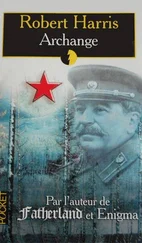
Robert Harris - Archangel
Здесь есть возможность читать онлайн «Robert Harris - Archangel» весь текст электронной книги совершенно бесплатно (целиком полную версию без сокращений). В некоторых случаях можно слушать аудио, скачать через торрент в формате fb2 и присутствует краткое содержание. Год выпуска: 2009, ISBN: 2009, Издательство: Arrow, Жанр: Старинная литература, на английском языке. Описание произведения, (предисловие) а так же отзывы посетителей доступны на портале библиотеки ЛибКат.

- Название:Archangel
- Автор:
- Издательство:Arrow
- Жанр:
- Год:2009
- ISBN:9780099282419
- Рейтинг книги:4 / 5. Голосов: 1
-
Избранное:Добавить в избранное
- Отзывы:
-
Ваша оценка:
Archangel: краткое содержание, описание и аннотация
Предлагаем к чтению аннотацию, описание, краткое содержание или предисловие (зависит от того, что написал сам автор книги «Archangel»). Если вы не нашли необходимую информацию о книге — напишите в комментариях, мы постараемся отыскать её.
Archangel — читать онлайн бесплатно полную книгу (весь текст) целиком
Ниже представлен текст книги, разбитый по страницам. Система сохранения места последней прочитанной страницы, позволяет с удобством читать онлайн бесплатно книгу «Archangel», без необходимости каждый раз заново искать на чём Вы остановились. Поставьте закладку, и сможете в любой момент перейти на страницу, на которой закончили чтение.
Интервал:
Закладка:
Their sores were contagious? No. The kulaks were contagious. Their souls were contagious. They carried the spores of counter-revolution. Bloodsuckers, spiders and vampires: that was what Lenin called them. And so what happened to the kulaks?
It was like the English battleship. You went to bed at night and they were there, and you got up in the morning and they were gone. The churches were all closed after that. But now the churches were open again - she had seen it with her own eyes. The kulaks had come back. They were everywhere. It was a tragedy.
And the Great Patriotic War, she remembered that - the Allied ships moored out beyond the mouth of the river, and the docks working all day and all night, under the heroic direction of the Parry, and the fascist planes dropping fire-bombs over the old wooden town and burning it, burning so much of it down. Those were the hardest times - her husband away fighting at the front, herself working as an auxiliary nurse at the Seamen's Policlinic, no food in the town and not much fuel, the blackout, the bombs and a daughter to bring up on her own...
ALL of this, of course, took much longer to extract than the printed record would suggest. There was a lot of banging of her stick and doubling-back and repitition and meandering, and Kelso was acutely aware of O'Brian fidgeting beside him and of the snow piling up and muffling the sounds outside. But he let her talk. Indeed, he kicked O'Brian twice on the ankle to warn him to be patient. He wanted to let her come to things in her own time. Fluke Kelso was an expert at this. This was how the whole business had started, after all.
He sipped his cold tea.
So you had a daughter, Comrade Safanova? That's interesting. Tell us about your daughter.
Vavara prodded the linoleum with her stick. Her mouth turned down.
That was of no consequence to the history of the Archangel Regional Party.
'But it was of consequence to you?'
Well, naturally it was of consequence to her. She was the child's mother. But what was a child when set against the forces of history? It was a matter of subjectivity and objectivity. Of who and whom. And of various other slogans of the Party she could no longer fully remember, but which she knew to be true and which had been a comfort to her at the time.
She sat back, hunched in her chair.
Kelso reached for the satchel.
Actually, I know something of what happened to your daughter,' he began. 'We have found a book, a journal, that Anna kept. That was her name, wasn't it? Anna? I wonder -can I show it you?'
Her eyes followed the movement of his hands, warily, as he began to unfasten the straps.
HER fingers were spotted with age, like the book itself, but they didn't tremble as she opened the cover. When she saw the picture of Anna, she touched it hesitantly, then her knuckle went to her mouth. She sucked on it. Slowly she brought the page up level with her face and held it close.
'I ought to be getting this on camera,' whispered O'Brian. 'Don't you dare even move,' hissed Kelso.
He couldn't see her expression, but he could hear her laboured breathing and again he had the odd sensation that she had been waiting for them - for years, maybe.
Eventually, she said, 'Where did you get this?'
'It was dug up. In a garden in Moscow. It was with some papers belonging to Stalin.'
When she lowered the book, her eyes were dry. She closed it and held it out to him.
'No. Read it,' he said. 'Please. It's hers.'
But she shook her head. She didn't want to.
'But that is her writing?'
'Yes, it's hers. Take it away.
She waved the book at him and wouldn't rest until it was safely put back in the satchel. Then she sat back, leaning to her right, one hand covering her good eye, stabbing at the floor with her stick.
ANNA, she said, after a time.
Well. Anna.
Where to begin?
Truth to tell, she had been pregnant with Anna when she married. But people didn't care about such things in those times - the Party had done away with priests, thank God.
She was eighteen. Mikhail Safanov was five years older - a metallurgist in the shipyards and a member of the Party's factory committee.
A good-looking man. Their daughter took after him. Oh yes, Anna was a pretty thing. That was her tragedy.
'Tragedy?'
Clever, too. And growing up a good young communist. She was following her parents into the Party. She had served her time as a Pioneer. She was in the Komsomol: she looked like something out of a poster in her uniform. So much so that she had been picked for the Archangel Komsomol delegation to pass through Red Square - oh, a great honour, this - picked to pass beneath the eyes of the Vozhd himself, on May Day 1951.
Anna's picture had been in Ogonyok afterwards andquestions had been asked. That had been the start of it. Nothing had been the same after that.
Some comrades had come up from the Central Committee in Moscow the following week and had started asking around about her. And about the Safanovs.
And once word of this got out, some of their neighbours had started to avoid them. After all, though the arch-fiend Trotsky was dead at last, his spies and saboteurs might not be. Perhaps the Safanovs were wreckers or deviationists?
But of course nothing could have been further from the truth.
Mikhail had come home early from the shipyard one afternoon in the company of a comrade from Moscow -Comrade Mekhlis: she would never forget his name - and it was this comrade who had given them the good news. The Safanovs had been thoroughly checked and found to be loyal communists. Their daughter was a particular credit to them. So much so that she had been selected for special Party work in Moscow, attending to the needs of the senior leadership. Domestic service, but still: the work required intelligence and discretion, and afterwards the girl could resume her studies with good words on her file.
Anna - well, once Anna got to hear of it - there was no stopping her. And Vavara was in favour of it, too. Only Mikhail had been opposed. Something had happened to Mikhail. It pained her to say it. Something during the war. He had never spoken of it, except once, when Anna was talking, full of wonder, about the genius of Comrade Stalin. Mikhail said he had seen a lot of comrades die at the front:
could she tell him, then, if Comrade Stalin was such a genius, why so many millions had had to die?
Vavara had made him rise from this very table - she struck it with her hand - and go outside into the yard for his foolishness. No. He was not the man he had been before the war. He wouldn't even go to the railway station to see his daughter off.
She fell silent.
Kelso said quietly, And you never saw her again?'
Oh yes, said Vavara, surprised at the question. They saw her again.
She made a curving motion with her hands, outwards from her belly.
They saw her again when she came home to have the baby.
SILENCE.
O'Brian coughed and bent forwards, head down, his hands clasped tight in front of him, his elbows on his knees. 'Did she just say what I thought she said?'
Kelso ignored him. With great effort, he managed to keep his voice neutral.
'And when was this?'
Vavara thought for a while, tapping her stick against her boot.
The spring of 1952, she said eventually. That was it. She got through on the train in March 1952, when it was starting to thaw a bit. They had had no warning, she had just turned up, with no explanation. Not that she needed to explain anything. You only had to look at her. She was seven months gone by then.
'And the father.. . ? Did she say...
No.
A vigorous shake of the head.
But you guessed, didn~you? thought Kelso.
No, she didn't say anything about the father, or about what had happened in Moscow, and after a while they gave up asking. She just sat in the corner and waited for her term to come. She was very silent, this new girl, not like their old Anna. She wouldn't see her friends, or step outside. The truth was, she was scared.
Читать дальшеИнтервал:
Закладка:
Похожие книги на «Archangel»
Представляем Вашему вниманию похожие книги на «Archangel» списком для выбора. Мы отобрали схожую по названию и смыслу литературу в надежде предоставить читателям больше вариантов отыскать новые, интересные, ещё непрочитанные произведения.








Обсуждение, отзывы о книге «Archangel» и просто собственные мнения читателей. Оставьте ваши комментарии, напишите, что Вы думаете о произведении, его смысле или главных героях. Укажите что конкретно понравилось, а что нет, и почему Вы так считаете.