Upton Sinclair - Love's pilgrimage
Здесь есть возможность читать онлайн «Upton Sinclair - Love's pilgrimage» весь текст электронной книги совершенно бесплатно (целиком полную версию без сокращений). В некоторых случаях можно слушать аудио, скачать через торрент в формате fb2 и присутствует краткое содержание. Год выпуска: 1911, Издательство: New York : M. Kennerley, Жанр: Старинная литература, на английском языке. Описание произведения, (предисловие) а так же отзывы посетителей доступны на портале библиотеки ЛибКат.
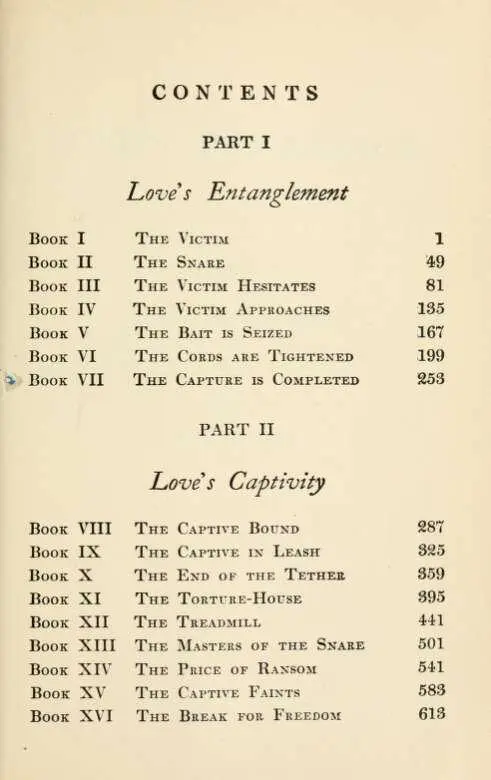
- Название:Love's pilgrimage
- Автор:
- Издательство:New York : M. Kennerley
- Жанр:
- Год:1911
- ISBN:нет данных
- Рейтинг книги:4 / 5. Голосов: 1
-
Избранное:Добавить в избранное
- Отзывы:
-
Ваша оценка:
Love's pilgrimage: краткое содержание, описание и аннотация
Предлагаем к чтению аннотацию, описание, краткое содержание или предисловие (зависит от того, что написал сам автор книги «Love's pilgrimage»). Если вы не нашли необходимую информацию о книге — напишите в комментариях, мы постараемся отыскать её.
Love's pilgrimage — читать онлайн бесплатно полную книгу (весь текст) целиком
Ниже представлен текст книги, разбитый по страницам. Система сохранения места последней прочитанной страницы, позволяет с удобством читать онлайн бесплатно книгу «Love's pilgrimage», без необходимости каждый раз заново искать на чём Вы остановились. Поставьте закладку, и сможете в любой момент перейти на страницу, на которой закончили чтение.
Интервал:
Закладка:
The duty of animals, as the clergyman set it forth to them, was to convert plant-tissue into a more concentrated and perfect form of nutriment. "The protein of animal flesh," he was saying, "is more nearly allied to human tissue; and so it is clearly more fitted for our food."
Here Thyrsis entered the conversation. "Doctor Holland," he said, mildly, "I should think it would occur to you to follow your argument to its conclusion."
The other turned to look at him. "What conclusion?" he asked.
"I should think you would become a cannibal," Thyr-sis replied.
And then there was silence at the table. When Dr. Holland spoke again it was to hurry the conversation elsewhere; and from time to time thereafter he would steal a puzzled glance at Thyrsis.
But this the boy did not see. His thoughts had gone whirling on; here, in this elegant dining-room, the throes of creation seized hold of him. For this was the image he had been seeking, the phrase that would embrace it all and express it all—the concentrated bitterness of his poisoned life! Yes, he had them! He had them, with all their glory and their power! They were Cannibals. Cannibals!
So, when he set out from the hotel, he did not go home, but walked instead for uncounted hours in the park. And in those hours he lived through the whole of his new book, the unspeakable book—"The Higher Cannibalism"!
In the morning he told Corydon about it. She cried in terror, "But, Thyrsis, nobody would publish it!"
"Of course not," said he.
"But then," she asked, "how can you write it?"
"I shall write it," he said, "if I have to die when I get through". So he shut himself up in his room once more.
§ 7. A FAMOUS scientist began the story—reasoning along the lines of Dr. Holland's argument. The grass took the inorganic matter, and made it into food; the steer ate the grass, and carried it to the next stage; and beyond that was one stage more. So the scientist
began making experiments—in a quiet way, of course. He reported the results before a learned scientific body, but his colleagues were so scandalized that the matter was hushed up.
The seed had been sown, however, A younger man took up the idea, and made researches in the South Seas —substantiating the claim that those races which took to anthropophagy had invariably supplanted the others. The new investigator printed his findings in a book, which was circulated privately; and pretty soon he was called into consultation by the master-mind of the country's finance—the richest man in the world. This man was old and bald and feeble; and now suddenly there came to him a new lease of life—new health and new enthusiasm. It was given out that he had got it by wandering about bare-footed in the grass, and playing golf all day—an explanation which the public accepted without question. No one remarked the fact that the old man began devoting his wealth to the establishing of foundling asylums; nor did any one think it suspicious that the younger generation of this multi-millionaire should rise so suddenly to power and fame.
But there began to be strange rumors and suspicions. There were young writers, who had developed a new technique, and had carried poetic utterance to undreamed of heights; and in this poetry were cryptic allusions, hints of diabolic things. A Socialist paper printed the menu of a banquet given by these "Neo-Nietzscheans", and demanded to know what one was to understand by filet de mouton blanc, and wherein lay the subtle humor of pate de petit bete. And at last the storm broke—a youth scarcely in his teens published a book of poems in which the dread secret was blazoned forth to the world with mocking defiance. There were
frantic attempts to suppress this book, but they failed; and then a prosecuting officer, eager for notoriety, placed the youth upon trial for his life. And so the issue was drawn.
The public at large awakened to a dazed realization of the head-way which the new idea had made. It had become a cult of the ruling-class, the esoteric religion of the state; everywhere its defenders sprang up—it seemed as if all the intellectual as well as the material power of the community was under its spell. To oppose it was not merely bad form—it was to incur a stigma of moral inferiority, to be the victim of a "slave-ethic".
With the scientific world, of course, its victory was speedy; the new doctrine was in line with recognized evolutionary teaching. The great names of Darwin and Spencer were invoked in its support; and, of course, when it came to economic science, there could be no two opinions. Had laissez-faire ever meant anything, if laissez-faire did not mean this?
At the very outset, the country was startled by the publication of a book by a college professor, famed as a leading sociologist, in which the case was presented without any attempt at sophistication. It was a fact, needing no attestation, that the mass of mankind had always lived in a state of slavery. At the present hour, under the forms of democracy, there were a quarter of a million men killed every year in industry, and half a million women living by prostitution, and two million children earning wages, and ten million people in want; and in comparison with these things, how humane was the new cult, how honest and above-board, how clean and economical! For the first time there could be offered to the submerged tenth a real social function to be performed. Once let the new teaching be applied
upon a world-wide scale, and the proletariat might follow its natural impulse to multiply without limit; there would be no more "race-suicide" to trouble the souls of eminent statesmen.
And this at the time when the attention of the community was focussed upon the new cause celebre! When the public prints were filled with an acrimonious discussion as to the meaning of the instructions given to the jury. If anyone chose to will his body to a purchaser, said the judge, and then go and commit suicide, there was no law to prevent him; and, of course, the subsequent purposes of the purchaser had nothing to do with the point at issue. This was a matter of taste— here the learned justice rapped for order—a matter of prejudice, largely, and the question at issue was one of law. There was no law controlling a man's dietetic idiosyncrasies, and it was to be doubted if constitutionally any such law would stand—certainly not in a federal court, unless it chanced to be a matter of interstate commerce.
In their bewilderment and dismay, the people turned to the Church. Surely the doctrines of Christianity would stand like a barricade against this monstrous cult. But already within the Church there had been rumors and disturbances; and now suddenly a bishop arose and voiced his protest against this attempt "to drag the Church into the mire of political controversy." It must be made perfectly clear, said the bishop, that Christianity was a religion, and not a dietetic dogma. Its purpose was to save the souls of men, and not to concern itself with their bodies. It had been stated that we should have the poor always with us; which made clear the futility of attempting to change the facts of Nature. Also it was certain that the founder
of Christianity had been a meat-eater; and though there might be more than one interpretation placed upon his
command concerning little children
There we might leave Thyrsis with the established Church. He had it just where he wanted it, and he shook it until its smoothly-shaven pink and white cheeks turned purple, and the demi-tasse went flying out of its beautifully manicured fingers! And while he did it he laughed aloud in hideous glee, and in his soul was a cry like the hunting-call of the lone gray wolf, that he had heard at midnight in his wilderness camp. So far a journey had come the little boy who had been dressed up in scarlet and purple robes, and had carried the bishop's train at the confirmation service! And so heavy a penalty did the church pay for its alliance with "good society"!
Читать дальшеИнтервал:
Закладка:
Похожие книги на «Love's pilgrimage»
Представляем Вашему вниманию похожие книги на «Love's pilgrimage» списком для выбора. Мы отобрали схожую по названию и смыслу литературу в надежде предоставить читателям больше вариантов отыскать новые, интересные, ещё непрочитанные произведения.











Обсуждение, отзывы о книге «Love's pilgrimage» и просто собственные мнения читателей. Оставьте ваши комментарии, напишите, что Вы думаете о произведении, его смысле или главных героях. Укажите что конкретно понравилось, а что нет, и почему Вы так считаете.