Upton Sinclair - Love's pilgrimage
Здесь есть возможность читать онлайн «Upton Sinclair - Love's pilgrimage» весь текст электронной книги совершенно бесплатно (целиком полную версию без сокращений). В некоторых случаях можно слушать аудио, скачать через торрент в формате fb2 и присутствует краткое содержание. Год выпуска: 1911, Издательство: New York : M. Kennerley, Жанр: Старинная литература, на английском языке. Описание произведения, (предисловие) а так же отзывы посетителей доступны на портале библиотеки ЛибКат.
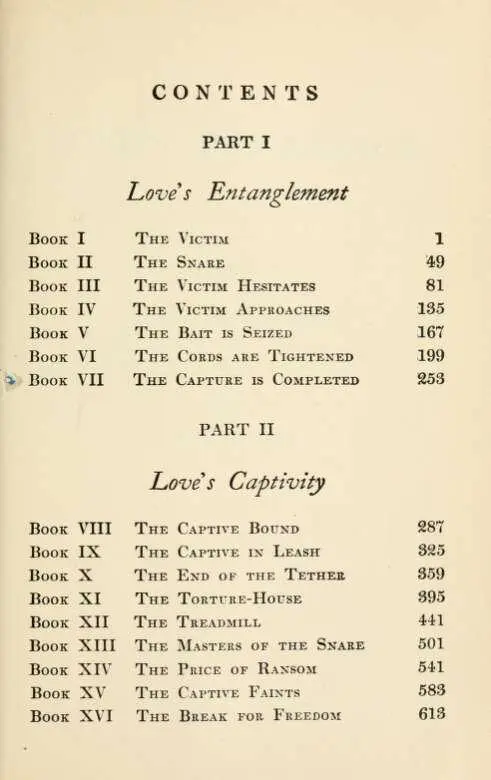
- Название:Love's pilgrimage
- Автор:
- Издательство:New York : M. Kennerley
- Жанр:
- Год:1911
- ISBN:нет данных
- Рейтинг книги:4 / 5. Голосов: 1
-
Избранное:Добавить в избранное
- Отзывы:
-
Ваша оценка:
Love's pilgrimage: краткое содержание, описание и аннотация
Предлагаем к чтению аннотацию, описание, краткое содержание или предисловие (зависит от того, что написал сам автор книги «Love's pilgrimage»). Если вы не нашли необходимую информацию о книге — напишите в комментариях, мы постараемся отыскать её.
Love's pilgrimage — читать онлайн бесплатно полную книгу (весь текст) целиком
Ниже представлен текст книги, разбитый по страницам. Система сохранения места последней прочитанной страницы, позволяет с удобством читать онлайн бесплатно книгу «Love's pilgrimage», без необходимости каждый раз заново искать на чём Вы остановились. Поставьте закладку, и сможете в любой момент перейти на страницу, на которой закончили чтение.
Интервал:
Закладка:
He was such an intricate and complicated baby, with so many things to be understood—belly-bands and diapers and irrational length of skirts. Sometimes, when Corydon was quite exhausted, the attending to these matters fell to Thyrsis, who became for the time a most domestic poet. He once sent an editorial-room into roars of merriment by offering to review a book upon the feeding of infants. But he told himself that even the hilarious editors had been infants once upon a time; and he had divined that there were secrets about life to be learned, and great art-works to be dreamed, even amid belly-bands and diapers. Also, Thyrsis would brave a great deal of ridicule in order to be paid a dollar for the reading of a book that he really wanted to read. For books that one wanted to read came so seldom; and dollars were so difficult to earn!
It seemed as if the task grew harder every week. He went without cuffs, and wore old and frayed collars, and washed his solitary necktie until it was threadbare, and lived upon prunes and crackers, and gave up the gas-stove in his room—and still he could scarcely manage to get together the weekly rent. He studied the magazines in the libraries, and racked his wits for new ideas to interest their editors. He haunted editorial-rooms until his presence became a burden, and he brought new agonies and humiliations upon himself. He would part from Corydon in the afternoon, and shut himself in his room; and sitting in bed to keep warm, he would work until midnight at some new variety of pot-
LOVE'S PILGRIMAG
boiler. After which he would go out to walk and clear his brain — and even then, exhausted as he was, his vision would come to him again, wonderful and soul-shaking. So he would walk on, and go back to write until nearly dawn at something he really loved.
§ 3. IT was so that he wrote his poem, "Caradrion". It was out of thoughts of Corydon, and of the tears which they shed in each other's presence, that this poem was made. Thyrsis had a fondness for burrowing into strange old books, in which one found the primitive wonder of the soul of man, first awakening to the mystery of life. Such a book was Physiologus, with his tales of strange beasts and magic jewels. "There is a bird called Caradrion", Thyrsis had read. . . . "And if the sick man can be healed, Caradrion goes to him, and touches him upon the mouth, and takes his sickness from him ; and so the man is made well." And out of this hint he had fashioned the legend of the two children who had grown up together in "the little cot, fringed round with tender green" ; one of them Cedric, and one Eileen — for he had given the names that Corydon preferred.
They grew "unto the days of love", so the story ran —
"And Cedric bent above her, stooping Iight 3 To press a kiss upon her tender cheek. And said, 'Eileen, I love thee ; yea I love, And loved thee ever, them my soul's delight.'
So time sped on, until there came
"To Cedric once a strange unlovely thought, That haunted him and would not let him be.
'Eileen,' he said, 'there is a thing called death, Of which men speak with trembling at the lips; And I have thought how it would be with me If I should never gaze upon thee more.'
So Cedric went to find out about these matters; he
•
sought a witch—"the haggard woman, held in awe."
"He found her crouching by a caldron fire; Far gleams of light fled through the vault away. And tongues of darkness flickered on the wall. Then Cedric said, 'I seek the fate to know'. And the witch laughed, and gazed on him and sang:
'Fashioned in the shadow-land,
Out into darkness hurled; Trusted to the Storm-wind's hand, By the Passion-tempest whirled! Ever straining, Never gaining, Never keeping,
Young or old! Whither going Never knowing, Wherefore weeping,
Never told!
Rising, falling, disappearing, Seeking, calling, hating, fearing; Blasted by the lightning- shock, Trampled in the earthquake rock; Were I man I would not plead In the roll of fate to read!'
"Then Cedric shuddered, but he said again, 'I seek the fate,' and the witch waved her hand; And straight a peal of thunder shook the ground, And clanged and battered on the cavern walls, Like some huge boulder leaping down the cliff. And blinding light flashed out, and seething fire Shattered the seamy crags and heaving floor."
And so in a vision of terror Cedric saw the little vale, and the cot "fringed round with tender green"; and upon the lawn he saw Eileen, lying as one dead.
"And Cedric sprang, and cried, 'My love! Eileen!' And on the instant came a thunder-crash Like to the sound of old primeval days, Of mountain-heaving shock and earthquake roar, Of whirling planets shattered in the dark."
And so, half wild with grief and despair, Cedric wandered forth into the world; and after great suffering, the birds took pity upon him, and gave him advice—that he should seek Caradrion.
" 'Caradrion ?' cried Cedric, starting up, 'Speak swiftly, ere too late, where dwelleth he?' 'Ah, that I know not,' spake the little voice, 'Yet keep thy courage, seek thou out the stork,
The ancient stork that saw from earliest days,
Sitting in primal contemplation lost,
Sphinx-like, seraphic, and oracular,.
Watching the strange procession of men's dreams.'
But the stork was cruel and would not heed him, and led Cedric a weary chase through the marshes and the brakes. But Cedric pursued, and finally seized the bird by the throat, and forced the secret from him—
" 'Fare southward still,
Fronting the sun's midnoon, all-piercing shaft, Unto the land where daylight burns as fire; Where the rank earth in choking vapor steams, And fierce luxurious vegetation reeks. So shalt thou come upon a seamed rock, Towering to meet the sun's fierce-flashing might, Baring its granite forehead to the sky. There on its summit, in a cavern deep, Dwells what thou seekest, half a bird, half man, Caradrion, the consecrate to pain.'
Then came the long journey and the search for the seamed rock.
" 'Twas night; and vapors, curling, choked the ground, And the rock writhed like flesh of one in pain. But Cedric mounted up to find the cave, Crying aloud: 'I seek Caradrion.' And so, till from the cavern depth a voice:
'Come not, except to sorrow thou be born.' And Cedric, panting, stretched his shrunken arms:
'Another's sorrow would I change to joy, And mine own joy to sorrow; help thou me.' To which the voice, sunk low, replied: 'Come thou.* And Cedric came, unfearing, in the dark, And saw in gloomy night a form in pain, With wings stretched wide, and beating faint and fast.
'Art thou Caradrion?' he murmured swift, And echo gave reply, 'Caradrion'."
So Cedric told of his errand, and pleaded for help; and he heard the answer of the voice:
£98 LOVE'S PILGRIMAGE
" 'Yea, I can save her, if thou be a soul
That can dare pain and face the rage of fate; A soul that feareth not to look on death.'
'Speak on,' said Cedric, shaking, and he spoke:
'This is my law, that am Caradrion, Whose way is sorrow and whose end is death; That by my pain some fleeting grace I win, Some joy unto another I can give. Far through this world of woe I seek, and find Some soul crushed utterly, and steeped in pain; And when it sleeps, I stoop on silent wing, And with a kiss take all its woe away— Take it for mine, and then into this cave Return alone, the blessing's price to pay.' Then up sprang Cedric. 'Nay,' he cried, 'then swift, Ere life be gone!' But once more spake the voice:
'Nay, boy, my race is run, my power is spent; This hope alone I give thee, as thou wilt; Whoso stands by and sees my heart-throb cease, Who tastes its blood, my power and form are his, And forth he fares in solitary flight, Caradrion, the consecrate to pain. And so my word is said; now hide thee far In the cave's night, and wrestle there in prayer.' But Cedric said, 'My prayer is done; I wait.' So in the cave the hours of night sped by, And sounds came forth as when a woman fights In savage pain a life from hers to free."
Читать дальшеИнтервал:
Закладка:
Похожие книги на «Love's pilgrimage»
Представляем Вашему вниманию похожие книги на «Love's pilgrimage» списком для выбора. Мы отобрали схожую по названию и смыслу литературу в надежде предоставить читателям больше вариантов отыскать новые, интересные, ещё непрочитанные произведения.








Обсуждение, отзывы о книге «Love's pilgrimage» и просто собственные мнения читателей. Оставьте ваши комментарии, напишите, что Вы думаете о произведении, его смысле или главных героях. Укажите что конкретно понравилось, а что нет, и почему Вы так считаете.