Kenzaburo Oe - Death by Water
Здесь есть возможность читать онлайн «Kenzaburo Oe - Death by Water» весь текст электронной книги совершенно бесплатно (целиком полную версию без сокращений). В некоторых случаях можно слушать аудио, скачать через торрент в формате fb2 и присутствует краткое содержание. Год выпуска: 2015, ISBN: 2015, Издательство: Grove/Atlantic, Inc., Жанр: Современная проза, на английском языке. Описание произведения, (предисловие) а так же отзывы посетителей доступны на портале библиотеки ЛибКат.
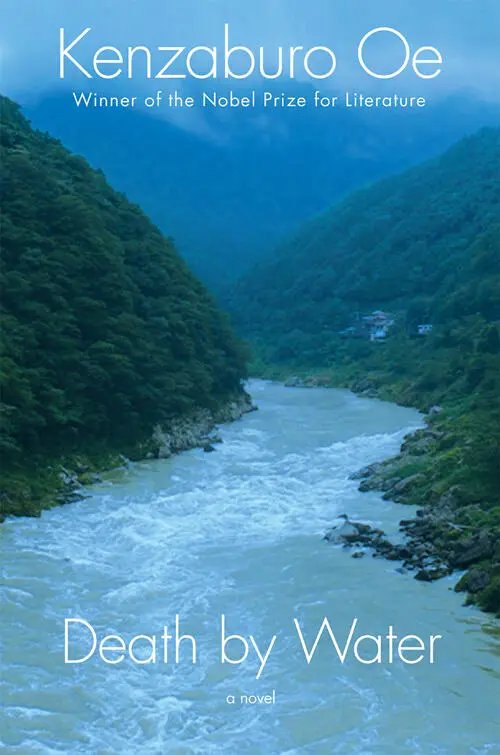
- Название:Death by Water
- Автор:
- Издательство:Grove/Atlantic, Inc.
- Жанр:
- Год:2015
- ISBN:9780802190871
- Рейтинг книги:3 / 5. Голосов: 1
-
Избранное:Добавить в избранное
- Отзывы:
-
Ваша оценка:
Death by Water: краткое содержание, описание и аннотация
Предлагаем к чтению аннотацию, описание, краткое содержание или предисловие (зависит от того, что написал сам автор книги «Death by Water»). Если вы не нашли необходимую информацию о книге — напишите в комментариях, мы постараемся отыскать её.
, his recurring protagonist and literary alter-ego returns to his hometown village in search of a red suitcase fabled to hold documents revealing the details of his father’s death during WWII: details that will serve as the foundation for his new, and final, novel.
Since his youth, renowned novelist Kogito Choko planned to fictionalize his father’s fatal drowning in order to fully process the loss. Stricken with guilt and regret over his failure to rescue his father, Choko has long been driven to discover why his father was boating on the river in a torrential storm. Though he remembers overhearing his father and a group of soldiers discussing an insurgent scheme to stage a suicide attack on Emperor Mikado, Choko cannot separate his memories from imagination and his family is hesitant to reveal the entire story. When the contents of the trunk turn out to offer little clarity, Choko abandons the novel in creative despair. Floundering as an artist, he’s haunted by fear that he may never write his tour de force. But when he collaborates with an avant-garde theater troupe dramatizing his early novels, Kogito is revitalized by revisiting his formative work and he finds the will to continue investigating his father’s demise.
Diving into the turbulent depths of legacy and mortality,
is an exquisite examination of resurfacing national and personal trauma, and the ways that storytelling can mend political, social, and familial rifts.
Death by Water — читать онлайн бесплатно полную книгу (весь текст) целиком
Ниже представлен текст книги, разбитый по страницам. Система сохранения места последней прочитанной страницы, позволяет с удобством читать онлайн бесплатно книгу «Death by Water», без необходимости каждый раз заново искать на чём Вы остановились. Поставьте закладку, и сможете в любой момент перейти на страницу, на которой закончили чтение.
Интервал:
Закладка:
“Even though Ricchan and I haven’t talked to Akari very much so far, he’s been very good about doing whatever we ask,” she said. “But he seems so sad and disheartened, and he doesn’t appear to do anything on his own initiative. Is that just the way he is these days? Asa told us that Akari always used to listen to music and study scores, while also working on his own compositions, so I guess we were expecting something different.”
I knew I would eventually have to explain what had transpired between Akari and me, but that prospect made me feel even gloomier than before. I suspected Unaiko wasn’t the type of person who would wait patiently for me to share the full story on my own timetable, but as it turned out she had already heard most of the details from my sister.
“I hope you don’t mind, but Asa told me pretty much everything she heard from Chikashi,” Unaiko said. “She mentioned that nowadays when you and Akari are together in the same place, he doesn’t listen to music at all. Apparently after the Big Vertigo struck you didn’t go out, aside from visits to the hospital for tests and so on, and you just puttered around the house day and night. As a result, there was never a time when Akari could relax by himself and enjoy listening to music, especially since the doctor had advised against prolonged use of headphones. I don’t know whether you expressly forbade Akari to listen to music, but apparently that was the impression he got.”
“Yes, Chikashi said I was probably sending that message unconsciously. There was just a little misunderstanding about the volume on the CD player,” I said, radically understating the problem.
“Well, it seems as if Akari has been feeling as though he did something bad and made you angry, and he hasn’t been able to forgive himself.”
“No, as I understand it, he simply decided not to share music with his father anymore, in any form.”
“Akari has a lot of pride, doesn’t he?” Unaiko asked.
“When families have offspring with cognitive disabilities, it’s very common to go on treating them like children long after they’ve reached maturity, and that has certainly been true in my own household at times,” I admitted. “Akari is a full-fledged adult now — he’s forty-five years old — but you’re definitely right about my son’s having an inordinate amount of pride.”
“Well, here’s an idea,” Unaiko offered. “You might not even be willing to consider something like this but I wanted to ask, at least. Actually, it’s about the van. In order to get the best use out of it, we converted it into a sort of studio on wheels. It’s furnished with high-end recording equipment, and we’ve already used it to record some radio dramas.
“So I was thinking that from time to time either Ricchan or I could take Akari out for a drive, maybe up into the mountains. We could park the van somewhere and then we could stay in the front seat doing paperwork or whatever while he would be in the back, listening to music with complete freedom. Does that sound like a workable plan?”
“If you’re able to persuade Akari to go for a drive, more power to you,” I said. “I would have no objections at all.”
“Well, as you know, Akari didn’t hesitate to go up to Matsuyama today with Daio at the wheel,” Unaiko pointed out. She sounded relieved. “That’s what made us think the system I just outlined might work. So I’ll wait for an opportune moment, and then I’ll try inviting Akari for a musical drive.”
We continued heading east on the national highway that runs along the Kame River, and then we took a secondary road through the bamboo grove where the farmers who took part in the famous insurrection cut bamboo stalks to make into spears. We emerged from the grove onto a smooth, well-maintained byway that led to a number of hamlets, then forked again. This time we headed north, following a serpentine lane into the wooded slope above the valley. Finally a meadow shaped like the sheath of a sword — the area’s local nickname, “Saya,” carries that meaning, among others — came into sight. At that point the road narrowed considerably, becoming no wider than a walking trail through the forest, so the only way to get to the Saya was on foot.
We left the van in a clearing and I led the way, since I had been there many times in the past. Scrambling down the slope, Unaiko and I entered a grove of broadleaf trees with dark, lush foliage and then climbed back up, following a slender path to a clearing drenched in sunlight. This was the lower end of the Saya. We were standing in a long, grassy, open space that had been carved out of the forest by a renegade meteor, with a little follow-up assistance from local residents. (It was perfectly suited for flower-viewing parties during cherry blossom season, but as yet there was no sign the buds had begun to swell.) We gazed at the gentle slope stretching above us to the north.
“Do you see the black rock just above the midway point?” I asked. “It’s part of a meteor that fell to earth, creating a clearing and this scabbard-shaped depression. I think what actually happened is that the meteor landed right in the middle of the virgin forest and the area below it, the Saya, was collateral damage — or should I say collateral construction? In feudal times, the young samurai supposedly turned this place into a makeshift racetrack or riding course, and used it to train for the tumultuous period of internecine strife that began during the last days of the Tokugawa Era. That’s another tidbit of the rich lore about this place.”
“I’ve heard that they leveled the flat area beyond the big black rock and then moved the timberline so it would seem to begin naturally right above there,” Unaiko said. “Asa told me about the time she and her colleagues put on a play here, as part of the film project; apparently they turned the whole lower part into audience seating, with as many as five hundred local women crowded in, going crazy over what was happening onstage — and then the scene was filmed. Asa was saying it was a once-in-a-lifetime event, bringing those local people together to participate in something so glorious and so inspiring.”
“Yes,” I said. “Asa was responsible for the cinematography aspect of the film, and her part of the project went perfectly. The problems began after primary shooting had wrapped. When the film reached the final editing stage, both in Japan and America, the NHK faction of the production team raised some objections, claiming the subject matter of the film had deviated from what was agreed upon in the contract. Meanwhile, on the American side, the woman who had been pouring her own money into the project — an internationally known actress and family friend whom Asa had managed to turn into an enthusiastic participant — anyway, she took the opposite position and refused to budge. As a result of the impasse, the production ground to a halt and everyone involved found themselves in limbo. The project ultimately ended up going broke, and it wasn’t clear who owned the rights. Asa ran around trying to create a nonprofit organization down here to keep the project alive, and that was how she started networking with the local theater community, including you and your colleagues at the Caveman Group. So for Asa, at least, I guess that abortive enterprise wasn’t completely meaningless.”
“But didn’t the movie win a prize at some Czech and Canadian film festivals, even though it never went wide?” Unaiko inquired. “Asa mentioned something about a whole slew of difficulties, but she was reluctant to go into detail because several issues are still being contested in court. What I’m getting at is that Ricchan and I have been thinking about what to do for our next big drama project, and we’ve become very interested in the movie and the local history it was based on. However, we haven’t even been able to get our hands on a copy of the screenplay because everything related to the film is tied up in litigation. And since the project was an international collaboration, trying to make sense of the contract is a huge hassle. Asa told us she gave her only copy of the script to the attorney, and he still has it today. We’ve been wanting to talk to you about this for ages, Mr. Choko, but Asa kept telling us to bide our time and wait for the right moment.”
Читать дальшеИнтервал:
Закладка:
Похожие книги на «Death by Water»
Представляем Вашему вниманию похожие книги на «Death by Water» списком для выбора. Мы отобрали схожую по названию и смыслу литературу в надежде предоставить читателям больше вариантов отыскать новые, интересные, ещё непрочитанные произведения.


Обсуждение, отзывы о книге «Death by Water» и просто собственные мнения читателей. Оставьте ваши комментарии, напишите, что Вы думаете о произведении, его смысле или главных героях. Укажите что конкретно понравилось, а что нет, и почему Вы так считаете.