Kenzaburo Oe - Death by Water
Здесь есть возможность читать онлайн «Kenzaburo Oe - Death by Water» весь текст электронной книги совершенно бесплатно (целиком полную версию без сокращений). В некоторых случаях можно слушать аудио, скачать через торрент в формате fb2 и присутствует краткое содержание. Год выпуска: 2015, ISBN: 2015, Издательство: Grove/Atlantic, Inc., Жанр: Современная проза, на английском языке. Описание произведения, (предисловие) а так же отзывы посетителей доступны на портале библиотеки ЛибКат.
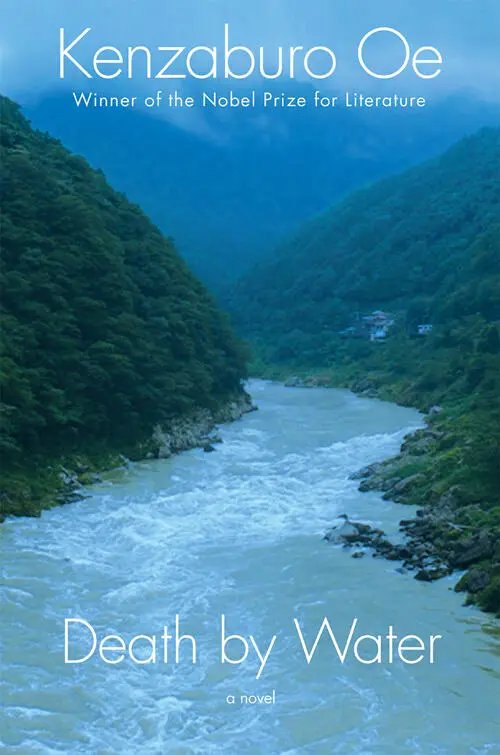
- Название:Death by Water
- Автор:
- Издательство:Grove/Atlantic, Inc.
- Жанр:
- Год:2015
- ISBN:9780802190871
- Рейтинг книги:3 / 5. Голосов: 1
-
Избранное:Добавить в избранное
- Отзывы:
-
Ваша оценка:
Death by Water: краткое содержание, описание и аннотация
Предлагаем к чтению аннотацию, описание, краткое содержание или предисловие (зависит от того, что написал сам автор книги «Death by Water»). Если вы не нашли необходимую информацию о книге — напишите в комментариях, мы постараемся отыскать её.
, his recurring protagonist and literary alter-ego returns to his hometown village in search of a red suitcase fabled to hold documents revealing the details of his father’s death during WWII: details that will serve as the foundation for his new, and final, novel.
Since his youth, renowned novelist Kogito Choko planned to fictionalize his father’s fatal drowning in order to fully process the loss. Stricken with guilt and regret over his failure to rescue his father, Choko has long been driven to discover why his father was boating on the river in a torrential storm. Though he remembers overhearing his father and a group of soldiers discussing an insurgent scheme to stage a suicide attack on Emperor Mikado, Choko cannot separate his memories from imagination and his family is hesitant to reveal the entire story. When the contents of the trunk turn out to offer little clarity, Choko abandons the novel in creative despair. Floundering as an artist, he’s haunted by fear that he may never write his tour de force. But when he collaborates with an avant-garde theater troupe dramatizing his early novels, Kogito is revitalized by revisiting his formative work and he finds the will to continue investigating his father’s demise.
Diving into the turbulent depths of legacy and mortality,
is an exquisite examination of resurfacing national and personal trauma, and the ways that storytelling can mend political, social, and familial rifts.
Death by Water — читать онлайн бесплатно полную книгу (весь текст) целиком
Ниже представлен текст книги, разбитый по страницам. Система сохранения места последней прочитанной страницы, позволяет с удобством читать онлайн бесплатно книгу «Death by Water», без необходимости каждый раз заново искать на чём Вы остановились. Поставьте закладку, и сможете в любой момент перейти на страницу, на которой закончили чтение.
Интервал:
Закладка:
“Going back a few years to when Japan lost the war, the most upsetting thing was that all the army officers and sailors who had seemed to be so gung ho about our earlier plan suddenly began acting as if they had just been released from an evil spell or something,” Daio went on. “They started acting as though everything we had talked about was a big joke and pretending they had never been serious about it at all. Choko Sensei was the only one who was fully committed to our ideologies, to the point where he felt compelled to flee the village, but of course he was swept away by the flooded river and ended up drowning before he could make his escape. Your father cared enough about our beliefs to stake his life on them, so we, as his survivors, were trying to preserve those principles through our work at the training camp after the war was over. Even today, I can’t help thinking about how inspiring it would have been if we could have had Choko Sensei’s son as our leader, to look up to. But yes, it’s true that even though we did have some abstract discussions about staging a kamikaze attack as a sort of posthumous tribute to your father’s devotion to the cause, when that day arrived my young disciples and I sat around laughing about that over-the-top scenario, and everyone agreed it had been a ridiculously unrealistic idea all along.
“Then many years later, when I read your novel, I was surprised to discover how seriously you and Goro had taken the whole thing. I mean, you two were so worried about the possibility of getting into trouble for your part in the illegal gun exchange that you actually went so far as to take a commemorative photo in case you ended up going to jail.”
Daio paused for a moment before adding, with a wry smile, “It’s really kind of funny, when you think about it!”
Chapter 9. Late Work
1
Several days later I plunked myself down on the great-room sofa, which had been jammed into a corner to create more space for rehearsals, and continued unpacking the books Asa had sent down from Tokyo. (I had already devoted three full days to this task.) I spent a few moments leafing through each volume before moving on to the next. When I had finished perusing one stack I put that batch back into its cardboard box, extracted a new pile of books, and began the process anew.
Normally I would have been prospecting for some riveting research topic to throw myself into as the first step toward beginning a new novel, but that wasn’t the case now. These were mostly books I had stashed on the top shelf of a certain bookcase at my house in Tokyo with the idea of eventually getting around to rereading them. In my upstairs study/bedroom there I kept my indispensable collection — many years in the making — of books by an assortment of authors, poets, and thinkers (including the collected works of my mentor, Professor Musumi) and a number of those were in the boxes as well. Finally, there were numerous unexplored volumes that I’d been planning to read someday at my leisure. Since I had abandoned the drowning novel and didn’t have a clue what else I might tackle as part of a late-work plan, the inchoate someday was suddenly at hand.
In the past whenever I had decided to seize the moment and begin rereading a certain book, before long I would toss it aside and move on to the next volume on the shelf. You might think such a scattershot approach would be an unsatisfying way to pass the time, but it wasn’t uncommon for me to look up from the pages and discover that two or three hours had passed in a pleasant blur. This was similar to the process I always went through when I was casting around for subject matter for my next book, but I already knew I wouldn’t be tackling another novel-length fiction project any time soon, if ever. At least, I thought, I could use this fallow time to catch up on my reading — and my rereading as well.
On this day, Unaiko and Akari had driven away in the Caveman Group’s van for an outing that would combine listening to music with exercise. (Those jaunts were now an almost daily occurrence.)
Not long after they set off, I received a phone call from Unaiko. There was a good deal of background noise and I couldn’t quite make out what she was saying, but she was clearly upset. When I realized that she was trying to tell me something about Akari, I jumped up from the sofa in alarm. The crackling static on the line kept getting louder and louder, and then the phone abruptly went dead. I replaced the handset in its cradle, then stood anxiously next to the phone and waited. Ten endless minutes later, it finally rang again. This time Asa was on the other end, calling from Tokyo. She sounded perfectly calm — almost too calm, as if she was making a conscious effort to convey that impression.
“Akari had a seizure,” she said. “He and Unaiko were up at the Saya, doing one of their fitness walks, and apparently it happened when they stopped to rest. Unaiko called me in a state of panic, saying she had tried to reach you but it was a bad connection to start with, and then the call was dropped. Luckily she was able to get through to Tamakichi’s mobile phone, and he called me in Tokyo. As it happened he’s already in the neighborhood, doing some forestry work not far from your house — planting saplings and whatnot. Anyhow, you need to head over to the Saya as soon as possible, so Tamakichi will swing by shortly to get you. He said it would help if you could be waiting for him at the top of the driveway.”
As I rushed around getting ready to leave, I couldn’t stop worrying about Akari’s seizure. There was a chance he might have fallen and hit his head on one of the rocks scattered around the Saya, I thought. For some reason that image reminded me of the strength and resiliency of Unaiko’s thighs the day we first met on the cycling path near my house in Tokyo, when she caught me from behind and saved me from toppling over.
In any event, I managed to find Akari’s prepacked emergency bag (which I had forgotten to give to Unaiko to take along on their outing), and as I emerged from the house my nephew Tamakichi was already sitting in the driveway in a pickup truck. Without getting out of the cab, he stretched one suntanned arm across the passenger seat and opened the door for me. No sooner had I climbed in than he put his foot on the gas pedal and sped away.
“I’m sorry you had to drive all the way down here,” I said. “I know I was supposed to be waiting for you up by the forest road, but when you start getting older everything seems to move in slow motion.”
“No worries,” Tamakichi replied. “I called Unaiko back, and she said that Akari was already up and about. I gathered they were just heading to the river to get him cleaned up.”
This news came as a great relief, but then I noticed that instead of taking the forest road through the valley, Tamakichi was heading uphill. “Is this the right way?” I asked.
“If you take the forest road to the Saya, you have to park the car and walk quite a ways,” Tamakichi explained. “I’m planning to take a detour, so we’ll be approaching from the top.”
I was forced to admit (although only to myself) that there were some gaps in my knowledge of the local topography these days. “Your mother was saying that when she was making her movie, your knowledge of the entire forest area made location scouting and filming much easier,” I said. “I gather you’re serious about making a career of forestry work?”
Tamakichi nodded. “I am,” he said. “You had the same inclination when you were a child, didn’t you, Uncle Kogito? You mentioned it in a couple of your books. Anyhow, long before we started working on the movie, the local village board had been doing a lot of maintenance work on the Saya and the surrounding area. Then when filming began there was a ‘no men allowed’ rule in effect, so my male colleagues and I were relegated to doing cleanup and postproduction work. I’ve never even seen the finished movie.”
Читать дальшеИнтервал:
Закладка:
Похожие книги на «Death by Water»
Представляем Вашему вниманию похожие книги на «Death by Water» списком для выбора. Мы отобрали схожую по названию и смыслу литературу в надежде предоставить читателям больше вариантов отыскать новые, интересные, ещё непрочитанные произведения.


Обсуждение, отзывы о книге «Death by Water» и просто собственные мнения читателей. Оставьте ваши комментарии, напишите, что Вы думаете о произведении, его смысле или главных героях. Укажите что конкретно понравилось, а что нет, и почему Вы так считаете.