Kenzaburo Oe - Death by Water
Здесь есть возможность читать онлайн «Kenzaburo Oe - Death by Water» весь текст электронной книги совершенно бесплатно (целиком полную версию без сокращений). В некоторых случаях можно слушать аудио, скачать через торрент в формате fb2 и присутствует краткое содержание. Год выпуска: 2015, ISBN: 2015, Издательство: Grove/Atlantic, Inc., Жанр: Современная проза, на английском языке. Описание произведения, (предисловие) а так же отзывы посетителей доступны на портале библиотеки ЛибКат.
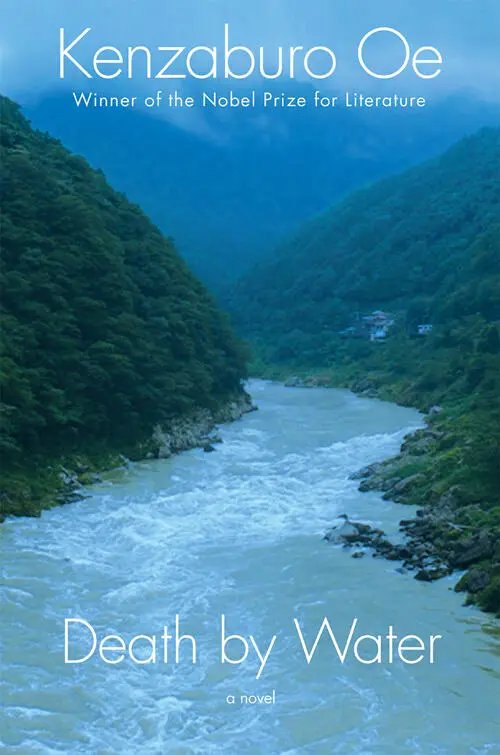
- Название:Death by Water
- Автор:
- Издательство:Grove/Atlantic, Inc.
- Жанр:
- Год:2015
- ISBN:9780802190871
- Рейтинг книги:3 / 5. Голосов: 1
-
Избранное:Добавить в избранное
- Отзывы:
-
Ваша оценка:
Death by Water: краткое содержание, описание и аннотация
Предлагаем к чтению аннотацию, описание, краткое содержание или предисловие (зависит от того, что написал сам автор книги «Death by Water»). Если вы не нашли необходимую информацию о книге — напишите в комментариях, мы постараемся отыскать её.
, his recurring protagonist and literary alter-ego returns to his hometown village in search of a red suitcase fabled to hold documents revealing the details of his father’s death during WWII: details that will serve as the foundation for his new, and final, novel.
Since his youth, renowned novelist Kogito Choko planned to fictionalize his father’s fatal drowning in order to fully process the loss. Stricken with guilt and regret over his failure to rescue his father, Choko has long been driven to discover why his father was boating on the river in a torrential storm. Though he remembers overhearing his father and a group of soldiers discussing an insurgent scheme to stage a suicide attack on Emperor Mikado, Choko cannot separate his memories from imagination and his family is hesitant to reveal the entire story. When the contents of the trunk turn out to offer little clarity, Choko abandons the novel in creative despair. Floundering as an artist, he’s haunted by fear that he may never write his tour de force. But when he collaborates with an avant-garde theater troupe dramatizing his early novels, Kogito is revitalized by revisiting his formative work and he finds the will to continue investigating his father’s demise.
Diving into the turbulent depths of legacy and mortality,
is an exquisite examination of resurfacing national and personal trauma, and the ways that storytelling can mend political, social, and familial rifts.
Death by Water — читать онлайн бесплатно полную книгу (весь текст) целиком
Ниже представлен текст книги, разбитый по страницам. Система сохранения места последней прочитанной страницы, позволяет с удобством читать онлайн бесплатно книгу «Death by Water», без необходимости каждый раз заново искать на чём Вы остановились. Поставьте закладку, и сможете в любой момент перейти на страницу, на которой закончили чтение.
Интервал:
Закладка:
“From this angle I appear to be standing on the stage stark-naked, like a fool, but there’s actually a military formation downstage from me, waving an assortment of flags,” she explained. “The naked woman is meant to be confronting that group, although there’s some doubt as to whether it poses any actual threat, and she is seen by the audience for only a split second before the stage is plunged into total darkness. Masao is a big proponent of deliberate ambiguity in his theater work, so while the naked woman was supposed to be standing there openly and proudly, the original plan was for her torso to be covered by a nude-colored tank top that came down to the tops of her thighs. I was actually the one who insisted full-frontal nudity was the only honest way to go. The next day we gave my ‘little striptease’ (as Masao insisted on calling it) a trial run at the first performance, to see how it would play onstage, and someone who was there returned the next night and took a surreptitious photo, and then sold it to a photography magazine. That photo created quite a sensation, and it’s one of the reasons the Caveman Group got a reputation for doing outrageous things, even before we started throwing ‘dead dogs’ around. Masao was so incensed that he threatened legal action, but the other party had proof the photo had been taken legitimately at a public performance, so that was the end of it.
“Getting back to the gift, I can’t help speculating about the motivation. I know that certain members of our troupe decided to send you this photo on the pretext of indulging your supposed pubic-hair fetish, but I can’t help wondering whether they might also have had a hidden agenda. I think this bizarre gesture might have been rooted in their apprehensions about our next big public-performance project — you know, the one Ricchan and I have been trying to put together, with Asa’s help. I know there’s a faction in the Caveman Group that isn’t completely thrilled with what I’ve been doing, and these members also voiced concern that my projects could end up overshadowing their own work. As I’m sure you’re aware, even in a theater group that appears to be made up of forward-looking artists there can still be a strong undertone of sexist discrimination directed toward ‘uppity females,’ especially in the more rural parts of this country.”
4
Later that morning, toward the end of the breakfast hour, Daio stopped by to relay an important message: Akari’s custom-made plaster cast had been delivered to the clinic in Honmachi.
“The cast is removable, so it will need to be taken off every night at bedtime and put back on first thing in the morning. Once you get the hang of it, Akari, you should be able to handle both those tasks by yourself,” Daio explained. “During the early stages, though, would you be able to take on that responsibility, Kogito? If so, I’d like to take you and Akari down to the clinic to get some pointers about how to deal with the cast.”
“I’ve been getting Akari’s bed ready every evening for the past forty-some years, except when I’ve been away from home, so I don’t think dealing with a cast will be excessively challenging,” I said drily.
“I’m making my bed all by myself now,” Akari muttered, looking down at his plate.
“Yesterday evening I was sticking special tape on the most painful places for you, isn’t that right, Akari?” I said. “I was being very careful not to touch your crushed vertebra, but …”
“It never hurt when Unaiko and Ricchan did it, either,” Akari retorted.
“Then would you rather have those two help you with the cast during the early stages, while you’re getting used to it?” I asked, unable to keep the despondency out of my voice. “If they have time, of course.”
“We were planning to ride along to the clinic in any case — that is, either Ricchan or me,” Unaiko said. “Since all we’re doing right now is outlining our next big production, we would be happy to help Akari in any way we can. Akari, would you like me to drive you today?”
“That sounds great!” Akari exclaimed.
“Thanks, Unaiko. I’ll leave it to you then,” Daio said. He, too, kept his face averted so he wouldn’t have to meet my eyes.
After Akari and Unaiko had set off in the van I went back to work unpacking the rest of the books Asa had sent. Daio sat on the sofa, reaching out from time to time to pick up a book and leaf idly through it. After a moment, I began to reminisce aloud.
“As you mentioned the other day, when Goro and I were still in high school, during the Occupation, we paid a visit to your training camp and we brought along an American officer who was a language expert,” I said. “His name was Peter, and your students hatched a plan to use him as a conduit to get their hands on some automatic pistols, rifles, and so on that the Americans had scrapped after the Korean War. Goro and I somehow got dragged into it, and we ended up overreacting just a bit.”
“Yes, I remember,” Daio said, and chuckled. “You put all the lurid details into one of your recent novels. Someone told me about the book, and when I read it I thought, Ah, so this is what was going on in Kogito’s head that weekend.
“As you say, Peter sold us some old army-surplus guns, which we thought we could turn around and sell to a scrap-iron dealer to raise a few bucks. However, when you wrote about that transaction in your novel, you added an imaginary scene in which Peter’s own pistol is forcibly confiscated by the guys from my training camp. You left it ambiguous, as you tend to do, but the implication was that Peter might have met with foul play at the hands of my followers. One of the local policemen happened to read the book and he came snooping around the camp, asking questions. This was a long time ago, of course. The truth was, we had kept a few of the surplus guns to use for target practice and that kind of thing, but everything was perfectly innocent and above board, and no harm came to Peter at all.”
“Yes, I realize that now,” I said. “But at the time, based on what Goro and I saw and heard at the training camp that weekend, we seriously believed you and your disciples were planning to attack the American military base on the outskirts of Matsuyama the night the peace treaty went into effect: September 8, 1951. When the date rolled around we were glued to the radio till well past midnight, expecting to hear some breaking news about your exploits.”
“Oh, right.” Daio smiled sheepishly. “You mentioned in your book that you even took a photo to commemorate the occasion. It seems as though we inadvertently set you boys up for a big disappointment, and I’m sorry about that,” he added, but he didn’t sound very contrite.
“Of course, we knew those discarded guns wouldn’t be of any use in actual combat,” I said. “After all, they were old and rusty and obsolete. We figured you were just using them as props for playing war games, but we really did believe your group was planning to stage some kind of suicidal attack on the American MPs who were guarding the gate of the army base. If you and your subordinates had actually followed through on that plan you would have been shot dead in the blink of an eye — although it would have gone down in history as the only uprising ever staged during the tenure of the occupying forces.”
“Well, the guerrilla warfare didn’t take place, and to be candid there was really never any chance it was going to,” Daio said. “The truth is, we did have one serious goal, although it was probably more of a wild hope. Since you obviously believed our goal was to get ourselves killed and go out in a blaze of glory, we thought you might be moved to drop by the training camp again on the day in question to try to intervene. If you had, I was hoping we would be able to persuade you — as the son and heir of Choko Sensei — to become our leader going forward.
Читать дальшеИнтервал:
Закладка:
Похожие книги на «Death by Water»
Представляем Вашему вниманию похожие книги на «Death by Water» списком для выбора. Мы отобрали схожую по названию и смыслу литературу в надежде предоставить читателям больше вариантов отыскать новые, интересные, ещё непрочитанные произведения.





Обсуждение, отзывы о книге «Death by Water» и просто собственные мнения читателей. Оставьте ваши комментарии, напишите, что Вы думаете о произведении, его смысле или главных героях. Укажите что конкретно понравилось, а что нет, и почему Вы так считаете.