Kenzaburo Oe - Death by Water
Здесь есть возможность читать онлайн «Kenzaburo Oe - Death by Water» весь текст электронной книги совершенно бесплатно (целиком полную версию без сокращений). В некоторых случаях можно слушать аудио, скачать через торрент в формате fb2 и присутствует краткое содержание. Год выпуска: 2015, ISBN: 2015, Издательство: Grove/Atlantic, Inc., Жанр: Современная проза, на английском языке. Описание произведения, (предисловие) а так же отзывы посетителей доступны на портале библиотеки ЛибКат.
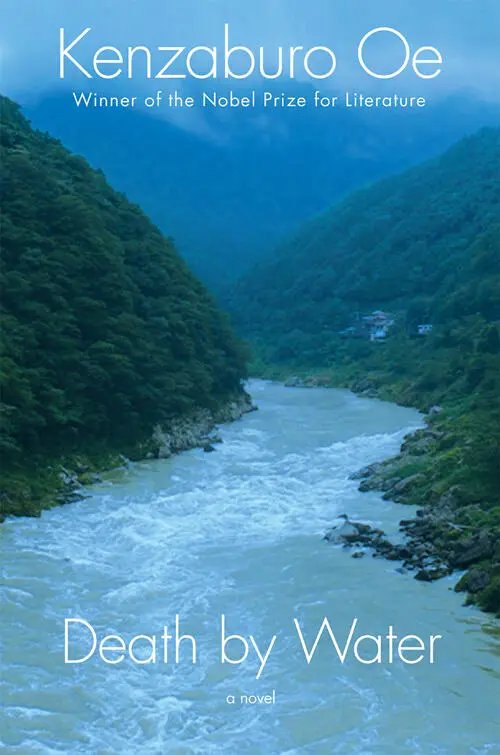
- Название:Death by Water
- Автор:
- Издательство:Grove/Atlantic, Inc.
- Жанр:
- Год:2015
- ISBN:9780802190871
- Рейтинг книги:3 / 5. Голосов: 1
-
Избранное:Добавить в избранное
- Отзывы:
-
Ваша оценка:
Death by Water: краткое содержание, описание и аннотация
Предлагаем к чтению аннотацию, описание, краткое содержание или предисловие (зависит от того, что написал сам автор книги «Death by Water»). Если вы не нашли необходимую информацию о книге — напишите в комментариях, мы постараемся отыскать её.
, his recurring protagonist and literary alter-ego returns to his hometown village in search of a red suitcase fabled to hold documents revealing the details of his father’s death during WWII: details that will serve as the foundation for his new, and final, novel.
Since his youth, renowned novelist Kogito Choko planned to fictionalize his father’s fatal drowning in order to fully process the loss. Stricken with guilt and regret over his failure to rescue his father, Choko has long been driven to discover why his father was boating on the river in a torrential storm. Though he remembers overhearing his father and a group of soldiers discussing an insurgent scheme to stage a suicide attack on Emperor Mikado, Choko cannot separate his memories from imagination and his family is hesitant to reveal the entire story. When the contents of the trunk turn out to offer little clarity, Choko abandons the novel in creative despair. Floundering as an artist, he’s haunted by fear that he may never write his tour de force. But when he collaborates with an avant-garde theater troupe dramatizing his early novels, Kogito is revitalized by revisiting his formative work and he finds the will to continue investigating his father’s demise.
Diving into the turbulent depths of legacy and mortality,
is an exquisite examination of resurfacing national and personal trauma, and the ways that storytelling can mend political, social, and familial rifts.
Death by Water — читать онлайн бесплатно полную книгу (весь текст) целиком
Ниже представлен текст книги, разбитый по страницам. Система сохранения места последней прочитанной страницы, позволяет с удобством читать онлайн бесплатно книгу «Death by Water», без необходимости каждый раз заново искать на чём Вы остановились. Поставьте закладку, и сможете в любой момент перейти на страницу, на которой закончили чтение.
Интервал:
Закладка:
“The kanji in the quotation is written with the character for water, arranged in a sort of pyramid,” I announced triumphantly when I returned. “The one you mistook for it is constructed in the same way, only with the character for tree. The first one is used to talk about floods and so on, and also to describe a scene where a body of water stretches as far as the eye can see.”
My father put on the silver-framed reading glasses he always kept nearby and then, wearing an expression so serious that it almost made him look like a different person, he went into his small study in the interior of the house, presumably to double-check what I had said. Later, he apparently shared his pride and amusement over the incident with my mother and also, as I was learning just now, with Daio.
While I listened to Daio on that morning in early spring, an image floated across my mind: my father, not out on some vast ocean but rather spinning around on the river bottom during the big flood, on the verge of being inexorably drawn into the whirlpool. My father, who at that moment must have been experiencing the sensations of venturing deep into the forest and, simultaneously, being sucked into a watery vortex. My father, who (for all I knew) might even have believed in some paradisiacal world beyond — a realm that could somehow, magically, be reached by drowning.
“Choko Sensei was studying the ways in which society and the nation as a whole were moving forward,” Daio was saying. “He used to tell us about some of the things he learned from his correspondence with supposedly illustrious people, but when we asked whether those people were recognized experts in the field of politics or economics it always emerged that, in fact, they were not. But you yourself gravitated toward the study of literature, and we’ve all heard the story of how you became interested in the subject because of the books your mother brought home for you when you were a child, during the war.”
While Daio and I were enjoying a desultory chat, Unaiko (who had driven down from Matsuyama) was busy in the kitchen fixing breakfast for us. When she came into the great room bearing coffee, she was dressed more or less as usual in Chinese-style trousers and a loose shirt that was almost like a jacket. However, I also got a clear sense of something Asa had spoken of in one of her letters: Unaiko did, indeed, project a kind of heightened aura, as if the major success of her theater-in-the-round play had somehow peeled away part of a protective carapace while also giving her self-confidence a visible boost.
Unaiko needed to consult with me about some practical matters, such as what time Akari should be awakened and when was the latest he could take his morning medicine — Maki had provided a list of all the meds and their dosages — but she conducted even that quotidian exchange in a lively, energized way. Evidently she had already had some preliminary discussions about division of labor with Daio.
“I’ll go upstairs and get Akari out of bed myself,” I said. “I don’t foresee any particular problems during the morning hours, at least.”
At this point Unaiko produced a fax from Maki that gave detailed instructions about Akari’s breakfast menus, complete with illustrations in the margins, and began to study it carefully.
The night before I had checked to make sure Akari was asleep and breathing normally before going to bed myself, but I hadn’t waited until he made his nightly midsleep trip to the bathroom. Before my disastrous outburst in the clinic’s waiting room, I had made a ritual of getting up whenever I heard Akari making his way to the toilet; I would go into his room and tidy the sheets and quilts, then wait for him to return so I could tuck him in again. Since that dark day, though, I hadn’t once performed my familiar middle-of-the-night task — which I had always thought of as something I would be doing forever.
Now, as I opened the door and entered the room (which was still dark because of the drawn curtains, and redolent of Akari’s body odor), I felt reluctant to turn on the light. After a moment I got a sense that something was stirring in the bed and then, finally, I flipped the switch. Akari was lying stretched out on the bed, wrapped in a cotton quilt and staring at the ceiling.
“You and I are going to be staying here at the Forest House for a little while,” I said, by way of orientation. “Mama and Maki aren’t here, so can you get dressed by yourself? A friend of Auntie Asa’s named Unaiko is making breakfast for us. If you’ve already used the toilet, let’s go downstairs. You can brush your teeth in the guest washroom there, all right?”
“I understand,” came the uninflected reply.
As Akari began to climb out of bed, I noticed that his movements were slower and clumsier than usual, and there seemed to be a hitch in his basic locomotion. I started to offer to help him to his feet, but then I lost my nerve. Instead, I walked over to the window next to the bed and pulled open the drapes. The trees hadn’t yet begun to bud, and the front garden looked barren and deserted. The river shoreline beyond the wooded valley was shrouded in clouds, and the slope above it had a bleak, desolate aspect. I was standing with my back to Akari, but I got the feeling that he was dressing himself with unusual alacrity.
My son and I descended the staircase in single file, keeping several steps between us. Unaiko was waiting at the bottom, and she led Akari to the washroom. When he didn’t take any notice of the visitor in the great room, Daio withheld his own greeting as well, but I could see him studying the hesitation in Akari’s gait.
While I was upstairs Daio had apparently been looking at a monochromatic woodblock print on the wall next to the sofa in the great room, which was the only decoration.
“What’s the story behind this piece of art?” he asked. “This dog looks really ferocious, as if with the proper training it could be taught to kill people.”
“Ah, you’re wondering about the print?” I said. “Well, I originally brought it down on my previous trip with the intention of hanging it in the space where I thought I would be working on a novel about my father, before and after his death. (That project is now defunct, as you may have heard.) When I went back to Tokyo I simply forgot to take it with me.”
“Maybe leaving it behind was just another symbol of your decision to give up on your drowning novel,” Daio said. “Asa was saying that it almost seemed as if the project was doomed from the start.”
Unaiko had returned from escorting Akari to the downstairs restroom and now she, too, was gazing at the woodblock print on the wall. “Maybe I’m being obtuse,” she said, “but I don’t see any great significance in your having forgotten to take this picture back to Tokyo. On the other hand, it’s certainly true that you did make a special point of grabbing this one particular work of art and lugging it all the way down here.”
I responded with an account of the print’s provenance. “I really don’t think this dog has the sort of evil mojo Daio seems to be ascribing to it,” I said. “On the other hand, I won’t pretend it’s a tranquil and pastoral image, either. As you can see, the date is written in pencil under the author’s signature. This piece was created in 1945, the year my father died, by a printmaker in Mexico, but I didn’t acquire it until the seventies. It’s actually a rather interesting story. At the time, just after the war, the government was oppressing some newspaper companies in Mexico City, and the reporters for those papers staged a major strike. They solicited support from every sphere of culture and the arts, and the printmakers helped raise money by selling work from their private collections. From what I heard, this print was one of them. I bought it at a gallery several decades later, when I was teaching in Mexico City.
Читать дальшеИнтервал:
Закладка:
Похожие книги на «Death by Water»
Представляем Вашему вниманию похожие книги на «Death by Water» списком для выбора. Мы отобрали схожую по названию и смыслу литературу в надежде предоставить читателям больше вариантов отыскать новые, интересные, ещё непрочитанные произведения.




Обсуждение, отзывы о книге «Death by Water» и просто собственные мнения читателей. Оставьте ваши комментарии, напишите, что Вы думаете о произведении, его смысле или главных героях. Укажите что конкретно понравилось, а что нет, и почему Вы так считаете.