Hedi Kaddour - Waltenberg
Здесь есть возможность читать онлайн «Hedi Kaddour - Waltenberg» весь текст электронной книги совершенно бесплатно (целиком полную версию без сокращений). В некоторых случаях можно слушать аудио, скачать через торрент в формате fb2 и присутствует краткое содержание. Год выпуска: 2009, Издательство: Vintage, Жанр: Современная проза, на английском языке. Описание произведения, (предисловие) а так же отзывы посетителей доступны на портале библиотеки ЛибКат.
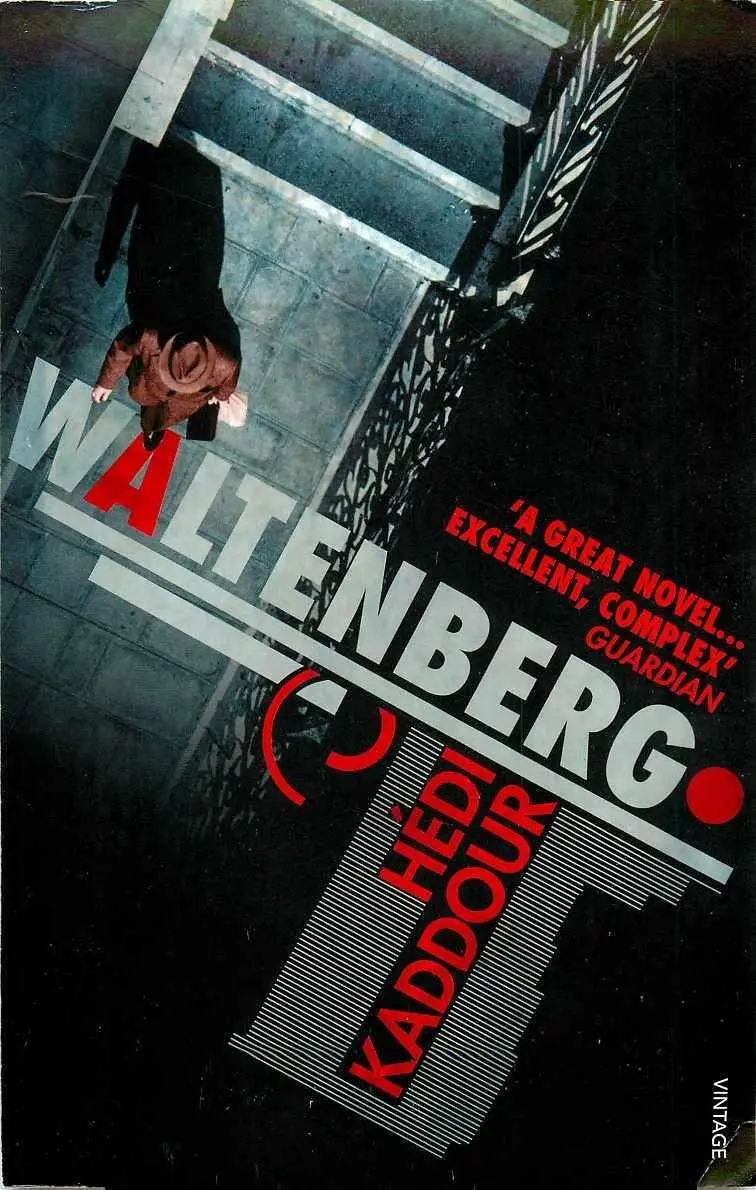
- Название:Waltenberg
- Автор:
- Издательство:Vintage
- Жанр:
- Год:2009
- ISBN:нет данных
- Рейтинг книги:3 / 5. Голосов: 1
-
Избранное:Добавить в избранное
- Отзывы:
-
Ваша оценка:
Waltenberg: краткое содержание, описание и аннотация
Предлагаем к чтению аннотацию, описание, краткое содержание или предисловие (зависит от того, что написал сам автор книги «Waltenberg»). Если вы не нашли необходимую информацию о книге — напишите в комментариях, мы постараемся отыскать её.
Waltenberg
Waltenberg — читать онлайн бесплатно полную книгу (весь текст) целиком
Ниже представлен текст книги, разбитый по страницам. Система сохранения места последней прочитанной страницы, позволяет с удобством читать онлайн бесплатно книгу «Waltenberg», без необходимости каждый раз заново искать на чём Вы остановились. Поставьте закладку, и сможете в любой момент перейти на страницу, на которой закончили чтение.
Интервал:
Закладка:
‘They put pressure on the Hungarians to fight and then left them in the lurch, CIA broadcasts told the Hungarians to take up arms, to set up a central military command, you know all this far better than I do, Lilstein, Radio Free Europe told the insurgents, go to it, reinforcements are on the way, the station was CIA-controlled and people believed what it said. That’s why I’m going back to Rosmar.’
Kappler’s voice booms in the dim light of the Konditorei, even the patron behind the bar does not succeed in ignoring a voice which threatens to explode at any moment. Kappler continues to speak and in his voice there is hatred for anyone who refuses to believe what it says. Lilstein has never seen his old friend like this:
‘I’m going back to Rosmar because the Americans made the Russians believe that they would intervene to help the Hungarians, they said to the people of Györ and Budapest go ahead NATO is coming to the rescue, the Russians laid about them as only they know how, maybe they only went at it so hard because they thought NATO might turn up and NATO didn’t budge, I know now that there’ll be no cavalry riding in from outside, I hate Russian tanks but I hate even more the scum who are now shedding crocodile tears, they landed the Hungarians in the deepest shit and now they’re staging a great international weeping-and-wailing-fest, there’ll be no serious intervention from outside.’
And Lilstein knew then that he would lose, that Kappler had looped his loopiest loop, no hope of any intervention from outside, he has just one hope left, that something might turn up from inside the country itself, that’s why he’s going back to the GDR, Lilstein has twigged that Kappler still had that one hope left: he wanted to make a difference.
If he was to be prevented from returning, this last hope had to be destroyed, Lilstein had a choice, either kill off the object of that hope or cut the legs from under the man who hoped it, at first he opted to destroy Kappler’s hopes, he did not draw pictures for him or offer an analysis, he just said:
‘All my Minister’s good at is scratching his arse, and he’s the second highest-ranking minister of the State which you wish to join, he’s the Interior Minister of the Socialist Workers’ and Peasants’ State and a member of the Politburo of the Unified Socialist Party of Germany, the second most important person in the country, and all this Minister is good at is arse-scratching, and that’s the kind of country you want to go back to?’
That made Kappler laugh a long, optimistic laugh, he glanced up towards the patron of the Konditorei, pointed to the empty carafe, the man came over to serve them, Kappler joked with him, he was almost relaxed.
So then Lilstein decided to disable Kappler, he had a choice of allowing him into the GDR to be roasted on a slow spit or do him real damage so that he might live:
‘I know exactly why you want to come over to us, Herr Kappler: eccentricity. You pretend to be eccentric because you’ve turned into a second-rate author, a writing machine, an old bruiser.’
And Lilstein put in the boot:
‘You’re trying to act like a somebody because nowadays you write like a nobody.’
Kappler flushed, Lilstein went on:
‘You know what you’re going to do once you’re back in the German Democratic Republic? You will prevent our young writers developing in their own way, you’ll cramp their style, the moment they try to come up with something new my Minister and his small-minded comrades will tell them to stop writing tripe, stop imitating the capitalist ways of doing things — at first that’s what they’ll say — if you imitate capitalist ways it will mean that we won’t allow you to publish anything, if you continue making trouble they’ll say you’re imitating imperialist ways, and that’s much more serious, capitalism is there, a fact of life, but imperialism is aggressive, which means that you’re in cahoots with those who wish to attack us, that you imitate imperialist ways.
‘From a literary point of view, that means nothing, Herr Kappler, but coming from them it means “we’re going to put you in jail”, thus far they’ve locked up young people who just wanted to be different, but soon they’ll be jailing anyone who doesn’t want to resemble what you’ve turned into, they’ll say look at Kappler, the penny’s dropped with him, he’s come in from outside and he’s setting you an example, he’s seen through it all, and anyone can read his books, it’s all perfectly transparent, so cut out all this symbolic or imperialistic petit-bourgeois posturing.
‘So you do see what purpose you’ll serve, Herr Kappler, don’t you? You’ll be used to prevent any other Kapplers coming through, I mean Kapplers like the Kappler of the twenties and thirties, now defunct. For a quarter of a century you’ve written nothing remarkable, nowadays you’re just a biographer, that’s why you want to go back, so that people will cheer the man you’re ashamed to have become.’
That’s how in the dimly lit Konditorei earlier that day Lilstein had advanced, destroying Kappler, feeling that he could weep, fabricating lies, lies which nevertheless were powerful, for they made Kappler turn bright red, made his chin tremble, Lilstein greatly admired Kappler’s latest books, but he shot them down in flames while he looked on, all to prevent him returning to Rosmar.
‘This notion that you would construct a narrative using the great days of the first half of the century was quite clever, Herr Kappler, a few dozen sequences, magnificent stuff, all the academies admired your last offering, but I know that the Kappler of 1929 would never have published it, he would have sat down in front of this succession of sequences and asked himself how it could all be brought together. He’d have buckled down to it, he’d have looked for a form.’
Lilstein lying to destabilise Kappler, using any means to ensure that Kappler does not go back:
‘You’re writing now like Turgenev or Anatole France, you write like they did before the war, I mean the 1914 war, it’s so earnest and antiquated, how can you expect to have anything to say?’
And the deeper Lilstein goes in with his lie, the easier the words come, the more convinced he feels that he is right, the quicker Kappler’s pages turn yellow, he knows what the ideologues of the GDR will do, threaten young writers, what’s all this rubbish about disjointed narratives? and your petit-bourgeois monologues, stream of consciousness, conscious smut more like, pornography, you get these ideas from the Yanks, from a reactionary pro-slaver, that apple of their eye, Faulkner, or the traitor Dos Passos, now take Kappler, he’s come back from there, from your precious West, he’s tried it all and he’s reverted to realism and a voice that tells things like they are, clearly, so everyone can understand, in the order they happen.
Lilstein talks to Kappler about what the Party ideologues will do, and the further he goes the more he feels he is right to say it, the more sympathetic he feels to those imperialist writers who are no more imperialist than Cholokhov who isn’t imperialist at all, Kappler is old.
‘Your books are closets for old clothes, Herr Kappler, as a form of writing the equivalent of antique furniture, too genteel, and to escape it you’re opting for a freakish course of action.’
That’s how Lilstein managed to get Kappler to snap:
‘That’s enough!’
Several times, and the last in a bare whisper:
‘That’s enough!’
And stop Lilstein did, he’d have liked to add that young people in the GDR had no need of the portable hell which Kappler has been dragging around with him since the beginning of time, he felt it wasn’t necessary, they drank slowly, Kappler looked around the small bar area of the Konditorei, he didn’t speak again, he seemed lost among the shelves of pots and pans and groceries, he allowed Lilstein to pay the bill, he then bought a few bars of chocolate, they left together, their footsteps were muffled by the snow as they walked towards the little bridge, they stopped, they looked up towards the edge of the forest, eyes peeled, Kappler asked:
Читать дальшеИнтервал:
Закладка:
Похожие книги на «Waltenberg»
Представляем Вашему вниманию похожие книги на «Waltenberg» списком для выбора. Мы отобрали схожую по названию и смыслу литературу в надежде предоставить читателям больше вариантов отыскать новые, интересные, ещё непрочитанные произведения.










Обсуждение, отзывы о книге «Waltenberg» и просто собственные мнения читателей. Оставьте ваши комментарии, напишите, что Вы думаете о произведении, его смысле или главных героях. Укажите что конкретно понравилось, а что нет, и почему Вы так считаете.