Hedi Kaddour - Waltenberg
Здесь есть возможность читать онлайн «Hedi Kaddour - Waltenberg» весь текст электронной книги совершенно бесплатно (целиком полную версию без сокращений). В некоторых случаях можно слушать аудио, скачать через торрент в формате fb2 и присутствует краткое содержание. Год выпуска: 2009, Издательство: Vintage, Жанр: Современная проза, на английском языке. Описание произведения, (предисловие) а так же отзывы посетителей доступны на портале библиотеки ЛибКат.
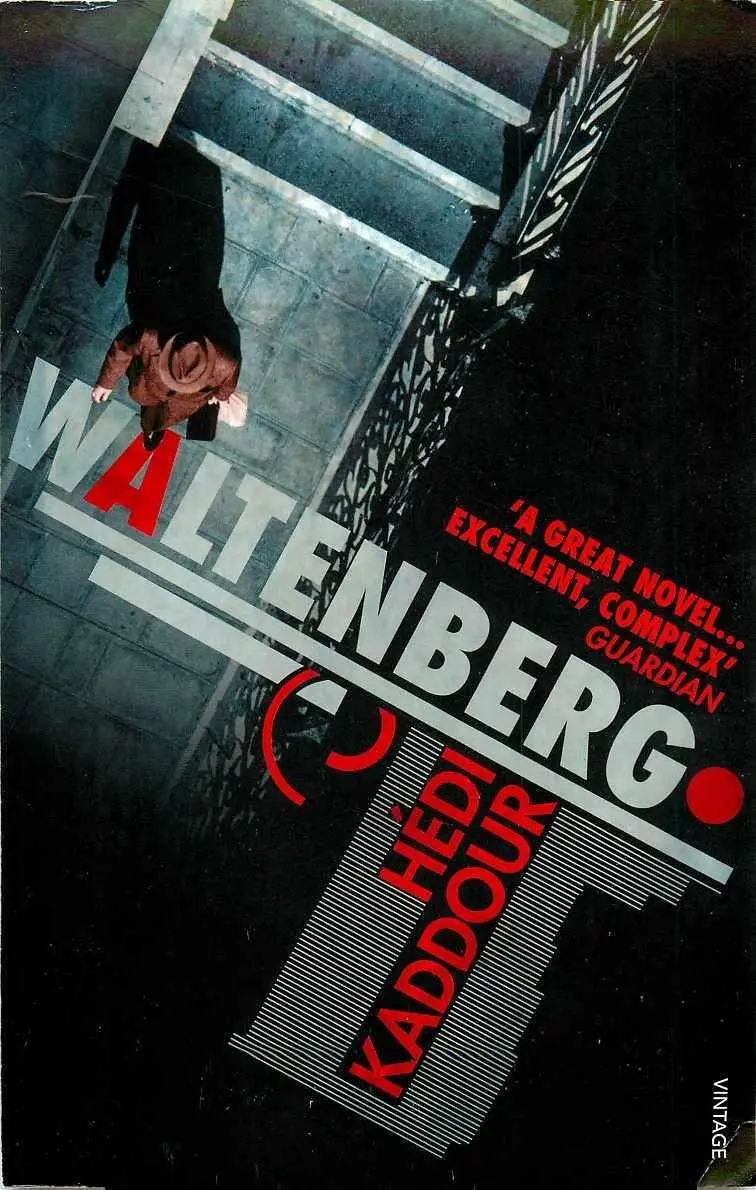
- Название:Waltenberg
- Автор:
- Издательство:Vintage
- Жанр:
- Год:2009
- ISBN:нет данных
- Рейтинг книги:3 / 5. Голосов: 1
-
Избранное:Добавить в избранное
- Отзывы:
-
Ваша оценка:
Waltenberg: краткое содержание, описание и аннотация
Предлагаем к чтению аннотацию, описание, краткое содержание или предисловие (зависит от того, что написал сам автор книги «Waltenberg»). Если вы не нашли необходимую информацию о книге — напишите в комментариях, мы постараемся отыскать её.
Waltenberg
Waltenberg — читать онлайн бесплатно полную книгу (весь текст) целиком
Ниже представлен текст книги, разбитый по страницам. Система сохранения места последней прочитанной страницы, позволяет с удобством читать онлайн бесплатно книгу «Waltenberg», без необходимости каждый раз заново искать на чём Вы остановились. Поставьте закладку, и сможете в любой момент перейти на страницу, на которой закончили чтение.
Интервал:
Закладка:
Lilstein turns round in his chair to show you the plates:
‘Can you see, there are eight different scenes for the plates, two per season, it’s rustic stuff, not very valuable, but I’m very fond of it, some of the details, let me show you, that cat in a clump of honeysuckle, it didn’t go there to take a nap, the cat creeps into the honeysuckle in the late afternoon, it lies down on its back on top of the clump just under the surface of the leaves, empty-headed blue tits beware!
‘Throughout the whole of your time in school, in 1943 you were fourteen, when half of the Monclar network were rounded up, there was no chance that you’d meet him or admire him, you lived the life of a cosseted schoolboy in a gorgeous apartment in Paris, large rooms, very high ceilings, cornices, gold paint, ornate chimneypieces, an apartment your papa had bought for a song after the armistice in 1940, from a man named Blumental, Blumental was a man in a hurry! In the apartment sounds were deadened by carpets and bulging cupboards, a china service with a silver thread motif off which you ate your dinner, bed linen with Blumental’s monogram, and even his children’s books, did you ever try to find out what happened to the Blumentals? Shall I take you through it and help you recapture lost time?
‘You suspected as much? Towards the end? There must be some details you don’t know, a valley in Savoie, white walls, lauze roof, a well, a few motorised vans one morning and your father feeling obliged to exclaim “just smell that air!”, it’s not easy to become aware of life at such moments, there too you must have hated yourself and held your tongue, because you were brought up according to solid family values, respect for your father, reserve, the authority of your elders, it’s not for you to judge them, and if the worst comes to the worst you take troubles to the priest who tells you to lift up your head to heaven, no, quite right, you’re a Protestant, but you must have loved those values before you learned to hate them, and you once believed you could put it all behind you by basking in the crimson promise of our dawn, by throwing yourself enthusiastically at the age of eighteen into the ranks of the seventy-five thousand who had been shot dead, let’s just say thousands, many thousands, and one day you discover that the Party you loved has put your best hopes to the worst possible use.
‘Be content, you can now feel truly sorry for yourself, it will make a change from just despising yourself, but all those others, the gentle-folk of the old caste with the best addresses who foregathered around the family table, their words still reverberate in your head, the dinners with Blumental finger-bowls, conversations about Judaeo-Bolshevism, saboteurs, the Greater Europe and the deafening silence of all these loud-mouthed people when your father had to flee the country after the Liberation, the silence of those who thought and said the same things as he did but never wrote it down or signed anything, the crimes of extreme civilisation are not crimes, these days all those people strut their stuff as good soldiers of the free world.
‘The Great Family awaits your return, young gentleman of France, a place has been prepared, in your name, you now have extensive experience of the world of the proletariat, so you can explain to them how it operates, how to sack a worker without repercussions, I could even saddle the said worker with five kids, that’s another so-called cliché, only society at large can manufacture clichés, but you know all this, you know what ends you will be made to serve.
‘And when you look in the mirror, you now have two unpleasant faces to contemplate: Narcissus and his papa, Monclar’s prosecutor and Pétain’s minister. Please remain seated, you want me to reassure you? You’re not the only one, and there’s worse to come.’
And finally Lilstein gets round to speaking of the death of comrade Sarah Lilstein, Doctor Lilstein, ‘a great figure in the international workers’ movement’, died of pneumonia, Moscow, 1946, pneumonia, a side-effect of Auschwitz, is Lilstein really speaking of his mother or of one of his own victims? Not long ago in Moscow, some well-intentioned soul passed Lilstein a manuscript, the notes the doctor took at his mother’s bedside just before her death, it was an odd gift.
At first, Lilstein had had his doubts, just around the time that he’d also had doubts after learning of the report on Stalin’s crimes attributed to comrade Khrushchev, there certainly were errors, with him as victim, not Stalin, the same blunders as you get in a war, a class war, but it wasn’t Stalin who fouled up, it was his underlings, Michael Lilstein was summoned to Moscow, he was received at the highest level, so you’re finding it hard to believe Khrushchev’s report, Misha? You’ve been through the mill yet you see yourself as an unfortunate exception, an intelligence worker caught up in a regrettable shambles, the stool, the endless screw and the camp, all because of the fall-out from some stupid botch-up, and Iosif Vissarionovich wasn’t in the know, nothing from which to draw sound conclusions, or better still, you sacrificed yourself after convincing yourself that it all served some useful purpose.
And while everything was collapsing around your ears, the others, taking their lead from the role of villain which you agreed to play, became more aware, harder-working, more disciplined, and were freer to be so, and you refuse to believe it when a report says you passed on the names of innocent people, because you did actually pass on names at the time, and you’d have talked so that the terror could go on in its mindless way, it was like giving a razor to a chimpanzee, you were willing to endure the worst in order to save the best, comrade Lilstein, and I don’t want anybody telling you that all you did was to help a chimpanzee play with a razor.
My dear Michael, you don’t believe wholeheartedly in Nikita Khrushchev’s report, so you won’t believe in the other report either, unless that report makes you want to reread the Khrushchev report.
And Lilstein was given an unedited copy of the report attributed to Khrushchev and then the notes written by his mother’s doctor, we’ve always trusted you, we’ve taken a lot of risks on your behalf, Michael, a great many risks, when we decided to send you off in short order to the steppes in the east so that you wouldn’t have to face the sorting of the sheep from the goats after Auschwitz was liberated, don’t you remember the looks on the faces of some of your comrades when the Red Army pulled you out of the camps in Poland? The way they said see you soon? No, you thought you had nothing to fear, at the time it was a bit obvious keeping you well away from the screening process, true you’d acquitted yourself magnificently in the camps, there was no better organiser than you, and at the same time you had one thing going for you, you weren’t popular, that is a valuable quality the way things are these days, a few months in Kazakhstan, the sorting of wheat and chaff became less urgent, a short spell in Moscow so we could have a closer look at you, and we quickly sent you home to Rosmar, that was just ten short years ago.
You did well at Rosmar, Misha, that general was a fool, but he gave you an opportunity to prove yourself, and then we redirected you towards the external intelligence service, that’s what saved you, we needed you, we needed your pre-war contacts, it was urgent, an invaluable source, but you were also dynamite, you’d committed a mortal sin, at a meeting at the start of the 1930s you’d seen your comrade Ulbricht sitting on a platform with Goebbels, it was in the great hall of the Friedrichshain, now that should have got you sorted for good but you were lucky, you were closely acquainted with certain people whom we needed, you had a great big American secret within arm’s reach.
Читать дальшеИнтервал:
Закладка:
Похожие книги на «Waltenberg»
Представляем Вашему вниманию похожие книги на «Waltenberg» списком для выбора. Мы отобрали схожую по названию и смыслу литературу в надежде предоставить читателям больше вариантов отыскать новые, интересные, ещё непрочитанные произведения.










Обсуждение, отзывы о книге «Waltenberg» и просто собственные мнения читателей. Оставьте ваши комментарии, напишите, что Вы думаете о произведении, его смысле или главных героях. Укажите что конкретно понравилось, а что нет, и почему Вы так считаете.