Hedi Kaddour - Waltenberg
Здесь есть возможность читать онлайн «Hedi Kaddour - Waltenberg» весь текст электронной книги совершенно бесплатно (целиком полную версию без сокращений). В некоторых случаях можно слушать аудио, скачать через торрент в формате fb2 и присутствует краткое содержание. Год выпуска: 2009, Издательство: Vintage, Жанр: Современная проза, на английском языке. Описание произведения, (предисловие) а так же отзывы посетителей доступны на портале библиотеки ЛибКат.
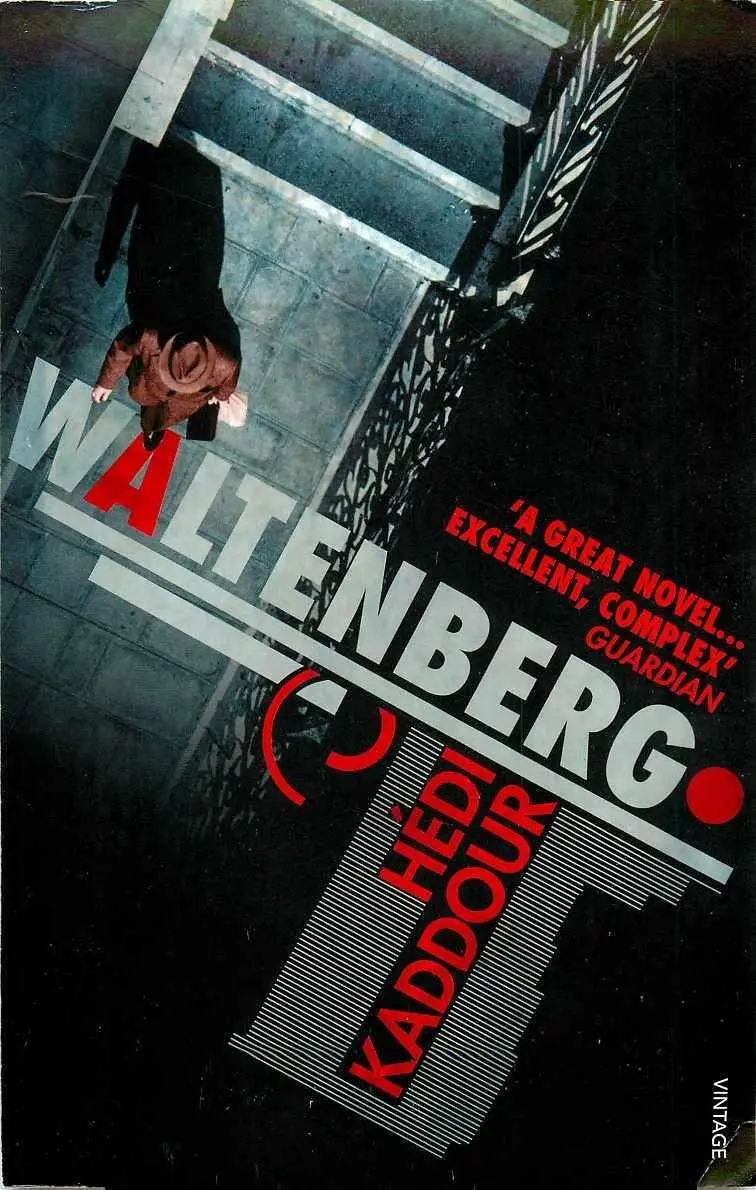
- Название:Waltenberg
- Автор:
- Издательство:Vintage
- Жанр:
- Год:2009
- ISBN:нет данных
- Рейтинг книги:3 / 5. Голосов: 1
-
Избранное:Добавить в избранное
- Отзывы:
-
Ваша оценка:
Waltenberg: краткое содержание, описание и аннотация
Предлагаем к чтению аннотацию, описание, краткое содержание или предисловие (зависит от того, что написал сам автор книги «Waltenberg»). Если вы не нашли необходимую информацию о книге — напишите в комментариях, мы постараемся отыскать её.
Waltenberg
Waltenberg — читать онлайн бесплатно полную книгу (весь текст) целиком
Ниже представлен текст книги, разбитый по страницам. Система сохранения места последней прочитанной страницы, позволяет с удобством читать онлайн бесплатно книгу «Waltenberg», без необходимости каждый раз заново искать на чём Вы остановились. Поставьте закладку, и сможете в любой момент перейти на страницу, на которой закончили чтение.
Интервал:
Закладка:
You showed you had what it takes, the men at the top were very pleased, you could have blown up in our faces but you really did us proud, it lasted five very good years, we showed the Americans and the English a thing or two, in 1951 it was your other mortal sin which unleashed the dogs, couldn’t you have phoned Adenauer or Bahr? or Bezukhov? no your name is Lilstein, that’s bad, you had that bastard Abakumov snapping at your heels, even Beria was scared, he might have come to your defence, he could have gone to see the Big Man with the moustache and said this comrade is not a cosmopolitan snake in the grass and I still need him.
Beria didn’t dare, all we could do was take some of the heat out of the situation, have you interrogated on the stool, keep your record out of it, even so at Magadan things got out of hand, and even when Stalin died and you were released and returned to your responsibilities, you had to pledge your enthusiastic support for Beria, it wasn’t the right time, a neutral reunified Germany, a fine idea, but the timing was all wrong, but once again we saved our deposit, we told Malenkov and Ulbricht that you were our source of information about the troublemakers, you spent your time making moves you shouldn’t have made, a real gift for the inappropriate move, we took many risks for you: crawl out of the sandpit, Misha, you’ve got to play with the big boys now.
Lilstein thanked his Soviet comrades who said they’d taken risks so that he would be spared the worst, maybe it wasn’t true, maybe nobody had been taking risks, maybe it was just a by-product of the bureaucracy, and at the time Lilstein had definitely had the feeling that he was being kept out of the limelight, that someone, perhaps the same someone who had pushed him into a car one morning with a blindfold over his eyes, was trying to spare him the worst by toning the treatment down, but after eighteen months in the camp he’d also felt that he was no longer being protected, he was sent out to do harder and harder labour, the sort you come back from feeling weaker and weaker, he saw those around him die more frequently, the comrades who said they’d always taken risks had been unable to take any more, if, that is, they’d ever taken any, but you could always pretend to believe the comrades when those who claimed to have taken risks seemed also to have taken over power, there had to be a side to be on, so some spring-cleaning is called for, open the windows, we’ve always trusted you, Michael, so here, read the notes your mother’s doctor ran risks to take instead of letting the grave swallow the errors.
One morning, the doctor saw, drawing up outside the clinic reserved for high-ranking Party officials, the kind of car which normally brought only his most prestigious patients, just one army officer got out, silver-blue uniform, as worn by Kremlin guards, a colonel’s uniform, a life or death rank, not the sort of man you’d want to meet so early in the day, but the doctor had felt relieved that it was that day and not another because he would be able to tell the colonel that he was going to save comrade Sarah Lilstein using drugs salvaged from the imperialists, he was very hopeful of saving her, a modicum of technical expertise borrowed from the West but also a sizeable input of Soviet know-how guided by the directives of the great Stalin.
The officer said that given the alarming nature of comrade Lilstein’s state of health, comrade Stalin had instructed comrade Ivanov to prepare a speech to honour comrade Lilstein at her funeral and that he had come to make certain arrangements in connection with the ceremony, the doctor said that fortunately there would now be no need for any such arrangement and the colonel repeated that comrade Stalin had instructed comrade Ivanov to write the funeral oration.
The colonel had not understood what the doctor was saying, so the doctor repeated that he could, indeed was going to, save comrade Lilstein’s life, he spoke with a cheerfulness intended to carry the colonel along on the tide of his enthusiasm.
And once more the colonel talked about Ivanov and the speech, and the doctor heard his guts rumble, he clenched his buttocks, and then contracted the muscles to prevent having an accident more befitting a toddler, and with the contraction and the cramps in his intestines came understanding, and with understanding his voice began to tremble at the moment when, for the third time, he was about to inform the colonel who seemed so hard of hearing that comrade Ivanov’s oration would not be needed, his voice shook, his jaw trembled, the words made no sense, panic spread to his airways, lips, the rest of him, he said nothing.
He did not give her penicillin and he felt so bad about this that he kept as close an eye on her as if she’d been his own mother, he took notes of what she said when she grew feverish, a kind of shorthand record of her delirium, because he was meticulous, out of medical scrupulousness, a good reason, they were notes taken with a view to a ‘Nosography of a Fever-Induced Delirium’, and all the while he was taking his notes he experienced a terror even more intense than that which had made him feel like a private on latrine fatigue reporting to the colonel of the guard.
But a second visitation by terror did not stop him taking dangerous notes, this second terror had been forced to admit defeat for, unlike the first which had only morality to overcome, the second had found itself up against remorse which is, in regimes which require strict observance, the only means of achieving dignity.
And his notes had been found by them , some of them made it their business to ensure that the good doctor disappeared, but another group of them had arranged for the notes to be completed, in secret.
From the time she felt sure she was going to die, and this was in the month of March 1946, comrade Sarah Lilstein began to babble, it was, noted the doctor, as if she’d understood everything, the toing and froing in the corridor, the decision that penicillin was contraindicated, the substitution of her nurses by others, it was as if she’d felt relieved by such signs of her imminent demise and had deliberately used her fevered state to let her thoughts run wild, so that she could say whatever she liked behind her ravings, think freely under the cover of the rambling state of mind they’d induced in her, think without being afraid of seeing death loom up before her, because death was there with her already, let her mind ramble without being afraid that friends and loved ones would be accused of plotting, since the proof of a rambling mind is in the excess of its rambling, in the things no healthy person would dream of saying.
Above all you had to avoid doing anything that might moderate the incoherence of your ramblings, in fact this would only prove that your mind was not wandering, so if your mind was really wandering you had no choice but to tell all and hold nothing back, so if you said you’d like to cut great Stalin’s balls off with Lev Davidovich Bronstein’s rusty scissors you ran fewer risks than if you didn’t dare go that far and made do, for example, with saying that the great leader had fucked up more than once on the agricultural policy front.
So Sarah Lilstein began to babble her way towards the worst things that could be said, she went on believing she could think under the cover of her ravings, keep control of her divagations, rave with the lucidity of the very drunk, and while she raved be both the Fool who raves and Shakespeare who makes him wise, Ariadne and the labyrinth, the egregious labyrinth, the eddy and the thing that thinks in the eddy, the eddy which scourges and dilutes everything in its wake, its history and its present, Sarah delving deep into her reserves, in the throbbing of her temples with a temperature of forty and eight tenths, and the fever entered into the very heart of her, took the place of the thought she believed she could control — and so, what she was trying to leave behind her to give a meaning to those fevered moments, now lost all meaning just when she was trying to find one, her ramblings were no longer a mask for her thoughts but the shape of the life she had led: her fevered outpourings were History itself.
Читать дальшеИнтервал:
Закладка:
Похожие книги на «Waltenberg»
Представляем Вашему вниманию похожие книги на «Waltenberg» списком для выбора. Мы отобрали схожую по названию и смыслу литературу в надежде предоставить читателям больше вариантов отыскать новые, интересные, ещё непрочитанные произведения.











Обсуждение, отзывы о книге «Waltenberg» и просто собственные мнения читателей. Оставьте ваши комментарии, напишите, что Вы думаете о произведении, его смысле или главных героях. Укажите что конкретно понравилось, а что нет, и почему Вы так считаете.