Hedi Kaddour - Waltenberg
Здесь есть возможность читать онлайн «Hedi Kaddour - Waltenberg» весь текст электронной книги совершенно бесплатно (целиком полную версию без сокращений). В некоторых случаях можно слушать аудио, скачать через торрент в формате fb2 и присутствует краткое содержание. Год выпуска: 2009, Издательство: Vintage, Жанр: Современная проза, на английском языке. Описание произведения, (предисловие) а так же отзывы посетителей доступны на портале библиотеки ЛибКат.
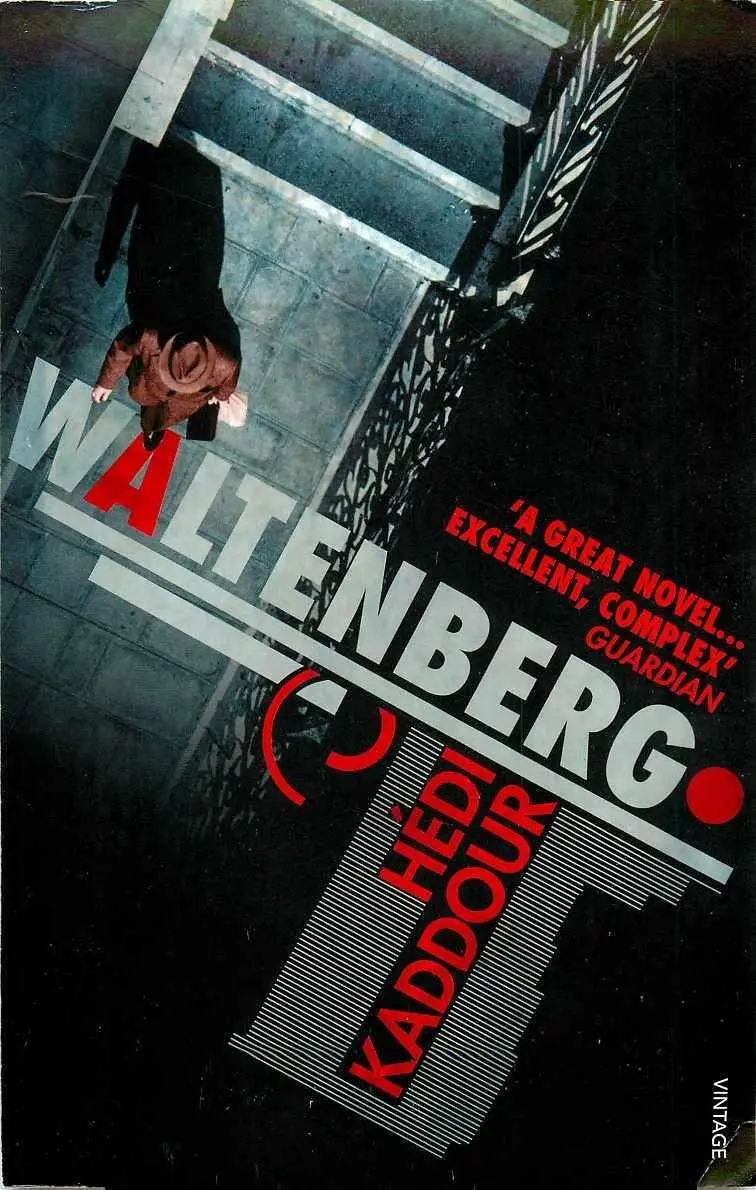
- Название:Waltenberg
- Автор:
- Издательство:Vintage
- Жанр:
- Год:2009
- ISBN:нет данных
- Рейтинг книги:3 / 5. Голосов: 1
-
Избранное:Добавить в избранное
- Отзывы:
-
Ваша оценка:
Waltenberg: краткое содержание, описание и аннотация
Предлагаем к чтению аннотацию, описание, краткое содержание или предисловие (зависит от того, что написал сам автор книги «Waltenberg»). Если вы не нашли необходимую информацию о книге — напишите в комментариях, мы постараемся отыскать её.
Waltenberg
Waltenberg — читать онлайн бесплатно полную книгу (весь текст) целиком
Ниже представлен текст книги, разбитый по страницам. Система сохранения места последней прочитанной страницы, позволяет с удобством читать онлайн бесплатно книгу «Waltenberg», без необходимости каждый раз заново искать на чём Вы остановились. Поставьте закладку, и сможете в любой момент перейти на страницу, на которой закончили чтение.
Интервал:
Закладка:
‘Tell me, young Lilstein, have you seen her again?’
Then they moved on and made for the village, the landscape was white but in shadow now, snow waiting for more snow, Kappler wanted Lilstein to escort him to the bus, at the last moment he said to Lilstein: ‘I’m going back to Rosmar because you’ve done your damnedest to stop me, I’m going back because there must be people around you who think like you, I have no illusions about what the GDR is like today, I just believe that there is more to be done there than in the West, I’d still like to achieve something before it’s too late for me, it’s no good saying any more, I still want to write new things, and I also believe that you still have decent thoughts.’
‘Thoughts aren’t enough, Herr Kappler, a group of people who have fine thoughts can do a great deal of harm, and they are the worst kind.’
Hans said to him:
‘Actually, young Lilstein, I like you best when you’re trying to be stupid.’
*
Years later, one day when Lilstein has behaved very affectionately towards you, when he’s called you ‘young gentleman of France’ three times on the trot, you will take your courage in both hands and raise the subject of Kappler, Lilstein will give you an unvarnished account of the talk he’d had that morning with his old friend before meeting you that same afternoon, when it was your turn. He’ll say that it had taken a long time for him to forgive himself for failing to find a way of undermining Kappler’s resolve.
Then you’ll ask Lilstein what he would have done if you too had said no.
He’ll reply that he’d have let you go, to live your life in the great wide world, but you have never been sure that this was true. Still, you never asked him outright if he would have arranged for you to disappear.
One day he’ll say that even without him you would have taken the same path, you like influence, especially the influence which multiplies the power of the men who work in the shadows, ultimately it’s an acceptable word, oh it’s most unlikely that you would ever have acquired links, not with anybody, you would have been your own master. Lilstein knows two or three gossipy types in Paris who are paid with signs of consideration, not by him, by the Russians, loose tongues in high places, you would have played that game with much more finesse, but you would have had no real influence, not with any camp, whereas with Lilstein it was real politics, you went forward together, you gave each other presents, gifts, counter-gifts, you betrayed no one and you acted in tandem, really a most lordly occupation.
You were both standing at Klosters in front of the locomotive of a mountain railway, Lilstein told you that the first time he ever saw you in the Waldhaus in 1956 he was desperate because he’d failed with Kappler and he’d decided to speak to you as if you were his last chance.
There were ants in the grass between the rails in front of the engine, Lilstein spoke in a cynical voice:
‘See? we’re like them, ants standing in the path of a huge railway engine, some have given up wanting to know and just haul their grain of barley without asking questions, other ants say I’m going to make the engine back off, others again say it’ll roll clean over me, there’ll always be some people who get it right, but with us it’s not the same. We’ve got the message: we play with model railways.’
Chapter 5. 1978, Rumours and a Pair of Braces
In which a man named Berthier goes hunting for moles inside, no less, the French Embassy in Moscow, in a manner prejudicial to the interests of Henri de Veze, whose love life is rocky, and also of Madame de Cramilly, who is bringing up a papyrus on her own.
In which de Veze remembers a voice crying ‘The Great Adventure is buggered!’
In which it becomes obvious that you’ve been Lilstein’s mole in Paris for a very long time and that you have the ear of the President of the French Republic.
In which it becomes clear that Michael Lilstein is in melancholy mood and has almost stopped believing in socialism.
During the course of his life, a man is required to be reborn several times, and all the help he gets comes from chance and error.
ColetteParis, 4 June 1978
Henri de Vèze entered the room without knocking, he is France’s ambassador to Moscow, he was one of Free France’s youngest subalterns and, in 1942, at Bir Hakeim, he cleared a minefield, his chances were one in ten.
He doesn’t knock before entering a minister’s office, even though it’s now thirty-six years later, even though it’s the Quai d’Orsay.
The Minister does not bridle: always agreeable, thinks de Vèze, spine of an oyster, a man of the centre, de Vèze is very angry, and the more so because he can’t say why nor tell the Minister straight out that this meeting has forced him to abandon his mistress in the middle of a quarrel, twenty minutes it took twenty minutes for her to agree to give him back his braces, forced to negotiate with a harpy so he can be on time for a mollusc.
De Vèze and the Minister have known each other for ages, they joined the Foreign Office together in 1946 but not by the same academic route, the Minister sat the usual exams while de Vèze was entitled to attempt those set specially for ex-servicemen, for several years this did not matter.
And then de Vèze realised that he was not really part of the club, though not where promotion was concerned, no, they’d never screwed him around on that score, but when in certain meetings you’re practically the only one in the room who never went to their prestigious École libre des sciences politiques, it gets to you in the end, especially the way they go about making sure you’re not aware of it, sensitive people, uncivilised but sensitive, they take your coat while their chums look on because the secretary, bless her, has forgotten to do it yet again, and they oblige with that excess of attentiveness which proclaims that they’re putting on a show especially for you, your scarf folded neatly instead of being stuffed into one sleeve, and everyone knows that you know.
The Minister is with a man to whom de Veze takes an instant dislike, crewcut, thin lips, well-developed shoulders, the blue-eyed athlete of airport novels, though from the waist up only: below the belt, to speed things up, all parts have been shortened, more like a Mediterranean plumber, back bent and buttocks rounded, will never make second military attaché, talks like bursts of machine-gun fire with a strange rising intonation at the end of a phrase, to make him sound forceful, another one of those types who believe that being in charge means having to have a big mouth, a vulgar loudmouth, low-slung rear-end of a cockerel, how dare the Minister think he can lumber an ambassador with a jester like that?
And it was to be introduced to this moron that de Vèze walked out on his mistress this morning, bang in the middle of a big row, and they’d been back together again only a matter of days, they’re both very good at rows, first a fit of feminine sulks, just a small one, the corners of her mouth turn down, her oval face becomes hard, her nose grows more pointed, a not-speaking phase which drags on, he was careful not to ask her what the matter was but to no avail, because she asked first, softly, gently:
‘What’s the matter?’
‘Nothing.’
‘You’re in a bad temper, I can feel it.’
‘Not at all, there’s nothing the matter with me.’
‘Yes there is, you seem to be in a hurry.’
That did it, the word ‘hurry’, it happened every time she says a word she doesn’t like, ‘hurry’, mentally you’ve as good as gone, de Vèze knew what came next:
Читать дальшеИнтервал:
Закладка:
Похожие книги на «Waltenberg»
Представляем Вашему вниманию похожие книги на «Waltenberg» списком для выбора. Мы отобрали схожую по названию и смыслу литературу в надежде предоставить читателям больше вариантов отыскать новые, интересные, ещё непрочитанные произведения.









Обсуждение, отзывы о книге «Waltenberg» и просто собственные мнения читателей. Оставьте ваши комментарии, напишите, что Вы думаете о произведении, его смысле или главных героях. Укажите что конкретно понравилось, а что нет, и почему Вы так считаете.