Hedi Kaddour - Waltenberg
Здесь есть возможность читать онлайн «Hedi Kaddour - Waltenberg» весь текст электронной книги совершенно бесплатно (целиком полную версию без сокращений). В некоторых случаях можно слушать аудио, скачать через торрент в формате fb2 и присутствует краткое содержание. Год выпуска: 2009, Издательство: Vintage, Жанр: Современная проза, на английском языке. Описание произведения, (предисловие) а так же отзывы посетителей доступны на портале библиотеки ЛибКат.
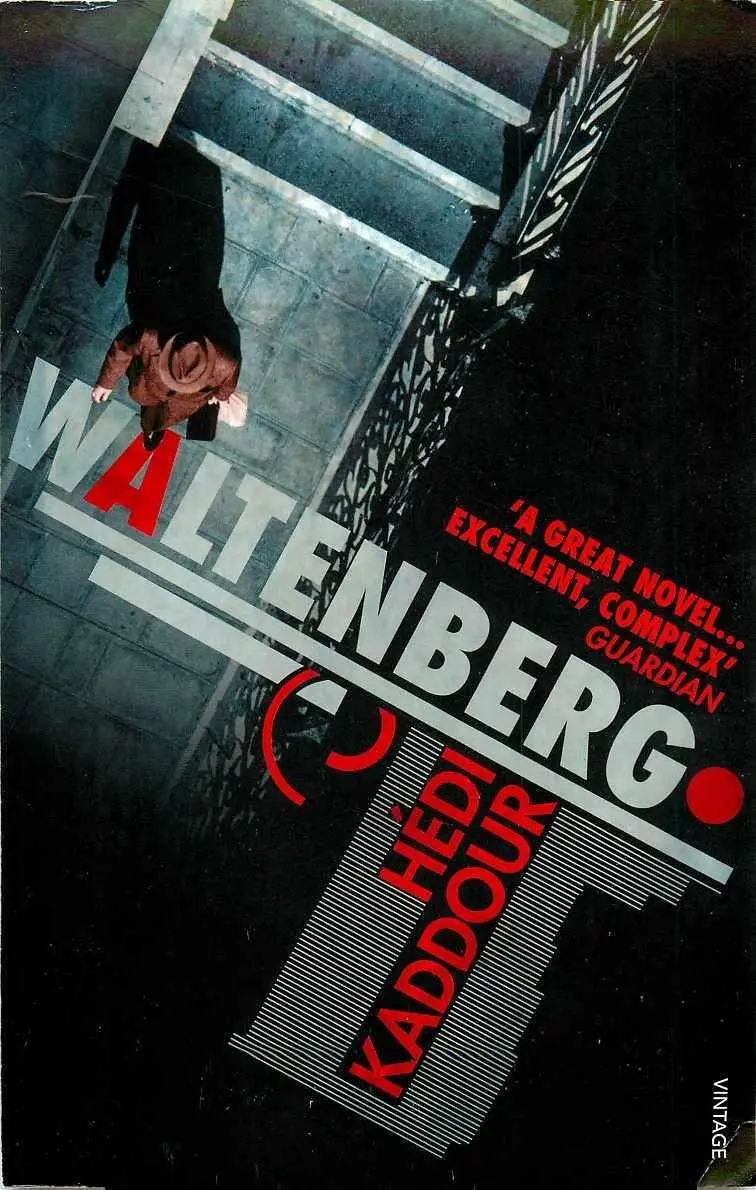
- Название:Waltenberg
- Автор:
- Издательство:Vintage
- Жанр:
- Год:2009
- ISBN:нет данных
- Рейтинг книги:3 / 5. Голосов: 1
-
Избранное:Добавить в избранное
- Отзывы:
-
Ваша оценка:
Waltenberg: краткое содержание, описание и аннотация
Предлагаем к чтению аннотацию, описание, краткое содержание или предисловие (зависит от того, что написал сам автор книги «Waltenberg»). Если вы не нашли необходимую информацию о книге — напишите в комментариях, мы постараемся отыскать её.
Waltenberg
Waltenberg — читать онлайн бесплатно полную книгу (весь текст) целиком
Ниже представлен текст книги, разбитый по страницам. Система сохранения места последней прочитанной страницы, позволяет с удобством читать онлайн бесплатно книгу «Waltenberg», без необходимости каждый раз заново искать на чём Вы остановились. Поставьте закладку, и сможете в любой момент перейти на страницу, на которой закончили чтение.
Интервал:
Закладка:
Lilstein and the young woman waved greetings, but did not stop to talk, bowled along by the expenditure of their combined energies, keeping in step, walking fast to keep warm, fighting sand and wind and the fierce flurries of stinging air which are on permanent duty for kilometre after kilometre under a storm-racked sky, lashed by gusts of wind which threatened to whip the hoods off their oilskins at any moment, forcing them to clap a frozen hand on the crown of their heads to prevent it, if they wanted to see around them they had to turn their shoulders or else partly swivel their heads inside their hoods, the wind was relentless, it blew at an angle, it swirled, always adversarial, finding a way in everywhere, laying its metal grip on everything, blasting, chilling, rending.
Yet for all that, their sweetness continued to seek the object of its desire, the cold wind denied it each time they exchanged a glance, forcing their heads down, making them bury their chins in their shoulders at an angle, the sweetness forced to retreat into eyes that looked out from lowered heads, sweetness suspended by the pummelling which left nothing in their thoughts except the wind, left them with no feeling but weariness, lungs raw, a kind of frozen-fingered intoxication, tears cold and salty, with nothing else for it but to go on walking, and when they returned in the middle of the afternoon to the white and blue room of the low-roofed house, once they were sheltered behind the closed door, they went on staggering for several moments from the fading effects of the wind.
What’s to be done with Lilstein in this mood who insists on telling you about Picasso, Guernica, Winter Journey, and regales you with the promises he once made on a beach? You don’t have a woman in Paris, at least not one sufficiently interesting for you to do the same and turn her into a story, you’re going to have to find something else to tell, but for the moment Lilstein goes on talking, like a man who has decided to tell all, with no thought for prudence, and you are turning into the one who listens to his secret outpourings, who’ll have to denounce Lilstein and Hatzfeld, to officials of the Party you are bent on leaving? Or to the Ministry of Internal Security?
‘The girl I walked with on the beach, young gentleman of France, denounced me, it’s funny, I can’t stand the thought that I was denounced and you cannot stand the thought of having denounced, yes, the charges you made were solid, I mean the ones you brought four years ago against the comrades in your cell, you remember, communists who met unofficially, there were seven or eight of them, and held endless discussions of books by Rousset and Kravchenko, and the “alleged Soviet camps”, and the Slansky trial and Tito and how to make the Party democratic? You got them thrown out of the Party by quoting Stalin and Thorez and lumping together Tito, Trotsky, Kravchenko, Slansky, the English, the police, Zionism, sorry, make that cosmopolitanism! Actually, a little too good to be true, if you will permit me a professional comment, which is why today you feel that what you did was squalid but that all you really did was cover up other things that were even more squalid, it must feel odd now to think of those you got excluded from the Party when at long last you know as much as they, Poletti, Warschawski, did.
‘What about the Monclars? did you ever see Monclar’s widow again? Nowadays you think like her, but the result of the charges you brought is that she’s a widow, did you really need to be so thorough? Did you have to say that there was no proof that her husband did not have any contact with the Germans during the war? No proof that he did not have ! That’s good, very good, you could have kept a low profile, settled for saying that, objectively speaking, they were playing the same game as the Bonn revanchists, but you decided to add a clinching argument, to add that one basic issue was worth considering, the possibility that there’d been some contact between Monclar and the Germans in 1943 when a part of the network was blown, and by raising that question you made Monclar terminally suspect, tarred him with a suspicion “which unfortunately his current attempts to sabotage Party policy could only corroborate”, this was tantamount to telling him you disapproved of the Party line in 1952, ergo you “very probably” did a deal with the Gestapo in 1943, and since we are now fighting a war we cannot afford the luxury of doubt.
‘Obviously you didn’t work all that out by yourself, you’d had evening classes which taught you that it’s good to corroborate, did you know they used the same line with me too in Moscow when I was being interrogated? Monclar tells you you’re a little shit, the comrade from the federation who just happens to be there that night says losing your temper does not constitute proof of innocence, good old Monclar, a perfectionist, he’s excluded, no, you’re right, he excludes himself, slams the door behind him, it makes him thoroughly miserable, and to make sure he doesn’t miss he gets hold of two revolvers, one for each temple, he fumbles, manages to burst both eyeballs, not a pretty sight, hang on, I must finish.
‘A week later he throws himself out of a window in the hospital, three floors, took four days to die, died like Brossolette but with Brossolette it was the Nazis and different kinds of torture, have you written to Monclar’s widow, I mean recently?
‘One of my closest friends was in Monclar’s network, a German antifascist with the FTP, today he’s one of our leading poets, lives in Potsdam not far from my house, a real poet, he was the one who told me the story of the bear and the hunter, though maybe it wasn’t him, no matter, sometimes we pass on secrets to each other, for the hell of it, not knowing if one of us will rat on the other, but we tell each other everything, that way the one who listens is just as guilty as the one who speaks, and if he does spill the beans he won’t last very long either — “comrade, if your contact wanted to say such stupid things, how come he trusted you so much?” — he’s for the drop too, which might even be a comfort for the friend he’s denounced, absolute transparency! Are you beginning to understand what sort of struggle I’ve got to engage in these days?
‘When I told my friend I might be meeting the Frenchman who had got Monclar thrown out of the Party, he said: “Ask him what he’s got against people who were in the Resistance.” There, I’ve done it. You think you’re a real swine, you want to leave the Party which landed you in the mire and now you’re going back to the nasty, sordid squalor you were trying to escape when you joined the Party, it would be so simple to have one squalid action to hate yourself for, such as what a young prosecuting counsel in a hurry once did, but we both know that there’s something else, and that’s why I’ve taken such a shine to you.’
Lilstein follows the direction of your eyes, turns round, stares at the dresser with you, a complete service of painted porcelain plates.
‘Yes, very fine, especially the large dishes, the spinners, the country dance, I had it brought here, it isn’t Swiss, don’t you recognise it? It comes from your part of the world, it’s French, Obernai-ware, from Alsace, the couple who run the factory are of Alsatian stock, they were already here in 1929, he was on the desk and she was housekeeper, a stroke of fortune for the pair of them, they both loved France but he didn’t like being taught French by having his knuckles rapped.
‘In 1927, ’28, they applied for a seasonal job, they liked it, they went down well, they were kept on, when they saw Hitler beginning to stir things up in Germany, they concluded that sooner or later he’d try to move back into Alsace, so they decided to stay in Switzerland, they escaped the return of the Germans in 1940, moved up the ladder, bought the hotel in ’43, bad times for tourism. She loves presiding over the kitchen range, she can make anything, especially Linzer, these decorated plates with country scenes, they’re very peaceful, I like them a lot.’
Читать дальшеИнтервал:
Закладка:
Похожие книги на «Waltenberg»
Представляем Вашему вниманию похожие книги на «Waltenberg» списком для выбора. Мы отобрали схожую по названию и смыслу литературу в надежде предоставить читателям больше вариантов отыскать новые, интересные, ещё непрочитанные произведения.











Обсуждение, отзывы о книге «Waltenberg» и просто собственные мнения читателей. Оставьте ваши комментарии, напишите, что Вы думаете о произведении, его смысле или главных героях. Укажите что конкретно понравилось, а что нет, и почему Вы так считаете.