Hedi Kaddour - Waltenberg
Здесь есть возможность читать онлайн «Hedi Kaddour - Waltenberg» весь текст электронной книги совершенно бесплатно (целиком полную версию без сокращений). В некоторых случаях можно слушать аудио, скачать через торрент в формате fb2 и присутствует краткое содержание. Год выпуска: 2009, Издательство: Vintage, Жанр: Современная проза, на английском языке. Описание произведения, (предисловие) а так же отзывы посетителей доступны на портале библиотеки ЛибКат.
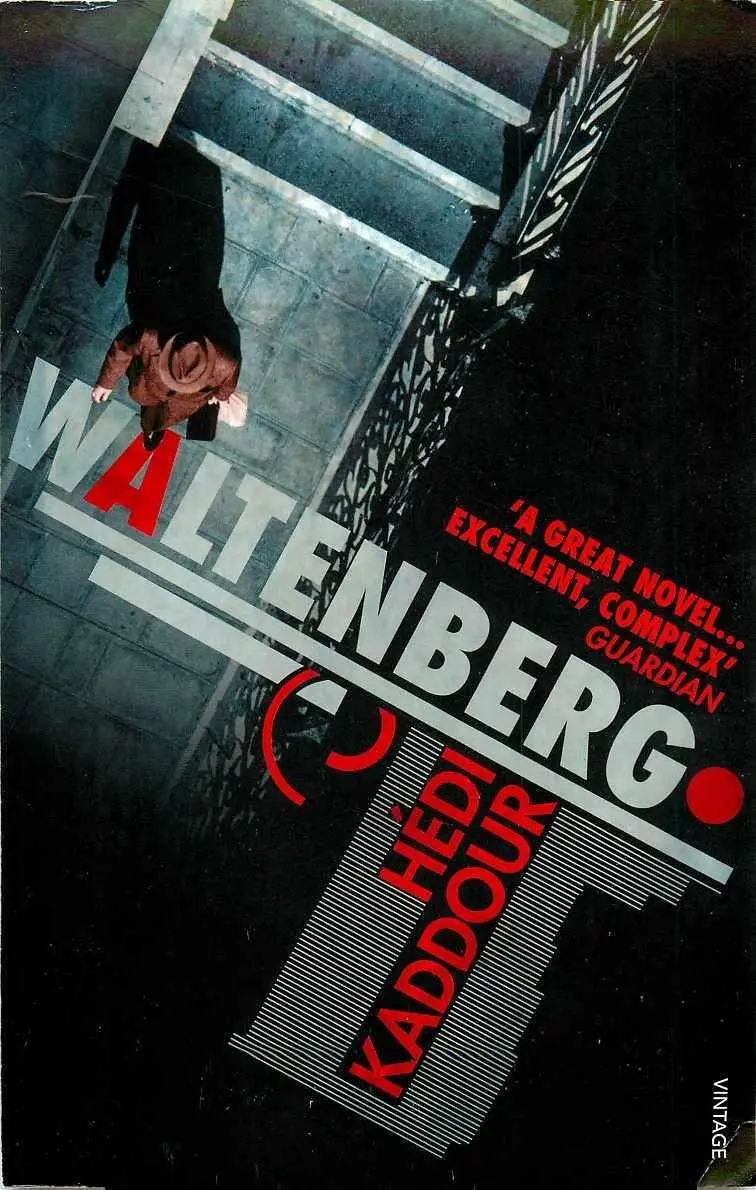
- Название:Waltenberg
- Автор:
- Издательство:Vintage
- Жанр:
- Год:2009
- ISBN:нет данных
- Рейтинг книги:3 / 5. Голосов: 1
-
Избранное:Добавить в избранное
- Отзывы:
-
Ваша оценка:
Waltenberg: краткое содержание, описание и аннотация
Предлагаем к чтению аннотацию, описание, краткое содержание или предисловие (зависит от того, что написал сам автор книги «Waltenberg»). Если вы не нашли необходимую информацию о книге — напишите в комментариях, мы постараемся отыскать её.
Waltenberg
Waltenberg — читать онлайн бесплатно полную книгу (весь текст) целиком
Ниже представлен текст книги, разбитый по страницам. Система сохранения места последней прочитанной страницы, позволяет с удобством читать онлайн бесплатно книгу «Waltenberg», без необходимости каждый раз заново искать на чём Вы остановились. Поставьте закладку, и сможете в любой момент перейти на страницу, на которой закончили чтение.
Интервал:
Закладка:
‘Have you seen her again?’
Make it just ‘her’, but my voice is bound to crack and he is quite capable of answering:
‘How about you? Have you seen her? When was that?’
It would be a laugh to tell him, Lilstein thought, I’m sure that sooner or later, somehow over the next few years, Max will tell him, at least the parts he knows, a tale of cloak and dagger, I bumped into her, I almost bumped into her, our paths crossed but I never saw her again, it wasn’t long ago, last August. Don’t tell this to Kappler.
It might make him give up the idea of going back to Rosmar, but don’t tell him, she comes out of the Budapest Academy of Music, the mood of the city is restless, end of August, they all reckon that 1956 will mark a new beginning, she has just done five hours’ straight teaching, a master-class, I wonder what Max will make of her masterclass, he’ll not pick up on it and pass directly to what comes next, or else he’ll use it as an excuse to try and talk about the music he loves.
It’s after nine in the evening, she’s happy, her Hungarian students are bright, a whole afternoon of Schubert, she has come up with new expressions to use on them, new ideas for exercises, a good singing teacher doesn’t say:
‘Put your whole soul into it!’
No, the good teacher finds graduated exercises which mobilise the multifarious moods of the soul, as a cover it was impeccable, very complete, it would have made the subject of a most interesting report, Lena’s singing class in the Academy of Music, from an analysis of the Lied to her work on the perineum and ‘when you sing keep thinking of your role, which is to inspire’, the verb most frequently on her lips is denken , her classes in German, like in the good old days of the Hapsburgs, and in French, she speaks very good French, she is a genuine European, had a father who was mad about Henry James, in front of her class of young Hungarians she can try exercises, angles, snatches of interpretation.
She’s just found one new phrase, she tells them not to try to express everything, your interpretation must leave the public wanting more, the audience must not receive passively, it must be drawn towards what you are singing, it’s not hesitation, there’s no mystery about it, it’s a tension, you are offering an interpretation and the audience is thinking that something more is about to materialise, so don’t obscure the message.
It is good to come up with new solutions and not simply be a rememberer of old inventions.
Night is falling slowly, there’s a taxi free, she does not want it, she’s walking to stretch her legs, one of her pupils has said, Madame, I’ll walk with you, crossing from one bank to the next, towards Buda, the residential quarter, and her hotel in the middle of a park.
A lovely walk, a fit young pupil, sensitive too, they walk beside the Danube then cross Elisabeth Bridge. I love wandering through towns as it gets dark, crossing bridges, the mist, which blurs the outline of the monuments, when I was singing I had to take care, I was always pretty healthy but night mist is a little menace, you can easily wake up next day croaking. Lena puts her hand through the young man’s arm, turns, forces him to do the same, look, that fantastic pile, it’s the Parliament building, quite magnificent, they resume walking, her hand is still through her pupil’s arm.
The suspension bridge vibrates with the steps of the pedestrians, at the end of the bridge her pupil stumbles, she clutches at his arm, a car is there, a door is open, the door slams shut, a pistol fitted with a silencer, one finger held against a mouth, the car speeds off, it swerves throwing Lena from one man against another, the one on her right says something, the car slows, other things are said, in fractured English, ‘you’, ‘calm’, they tie her hands, a hood is placed over her head, her head is forced down, fewer bends now, they are on an open road, much time goes by, her back aches.
Now the car is being driven fast, they let Lena sit up again, I must try to sleep, there’s nothing else I can do, I should never have walked, it wouldn’t have made any difference, they’d have laid on a bogus taxi, that pupil of mine was a good-looking boy, did they lean on him? Lithe, he walked lithely.
A long road, the car brakes, a sharp turn, ruts, then an unmade road, come to a stop, they bundle her out, a damp forest smell, they sit her down, back must be against the trunk of a tree, they remove the hood, a bad sign.
The air is dark and cool, night, moon, a soughing of leaves, a clearing, three men and one woman stand over her, two machine-pistols. The men smoke. Everything has a pallid sheen.
She looks up at the sky, hears the beat of wings, repeats to herself ‘The stars and our lives are bound by hoops of steel’, she is sixty-one years old, it’s the end of the road, she is not unhappy, this afternoon’s renditions of Schubert were very good. None of the three men look at Lena, the woman has the face of a mournful slave, rough movements and a revolver. She takes Lena by the arm and leads her to one side.
The Russians had kidnapped Lena, the KGB, it was Max who reconstructed the puzzle, it took him a good long time, he reconstructed it for Hans, to tell him the story of what happened, a very Max-ish story, with real facts, gaps, and cloak-and-dagger padding to fill the gaps, in 1956 Markov is Russia’s deputy Minister of Security, in late August he arrives in Hungary, on its eastern border, a meeting of Warsaw Pact intelligence services, in a railway carriage:
‘The Americans are making a nuisance of themselves, we need to give them a serious warning not to make a nuisance of themselves.’
‘We could eliminate a few of their agents tonight, comrade Minister.’
‘Like diplomats, you mean? And then what? If they’ve got diplomatic passports, we’ll have the United Nations down on us like a ton of bricks. If they don’t, they’re just the small fry.’
Lilstein is there, a better head on him than most of the other men present, he has a detached air, in fact he’s had an idea but wishes he hadn’t, it’s a bad idea but it might produce good results, a doubtful gesture which might not turn out too badly, though badly for whom? He hesitates while all the rest put forward their proposals, round up one of the known networks and shoot the lot, hang them, do it in public, expel America’s ambassador but not Britain’s, it would produce the same rumpus and would have less fall-out, maybe there’s something could be set moving in Berlin.
‘What? Another world war?’
Markov is beginning to get angry, and the men who are there are afraid of Markov, it’s late, it’s dark and the later it gets the twitchier Markov becomes. It is dangerous to speak within earshot of a man with a record like Markov’s, he saw off the Waffen SS with his foot soldiers, a forceful type, but tonight he’s as jumpy as a cat, the other men speak when he gives them the nod and as they speak they can hear what is going into the report that contains a minute of what they’ve said together with an estimate of their abilities, at this juncture we need to come up with guilty names, if we’re in this mess it’s because there have been anomalies, if there have been anomalies it’s because there have been failures.
Usually the way out of these messes is to recommend the strongest measure, pull coals out of the fire, only this time, pulling coals out of the fire when the result is a disaster amounts to sabotage, and Markov glares at the advocate of the strongest measures as if he were dealing with a mixture of Anglo-Saxon spy and Trotskyite snake, like in the good old days.
Then someone recommended to Markov the strongest measures, with safeguards, and Markov asked what exactly, and he doesn’t know, and the report is filled out and he’s marked down as a moron. Markov doesn’t need to tell you in so many words, you might well be the head of Hungarian or Czech counter-espionage, and thousands, millions of people shake in their shoes at the mere mention of your name, but when you’re facing Markov you’re an undiluted moron.
Читать дальшеИнтервал:
Закладка:
Похожие книги на «Waltenberg»
Представляем Вашему вниманию похожие книги на «Waltenberg» списком для выбора. Мы отобрали схожую по названию и смыслу литературу в надежде предоставить читателям больше вариантов отыскать новые, интересные, ещё непрочитанные произведения.







Обсуждение, отзывы о книге «Waltenberg» и просто собственные мнения читателей. Оставьте ваши комментарии, напишите, что Вы думаете о произведении, его смысле или главных героях. Укажите что конкретно понравилось, а что нет, и почему Вы так считаете.