Hedi Kaddour - Waltenberg
Здесь есть возможность читать онлайн «Hedi Kaddour - Waltenberg» весь текст электронной книги совершенно бесплатно (целиком полную версию без сокращений). В некоторых случаях можно слушать аудио, скачать через торрент в формате fb2 и присутствует краткое содержание. Год выпуска: 2009, Издательство: Vintage, Жанр: Современная проза, на английском языке. Описание произведения, (предисловие) а так же отзывы посетителей доступны на портале библиотеки ЛибКат.
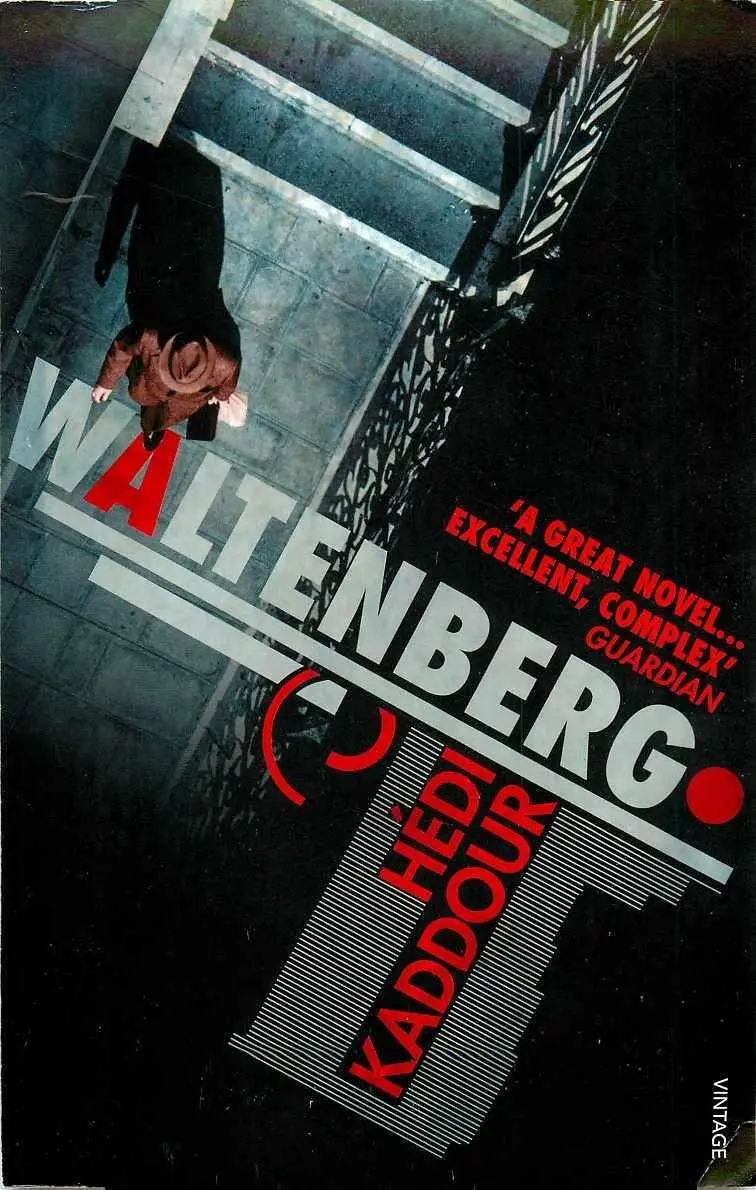
- Название:Waltenberg
- Автор:
- Издательство:Vintage
- Жанр:
- Год:2009
- ISBN:нет данных
- Рейтинг книги:3 / 5. Голосов: 1
-
Избранное:Добавить в избранное
- Отзывы:
-
Ваша оценка:
Waltenberg: краткое содержание, описание и аннотация
Предлагаем к чтению аннотацию, описание, краткое содержание или предисловие (зависит от того, что написал сам автор книги «Waltenberg»). Если вы не нашли необходимую информацию о книге — напишите в комментариях, мы постараемся отыскать её.
Waltenberg
Waltenberg — читать онлайн бесплатно полную книгу (весь текст) целиком
Ниже представлен текст книги, разбитый по страницам. Система сохранения места последней прочитанной страницы, позволяет с удобством читать онлайн бесплатно книгу «Waltenberg», без необходимости каждый раз заново искать на чём Вы остановились. Поставьте закладку, и сможете в любой момент перейти на страницу, на которой закончили чтение.
Интервал:
Закладка:
Everywhere, from the Vosges to the Channel, battle was joined for points on maps, and Gilberte Swann wrote to Marcel to inform him that both the hillock at Méséglise, with the hawthorn hedge, and the cornfield through which the winds of adolescent love had blown, was now Hill 307 of which the newspapers talked so much.
May 2001, the Frankfurter Allgemeine Zeitung , Ludwig Harig reporting from Saint-Rémy. Monsieur Louis, one of the men who found the grave, showed him lot 357 and the spot where Alain-Fournier and the Frenchmen were shot.
‘That’s right,’ said Monsieur Louis, ‘shot for attacking a dressing-station. The clash of two companies of very young soldiers.’
A week later, a letter to the Frankfurter Allgemeine Zeitung from Gerd Krumeich, a historian with an expert knowledge of Joan of Arc: ‘That Fournier was sent to face a firing-squad cannot be stated with absolute certainty.’
And Stéphane Audoin-Rouzeau, a specialist in the history of cruelty on the battlefield:
‘In the matter of the incident at Saint-Rémy, both the excavation of the site and the archive evidence indicate clearly that something extremely violent happened, but not that it was accompanied by any particular cruelty.’
Further along, another cemetery, at Vaux-les-Palameix, other remains, those of eight German stretcher-bearers, killed the same day as the Frenchmen.
Max Goffard and Hans Kappler, one left with cauliflower ears, the other with the memory of a woman, had marched off to war full of hope. They had very quickly heard the din of a conflict which was to be the last before the great leap forward and it did not strike them as being in any way different from the thunderclaps at Christmas which frighten the children and promise them all presents on the big day.
Chapter 3. 1956, A Remarkable Symmetry
In which Michael Lilstein remembers Hans Kappler and offers you a job as a Paris spy.
In which we learn what Lena owed to an easy-going American named Walker.
In which Lena disappears in the middle of Budapest.
In which Max tells several stories including the one which ends: ‘We already know…’
In which Michael Lilstein unveils his theory of twin souls and introduces you to Linzer Torte.
So it would seem you have a taste for espionage.
Faust to Mephisto, Johann Wolfgang Goethe, Faust . A tragedy
Waltenberg/Paris, early December 1956
‘Why so set on going back, Herr Kappler?’
It is with these words that Lilstein will make his approach to Kappler. Destabilise Kappler, force him to doubt, waste no time, make him change his mind.
Lilstein has just arrived at Waltenberg in the heart of the Swiss Alps. He strolls through the village until it is time for his first appointment, he walks across the powdery snow, slowly, each footfall a muffled sigh, walking slowly is such luxury, a layer of powdery snow, ten centimetres, a little less, which has fallen on lying, frozen snow, the air is dry, very sharp, Lilstein likes it.
This village in the Grisons is not his home ground, but he was born here, at Waltenberg, not born exactly but he spent his adolescence in this place: looking at women, having ideas, talking, onward and upward, drinking, smoking, always in a hurry, he loved speed, he completed the five-year plan in four, comrades! he smiles and slows down even more as he walks over the snow, looks at the forest which climbs up the side of the mountain and stops just before the sparkling cap of snow, quite a coup, two appointments today.
One man with a mind to change before lunch.
Another to convince this afternoon, two separate meetings but strikingly symmetrical.
Lilstein tells himself that it will be intellectually very gratifying if he can bring it off. It’s a bit much to fit into one day but just now he can’t afford to spend much time away from Berlin and the Stalinallee.
Mountains, sensations, ideas, this is where it all began a quarter of a century ago, in the spring of 1929.
He’d come from Rosmar, he was almost sixteen, he can still remember the first time he came up here, it wasn’t anything like nowadays, a bus with the same hunting-horn depicted on the forward door but much less comfortable than today’s, a very bumpy ride, very narrow road, ruts, ravines, all much harder going the higher you went, sometimes barely thirty centimetres between the tyres and a precipice, wonderful memories, would the trees just here break our fall? Will I have time to jump out of the window?
The bus skidded, lurched, Lilstein jumped out through the window, clutched at branches, the branches snapped, blood, screams. False alarm. He didn’t jump because the bus went on climbing, small red flowers stared at him, saxifrage poked through the snow, the ravine was full of them, a series of bends, horns blaring, he shook, how stupid, felt sick, the nausea made worse because at the age he was then he did not want to admit to being afraid.
The nausea had not lasted, at Waltenberg, it never does. Quite extraordinary this sensation of having transparent lungs, pure air, it stings, beware nose bleeds.
These last few years, Lilstein has come back to Waltenberg quite often, yes, with dangerous frequency, but he knows the area well, has friends here, he’d be warned instantly, though actually he doesn’t care, besides, the level of risk is the same every day, and his large East Berlin office is hardly the safest of places: the last time he felt at ease there, with a sense that he was making a success of his life, in 1951, two cars had come to get him.
A blindfold over his eyes, long hours in a plane, another car. At their destination, they removed the blindfold, sat him down on a stool a metre from the wall, allowed him to sit only on the edge of the stool, no way he could support himself against the wall, must sit up straight, he wasn’t beaten, dunked in a bath, no electric wires.
They didn’t want to leave any visible damage. Days and days spent on that stool, twenty hours a day: they took turns in teams of four, they call the approach the endless screw, the edge of the stool, a few punches, just to correct his posture, the feeling the stool reaches up to the back of your neck.
When Lilstein sags they drag him upright by the ears, they say they never saw anyone put up so little resistance, thump him in the kidneys, pinch his cheeks. But never in the presence of a superior.
A few days of this reduces a man to an aching pile of vertebrae, lots of questions, some of which he was unable to answer, but they didn’t seem to want very detailed answers, not like the Gestapo when they’d demanded the names of the men in the network. In the Lubyanka, the questioning never stopped, an immense exhausting pain, for which Lilstein believed in the end that he alone was responsible. Then the blindfold again, the car, the plane, a new prison, a camp, in the cold.
When he was released, after the death of Stalin, he met the man who’d directed his interrogation, colonel’s uniform, decorated like a hero.
‘I had my orders,’ the Colonel said.
A good training if the fascists ever manage to get me again,’ Lilstein said.
‘You sound bitter, comrade, and you have every right to be.’
‘Bitterness helps a man to grow old gracefully,’ said Lilstein. ‘It also makes a man efficient. You stop having illusions.’
Ever since Lilstein lost his illusions, he always does what he wants to do, whatever the risk, and he thrives on it. All the same, he remains cautious, he has come to Waltenberg circuitously, via Austria and Sweden, the Colonel was quite a decent man, he’d told Lilstein in an expressionless voice:
‘Some of the men you denounced in 1947 did not have your luck, or protection.’
Читать дальшеИнтервал:
Закладка:
Похожие книги на «Waltenberg»
Представляем Вашему вниманию похожие книги на «Waltenberg» списком для выбора. Мы отобрали схожую по названию и смыслу литературу в надежде предоставить читателям больше вариантов отыскать новые, интересные, ещё непрочитанные произведения.










Обсуждение, отзывы о книге «Waltenberg» и просто собственные мнения читателей. Оставьте ваши комментарии, напишите, что Вы думаете о произведении, его смысле или главных героях. Укажите что конкретно понравилось, а что нет, и почему Вы так считаете.