Hedi Kaddour - Waltenberg
Здесь есть возможность читать онлайн «Hedi Kaddour - Waltenberg» весь текст электронной книги совершенно бесплатно (целиком полную версию без сокращений). В некоторых случаях можно слушать аудио, скачать через торрент в формате fb2 и присутствует краткое содержание. Год выпуска: 2009, Издательство: Vintage, Жанр: Современная проза, на английском языке. Описание произведения, (предисловие) а так же отзывы посетителей доступны на портале библиотеки ЛибКат.
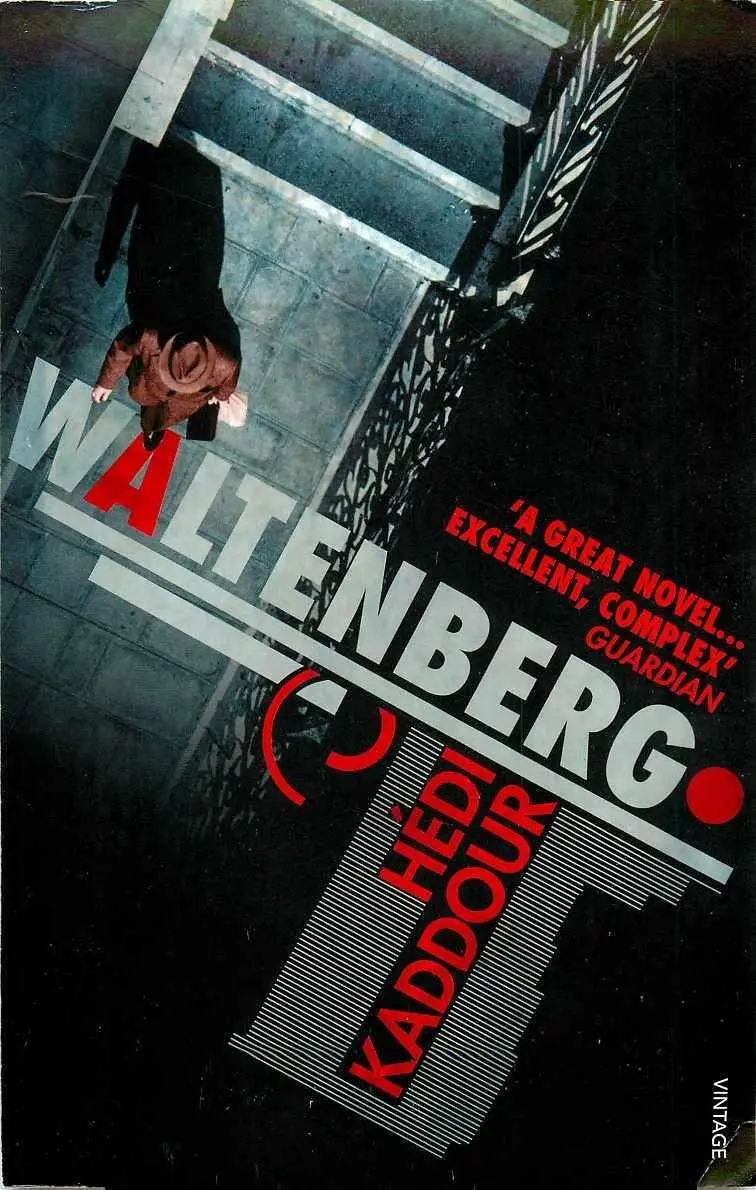
- Название:Waltenberg
- Автор:
- Издательство:Vintage
- Жанр:
- Год:2009
- ISBN:нет данных
- Рейтинг книги:3 / 5. Голосов: 1
-
Избранное:Добавить в избранное
- Отзывы:
-
Ваша оценка:
Waltenberg: краткое содержание, описание и аннотация
Предлагаем к чтению аннотацию, описание, краткое содержание или предисловие (зависит от того, что написал сам автор книги «Waltenberg»). Если вы не нашли необходимую информацию о книге — напишите в комментариях, мы постараемся отыскать её.
Waltenberg
Waltenberg — читать онлайн бесплатно полную книгу (весь текст) целиком
Ниже представлен текст книги, разбитый по страницам. Система сохранения места последней прочитанной страницы, позволяет с удобством читать онлайн бесплатно книгу «Waltenberg», без необходимости каждый раз заново искать на чём Вы остановились. Поставьте закладку, и сможете в любой момент перейти на страницу, на которой закончили чтение.
Интервал:
Закладка:
For a few hours here at Waltenberg, Lilstein can forget all about Warsaw, Budapest, such folly, and Suez, fortunately there’s been Suez, that other folly, Lilstein hates events which just happen all by themselves then link up, gang up on you. He’s had his fill of it these last few months.
Here at least he can breathe freely for a few hours, Switzerland, peace.
The little bridge at the edge of the village has not changed, in 1929 he used to spend every evening on it smoking his first pipefuls of dark tobacco cut with a Dutch honey mixture, numberless stars, the stars of deep mid-winter, the gurgle of the stream under the bridge is the same, things look smaller now than they did twenty-seven years ago but they’re just the same, the bridge marks the entry to Waltenberg, Lilstein scrutinises the field of snow to his left, as far as the edge of the wood. Sometimes, if there’s no noise from the village, you might spot a scampering stoat, but all is quiet just now.
Anyway, Lilstein hasn’t time to stand there and keep watch, he makes for the houses, in the middle of the village are the church, the Hotel Prätschli, the grocery-cum-ironmonger’s-cum-café with its large sign Konditorei, the garage, the red and gold petrol pump, and two large cowsheds. From the square, another hotel, the Waldhaus, can be seen on the distant side of a mountain, just where the ski slopes begin their descent to the north.
The Prätschli is a family hotel, the Waldhaus is much grander, a huge eight-storey double chalet, oversized, a bogus chalet trying to be a chateau, it disguises its inner structure of steel and concrete under wood cladding, beams, pantiles, rafters, joists, it dwarfs the valleys with its size, more than 400 rooms, a piece of Belle-Époque flummery, an hotel which draws its life from elsewhere, from people who travel hundreds, thousands of kilometres to live cocooned for a week or two in a land of chocolate, ski-lifts, simple joys and secret banking, it was built in the first years of the century, it started as a luxury sanatorium, with a bobsleigh run, it was accessible only by cable-car, in 1910 it was turned into a hotel and after 1918 a road was made, a heated garage was installed in the hotel basement together with an annexe which added a further hundred very modern rooms. The cable-car is still there, Lilstein read somewhere that in the days when it was a sanatorium coffins were sometimes brought down by bobsleigh, though that’s probably a joke.
The Waldhaus quickly turned into a hotel catering for the winter sports and conference trade, Lilstein knows the owners quite well, has known them for ages, a couple who came from Alsace in the twenties, no money, a great deal of experience, became managers in 1939, were able to buy it in 1943, the darkest of the crisis years for tourism.
Lilstein strolls but he’ll have to work fast, it’s risky, two meetings in the same place, but the idea had caught his fancy and wouldn’t let him be. The purpose of the first meeting is to make Kappler change his mind, Kappler, the great writer, the man who before the war had given him advice about life but that’s all in the past.
The other meeting, with the man who needs to be convinced, a young Frenchman, from Paris, not yet thirty, if he accepts my proposal it could mean a very bright future for him.
That lands me with a very neat antithesis, it’s dialectical, no, not dialectical, there’s no synthesis, these two meetings form a symmetry, a thing and its obverse not its opposite, but what happens if it’s the opposite that comes up?
I try to dissuade Kappler from returning to the GDR but instead he goes back and settles down at Rosmar; I try to persuade the young Frenchman to work with me, but he tells me to go to hell and denounces me to whoever will listen. You’ve still got your perfect symmetry but with both operations going wrong on the same day.
If Kappler does go back despite all I tell him it will be a failure only to me, in Berlin on the contrary I shall be congratulated for securing his return. But I won’t be forgiven if the second operation goes wrong, long-term recruitment is the aim of all heads of external security whichever side they’re on, a young man with a brilliant future, guide him over a period of years, tens of years, you’re taking a big risk here, oh yes, but the problem is that you’ve not told anybody in Berlin about this plan to recruit the young Frenchman.
Or then again I fail with Kappler and succeed with the Frenchman, or else I succeed with Kappler and fail with the Frenchman, but I can also fail with both of them, which makes four possible outcomes in all.
To convince the young Frenchman I’ll have to sound as if I’m convinced myself, with Kappler I’ll have to sound bitter, writers like bitterness but if bitterness is all Kappler sees in me and if the Frenchman senses that I am too convinced, I’ll be whistling in the wind, I’m the one who wants something, what have I got to offer?
Lilstein has known Kappler for ages, he first met him when he was already world-famous, it happened here, in 1929, Lilstein had come with his older brother, Thomas, a philosopher with a promising future, the ‘Waldhaus Seminar’, intellectuals, philosophers, economists, politicians, scientists, wealthy backers, beautiful women. People who wanted, as the expression already had it, to ‘build Europe’, all good bourgeois citizens and some of them even enlightened. Thomas is dead, he wanted to change philosophy, to find new relationships between being, reason and History.
What Lilstein wanted was to install telephone and radio in every corner of the globe and bring about the Revolution, sometimes people paid attention, affectionately, called him ‘Young Lilstein’, he was in love and he was rebuilding the world. These days he wonders exactly what it is he really wants to rebuild.
A few weeks ago in Berlin, he had been summoned by the Minister: ‘Kappler wants to come back! Come back! Imagine, he’s been gone ten years and now he wants to come back, at this point in time! It shows we were right all along!’
The Minister’s huge paw strikes the top of his desk, hairs sprout on every joint of each finger, his voice rises:
‘This proves it beyond the shadow of a doubt! Everything we’ve done this past year was harsh but it was fair, they call us “East Germany”, even the “Soviet Zone”, but Kappler said: “I’m going home”, it proves we’re a true homeland and not a part of somewhere else, you know him, don’t you? known him personally for almost thirty years, you will go to him, you will give him anything he asks for, he must come back, it would be a stupendous coup. Kappler! he’s abandoning them! I can already hear their hounds baying! He’s coming back to the camp of progress, peace and socialism in spite of all the howls of their typewriter-pounding hyenas.’
The Minister pauses, looks Lilstein in the eye and adds:
‘And in spite of our own mistakes! At last, some good news!’
And then the Minister did something very unpleasant. He stood up and scratched himself between the buttocks, a gesture which is appropriate only in private, as though Lilstein wasn’t there. The Minister has short arms and this means he has to twist his spine backwards and to one side so that his hand can reach its objective, his head also has to bend back and to one side. To compensate, the Minister thrusts his chin forward and half-opens his mouth, a pose redolent of authority and deep thought, while his hand explores, locates and deals at length with the main item on the agenda.
Lilstein glanced out of the window, how can the Minister be told that the whole scheme is likely to come badly unstuck? Kappler back in Rosmar? He’s done it once before, in 1946, he’d come from England, couldn’t stand being at Rosmar for more than six months, and now he wants to come back again, Lilstein knows Kappler, and he knows the area he comes from, hammer and compass in a ring of rye, it won’t work out, you won’t feel right there, Herr Kappler, everything they say about us is true. Even in his head he still calls him Herr.
Читать дальшеИнтервал:
Закладка:
Похожие книги на «Waltenberg»
Представляем Вашему вниманию похожие книги на «Waltenberg» списком для выбора. Мы отобрали схожую по названию и смыслу литературу в надежде предоставить читателям больше вариантов отыскать новые, интересные, ещё непрочитанные произведения.







Обсуждение, отзывы о книге «Waltenberg» и просто собственные мнения читателей. Оставьте ваши комментарии, напишите, что Вы думаете о произведении, его смысле или главных героях. Укажите что конкретно понравилось, а что нет, и почему Вы так считаете.