Hedi Kaddour - Waltenberg
Здесь есть возможность читать онлайн «Hedi Kaddour - Waltenberg» весь текст электронной книги совершенно бесплатно (целиком полную версию без сокращений). В некоторых случаях можно слушать аудио, скачать через торрент в формате fb2 и присутствует краткое содержание. Год выпуска: 2009, Издательство: Vintage, Жанр: Современная проза, на английском языке. Описание произведения, (предисловие) а так же отзывы посетителей доступны на портале библиотеки ЛибКат.
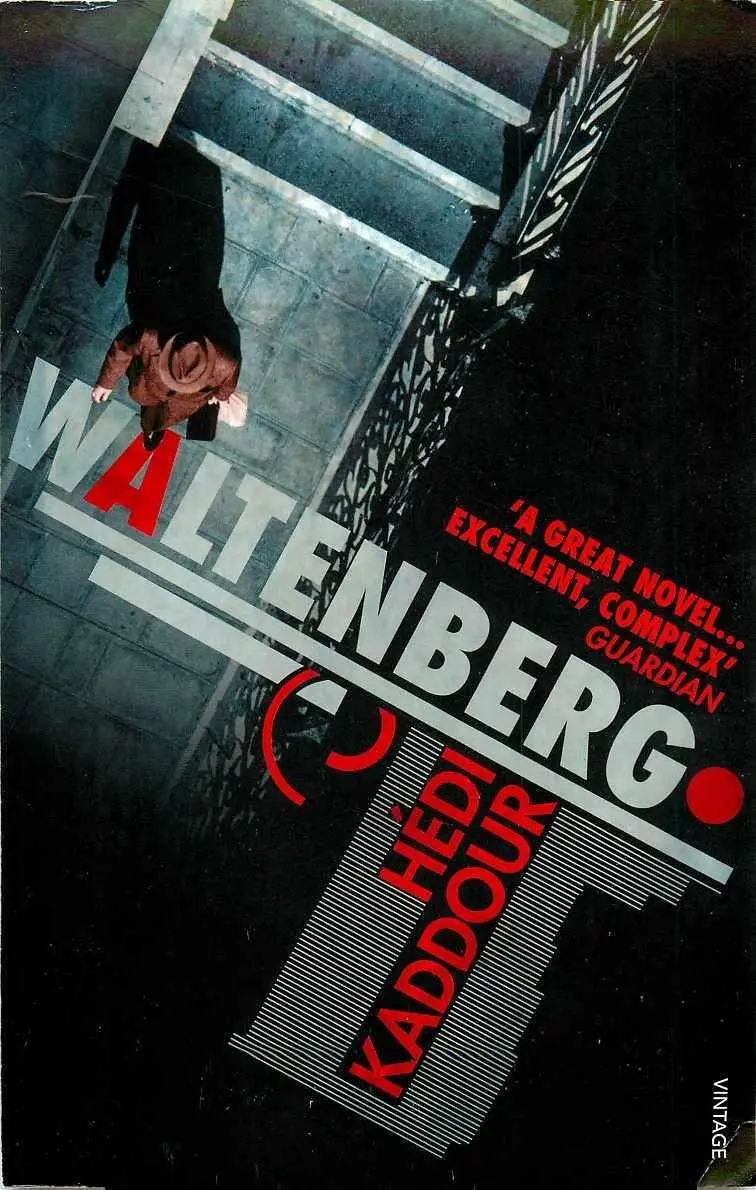
- Название:Waltenberg
- Автор:
- Издательство:Vintage
- Жанр:
- Год:2009
- ISBN:нет данных
- Рейтинг книги:3 / 5. Голосов: 1
-
Избранное:Добавить в избранное
- Отзывы:
-
Ваша оценка:
Waltenberg: краткое содержание, описание и аннотация
Предлагаем к чтению аннотацию, описание, краткое содержание или предисловие (зависит от того, что написал сам автор книги «Waltenberg»). Если вы не нашли необходимую информацию о книге — напишите в комментариях, мы постараемся отыскать её.
Waltenberg
Waltenberg — читать онлайн бесплатно полную книгу (весь текст) целиком
Ниже представлен текст книги, разбитый по страницам. Система сохранения места последней прочитанной страницы, позволяет с удобством читать онлайн бесплатно книгу «Waltenberg», без необходимости каждый раз заново искать на чём Вы остановились. Поставьте закладку, и сможете в любой момент перейти на страницу, на которой закончили чтение.
Интервал:
Закладка:
Lilstein has tried to reason with the Minister again, he has asked for a delay, he said maybe the subject’s in poor physical shape, he’s coming back because he’s depressed, what’ll we do if it turns out he’d come to us as a way of going to his death? The Minister said he’ll be coming to the land of compass and rye, the scum flee, the best return, the compass, the rye and the hammer, not their filthy lucre, depression my arse, I thought you had a better analytical brain. The Minister’s forefinger in Lilstein’s direction:
‘Think more politically!’
Lilstein ignored the short-armed Minister’s arse: comrade Minister, we must tread carefully, this man won’t be coming back because he thinks we’re going to tear everything down, and the Minister said, but that’s the point, we are going to tear everything down, urged on by the proletarian masses whose mouthpiece is the Party, and Kappler will be the positive living contradiction within this process which has been decided, directed and led by the Politburo under the authority of the general secretary, Comrade…
‘Comrade Minister’ — Lilstein has dared to interrupt the Minister — ‘Hans Kappler does not give the same words the same meanings, let me remind you that in our country, when a writer publicly contradicts a minister, even the Minister of Culture, it’s called antidemocratic propaganda, and he can be sent to prison for it. Now Kappler will not hesitate to contradict, he will exude negative contradiction, so at what point do we lock him up? The day after he gets here? Three weeks after? We will probably have to do it very quickly, otherwise we’ll have to deport him or let all those who think as he does say their piece freely. Let’s take our time, I say “our” time although this is not my area, I am not authorised for internal subversion, only exterior intelligence.’
As he speaks, Lilstein can see the Minister’s tactic — success and it’s marked down to the Minister, failure and it’s Lilstein who fouled up — no, Minister, you fat pig, don’t rely on me to carry the can, you think you’re so strong, Minister, you have the support of a number of Soviet comrades, but they aren’t necessarily the right ones any more, the funny thing is that you can’t see it yet, one of these days I shall walk into your office and you’ll be looking pretty sick because in the photo in Pravda the faces are different, not all of them, but you’ll have this peculiar expression on yours, you’ll scratch your arse because you think that you’ve got every right to scratch your arse in my presence, that I don’t count, and you’ll try to make sense of the new photo.
You might ask me what the photo in Pravda, all these changes, mean. What cannot be asked of a Department Head can be put to someone in whose presence you can scratch your arse, even if he’s a Department Head, a brief passing conversation, one pig to another, you might assume I’ll make it easy for you, and if my reply is that I have no idea, you can always bawl me out saying I never know anything, no, I know what I’ll do, Minister, I’ll pick up the photo and I’ll look even more scared than you, and that’ll make you stop scratching yourself, you’ll try to reassure me, the Soviet comrades have their own way of seeing things, they’ll let us know when it suits them, sometimes they move very fast, you’ll put on a brave smile when you say ‘very fast’, Minister, and there we’ll be standing in front of the great slide, making polite noises.
You assure me that it’ll be a straightforward descent, no more complicated than many other things in life, then all will return to normal at the bottom of the slope, say a quick hello to the new comrades, a kiss on the lips and then it all starts up again, so you’ll want to go first, you’ll try to push off gracefully, a straightforward descent, and there’ll be only me who’ll know, and I’ll certainly not let on, that during the night the great slide iced up completely.
Lilstein looks the Minister straight in the eye:
‘Comrade Minister, let us take steps to ensure we do not have an incident, at least let me sound out Kappler’s intentions.’
And the Minister says:
‘We must act quickly, you have your orders.’
He added nothing further. Correction: as he escorted Lilstein to the door he put one final question to him, keeping his tone formal:
‘Are you for or against?’
‘Against,’ said Lilstein.
The Minister opened the door:
‘All the same, those are your orders, and those orders express the will of the Politburo and Comrade Walter Ulbricht!’
The Minister had not needed to make him say ‘Against’, he did it for the benefit of his microphones and he took the opportunity to mention Ulbricht’s name at least once.
Hans Kappler appeared to be in as much of a hurry as the Minister. To Lilstein’s first message he replied that he didn’t need time to think: in ten days he’d be in Berlin at the checkpoint on Friedrichstrasse.
At which Lilstein quickly arranged a meeting, in the greatest secrecy, at Waltenberg, to finalise the details.
‘Do you like the Konditorei, Herr Kappler? Next Thursday, late morning? Shall we say eleven?’
Lilstein likes the Konditorei too, a kind of general emporium, groceries, hardware, ironmongery, confectionery, tobacco, bread and a few tables and chairs in the back to serve as a Weinstube. Low ceiling, narrow windows, gentle shadow, the smell of leather, specifically of harness and straps, the fragrance of bread and the tang of metal, nails are sold by the dozen, and all transactions are entered by hand in a great grey ledger, everyone who walks in says Grüss Gott!
What approach is he going to adopt with Kappler? The man’s gone mad. Less than a year ago, he signed a piece in Preuves, for the people of the Congress for the Freedom of Culture who are anticommunists, which makes him a self-confessed anticommunist, and now he wants to go over to the socialist bloc, it’s crazy. Or else, Kappler has turned into a lost soul floating on ideals as the current wafts him, frankly you’d be a lot more use to the cause of progress if you stayed in the West, Herr Kappler, representing us to the West, rather than coming back here spouting ideas which will be identified as Western.
It’s all airy talk, and Kappler is very sensitive to how things are put, if it can’t be said in ten words, then it’s not true, not in fiction of course, the Kappler of old would point out, but true of life, of the way things are decided and action is initiated. You must learn, young Lilstein, speak last, use no more than ten words per sentence and utter only a few sentences.
Kappler, the master of the meandering sentence, my sentences are like centipedes he would say laughing; in 1929 Kappler gave Lilstein advice on the use of the incisive sentence in his undertakings, as if he were trying to relive his youth through Lilstein, but today he acts like anybody because he has begun to write like no one in particular.
Don’t tell Kappler what he should do, destabilise him instead, why do you want to go back so badly? Lilstein also has another question to ask but he keeps it up his sleeve, because he doesn’t know where it might lead them, he doesn’t know how far this question he holds in reserve might take him, still it’s what this is really all about, Rosmar is the idea of a man for whom everything’s finished. Kappler is not a politician, his craziness is of a different order, so ask him the question: ‘Did you ever see her again, Herr Kappler?’
No, not that question, if I ask him that more than likely I’ll start shaking as I ask it, best water it down:
‘Have you seen any of the people you knew in the good old days?’ Fool, it’s the same question and it’s not so upsetting to say.
Читать дальшеИнтервал:
Закладка:
Похожие книги на «Waltenberg»
Представляем Вашему вниманию похожие книги на «Waltenberg» списком для выбора. Мы отобрали схожую по названию и смыслу литературу в надежде предоставить читателям больше вариантов отыскать новые, интересные, ещё непрочитанные произведения.








Обсуждение, отзывы о книге «Waltenberg» и просто собственные мнения читателей. Оставьте ваши комментарии, напишите, что Вы думаете о произведении, его смысле или главных героях. Укажите что конкретно понравилось, а что нет, и почему Вы так считаете.