Hedi Kaddour - Waltenberg
Здесь есть возможность читать онлайн «Hedi Kaddour - Waltenberg» весь текст электронной книги совершенно бесплатно (целиком полную версию без сокращений). В некоторых случаях можно слушать аудио, скачать через торрент в формате fb2 и присутствует краткое содержание. Год выпуска: 2009, Издательство: Vintage, Жанр: Современная проза, на английском языке. Описание произведения, (предисловие) а так же отзывы посетителей доступны на портале библиотеки ЛибКат.
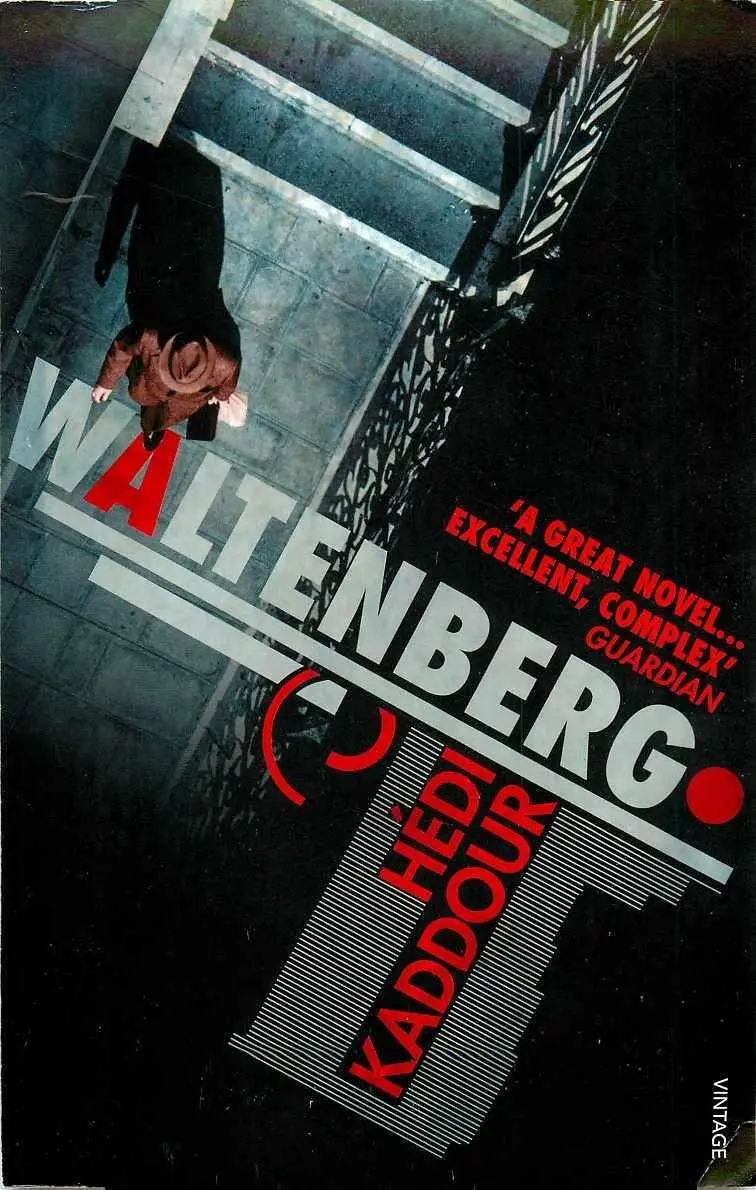
- Название:Waltenberg
- Автор:
- Издательство:Vintage
- Жанр:
- Год:2009
- ISBN:нет данных
- Рейтинг книги:3 / 5. Голосов: 1
-
Избранное:Добавить в избранное
- Отзывы:
-
Ваша оценка:
Waltenberg: краткое содержание, описание и аннотация
Предлагаем к чтению аннотацию, описание, краткое содержание или предисловие (зависит от того, что написал сам автор книги «Waltenberg»). Если вы не нашли необходимую информацию о книге — напишите в комментариях, мы постараемся отыскать её.
Waltenberg
Waltenberg — читать онлайн бесплатно полную книгу (весь текст) целиком
Ниже представлен текст книги, разбитый по страницам. Система сохранения места последней прочитанной страницы, позволяет с удобством читать онлайн бесплатно книгу «Waltenberg», без необходимости каждый раз заново искать на чём Вы остановились. Поставьте закладку, и сможете в любой момент перейти на страницу, на которой закончили чтение.
Интервал:
Закладка:
When did it all start? The day after Sarajevo, L’Illustration published a large sketch of the event which filled page three, the Archduke falling as he is shot, and opposite on page two the editorial written three days earlier is entitled: ‘We are such spoiled brats’; one of the survivors of that war will be killed in 1944 in the Seine-et-Marne when his train is strafed by a US Lightning. Meanwhile Sarah Bernhardt has a wooden leg, in 1916 she makes a film, she wears a Greek-style tunic and carries a flag which flaps in the wind, she calls down the wrath of France’s fighting men on the Boches, asking in alexandrines ‘that one day by warriors shall their temples be destroyed, their children maimed and women raped’, she also talks of monsters and the extermination of a whole race.
Hans was standing next to me but that did not stop him staring at the patches of red on Marie-Thérèse’s throat, me, I never blush, I never blushed even when Marie-Thérèse called me ‘dear Lena’.
I can’t blush. All someone like Marie-Thérèse does is let it happen, she never tries to control herself, she lets herself blush and men interpret it as a promise. They must wonder if the rest of her blushes too, they call her type voluptuous. She was a lot less good-looking than me, she had short legs, it was no good her raising the waist on all her dresses, you could still see that she had short legs. One day, outside the Waldhaus, she had to lower the saddle of her bike, she wasn’t at all happy about that, the Frenchman with the jug ears looks sad, or is it just a trick of the mirrors?
Max is now well launched, he talks in a loud voice to shut the others up, to forget, to find life again on the other side of despair, to have the time to watch that woman, and simultaneously he has the unbearable feeling of spreading himself too thin, of being less himself the more he talks, a mixture of everything, good for nothing except heaping cinders on the fire, pipe, beer, some day all you’ll be fit for is talking to your slippers, you’ll screw some girl from the Charente on your kitchen table and then tell her the story of your life, there’ll be no one left.
Max sees the girl from the Charente now, on the table in the brasserie, while he talks to his comrades and watches the woman in the reflecting mirrors, the handsome face of a woman who has better things to do than listen to men talking, she doesn’t smoke, you stand up, turn your back on all these boozy dimwits, and you go off with her, you become a different person, the man you wanted to be fifteen years ago when you walked into the Vieux Paris for a coffee before rushing home to read Aristotle, you look good, she has good breasts, Aristotle in the original and a good time with the woman, back seat of a cab, then throw her out head first, yes but she’s not even looking at you, you haven’t even managed to catch her eye once.
Listen, in 1914 or 1915, which is where our poetical story really begins, the Reich ministry in Berlin has a sense of its bounden duty, it rejects Thomas shells, Thomas steel is all right for shoeing mules but only Martin steel produces shells that pulverise everything they hit.
‘And what shall we do with our stocks of Thomas shells?’ ask the Reich’s steelmakers.
‘Sell it all to the Swiss, Swiss requirements in that department are huge, they buy twenty times as many from us as they produce themselves, where do all the shells go? That’s beside the point, there’s got to be profit, Swiss francs, and when the stocks have all gone make more Thomas shells for Switzerland, and ask top prices, respect the cartel, no need to bother your heads who buys them from Switzerland, in any case if Thomas shells fall on our German pillboxes they’ll be landing on good English concrete which can only be bought for Swiss francs, it comes via Holland and Denmark, along with the copper and copra for our explosives, and if we run short of Martin shells at the front, too bad, we’ll buy your Thomases too, says the Reich ministry to the Reich’s steelmakers, jump to it, and you can drop your prices for us.’
Max glances up, the woman has gone, get up quickly, catch up with her, the cab, but finish the story first, protests from the steelmakers, and Hindenburg orders the Reich ministry to abide by the tariff set by the cartel and ‘give them the price they ask, which is the export price’. I’ve also got a very good story about French army supplies in 1916, but that’ll keep for later. Max starts getting to his feet, shall I retrieve my coat? my hat? They’ll just laugh at me. Max sits down again, he’s just noticed that there’s no one at the beautiful brunette’s table, they’ve all gone, you didn’t see a thing.
‘Another round!’ says Max. ‘On me.’
But let us not forget the real culprit, that straw boater, everything that preceded those few days during which it was waved this way and that under a burning sun, union sacrée , long live France, long live Poincaré, long live the Kaiser, war’s a novelty, a joy, the sacrifice made for one’s country, and last Tuesday morning in the Salle Gaveau Bishop Bolo gave some advice to a thousand young Frenchwomen on how to choose a husband, a long engagement is essential for you to get to know one another, for a fiancé is the most beguiling kind of liar, you will need time to get him trained, separation and the war are blessings in disguise, in the big stores, the girls who get paid three francs a day for a fifteen-hour day demand more chairs.
It will encourage laziness, say the directors, a sordid business having something like that brought up, the strike has been broken, and from Biskra, Monsieur Chiarelli, the distinguished entomologist, has sent us two splendid photographs of scorpions, one of a mother no doubt panic-stricken devouring her young, and one of an adult male devouring another, with the last three joints of the tail and the poisonous sting sticking out of the mouth of the victor.
For the dragoons at Monfaubert there are eight targets, eight dove-grey dreams as splendid as myths, each with its own great wings, a span of fourteen metres secured by wires finer than the guys of the finest sailing boats, forty square metres of aerofoil, a stream-lined fuselage made of canvas and light wooden struts, a stubby vertical mast between the engine and the pilot, a complex system of cables supporting wings (conceived and designed by observing the flight of a zanonia seed) with a span of fourteen centimetres, a perfectly rounded leading edge and a gracefully flowing trailing edge.
Igor Etrich, a first-rate engineer, multiplied the proportions of the outer shell by a hundred, added a pigeon-tail rear-end together with a six-cylinder in-line Mercedes engine, 120 horse-power, sweet dove-grey chargers, the century’s new weapon of the skies, the Taube, one of them dropped two small bombs on Paris on 13 August.
The cavalrymen charge these new replacements on behalf of all the cavalries in the whole wide world, aircraft, airplanes, also known as aeroplanes, ’planes, the monoplanes Hans looks after, though in civilian life he is a naval engineer, novelist and dreamer, the army had turned him into a private in the infantry but quickly reassigned him as chief air mechanic in the first days of the war when the skies are still relatively free, pilots climb to almost 2,000 metres singing a snatch of song behind their propellers and return to base with bullet holes in their wings and a few snippets of information about the enemy, they smell of hot oil, their faces and hands are as oily as their engines but they wear fleece jackets costing a thousand marks a throw, are billeted in a château, drink champagne as they discreetly compare genealogical notes.
Up there, the war is almost clean, some opponents are still at the stage of saluting each other, they don’t use parachutes, the dream of Icarus runs through their veins.
Читать дальшеИнтервал:
Закладка:
Похожие книги на «Waltenberg»
Представляем Вашему вниманию похожие книги на «Waltenberg» списком для выбора. Мы отобрали схожую по названию и смыслу литературу в надежде предоставить читателям больше вариантов отыскать новые, интересные, ещё непрочитанные произведения.










Обсуждение, отзывы о книге «Waltenberg» и просто собственные мнения читателей. Оставьте ваши комментарии, напишите, что Вы думаете о произведении, его смысле или главных героях. Укажите что конкретно понравилось, а что нет, и почему Вы так считаете.