Hedi Kaddour - Waltenberg
Здесь есть возможность читать онлайн «Hedi Kaddour - Waltenberg» весь текст электронной книги совершенно бесплатно (целиком полную версию без сокращений). В некоторых случаях можно слушать аудио, скачать через торрент в формате fb2 и присутствует краткое содержание. Год выпуска: 2009, Издательство: Vintage, Жанр: Современная проза, на английском языке. Описание произведения, (предисловие) а так же отзывы посетителей доступны на портале библиотеки ЛибКат.
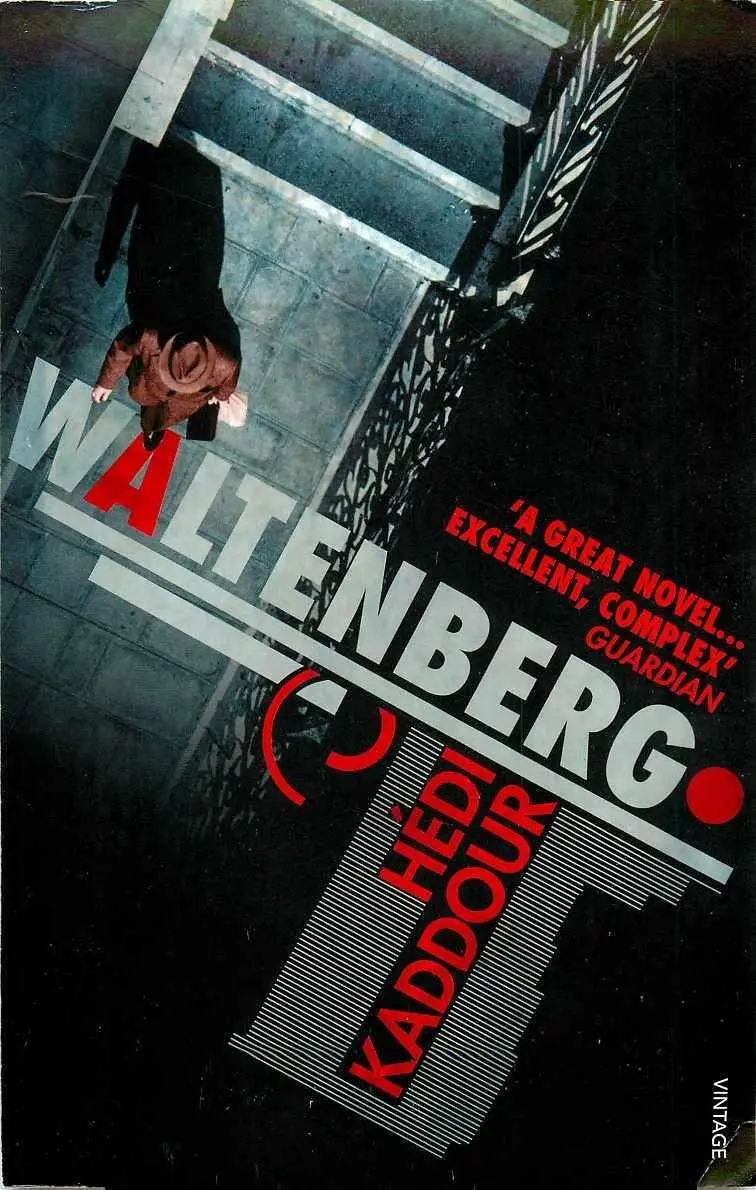
- Название:Waltenberg
- Автор:
- Издательство:Vintage
- Жанр:
- Год:2009
- ISBN:нет данных
- Рейтинг книги:3 / 5. Голосов: 1
-
Избранное:Добавить в избранное
- Отзывы:
-
Ваша оценка:
Waltenberg: краткое содержание, описание и аннотация
Предлагаем к чтению аннотацию, описание, краткое содержание или предисловие (зависит от того, что написал сам автор книги «Waltenberg»). Если вы не нашли необходимую информацию о книге — напишите в комментариях, мы постараемся отыскать её.
Waltenberg
Waltenberg — читать онлайн бесплатно полную книгу (весь текст) целиком
Ниже представлен текст книги, разбитый по страницам. Система сохранения места последней прочитанной страницы, позволяет с удобством читать онлайн бесплатно книгу «Waltenberg», без необходимости каждый раз заново искать на чём Вы остановились. Поставьте закладку, и сможете в любой момент перейти на страницу, на которой закончили чтение.
Интервал:
Закладка:
The Frenchman at the next table with the big ears, most entertaining, he looks at me as if I were the only woman in his life, he talks in a loud voice, he comes out with some very French names, Martin, Thomas, he might be called something along those lines too, or maybe Duval. He’s watching me in one of the mirrors with eyes that drink, eat, beckon, undress, would like to bite, disappear, garrulous eyes, very French, but not stupid. Now Hans didn’t have garrulous eyes, his looked surprised, frequently surprised, if I’d made a scene about Marie-Thérèse he’d have come down to earth with a bump. He still hadn’t noticed anything or felt anything or anticipated anything, and it was the scene I’d make that would open his eyes.
We were out walking, I was holding his arm, we met Marie-Thérèse coming towards us, she hardly knew me but called me ‘dear Lena’, she stopped and chatted, Hans was being witty, she laughed and touched his other arm as she laughed, do I dig my nails into her cheeks at this point? Or when she does it again, when she leans unambiguously on his arm, with both hands, so that through my arm I can feel Hans’s body leaning away from me under the pressure of that woman’s hands.
Marie-Thérèse blushed as she stood there, she wasn’t ashamed of blushing, her neck was uncovered and her throat was suffused with red, Hans looked, he did not look openly the way you’re supposed to when people push something under your nose unceremoniously, no, he glanced at it, pretended he wasn’t looking at all, glanced at me tenderly, and then his eye sidled off again towards that bright redness.
Max raises one finger, like in school, not like a pupil but like the teacher when he wants to stress the salient point, what you need, friends, is the story of the Martins and the Thomases, names of large families.
‘Max, how can you have a poetical tale about large families?’
‘Easy,’ Max replies, ‘a dramatic story, group photos, white dresses, a swing in one corner of the photo, interchangeable names and oodles of conflict. Martin, Thomas! That’s Pierre-Emile Martin versus Sidney Thomas, decades of confrontation spent chasing each other up and down statistical graphs, Martin, a decent old cove who hailed from Sireuil in the days of Napoleon III, Catholic, qualified engineer, concerned for the welfare of his workers, more than charitable, and Sidney Thomas ten years later, an Englishman, long-standing quarrel, two names at loggerheads, each despising the other, and no sign of it all finishing, at stake world conquest, with little flags planted in the planisphere of their epic struggle.
‘And at times quite staggering profits! shush, not a word, I’ll carry on, at others catastrophic falls on the Stock Exchange, close-down, new start, cycles, crises, competing tooth and nail for markets, patent for patent, perhaps they even came near to pairing off two of their children, one of Martin’s daughters and one of Thomas’s sons, but in the end there is no marriage, production goes up and up, the women produce fewer offspring, but there are still plenty of faces in the photos, two names, competing, and so, starting from a story about iron ore, Victor Hugo…’
‘Max!’
‘Oh yes, Hugo, “O Nature, here are thy sublime beginnings”.’
‘Max, we all know you’re mad about Hugo, you even went to his funeral.’
‘You villain, I wasn’t even born then.’
‘In that case, spare us the rest.’
‘One more quote and I’ll stop: “At the sound of thy voice thy forces rise up from the glooms of the deep”, to those forces we’ve added jaw-crushers, cone-crushers, cylinder-crushers, hammer-crushers, spiral separators, hydrocyclones, clean iron ore, it’s crushed to produce molten pig-iron and clippety-clop, the carbon in the molten metal is oxidised, and then Bessemer…’
‘Max, give me back my tankard.’
‘It’s empty.’
‘Exactly, the waiter won’t be able to see I need a refill.’
‘Too bad, just drink out of my glass instead, I’ll keep your tankard, you’ll see, and Martin, no let’s have Bessemer first, actually it all starts with Bessemer.’
‘Or Cro-Magnon man.’
‘If you’re going to be like that, I’ll shut up.’
‘No, Max, you just carry on now but you can bring it to a speedy conclusion.’
‘If you want a story, you’ve got to put in the time.’
Max holds the tankard at an angle, the Bessemer convener being slightly tilted, Max’s forefinger under the tankard, cold air is blown into the bottom of the blast box at high pressure, the air passes up through the molten mass, a dry splashing, a burst of reddish yellow light, a shower of sparks, the blow eliminates the excess carbon, a bluish flame with a dark tip spurts out of the top, clouds of smoke, sprays of molten metal, the flame grows taller, turns white and clippety-clop, the tankard is horizontal, the Bessemer vessel is tipped up, the pig-iron is decarburised in a quarter of an hour, ingots are cast, Bessemer steel is fantastic, just one problem, the yield is inadequate, which is where my little chums Martin and Thomas come in, quantity, the future’s in quantity, no more converters but vertical furnaces, here, take your tankard, don’t cry.
Max stands two half-opened books upright in the middle of the table, large vertical smelters, menu for a roof, paper napkin for the floor, decarburise, dephosphorise, desulphurise, these tall furnaces are masters of the world, steel in huge quantities, Thomas’s fining process involves blowing air through the molten ore, then lime and scrap-iron are added and pig-iron appears in the converter.
Max drops sugar lumps, matches, cigarettes, cigarette-ends between the two books, you wanted a story, well you’ve got one, unabridged, complete with forced air and incineration of all elements, the appearance of red smoke signals the end of the cycle, the cinders are cleaned out, it makes excellent fertiliser for crops, and then ferromanganese is added.
Max adds coins and even his signet ring, glances up at his companions around the table, how’s that for detail? long live Zola! now who’s next? In Martin’s process, it’s even better, there’s no blowing of air, instead a gas flame is used to raise the smelting temperature of the iron in the furnace, better quality of product.
The upshot is that there are two types of steel, Martin’s and Thomas’s, and then the fighting starts, Martin’s steel is better, so he has all sorts of problems, one lawsuit after another for infringement of patents, no substance to the charges, but patents only protect the inventor for twenty years, the cases brought by his competitors slow down production, the ploy is to gain time until Martin’s process has fallen into the public domain and can be used by anybody, meanwhile they fall back on Thomas’s process until Martin’s can be exploited without payment of royalties, of course Thomas steel is poorer in quality, but for rails and low-grade purposes it is adequate. And Pierre-Émile Martin? he doesn’t go under but he doesn’t see the financial returns he might have, he retires, an embittered man.
‘Max, you promised us a poetical yarn, not a saga!’
‘You’ll get it all.’
Two simultaneous charges by battered dragoons, one from the east and one from the west of the clearing at Monfaubert, remnants of a captainless squadron, the dragoons mount a pincer movement, another dreamlike charge but there is fear and something else, the touch, the taste of horror, their blood is up: scream, do what you never did before, spit out and destroy those dove-grey German dreams, those dreams which face the cavalrymen as they charge from all parts of the field, German dreams which have emerged from a labyrinth, gay as a rower’s straw boater, centuries of waking dreams, of red-chalk sketches, of regrets, architect’s plans, pulleys, projects abandoned and resumed, like clockwork muffled by feathers, like floating drapes hanging by threads.
Читать дальшеИнтервал:
Закладка:
Похожие книги на «Waltenberg»
Представляем Вашему вниманию похожие книги на «Waltenberg» списком для выбора. Мы отобрали схожую по названию и смыслу литературу в надежде предоставить читателям больше вариантов отыскать новые, интересные, ещё непрочитанные произведения.








Обсуждение, отзывы о книге «Waltenberg» и просто собственные мнения читателей. Оставьте ваши комментарии, напишите, что Вы думаете о произведении, его смысле или главных героях. Укажите что конкретно понравилось, а что нет, и почему Вы так считаете.